
Suchergebnisse für "Factsheet: Energietechnologien gestalten, die für alle sinnvoll und nutzbar sind"
Multi-Activ-Facade
Multi-Activ-Facade is a pre-manufactured, multifunctional panellised façade, which incorporates ventilation with heat recovery, passive house windows and photovoltaic for smart self-supply within retrofitting measures. The specific challenge is the application within social housing.
ERA-NET COFUND Smart Cities and Communities (2014 - 2019)
Smart Cities and Communities have been identified as key to achieving the energy efficiency targets for 2020 and 2050. The main objective of this ERA-NET COFUND is to stimulate successful practice and facilitate replicability within Smart Cities and Communities implementation projects and also across projects in order to achieve a technological shift in the current energy system and provide smart and integrated solutions for technology, government and society.
IEA Bioenergy Task 33: Newsletter Vol. 1/2012
Thermische Biomasse Vergasung
Dr. Jitka Hrbek, TU Wien, Institut für Verfahrenstechnik
Deutsch, 3 Seiten
Downloads zur Publikation
Kongress: Kluge Strategien im Passivhausbau
10. Jun 2003 -
11. Jun 2003
A-3922 Großschönau, SchönauerhofGroßschönau, AT
FVV Großschönau veranstaltet diesen Fachkongress im Vorfeld der 18. BIOEM
Heat supply of development areas through supplementary solar supported near heat nets
Evolution of technical solutions for modular open ended near heat nets for development areas that are realized in several configuration levels. Adjusted solar heat and biomass solutions are supposed to be defined by modular construction and decentralized integration.
IEA - Advanced Motor Fuels Technology Collaboration Programme (AMF-TCP)
The AMF Technology Collaboration Programme’s (AMF-TCP) vision is that advanced motor fuels, applicable to all modes of transport, significantly contribute to a sustainable society around the globe. The mission of AMF is to advance the understanding and appreciation of the potential of advanced motor fuels toward transport sustainability. We provide sound scientific information and technology assessments facilitating informed and science-based decisions regarding advanced motor fuels on all levels of decision-making.
Autofreier Tourismus In Österreich
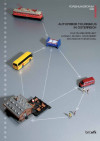
Das Tälerbusprojekt Lungau, Murau, Nockgebiet - ein innovatives Model
Forschungsforum
3/1995
Herausgeber: BMVIT
Deutsch, 6 Seiten
Downloads zur Publikation
LivingMODELofTomorrow
Development of transparent, technical and economic models for medium and high volume residential buildings, with special focus on the non-profit sector. Topics such as generation living, teleworking as well as smart homes are developed in an integrated model, for dense structures as well as pavillons and townhouses. All models follow the three pillars of sustainability.
KLIMADEMO VIS-A-VIS: Participatory realization of a climate-neutral demonstration building Vis-à-Vis
Participatory development of a pilot project at the interface between climate neutrality, affordability and multi-storey wooden housing based on well-founded decision-making bases in terms of renewable materials and renewable energies. The result is a multipliable carbon neutral building and the dissemination of carbon neutrality know-how to a larger audience.
IEA SHC Task 53: New Generation Solar Cooling & Heating Systems
Within the framework of the IEA SHC Task 53 'New Generation (NG) Solar Cooling & Heating Systems', solar-electric and solar-thermal air-conditioning systems were investigated. The main objective was the development and documentation of reliable and economical NG system solutions. A comprehensive comparison of different NG systems as well as the elaboration of support measures for the market launch are core results of the international cooperation.
Safety and Authorization of Biomass Gasification Plants
Biomass gasification is a success promising technology for the combined heat and power production based on the utilization of domestic biomass. With this project a safety and commissioning guideline for the technology was created for the enhancement of the technology's market introduction.
Reduction of Broke in Paper Production
Development of a measurement and control system that detects paper deformation during production. Thus, broke is reduced, significant savings in energy use are achieved, and the economic efficiency is well increased.
Field test of a virtual power Plant comprising 30 pellet-boiler fired micro-CHP modules
A virtual biomass plant comprising 30 micro-CHP-Modules, each of them integrated into an existing pellets-boiler in the Austrian region of eastern Styria is to be tested. The goal of this project is to gain experience and to introduce a new sustainable technology.
Technical status of ventilation systems for buildings

Evaluation of existing ventilation systems in Austria considering technical quality and practicability.
Mitteilungsblatt "Biobased Future" - Sondernummer/Juni 2012
HR DI M. Wörgetter, DI D. Bacovsky, DI (FH) A. Sonnleitner
Herausgeber: Bioenergy2020+ GmbH, Mitherausgeber für den Sonderteil IEA Bioenergy: JOANNEUM RESEARCH Forschungsgesellschaft - DI Kurt Könighofer
Deutsch, 32 Seiten
Downloads zur Publikation
Energy R&D 2023: Public Expenditures in Austria
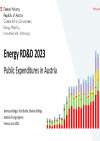
Public spending on energy research totalled 310.8 million euros in 2023. The figure for 2021, by far the highest ever recorded in Austria, was therefore exceeded.
Schriftenreihe
16/2024
A. Indinger, F. Bettin, M. Rollings
Herausgeber: BMK
Deutsch, 150 Seiten
Downloads zur Publikation
Sustainability Reporting - Guidelines for Sustainability Reporting based on reporting processes of VA Technologie and Österreichische Bundesforste
Scientific attendance of sustainability reporting processes in two partner enterprises (VA Tech and ÖBf AG). Development of the guideline "Reporting about Sustainability" based on these practical experiences.
Integral Resource Optimisation Network - Concept
An integral control network for optimizing the resource "electrical energy". Concept for new, innovative services for the power market based on the latest advances in the field of modern information- and communication technologies.
LTS Flywheel - Long Term Storage-Flywheel: New approaches for increasing the economically usable storage time and safety
Development of the fundamentals for a Long Term Storage (LTS)-flywheel for decentralized storage of electrical energy (e.g. from wind or PV power plants), with a significant increase in storage time (goal: 12 hours) and safety, featuring low system costs. Therefore, the LTS-Flywheel is an essential contribution to the building of the future.
Hygrothermal behaviour of double-skin facades in solar irradiation - theory evaluation by means of on-location measurements
Detailed clarification of the base parameters of thermodynamic simulation calculations by means of on-location measurements on the five-storey double-skin facade of the Federal Institute of Social Education in Baden bei Wien