Suchergebnisse für "Factsheet%3A Energietechnologien gestalten%2C die f%C3%BCr alle sinnvoll und nutzbar sind"
IEA Heat Pump Centre Newsletter Vol. 33, No 1/2015

Herausgeber: IEA Heat Pump Centre
Englisch, 40 Seiten
Downloads zur Publikation
IEA Heat Pump Centre Newsletter Vol. 32, No. 2/2014
Herausgeber: Heat Pump Centre
Englisch, 32 Seiten
Downloads zur Publikation
Climate-friendly buildings
Monitoring sustainable construction methods in Austria
energy innovation austria
2/2023
Herausgeber: BMK in cooperation with the Climate and Energy Fund
Englisch, 12 Seiten
Downloads zur Publikation
IEA Demand Side Management Technologies and Programmes - Annual Report 2014
Herausgeber: IEA Demand Side Management Programme
Englisch, 138 Seiten
Downloads zur Publikation
IEA Demand Side Management Technologies and Programmes - Annual Report 2013
Herausgeber: IEA Demand Side Management Programme
Englisch, 116 Seiten
Downloads zur Publikation
Net-Zero Energy Buildings - A Consistent Definition Framework
Energy and Buildings Febr. 2012
Sartori I., et al
Englisch, 12 Seiten
Downloads zur Publikation
ÖKOinFORM Folder 4 - Bauteile aus nachwachsenden Rohstoffen
im Rahmen der Programmlinie Haus der Zukunft
J. Fechner, B. Lipp, R.Lechner
Herausgeber: BMVIT
Deutsch, 8 Seiten
Downloads zur Publikation
ÖKOinFORM Folder 3 - Passivhaus aus nachwachsenden Rohstoffen
im Rahmen der Programmlinie Haus der Zukunft
J. Fechner, B. Lipp, R.Lechner
Herausgeber: BMVIT
Deutsch, 8 Seiten
Downloads zur Publikation
IEA-SHC Newsletter: "Solar Update" Issue 60, October 2014
Herausgeber: IEA- Solar Heating and Cooling Programme
Englisch, 22 Seiten
Downloads zur Publikation
Sanierungsleitfaden - Neue Standards für alte Häuser
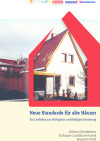
Aktualisierte Neuauflage 2007. Ein Leitfaden zur ökologisch nachhaltigen Sanierung.
Schriftenreihe
33/2007
Edeltraud Haselsteiner, Katharina Guschlbauer-Hronek, Margarete Havel
Deutsch, 175 Seiten
Downloads zur Publikation
Policy Brief 2: Policy Guidelines for Electric Motor Systems (2015)
Herausgeber: Electric Motor Systems Annex
Englisch, 2 Seiten
Downloads zur Publikation
Ökosan´09 - Internationales Symposium für hochwertige energetische Sanierung von großvolumigen Gebäuden
Schriftenreihe
45/2011
K. Höfler
Herausgeber: BMVIT
Deutsch, 28 Seiten
Downloads zur Publikation
Elektrischer Spitzenlastausgleich in Lebensmittelketten - Strategien zur Verbesserung der Energieeffizienz
Schriftenreihe
63/2009
G. Becker
Herausgeber: BMVIT
Deutsch, 99 Seiten
Downloads zur Publikation
Innovation & Kosteneffizienz: Kostenoptimale Gebäude-standards für groß-volumige Wohngebäude
Inno-Cost
Schriftenreihe
14/2015
W. Hüttler, J. Rammerstorfer, D. Bachner
Herausgeber: BMVIT
Deutsch, 99 Seiten
Downloads zur Publikation
CHALLENGE - Highly efficient use of hot gas and waste heat in air/water heat pumps for plus-energy buildings and quarters
CHALLENGE aims to further develop the system concept for air-to-water heat pumps in such a way that they can be used efficiently and without the above mentioned negative effects in densely built-up urban areas. In concrete terms, validated simulations and a functional model of the overall system on a laboratory scale are to be used to demonstrate that the concept can save 10% of electrical energy, reduce the noise of outdoor units in summer to a minimum and prevent the formation of local heat islands.
urban pv+geotherm - Innovative concepts for the supply of large volume buildings/ quarters with PV and geothermal energy
The use of renewable energies in inner city locations is mostly linked to higher costs andconsidered as problematic. The aim of this project was to optimize (cost and energy) heating (and where required, cooling) using geothermic and photovoltaic for an urban, densely-built development area. With the project´s findings it will be easier to ecologically and economically plan the use of renewable energies especially in urban areas.
Klimawende Bruck
Klimafahrplan der Klima-Pionierstadt Bruck an der Mur
Schriftenreihe
38/2025
Martina Heidenhofer
Herausgeber: BMIMI
Deutsch, 42 Seiten
Downloads zur Publikation
IEA - Advanced Fuel Cells: Österreichische Beteiligung am Implementing Agreement on Advanced Fuel Cells
Schriftenreihe
33/2012
G. Simader, J. Gsellmann
Herausgeber: BMVIT
Deutsch, 68 Seiten
Downloads zur Publikation
Klimaschutz macht Schule
Ein Prototyp für eine zielgerichtete Wissensaufbereitung für Schüler am Beispiel
nachhaltiger Gebäude "Hänschen lernt"
Schriftenreihe
1/2014
J. Bruckner
Herausgeber: BMVIT
Deutsch, 35 Seiten