
Suchergebnisse für "Factsheet%3A Energietechnologien gestalten%2C die f%C3%BCr alle sinnvoll und nutzbar sind"
e-nova 2010
11. - 12. November 2010
Fachhochschulstudienzentrum Pinkafeld, Steinamangerstraße 21
7423 Pinkafeld, AT
Nachhaltige Gebäude: Planung - Betrieb - Bewertung
CircularBioMaterials
ParaStruct GmbH explores the technical and economic possibilities of recyclable, mineral-bound biomaterials in the project. The result is a basis for further development work and investments in this area.
Environmental, Material Flow and Sustainability Management Accounting - Offensive diffusion in adult education
Diffusion of the "Factory of Tomorrow" project line on environmental and material flow cost accounting (EMA and MFCA) for corporate and national system boundaries, as well as related tools for sustainability accounting in existing post graduate studies.
Smart grids for a sustainable energy supply system
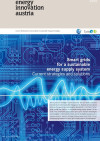
Current strategies and solutions
energy innovation austria
2/2016
Herausgeber: BMVIT und Klima- und Energiefonds
Englisch, 8 Seiten
Downloads zur Publikation
Energie-Spar-Netzwerk
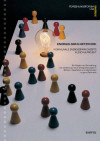
Kommunale Energiesparkonzepte als Schulprojekt
Forschungsforum
1/1994
Herausgeber: BMVIT
Deutsch, 6 Seiten
Downloads zur Publikation
IEA DHC Annex TS3: Proceedings of the Webinar on “Hybrid Energy Networks” (2021)
Präsentationsunterlagen des Webinars am 27. April 2021 mit dem Schwerpunkt auf Hybride Energiesysteme.
Herausgeber: IEA DHC Annex TS3, 2021
Englisch, 278 Seiten
Windenergie In Österreich
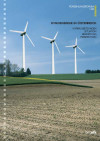
Voraussetzungen, Situation, Bewertung, Perspektiven
Forschungsforum
1/1995
Herausgeber: BMVIT
Deutsch, 6 Seiten
Downloads zur Publikation
AFOM - Automatic failure and optimisation analysis by data-acquisition
In the project, methods will be developed for analysing measured value curves to detect changes in operation or failures in the system. By integrating BIM data of buildings, corresponding models will be generated to validate the heating, ventilation, and air conditioning (HVAC)-networks, which will be used for analysis.
Smart Grids Week - Salzburg 2013
Smart Grids Week Salzburg 2013
IEA EBC Annex 67: Energy Flexibility of Domestic Thermal Loads - A Building Typology Approach of the Residential Building Stock in Austria (2017)
Der Artikel ist im Journal "Advances in Building Energy Research" von Taylor & Francis, Ausgabe ISSN: 1756-2201 (online), am 10. Jänner 2018 erschienen. Es wird ein Überblick über verschiebbare Heizlast für vier verschiedene Gebäudestandards in Österreich gegeben.
Tobias Weiss, Armin Knotzer, Anna Maria Fulterer
Herausgeber: IEA-EBC Programm
Englisch, 17 Seiten
Themen
Vitality City - Holistic energy strategies for cities in transition
Energy simulation of any size city (municipalities) based on the data from laser scanning and satellite analysis (Geodata) to obtain dynamical energy demands and available energy resources.
Villach KlimaFit - Municipal Transformation Process to Achieve Climate Neutrality in Villach
The strategic framework for achieving climate neutrality has been decided in Villach and the city itself can already point to good results in its own sphere of action (buildings, photovoltaics). However, the lack of own energy and mobility operations, the type and scope of construction/investment projects (third-party projects) and the limited scope for action in strategic development topics (little land owned by the city of Villach) require the adaptation (transformation) of municipal instruments in order to implement climate neutrality holistically.
Workshop: Althaussanierung mit Passivhauspraxis
3. Nov 2003
Landhaus, OstarrichisaalSt. Pölten, AT
Veranstaltung zum Projektabschluss des Haus der Zukunft-Projekts
Passive house Kindergarten with an integrated therapeutical group
Applied passive house techniques with locally available materials for a public building using limited funds.
DataScience4SmartQuarters - Energy saving potentials through neighbourhood and community planning – Part 2
DataScience4SmartQuarters develops and researches an innovative method for the fast and efficient evaluation of simulation scenarios (building/energy, mobility) for communities.
IEA AFC Annex 35: High‐Purity Hydrogen Production with the Reformer Steam Iron Cycle (2018)
Demonstration eines Laborprototyps zur dezentralen Herstellung von hochreinem Wasserstoff aus Biogas.
S. Nestl, G. Voitic, R. Zacharias, S. Bock, V. Hacker
Herausgeber: Wiley-VCH, Energy Technology
Englisch, 7 Seiten
Tageslichtnutzung In Gebäuden
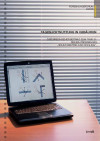
Österreichischer Beitrag zum TASK 21 des IEA Programms "Solar Heating and Cooling"
Forschungsforum
3/2000
Herausgeber: BMVIT
Deutsch, 6 Seiten
Downloads zur Publikation
Tagung: 5. Nationale Photovoltaik-Tagung
25. Mar 2004 -
26. Mar 2004
ETH ZürichZürich, CH
Integration Solarstrom - Architektur