
Suchergebnisse für "Factsheet%3A Energietechnologien gestalten%2C die f%C3%BCr alle sinnvoll und nutzbar sind"
University Plus-Energy Office High-Rise Building
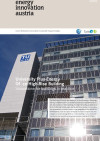
Innovations for buildings in practice
Herausgeber: BMVIT und Klima- und Energiefonds
Englisch, 8 Seiten
Downloads zur Publikation
Innovations for cool urban oases
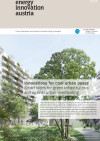
Smart ideas for green infrastructure and against urban overheating
energy innovation austria
3/2018
Herausgeber: BMVIT und Klima- und Energiefonds
Englisch, 8 Seiten
Downloads zur Publikation
Multifunktionale Energieversorgung in Städten
Schriftenreihe
01/2007
K. Gruber
Herausgeber: Bundesministerium für Verkehr, Innovation und Technologie
Deutsch, 124 Seiten
Downloads zur Publikation
Sustainable trend-setters - LOHAS on the way to a sustainable society
"Sustainable trendsetters" investigated the consumer group "cultural creatives" by applying the Q-methodology. It provides criteria for product development and promotion of LOHAS products and services in the sustainable textile sector and for sustainable tourism.
Active Buildings
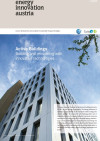
Building and renovating with innovative technologies
energy innovation austria
1/2013
Herausgeber: BMVIT & Klima- und Energiefonds
Englisch, 8 Seiten
Downloads zur Publikation
Smart Grids Week 2010
22. - 25. June 2010
Salzburg AG/Congress Salzburg
5020 Salzburg, AT
Austrian Smart Grid Pioneers in Dialogue. Guest Countries: Germany and Switzerland
Energieforschungsstrategie Österreich

Making the Zero Carbon Society Possible!
Michael Cerveny, Johannes Gadner, Anton Graschopf, Michael Paula
Herausgeber: Rat für Forschung und Technologieentwicklung
Deutsch, 56 Seiten
Downloads zur Publikation
E_PROFIL - neighborhood profiles for optimized energy transformation processes
E_PROFIL is a set of methods (an IT-supported toolkit) for the elaboration of neighbourhood profiles. The aim of the project is to facilitate an energy and resource efficient development in the planning practice of Austrian cities. Furthermore, the project is an important asset for research and planning activities in Europe and can also be applied to other neighbourhoods.
Sustainable Lighting
Research & development for new technologies and products from Austria Today
energy innovation austria
4/2014
Herausgeber: BMVIT and Klima- und Energiefonds
Englisch, 8 Seiten
Downloads zur Publikation
Photovoltaics - a key technology
Innovations from Austria for tomorrow`s power supply
energy innovation austria
2/2017
Herausgeber: BMVIT und Klima- und Energiefonds
Englisch, 8 Seiten
Downloads zur Publikation
Agricultural Resources for Biogas Production
Genotypes of energy plants adapted to the location will be identified and specialist crop rotation adapted to the location will be developed. The fermentation process will be optimised and the methane energy model will be advanced. The efficiency of the biogas production will be enhanced.
Marktreifes Plus-Energie-Büro
Schriftenreihe
49/2011
B. Reiß, H. Schöberl, M. Leeb, T. Bednar Berichte aus Energie- und Umweltforschung 49/
Herausgeber: BMVIT
Deutsch, 164 Seiten
Downloads zur Publikation
MaBo - material saving in bored piles - a contribution to reducing CO2-emissions in the construction industry
Development of an innovative method for saving material in bored piles in order to reduce CO2 emissions in the construction industry. By optimizing the construction methods and using alternative materials, the sustainability of the foundation bodies is to be improved.
AI4FM - Artificial Intelligence for Facility Management
AI-based anomaly and fault detection in buildings. Digital twins of buildings with simulation models for testing and optimizing rule-based fault detection methods. Mining of the recorded time-series data from existing Building Management Systems to train Machine Learning models for fault detection.
Twin2Share - Digital twins for energy optimization in energy communities (ECs)
Digital twins to support energy communities over their life cycle. The project focuses on optimizing energy efficiency and costs, dynamic load management and the integration of users to promote sustainable energy use and the stabilization of the electricity grid.
ProzesSan - Development of processes to increase the decarbonisation and refurbishment rate in the housing sector
The project aims to assist owners of large property portfolios with the challenges of refurbishing their buildings. The first step is to identify the various obstacles and develop appropriate solutions. These will be tested in three workshop phases with the owners, and a workshop manual and guidelines will be developed.
Aktoren unterstützte, adaptive Verbrennungsoptimierung zur Feinstaubreduzierung
Dipl.-Ing. Herbert Hartl, MBA
Herausgeber: Bundesministerium für Verkehr, Innovation und Technologie
Downloads zur Publikation
ModularHeatNet
The aim of the project is to support Ottensheim in phasing out fossil fuels and developing a "climate-neutral" heat supply. As a result, the community will receive a solid decision-making basis based on the technical, economic, organizational, and environmental comparison of the examined heat supply approaches.
Co-Housing Gutenberg: Integrated Sector Coupling for Shared Living, Energy, and Mobility
The "CoHoGutenberg" project aims to establish a sustainable co-housing model in the rural community of Gutenberg, Styria, by combining sufficiency principles with state-of-the-art energy technologies.
Cities as innovation drivers
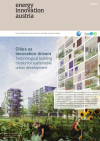
Technological building blocks for sustainable urban development
energy innovation austria
4/2013
Herausgeber: BMVIT, Klima- und Energiefonds
Englisch, 8 Seiten