
Suchergebnisse
Project-Imagepool
Project images created as part of the City of Tomorrow, House of Tomorrow and IEA Research Cooperation programs.
CETPartnership Annual Conference 2025 - System Transition
21. - 22. October 2025
Online
The conference will explore how CETPartnership can enhance its role in supporting this evolution—across technologies, regions, and policy frameworks.
IEA AFC Annex 35: Brennstoffzellen für portable Anwendungen (Arbeitsperiode 2020 - 2023)
Annex 35 umfasst den Austausch von Informationen und Forschungsergebnissen über die neuesten Entwicklungen im Bereich der portablen Brennstoffzellen. Neben der Systementwicklung werden die Herstellung der Membran-Elektroden-Einheit (MEE), die Systemkomponenten wie der elektrische Konverter oder die Gasversorgung, der Aufbau und die Auslegung von Hybriden, sowie die Aspekte der Sicherheit und Normierung behandelt.
IEA AFC Task 30: Elektrolyse (Arbeitsperiode 2024 - 2027)
IEA AFC Task 30 befasst sich mit der Erzeugung von Wasserstoff durch Elektrolyse. Fragestellungen bezüglich Materialkosten und -haltbarkeit, sowie Effizienz und Zuverlässigkeit stehen im Mittelpunkt der Forschungsbestreben. Lösungsansätze basieren auf der Entwicklung neuer Materialien und Methoden zur Überwachung von Alterungsphänomenen, sowie der Optimierung von Betriebsstrategien. Innerhalb von Task 30 werden Entwicklungen unter weltweit führenden Forschungseinrichtungen und Firmen geteilt.
IEA AFC Annex 31: Polymerelektrolytmembran-Brennstoffzellen (Arbeitsperiode 2020 - 2024)
Brennstoffzellen bieten ein erhebliches Potenzial für die Umgestaltung der Energieversorgung und Mobilität. Darüber hinaus kann Wasserstoff als Speichermedium für erneuerbare Energien eingesetzt werden, was Netzstabilität und Versorgungssicherheit erhöht. Annex 31 befasst sich mit der technologischen Entwicklung der Schlüsselkomponenten von Brennstoffzellen, der Systementwicklung sowie der Unterstützung der Markteinführung durch die Analyse und Entwicklung der politischen Rahmenbedingungen und dem Abbau von Markteintrittsbarrieren.
IEA Energieeffiziente Endverbrauchsgeräte (4E TCP)
Die Arbeiten des IEA 4E TCP erstrecken sich über vier Plattformen und gemeinsame Projekte: Energieeffiziente elektrische Motorensysteme, nachhaltige Beleuchtung und Steuerung, effiziente bedarfsgesteuerte Netze und elektronische Geräte und Leistungselektronik zur Steuerung und Umwandlung elektrischer Energie.
IEA 4E TCP-PECTA: Leistungselektronik zur Steuerung und Umwandlung elektrischer Energie (Arbeitsperiode 2024 - 2027)
Die Power Electronic Conversion Technology Platform (PECTA - Leistungselektronik zur Steuerung und Umwandlung elektrischer Energie) ist einer von 4 Plattformen im IEA 4E Technologieprogramm (TCP). PECTA soll dabei das Effizienzpotential unter Verwendung und durch Integration von Halbleitern mit weitem Bandabstand (Wide-Bandgap WBG) in Leistungselektronikapplikationen evaluieren und als unabhängige Informations- und Wissensplattform für politische EntscheidungsträgerInnen zum Thema WBG dienen.
IEA experts group "R&D priority setting and evaluation" (EGRD) - Arbeitsperiode 2024 - 2026
Die IEA Expertengruppe F&E Prioritätensetzung und Evaluierung (EGRD) wurde vom Komitee für Energieforschung und Technologie (CERT) initiiert mit dem Ziel, analytische Ansätze zur Energie-Technologie-Analyse, zu F&E Prioritätensetzung sowie zu Einschätzung von Nutzen von FTI Politiken zu entwickeln und zu verbreiten.
IEA Bioenergy Task 44: Flexibilisierung und Systemintegration (Arbeitsperiode 2025 - 2027)
Welche Vorteile ergeben sich durch stärker integrierte Prozesse und Systeme? Wie können wir Integration messen und worauf sollen wir bei der Kopplung zwischen diversen Sektoren achten? Der IEA Bioenergy Task 44 liefert Antworten auf diese und verwandte Fragen, vor allem in Bezug auf eine Kreislaufbioökonomie und die Energiewende.
IEA Bioenergy Task 44: Flexible Bioenergie und Systemintegration (Arbeitsperiode 2022 - 2024)
IEA Bioenergy Task 44 trägt zur Entwicklung und Analyse von flexiblen Bioenergielösungen als Beitrag zu einem kohlenstoffarmen Energiesystem bei. Ziel war es, das Verständnis für die Möglichkeiten und deren Potentiale sowie den Status flexibler Bioenergie zu verbessern und Hindernisse sowie den künftigen Entwicklungsbedarf im Kontext des gesamten Energiesystems (Strom, Wärme und Verkehr) zu ermitteln.
IEA Bioenergy Task 39: Biokraftstoffe zur Dekarbonisierung des Verkehrs (Arbeitsperiode 2022-2024)
Das langjährige Ziel von IEA Bioenergy Task 39 ist das Vorantreiben der Dekarbonisierung im Transportsektor mithilfe von biogenen, nachhaltigen Treibstoffen mit niedriger Kohlenstoffintensität. Dies schließt konventionelle und fortschrittliche Biokraftstoffe ein, die über verschiedene technologische Routen (oleochemische, biochemische, thermochemische und hybride) hergestellt werden können. Im Triennium 2022-2024 lag der Fokus zunehmend auf dem schwieriger zu elektrifizierenden Langstreckenverkehr.
IEA PVPS Task 1: Photovoltaik - Strategische Analysen und Informationsverbreitung (Arbeitsperiode 2022 - 2024)
Seit Beginn des IEA-Photovoltaikprogrammes im Jahr 1993 werden in diesem Task Analysen der weltweiten Photovoltaikentwicklung durchgeführt, aus denen auch inhaltliche Arbeitsschwerpunkte des Programmes abgeleitet werden. Damit bekommt der Task 1 eine strategische Bedeutung für das PVPS-Gesamtprogramm. Die Teilnahme aller PVPS-Länder an diesem Task ist verpflichtend, um eine hohe Qualität der Daten und Analysen sicherstellen zu können.
10 Jahre Mission Innovation: Jubiläumstreffen bei CEM16/MI10 in Busan
Eine Dekade Wirkung – wie Mission Innovation die globale Landschaft sauberer Energietechnologien gestaltet hat.
Mission Innovation Net-Zero Industries Award 2025 - noch bis 30. September einreichen!
Der „Mission Innovation Net-Zero Industries Award“ zeichnet auch 2025 herausragende Unternehmen und visionäre Persönlichkeiten aus, die mit innovativen Ansätzen den Übergang zur klimaneutralen Industrie aktiv mitgestalten.
Anna Wang, MA
Anna Wang wechselte mit Oktober 2022 ins BMIMI, Sektion III, Abteilung 3, Energie- und Umwelttechnologien. Sie wird im Kernteam "Klimaneutrale Stadt" sowie in der Koordination der "Driving Urban Transitions Partnership" mitwirken.
MR DI Michael Paula
MR DI Michael Paula war von 1996 bis Oktober 2021 Leiter der Abteilung für Energie- und Umwelttechnologien des Bundesministeriums für Klimaschutz, Umwelt, Energie, Mobilität, Innovation und Technologie (BMK) (jetzt BMIMI). Anlässlich seiner Versetzung in den Ruhestand erhält DI Michael Paula als Doyen der österreichischen Energieforschung die "Stadt der Zukunft" - Ehrenurkunde für seinen langjährigen Einsatz für Innovation und Nachhaltigkeit.
Wärmespeicher im Energiesystem der Zukunft
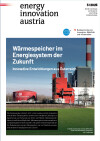
Innovative Entwicklungen aus Österreich
energy innovation austria
3/2025
Herausgeber: BMIMI gemeinsam mit dem Klima- und Energiefonds
Deutsch, 12 Seiten
Downloads zur Publikation
13. Internationale Anwenderkonferenz "Biomassevergasung"
25. November 2025
BMIMI, Radetzkystraße 2, 1030 Wien
Wir richten unseren Blick auf den Weltmarkt und aktuelle Entwicklungen im Bereich der Biomassevergasung. Nach Berichten zum Stand der Forschung vertiefen wir die Thematik anhand von Anwendungsbeispielen aus der Praxis. Im letzten Themenblock befassen wir uns mit dem heutigen und zukünftigen Stellenwert der Biomassevergasung.
IEA SHC Task 70: Integrierte Beleuchtung mit geringem Kohlenstoffimpakt und hohem Komfort
Vor dem Ziel der Dekarbonisierung und Nachhaltigkeit von Gebäuden im Sinne der Kreislaufwirtschaft muss für integrierte Beleuchtungsanlagen der bisher rein energiebasierte Fokus auf den gesamten Lebenszyklus unter besonderer Berücksichtigung der visuellen und nicht-visuellen Nutzeranforderungen erweitert werden. Im Task werden dazu für die relevanten Stakeholder strategische, technische und wirtschaftliche Informationen erarbeitet und Netzwerkaktivitäten angeboten.
IEA SHC Task 72: Solare Photoreaktoren zur Produktion von Treibstoffen und Chemikalien (Arbeitsperiode 2024 - 2028)
Angesichts der steigenden Nachfrage nach grünen Treibstoffen und Chemikalien gewinnen solarbasierte Photoprozesse, die direktes Sonnenlicht nutzen, an Bedeutung. Der IEA SHC Task 72 zielt in einem interdisziplinären Ansatz auf die Entwicklung neuer Materialien, Reaktordesigns und Systemintegrationsstrategien sowie standardisierter Test- und Evaluierungsprotokolle ab, um letztendlich den Weg für zukünftige Solar-Photoreaktoren als neue Marktsegmente für die Solarindustrie zu ebnen.