
Suchergebnisse
Positive Energy Districts and Neighbourhoods for Climate Neutrality: Ausschreibung geöffnet
Plusenergiequartiere werden einen wichtigen Beitrag in Richtung Klimaneutralität und Umweltschutz leisten. Die Region Brüssel, Dänemark, die Niederlande, Italien, Rumänien, Schweden, die Türkei und Österreich haben kürzlich eine transnationale Ausschreibung zur Implementierung von Positive Energy Districts geöffnet (Gesamtbudget 7,85 Mio. Euro). Einreichungen sind bis 24.02.2022 möglich.
INNERGY - Real laboratory in the central Inn-valley for climate-neutral semi-urban areas
Sustainable energy supply solutions for existing quarters and industry had been surveyed holistically and cross-sectorally in a small-structured area, consequently pilot projects had been elaborated with the aim to build up a climate-neutral region.
Circular Bio-based Europa Joint Undertaking: Info Day
7. Juni 2022
Online
Join the CBE JU Info Day to learn about the 2022 call for project proposals and meet with other potential applicants.
BuildReUse - 100 Prozent Re-Use und Recycling bei Gebäuden mit kurzen Nutzungszyklen
Manche Gebäude - wie zum Beispiel Supermärkte oder Bürogebäude - werden häufig nach wenigen Jahren abgerissen und neu gebaut oder zumindest umgebaut, wodurch große Mengen an Gebäudekomponenten zu Abfall werden. Das Projekt BuildReUse zielt darauf ab, Konzepte der Kreislaufwirtschaft für diese Gebäude zu entwickeln und den dafür notwendigen Wandel in der Bauwirtschaft zu fördern.
Community & Veranstaltungen
"Zeitreise" durch die IEA Forschungskooperation
Seit dem Beitritt zur IEA im Jahre 1975 beteiligt sich Österreich aktiv an den Technologieprogrammen. In Form einer "Zeitreise" sind wesentliche Meilensteine der letzten 47 Jahre dargestellt.
Internationale Strategien
Hier finden sie einen Überblick über internationale Strategien zum Thema Energie und Umwelttechnologien.
#mission2030 - Die österreichische Klima- und Energiestrategie (2018)
Die Strategie bildet die Grundlage für den nationalen Energie- und Klimaplan Österreichs und ist in den Rahmen des im Dezember 2015 von 195 Staaten beschlossenen Pariser Klimaabkommens gesetzt, das von Österreich als einem der ersten EU-Mitgliedstaaten ratifiziert wurde und das im November 2016 in Kraft getreten ist. Das Pariser Klimaabkommen stellt ein global rechtsverbindliches Vertragswerk zum Klimaschutz dar.
Herausgeber: BKA, BMNT, BMVIT, 2018
Deutsch
Downloads zur Publikation
ASAP Ausschreibung 2023
Im Rahmen des Österreichischen Weltraumprogramms ASAP stehen für die Ausschreibung 2023 ca. 10,5 Millionen Euro zur Verfügung. Davon sind ca. 3,7 Millionen Euro der Energiewende, Mobilitätswende und Kreislaufwirtschaft zugeordnet, womit ein bedeutsamer Beitrag zum Klimaschutz geleistet werden soll.
greenstart Voting
Zehn Start-ups konnten sich für greenstart qualifizieren, doch nur drei bekommen den begehrten Titel „greenstar“ und erhalten jeweils 20.000 Euro Preisgeld. Bis 16. Oktober 2023 mitentscheiden, wer greenstar wird.
Call for Abstracts: D-A-CH Algen Summit 2024
Beim D-A-CH Algen Summit im Mai in der Schweiz werden aktuelle Entwicklungen in Algenindustrie und -forschung vorgestellt. Die Einreichungsfrist für Poster Abstracts ist der 1. April 2024.
Pyrolysetechnologien in Europa
Technologieübersicht mittelschneller Pyrolyse für dezentrale Anwendungen, für kleine und mittlere Unternehmen und für die Kreislaufwirtschaft
Ausschreibung zum ÖGUT-Umweltpreis geöffnet!
Das BMK unterstützt vier Kategorien: "Mit Forschung & Innovation zur Kreislaufwirtschaft", "Klimaneutrale Stadt", "Frauen in der Umwelttechnik" und "Partizipation und zivilgesellschaftliches Engagement". Einreichschluss: 13. September 2024
PolyBacTex - Umwandlung gemischter Textilabfälle in Recyclingfasern und Zellulose für eine nachhaltige Produktion
Das Projekt PolyBacTex entwickelt eine Lösung zum Recycling von Mischtextilien, indem die einzelnen Fasertypen (Cellulose und Polyester) chemisch getrennt und biotechnologisch aufgewertet werden. Dadurch können Cellulose-Fasern rückgewonnen und zurück in den Prozess der Faserherstellung gebracht werden.
ÖGUT Umweltpreis 2024 verliehen
In der Kategorie "Klimaneutrale Stadt" gewinnt das "Umsetzungsprogramm Raus aus Gas" der Stadt Wien. Das Projekt Timberloop von der Holzforschung Austria erzielt den ersten Platz in der Kategorie "Mit Forschung & Innovation zur Kreislaufwirtschaft". Lisa Gabriela Bayer (Borealis AG) und Eva Lems (Büro für Energie- und Umweltfragen) freuen sich über die Auszeichnung in der Kategorie "Frauen* in der Umwelttechnik". Die Baupiloten Innsbruck OG mit dem „Beteiligungsprozess Mittelschule Mieming" und die Fairkehrswende Wien mit „Wir machen Wien" gewinnen in der Kategorie Partizipation. Das Stadt der Zukunft-Projekt GLASGrün erhielt den Sonderpreis des Magazins BUSINESSART. Das BMK unterstützte vier Kategorien und sponserte die Preisgelder.
Ausschreibung zum ÖGUT-Umweltpreis geöffnet!
Das BMIMI unterstützt drei Kategorien: "Klimaneutrale Stadt", "Mit Forschung & Innovation zur Kreislaufwirtschaft" und "Frauen in der Umwelttechnik". Das Preisgeld beträgt insgesamt EUR 40.000, Einreichschluss ist der 15. September 2025.
39. BIOEM 2026 - BAUEN. ENERGIE. LEBEN.
04. - 07. Juni 2026
BIOEM Messegelände Sonnenplatz 1, 3922 Großschönau, AT
Auf der BIOEM, eine der erfolgreichsten Fachmessen Österreichs, findet man eine große Anzahl an Aussteller:innen und Innovator:innen zu den Themen Energie/Umwelt, Bauen/Sanieren, Wohnen/Sicherheit, Garten/Biodiversität, Wellness/Gesundheit und Elektromobilität.
LICHTBLICKE, "BRIGHT SPOTS"
Costs and benefits of daylight redirection systems: integrated assessment of daylight redirection systems and daylight-dependent control systems to reinforce daylight utilisation in existing buildings.
Modernizing by Catalogue
Façade and Open Space Modernization with Standard Building Components in Housing of the Fifties und Sixties.
plusFASSADEN
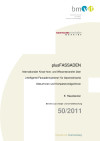
Internationaler Know-how- und Wissenstransfer über "intelligente Fassadensysteme" für österreichische AkteurInnen und KompetenzträgerInnen
Schriftenreihe
50/2011
E. Haselsteiner
Herausgeber: BMVIT
Deutsch, 283 Seiten