
Suchergebnisse
IEA HPT Annex 51: Studie "Perception Rating of the Acoustic Emissions of Heat Pumps" (2021)
Die Studie untersuchte die Wirkung und Richtungsabhängigkeit verschiedener, potentiell lärmmindernder Maßnahmen bei Wärmepumpen und den Bezug zur Wahrnehmung der Lästigkeit.
Christian H. Kasess, Christoph Reichl, Holger Waubke
Herausgeber: e Forum Acusticum, Lyon, France, 2021
Englisch, 6 Seiten
IEA ISGAN Annex 7: ISGAN Regulatory Sandboxes 2.0 Project - Policy Messages to the Clean Energy Ministerial (2021)
Regulatory Sandboxes sind Initiative und Programme, die Innovatoren die Möglichkeit geben, neue Technologien, Services und Geschäftsmodelle unter „real-world" Bedingungen zu testen. Im ersten Halbjahr wurde in einer Inter-Annex Kollaboration eine follow-up Initiative zum Thema „Regulatory Sandboxes“ umgesetzt. Die Policy Messages wurden vom ISGAN Projektteam und den internationalen Teilnehmer:innen an das CEM12 formuliert.
Klaus Kubeczko, Anna Wang, Dierk Bauknecht, José Pablo Chaves Ávila, Mauricio Correa Ramírez, Aram An, Nicole Kerkhof-Damen, Helena Lindquist, Magnus Olofsson
Herausgeber: IEA ISGAN, 2021
Englisch, 7 Seiten
Downloads zur Publikation
IEA 4E Annex: Elektrische Motor Systeme Task 3: Neue industrielle Entwicklungen und Digitalisierung (Arbeitsperiode 2021 - 2024)
Der Task 3 des Annex Electric Motor Systems „Neue industrielle Entwicklungen und Digitalisierung“ erstellt technische und politische Empfehlungen zur Nutzung von digitalen Technologien für erhöhte Energieeffizienz in elektrischen Motorsystemen. Dazu werden industrielle Anwendungsfälle beschrieben, Anwender:innen-Interviews geführt und politische Instrumente analysiert.
Technology Roadmap, Carbon Capture and Storage, IEA 2009

Der Fahrplan zu Carbon Capture and Storage zeigt den aktuellen Status sowie die notwendigen nächsten Schritte aus Sicht der Finanzierung, Gesetzgebung, des öffentlichen Bewusstseins und der internationalen Zusammenarbeit.
International Energy Agency
Englisch, 52 Seiten
Downloads zur Publikation
Post-combustion carbon capture from coal fired plants - solvent scrubbing (Davidson, 07-2007)
Englisch
IEA AFC Annex 35: Paper "Development of Palladium and Platinum based Membrane Electrode Assemblies and Performance Characterization in the Alkaline Direct Ethanol Fuel Cell" (2020)
Dieser Abstract beschreibt die Charakterisierung von kommerziellen Katalysatoren und deren Verwendung für die Herstellung von Membran Elektroden Einheiten für die alkalische Direkt-Ethanol-Brennstoffzelle. Darüber hinaus wird der Einfluss der Durchflussrate der Brennstoffe auf die Zellleistung dargestellt.
M. Roschger, S. Wolf, D.Garstenauer, V. Hacker
Herausgeber: Proceedings of the 16th Minisymposium Verfahrenstechnik and 7th Partikelforum (TU Wien, Sept. 21/22, 2020)
Englisch, 4 Seiten
IEA AFC Annex 35: Paper "Cold start behavior and freeze characteristics of a polymer electrolytemembrane fuel cell" (2021)
Diese Arbeit befasst sich mit dem Startverhalten von PEM-Brennstoffzellen bei winterlichen Temperaturen. Verschiedene Kaltstartstrategien werden untersucht und die Einflüsse von Eisbildung auf die Zellkomponenten analysiert.
Katharina Kocher, Stefan Kolar, Walter Ladreiter, Viktor Hacker
Herausgeber: Fuel Cells 2021
Englisch, 10 Seiten
Konferenz: 2. Puchberger Wirbelschichttreffen
19. Oct 2009 -
20. Oct 2009
Puchberg am Schneeberg , AT
Vom 19. - 20. Oktober 2009 findet in Puchberg am Schneeberg (NÖ) das 2. Puchberger Wirbelschichttreffenstatt. Das Treffen dient vor allem dem direkten Erfahrungsaustausch und der Weiterentwicklung der Wirbelschichttechnologie.
Berichte aus Energie- und Umweltforschung 18/2001Teilnahme am IEA Solar Heating and Cooling Program Task 21 Daylight in Buildings
Endbericht zum Auftrag des Bundesministerium für Wissenschaft, Verkehr und Kunst über die Teilnahme am Task 21- Daylight in Buildings an das Bartenbach Lichtlabor
Mehrsprachig
GHG-Bericht: Storing CO2 through Enhanced Oil Recovery
Die aktuelle Publikation IEA CCS Unit prüft die Möglichkeit der kombinierten CO2-Speicherung und tertiären Ölförderung.
Konferenz: Smart Grids Week - Salzburg 2013
13. - 17. Mai 2013
Salzburg Congress und Salzburg AG5020 Salzburg, AT
Die Smart Grids Week - Salzburg 2013 soll entscheidend dazu beitragen, den in Österreich erfolgreich begonnenen Prozess der Weiterentwicklung der Elektrizitäts-Infrastrukturen zu stärken und die Anbindung an die internationalen Entwicklungen zu forcieren.
EGRD Workshop: Island Energy - Status and Perspectives
5. - 6. October 2015
Tokyo, JP
This workshop focussed on the energy challenges, strategy and technological solutions on islands and remote, sparsely populated areas. The workshop explored the similarities and differences in a variety of cases in order to summarize lessons learnt, not least in terms of technological solutions.
IEA-DSM Spotlight Newsletter - Issue 53
Der Newsletter berichtet über IEA Demand-Side Management (DSM) Task 24, die DSM Universität, Ergebnisse aus Task 21 und die "Energy Conference 2014" in Neuseeland
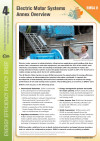
Policy Brief 0: Electric Motor Systems Annex Overview
Herausgeber: Electric Motor Systems Annex
Englisch, 2 Seiten
Downloads zur Publikation
Industrial Process Indicators and Heat Integration in Industries (Brunner/Slawitsch/Giannakopoulou/Schnitzer 2008)
The goal of this report, developed in the framework of the Task33/IV - Solar Heat for Industrial Processes (SHIP) of theInternational Energy Agency, is to give an overview of the toolswhich have been developed within this IEA Task 33/IV.
Englisch
IEA-DSM Spotlight Newsletter 52, Feb 2014
Schwerpunktthemen sind flexible Industrieprozesse als DSM Potenzial, die Rolle von "Facilitatoren" bei der Entwicklung des Contracting-Markts, die Vorstellung eines neuen Tasks zu Geschäftsmodellen für DSM-Energiedienstleistungen sowie Länderberichte aus Finnland und Neuseeland.
Evaluierung des Programms IEA-Forschungskooperation
Schriftenreihe
46/2012
C. Mandl, T. Kuttner
Herausgeber: BMVIT
Deutsch, 91 Seiten
Downloads zur Publikation
Prospects for coal and clean coal technologies in India (Mills, 12-2007)
Englisch
IEA Hybrid and Electric Vehicles - Annual Report 2012
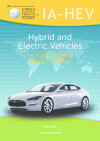
The electric drive gains traction
Herausgeber: IEA - International Energy Agency
Deutsch, 234 Seiten