
Suchergebnisse
IEA Bioenergy Task 37: Energie aus Biogas (Arbeitsperiode 2025 - 2027)
Systeme zur anaeroben Vergärung sind ein wichtiger Bestandteil in der Abfall- und Abwasserwirtschaft sowie in der Landwirtschaft. Der Stand der Technik der Technologien und die Entwicklung des Sektors sind international sehr unterschiedlich. Schwerpunktthemen des Erfahrungsaustausches in Task 37 sind Zusatznutzen von Biogas in der Kreislaufwirtschaft, Rahmenbedingungen zur Gärrestnutzung, Monitoring von mikrobiellen Kulturen in Biogasanlagen sowie Vergleich der wirtschaftlichen Rahmenbedingungen.
IEA AMF Task 66 Online Seminar Series "Recent progress in SAF research" - Seminar #2/10
20. May 2025, 03:30 - 05:30 PM CET
Online, AT
This free online seminar will highlight recent research on the identification of process parameters and desirable end-use properties of Sustainable Aviation Fuels (SAF). The seminar is moderated by Doris Matschegg and Dina Bacovsky (BEST).
Artikel in der Zeitschrift „nachhaltige technologien“ Ausgabe 1/2017: Stadtplanung mit Energie
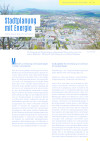
Um die erfolgreiche Umsetzung von Energiestrategien im städtischen Bereich zu unterstützen, müssen umfassende Lösungen auf Stadtteilebene gefunden und Stadt- und Energieplanungsprozesse noch besser miteinander verknüpft werden.
Herausgeber: AEE - Dachverband
Deutsch, 3 Seiten
Downloads zur Publikation
IEA PVPS Task 13: PV Performance Modeling Methods and Practices (2017)

Der Bericht stellt die Schritte zur Modellierung von PV Anlagen dar und gibt einen Überblick über den ersten gemeinsamen IEA PVPS Task 13 / PVPMC Workshop, der in Köln 2015 beim TUV Rheinland stattfand.
Joshua S. Stein, Boris Farnung (Ed.), Marion Schroedter-Homscheidt, Karel De Brabandere, Marcel Suri, Jan Remund, Manajit Sengupta. Elke Lorenz, Anton Driesse, Stefan Winter, Annette Hammer, Thomas Huld, Mitchell Lee, Giorgio Belluardo, Fotis Mavromatakis, Benjamin Duck, Markus Schweiger, Werner Herrmann, Bruce H. King, Janine Freeman, Teresa Zhang, Gianluca Corbellini, Christian Reise, Hendrik Holst, Jose E. Castillo-Aguilella, Bruno Wittmer, Tomas Cebecauer, Aron P. Dobos, Paul Gibbs, Angele Reinders, Matthew Boyd, Gabi Friesen, Benjamin Matthiss, Steve Ransome, Jürgen Sutterlueti, Yuzuru Ueda, Roger French
Herausgeber: IEA PVPS Task 13 / 2017
Englisch, 98 Seiten
Downloads zur Publikation
IEA PVPS Task 13: Technical Assumptions Used in PV Financial Models Review of Current Practices and Recommendations (2017)
Der Bericht gibt eine Methodenübersicht der finanziellen Modellierung bei Photovoltaik-Investments und praktische Richtlinien und Empfehlungen zur Minderung und Absicherung der finanziellen Risiken.
Mauricio Richter, Caroline Tjengdrawira, Jan Vedde, Mike Green, Lyndon Frearson, Bert Herteleer, Ulrike Jahn, Magnus Herz, Marc Köntges und Bengt Stridh, Karl Berger, Eckhard Janknecht, David Moser, Giorgio Belluardo, Nils Reich
Herausgeber: IEA PVPS Task 13 / 2017
Englisch, 101 Seiten
Downloads zur Publikation
IEA PVPS Task 13: Uncertainties in PV System Yield Predictions and Assessments (2018)
Langfristige Ertragsprognosen und Ertragsgutachten sind wesentlich für Photovoltaikinvest-Entscheidungen. Die mit der Ertragsmodellierung verbundenen Unsicherheiten sind bisher wenig untersucht.
Christian Reise, Björn Müller, David Moser, Giorgio Belluardo, Philip Ingenhoven und Anton Driesse, Guillaume Razongles, Mauricio Richter
Herausgeber: IEA PVPS Task 13 / 2018
Englisch, 74 Seiten
Downloads zur Publikation
Workshop: IEA Bioenergy Task 44 - Flexible Bioenergy and System Integration
24. January 2020
Messe Congress Graz - Conference Center, Graz, AT
This workshop shows relevant links to other technological tasks within IEA Bioenergy.
IEA SHC Task 55: Developing innovative business models for reducing return temperatures in district heating systems: Approach and first results (2020)
Im Artikel wird der Entwurf innovativer Geschäftsmodelle zur Senkung der Rücklauftemperaturen in Fernwärmenetzen vorgestellt
Paolo Leoni, Roman Geyer, Ralf-Roman Schmidt
Herausgeber: Energy (Elsevier), Volume 195, 2020
Englisch, 9 Seiten
IEA Wind Task 32: Increasing the impact of wind lidar through digitalisation (2019)
Dieses Dokument beschreibt die Möglichkeiten und Perspektiven für LIDAR Anwendungen durch die Digitalisierung.
Clifton, A., Vasiljevic, N.; Würth, I.
Englisch, 2 Seiten
IEA World Energy Outlook Special Report: Sustainable Recovery (June 2020)
Die Covid-19-Pandemie hat eine historische Krise für Volkswirtschaften und Energiemärkte ausgelöst. Gleichzeitig stellt sie eine einmalige Chance dar, die Transformation hin zu einem nachhaltigen Energiesystem einzuläuten. Als Reaktion auf Anfragen von Regierungen weltweit hat die IEA einen Plan zur nachhaltigen Wiederbelebung der Wirtschaft erstellt, welcher Maßnahmen für die kommenden drei Jahre aufzeigt.
Herausgeber: IEA
Englisch, 174 Seiten
IEA HPT Annex 48: Second Phase, Task 2 "Structuring information on industrial heat pumps and preparation of guidelines" - Austrian Report (2019)
Der Bericht beschreibt 10 Anwendungsbeispiele für Industriewärmepumpen in der österreichischen Industrie.
V. Wilk, J. Krämer, A. Arnitz, R. Rieberer
Herausgeber: IEA HPT, August 2019
Englisch, 50 Seiten
Downloads zur Publikation
IEA HPT Annex 48: Second Phase, Task 4 "Training materials for industrial heat pumps" - Austrian Report (2019)
Dieser Bericht beschreibt die Integration, Auslegung und Steuerung von Wärmepumpen für industrielle Prozesse.
A. Arnitz, R. Rieberer, V. Wilk
Herausgeber: IEA HPT, August 2019
Englisch, 16 Seiten
Downloads zur Publikation
IEA EBC Annex 80: Balanced Heating & Cooling with Radiative Surfaces (2020)
Ausgeglichenes Heizen und Kühlen mit saisonalen Wärmespeichern mittels Flächenheizungen und -kühlung
Peter Holzer (IBR&I Institute of Building Research & Innovation), David Stuckey (IPJ Ingenieurbüro P. Jung)
Herausgeber: IEA EBC Annex 80
Englisch, 7 Seiten
Downloads zur Publikation
IEA 4E EDNA Bericht: Gerätebezogene Energievorteile durch ihre Vernetzung (2021)
IEA 4E EDNA – Electronic Devices & Networks Annex zielt auf die Untersuchung der Energieeffizienz von netzwerkverbundenen Geräten und Anwendungen ab, um politische EntscheidungsträgerInnen bei der Maßnahmensetzung zur Förderung von Energieeffizienz zu unterstützen. Der Bericht "Retrofitting Connectivity for Energy Benefits" fasst die Ergebnisse einer Studie zusammen, die Nachrüstungsmöglichkeiten bezüglich einer Vernetzung für elektronische Geräte zum Zwecke der Verbesserung der Energieeffizienz untersucht.
Herausgeber: IEA 4E EDNA
Englisch, 21 Seiten
Downloads zur Publikation
IEA Bioenergy Task 37: Energie aus Biogas (Arbeitsperiode 2022 - 2024)
Die Biogastechnologie ist mittlerweile in vielen Teilnehmerländern des Tasks weit verbreitet. Neben dem allgemeinen Wissensaustausch und des Hervorhebens von Best Practice Beispielen, liegt der Fokus der Arbeiten in diesem Triennium auf der Rolle von Biogas bei der Dekarbonisierung der Industrie und der Landwirtschaft, Biogas im Energiesystem sowie Prozessoptimierung im Bereich der Emissionen und der Prozessstabilität.
IEA Bioenergy Task 32: Biomasseverbrennung (Arbeitsperiode 2022 - 2024)
Biomasseverbrennung ist eine bedeutende Technologie zur Bereitstellung von erneuerbarer Energie. Fast die Hälfte des europäischen Energieverbrauchs entfällt auf Wärme, die unter anderem klimaschonend durch Biomasseverbrennung bereitgestellt werden kann. Diese stellt daher eine Schlüsseltechnologie zur Erreichung der Klimaziele dar. In diesem Projekt soll der Informationsaustausch zu relevanten Themen sichergestellt, und so der Erfolg österreichischer Akteure aus Wirtschaft und Forschung unterstützt werden.
IEA Bioenergy Task 40: Bereitstellung von biobasierten Wertschöpfungsketten (Arbeitsperiode 2022 - 2024)
Bioenergy Task 40 fokussierte traditionell auf den internationalen Handel und Versorgungsketten von Biomasse für Bioenergie. Ab 2018 wurde der Systemblick ausgeweitet, auch um den österreichischen Anforderungen besser gerecht zu werden. Der Schwerpunkt auf Versorgungsketten wurde beibehalten, allerdings unter einer breiteren Prämisse: die Errichtung von biobasierten Wertschöpfungsketten für eine nachhaltige und faire Bioökonomie.
ASAP Kick Off - Weltraum ist für alle da!
21. September 2022
Hotel Savoyen Vienna Rennweg 16, 1030 Wien, AT
Anlässlich der Herbstausschreibung des Österreichischen Weltraumprogramms ASAP findet diese Informations- und Vernetzungsveranstaltung statt. Ziel der Veranstaltung ist die Vernetzung der Weltraum-Community mit Anwendern und Bedarfsträgern aus den Sektoren Energie, Mobiltät, Kreislaufwirtschaft und klimaneutrale Stadt.
IEA DHC Annex TS3: Webinar on “Digitalization for optimizing integrated district heating systems” (2021)
Das Webinar fand am 3. November 2021 in Kooperation mit dem IEA DHC Annex TS4 zum Thema Digitalisierung und Optimierung integrierter Energiesysteme statt. Die Präsentationsunterlagen und Videoaufzeichnungen sind online.
Ralf-Roman Schmidt, Dietroch Schmidt
Herausgeber: IEA DHC Annex TS3 und IEA DHC Annex TS4
Englisch
IEA Wind Task 19: International Recommendations for Ice Fall and Ice Throw Risk Assessment Edition 2 – What’s new? (2022)
Die Präsentation gibt einen Überblick zu den Neuerungen der 2. Ausgabe der International Recommendations for Ice Fall and Ice Throw Risk Assessment.
Claas Rittinghaus
Herausgeber: IEA Wind Task 19, 2022
Englisch, 17 Seiten