
Suchergebnisse
Formation of an Austrian EPD-Platform for building products
The objective of the project at hand was to create the general program guidelines for the "Austrian EPD-platform for building products": basic guidelines, general guidelines for LCA, general guideline for determination of emissions to indoor air and environment during operation phase.
HEROES - Houses for Energy- and ResOurce Efficient Settlements
A simplified method will be developed for the calculation of environmental indicators for so far not considered building elements (eg. constructions, which are not thermally relevant and HVAC-components). The theoretical principles for the calculation of the primary energy demand and the CO2-Emissions for operating and raising a building will be harmonized.
NEFI x IETS-19: Industrial Flexibility
26. April 2022
Online, Linz, AT
Focus on national and international endeavours for industrial flexibility in the context of electrification, hydrogen use and further systemic approaches.
Summer University Vienna: Green.Building.Solutions.
26. July - 17. August 2014
Wien, AT
First hand ecological knowledge and engineering expertise bundled in a three-week program in the capital of energy efficient building: Vienna. Think sustainable, take care of your future - now.
Seminar: Highlights of Austrian Building Technology
6. March 2014, 13:00 (s.t.) - 18:00 Uhr
Vienna University of Technology, Karlsplatz 131040 Wien, AT
Highlights of building design and technology in Austria will be presented. The event is targeting trade delegates, building professionals and public authorities. The first passive office tower worldwide and the first plus-energy office set outstanding examples.
7th International Summer School - Solar Energy 2003
28. Jul 2003 -
8. Aug 2003
Academia EngiadinaSamedan , CH
Applications - Sustainable Energy Issues
21st European Biomass Conference and Exhibition
3. - 7. Juni 2013
Copenhagen, DK
The European Biomass Conference has been initiated on 1980 with the aim to "bring togheter biomass experts from many countries, to provide a good pictures of the most recent advances in research, development and application of biomass technologies for energy production"
Further initiatives in the field of Smart Grids
Diffusion Of Photovoltaics In Austria
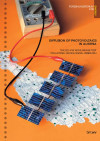
The 200 KW Wide- Range Test Collateral Sociological Research
Forschungsforum
2/1998
Herausgeber: BMVIT
Englisch, 6 Seiten
Downloads zur Publikation
"gugler! build & print triple zero" - Subproject 8: Leuchtturm gugler – Ökoeffektive Plusenergiedruckerei
On the basis of the commercial building gugler with 2140 m² useable floor area existing and 3260 m² useable floor area to be built a concept for a 100% recyclable ecoeffective building had been developed.
Decarbonisation of industry
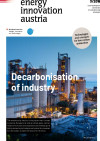
Ways to achieve a zero-emission industry. Innovation is the key for climate-friendly production.
energy innovation austria
3/2019
Herausgeber: BMVIT und Klima- und Energiefonds
Englisch, 12 Seiten
Downloads zur Publikation
Energy Efficient University Buildings
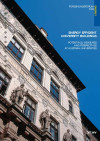
Potentials, measures and perspectives at Austrian universities
Forschungsforum
3/1999
Herausgeber: BMVIT
Englisch, 6 Seiten
Downloads zur Publikation
Global Wood Pellet Industry - Market and Trade Study
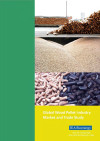
Cocchi M., et al.
Englisch, 190 Seiten
Downloads zur Publikation
IEA Bioenergy Task 39 Newsletter #36 (April 2014): USA
Diese Ausgabe des Newsletters beinhaltet neben Neuigkeiten aus der Task, interessanten Berichten, Veranstaltungen und News, einen Schwerpunktsartikel über die Entwicklungen im Biotreibstoffbereich in den USA.
Herausgeber: IEA Bioenergy Task 39
Englisch, 13 Seiten
Downloads zur Publikation
Future-Oriented Products And Services
New Approaches to innovative and environmentally sound produc design
Forschungsforum
1/1998
Herausgeber: BMVIT
Englisch, 6 Seiten
Downloads zur Publikation
Market development for advanced housing renovation

from demonstration projects to volume market
Herausgeber: IEA-SHC Task 37
Englisch, 87 Seiten
Downloads zur Publikation
Electricity from Biomass: from small to large scale
Summary and Conclusions from the IEA Bioenergy ExCo72 Workshop
Pearse Buckley, Arthur Wellinger
Herausgeber: IEA Bioenergy
Englisch, 20 Seiten
Downloads zur Publikation
Mitteilungsblatt "Biobased Future" - Nr. 5/Jänner 2016
Mitteilungsblatt über Biomasse für Energie und Industrie in einer nachhaltigen Wirtschaft
Herausgeber: Bioenergy 2020+
Downloads zur Publikation
Building With Renewable Raw Materials
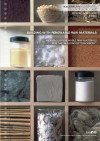
Indigenous Renewable Raw Materials for the "Building of Tomorrow"
Forschungsforum
4/2002
Herausgeber: BMVIT
Englisch, 6 Seiten
Downloads zur Publikation
Transparent Thermal Insulation
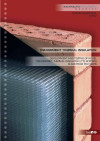
Development and Testing of novel Transparent Thermal Insulatio (TTI) Systems made from Polymers
2/2002
Herausgeber: BMVIT
Englisch, 6 Seiten