
Suchergebnisse
Solar assisted air conditioning of buildings
Activities to prepare the market for solar cooling technologies in Austria. The project was carried out in cooperation with the IEA Implementing Agreement Solar Heating and Cooling (Task 25).
Material utilization of end-of-term textiles
Mechanical processing of the non-reusable part of collected end-of-life apparels (e.g. cutting, sifting, etc.); development of marketable application for the obtained short fibers in the field of construction materials (e.g. bitumen modification)
Integral Resource Optimization Network Study
A robust, distributed control network for optimizing the resource "electrical energy". Consumers, producers and storages network in a self-organized way and coordinate autonomously their usage of electrical energy. Load-shaping, transparent flow of information, system-wide increase in efficiency.
Agricultural Resources for Biogas Production
Genotypes of energy plants adapted to the location will be identified and specialist crop rotation adapted to the location will be developed. The fermentation process will be optimised and the methane energy model will be advanced. The efficiency of the biogas production will be enhanced.
POSTPONED: 2nd International Conference on Negative CO2 Emissions
12. - 15. May 2020
Chalmers University of Technology, Gothenburg (SE)
PLEASE NOTE: Due to the outbreak of Covid-19 the conference is going to be postponed by one year, to May 18-21, 2021.
Market survey of energy storage technologies in Austria (MSSP2020)
Stationary battery storage devices for the maximisation of the private consumption in PV-systems, large heat storage for local and district heating systems, thermal activation of buildings and the area of innovative storage systems have been chosen for the first market survey within this project. The historical market diffusion of these technologies is surveyed empirically and documented up to 2020.
REGOreal - 100% Renewable Energy Region: Local Energy Common Good Economy in real laboratories for networked energy and mobility cells
In REGOreal, the exploration for a 100% renewable energy region in the area of Retz-Horn-Krems-Tulln (Lower Austria) and Mallnitz (Ktn) is taking place. There are four focus topics: 100 Renewable Energy Communities (REC), 1.000 building renovations, 10.000 energy exporters (in the sense of employees who carry the approach into their private environment) and 100 Mio. km of sustainable mobility with extensive use of IT for the development of local integrated energy systems (IES) to integrate a colorful mix of different actors and objects.
JPI Urban Europe Agora Stakeholder Dialogue: Dilemmas and Potentials of Urban Transitions towards Sustainable Urban Futures
24. - 25. April 2018
Palatul Universul, Strada Actor Ion Brezoianu 23–25, Bucharest
What are the urgent challenges in urban transitions? What are the ‘hardest cases’ in the urban mission? We need your help to address the most important urban issues.
The Fuel Cell Industry Review 2015
Prof. David Hart, Franz Lehner, Robert Rose, Jonathan Lewis
Herausgeber: E4tech
Englisch, 52 Seiten
Energy Technology Initiatives 2013
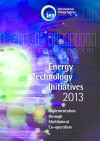
Implementation through Multilateral Co-operation
Herausgeber: IEA - International Energy Agency
Englisch, 114 Seiten
Downloads zur Publikation
Power projects using methane from coal mines (Sloss, 08-2006)
Englisch
Delphi Report Austria
Future-oriented approaches to the long-term comptitiveness an locational quality of Austria
Forschungsforum
4/1998
Herausgeber: BMVIT
Englisch, 6 Seiten
Downloads zur Publikation
Daylight In Buildings
Austria´s contribution to Task 21 of IEA "Solar Heatin and Cooling" Program
Forschungsforum
3/2000
Herausgeber: BMVIT
Englisch, 6 Seiten
Downloads zur Publikation
Slides: Country Report Austria (2014)
Gerfried Jungmeier
Herausgeber: IEA Bioenergie Task 42
Englisch, 41 Seiten
Downloads zur Publikation
RD&D on coal use in Australia and the COAL21 action plan (Henderson/Mills/Topper, 12-2005)
Englisch
ENARD Annex I Information sub-Task
regulatory frameworks and business models conducive to the development of Smart Grids
Aidan Roberts
Englisch, 51 Seiten
Downloads zur Publikation
Wind Power In Austria
Prerequisites, Situation, Evaluation, Perspectives
Forschungsforum
1/1995
Herausgeber: BMVIT
Englisch, 6 Seiten
Solar Heating And Cooling in Austria (Faninger, 2009)
Status Report 2009 on Research, Development and Market Deployment of Solar Thermal Technologies in Austria. Presented to the IEA Solar Heating and Cooling Programme in July 2009