
Suchergebnisse
IEA Bioenergy Conference 2021
29. November - 9. December 2021
Online
Bioenergy – a critical part of the path to carbon neutrality. The three-yearly conference of IEA Bioenergy will be held as a series of online sessions spread over two weeks. The central theme will be the role of biomass in the transition towards a carbon neutral society.
The Market-driven Circular & Bioeconomy
8. June 2021, 10:10 – 12:30 Uhr
Online
Partner event of the EU GREEN WEEK 2021.
IEA Hydrogen Task 45: Renewable Hydrogen Production
Due to the increasing pressure to replace fossil fuels with alternatives, the demand for renewable hydrogen supplies is also increasing. In this project, the state of the art of various established and innovative production paths will be collected, processed and then made available to the public.
IEA IETS Task 15: Industrial Excess Heat Recovery (Phase 4)
Excess heat recovery plays a crucial role in reducing emissions in industry. Through strategic planning and efficient process integration, companies can improve their energy efficiency and significantly reduce their carbon footprint. Task XV facilitates the international exchange of experience and knowledge between different companies. This identifies best practices to promote the implementation of energy-efficient technologies in industry.
IEA Hydrogen Task 48: Future demand of Hydrogen in Industry
The task provides an overview of the current and expected use of hydrogen in various industrial sectors. It evaluates the extent to which past and predicted developments in the use of hydrogen in industry deviate from the roadmaps of different countries. This information is important for both companies and policymakers and can support the ramp-up of hydrogen use and the decarbonization of the industrial sector.
Cleaner Production
Trend-setting examples in Austria PREPARE a method for an innovative and environmentally sound economy
Forschungsforum
4/1997
Herausgeber: BMVIT
Englisch, 6 Seiten
Downloads zur Publikation
IEA ECBCS Annex 49 Midterm Report (2010)
Low Exergy Systems for High-Performance Buildings and Communities
Englisch
IEA EBC Annex 66: Newsletter No. 3 March 2016
Herausgeber: IEA EBC Annex 66
Englisch, 14 Seiten
Downloads zur Publikation
Energy-storage concrete: Thermal Component Activation
This planning guide provides information on the option of solely heating and cooling small-volume residential buildings by means of thermal component activation (TCA). Concrete instructions on the planning of residential buildings with thermally-activated ceilings are also provided.
Felix Friembichler, Simon Handler, Klaus Krec, Harald Kuster
Herausgeber: BMVIT
Englisch, 122 Seiten
Downloads zur Publikation
Smart Grids Week Salzburg 09
13. - 15. May 2009
Bayerhamerstrasse 16
Salzburg, AT
Distributed Generation and Smart Grids - A Roadmap for Austria
ISES Solar World Congress 2011
28. August 2011 - 2. September 2011
Kongress Palais Kassel
Kassel, DE
The world´s largest scientific congress in the field of solar energy and buildings.
IEA Bioenergy - Annual Report 2014
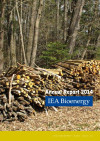
Herausgeber: Pearse Buckley, IEA Bioenergy Sekretariat
Englisch, 140 Seiten
Downloads zur Publikation
IEA EBC - Strategic Plan 2014 - 2019
Energy in Buildings and Communities Programme
Herausgeber: IEA-Energy in Buildings and Communities Programme
Englisch, 36 Seiten
Downloads zur Publikation
IEA Bioenergy Newsletter #22 (2010)
Englisch, 8 Seiten
Downloads zur Publikation
Energieforschungserhebung 2009
Ausgaben der öffentlichen Hand in Österreich
Erhebung für die IEA
Schriftenreihe
74/2010
A. Indinger, M. Katzenschlager
Herausgeber: BMVIT
Downloads zur Publikation
IEA SHC Solar Newsletter "Sustainable SolarHousing" Vol .44 October 2005
Experts in the joint work of the IEA Solar Heating and Cooling Programme and the IEA Energy Conservation in Buildings and Community Systems, SHC Task 28/ECBCS Annex 38: Sustainable Solar Housing, collaborated to research how better to build very low energy, solar housing.
Englisch
SOL4 business and training center Eichkogel
Demonstration project for sustainable construction of a working and living environment
IEA Bioenergy - Annual Report 2012
Herausgeber: IEA Bioenergy
Englisch, 124 Seiten
Downloads zur Publikation
Passive-house-suited low power wood-furnace
Log-fired furnace with low energy performance, optimised to be used in passive house constructions. The desired energy output, ranging from 1 kW to a max-peak of 3 kW, is achieved by an "energy storing unit" (energy-storage material covered by an insulation layer) in combination with valves to control the energy release.