
Suchergebnisse
IEA SHC Task 49/IV: Solar Process Heat for Production and Advanced Applications
IEA SHC Task 49/IV focussed ist work on important research questions on solar process heat within the three subtasks: Process heat collectors, their application, comparison and possible standarization; Process Integration and process intensification as required interlinkage between solar heat and production processes; Design Guidelines, case studies and promotion as key for market penetration.
IEA SHC Task 61/EBC Annex 77: Integrated Solutions for Daylighting and Electric Lighting
Lighting accounts for around 15% of global electricity consumption - intelligent coordination of daylighting and electric lighting solutions together with integral lighting controls enable significant energy savings. At the same time, the solutions must be optimally planned in a user-centered approach based on the visual and non-visual effects of light. The task analysed user requirements as well as existing technologies and design methods and documented exemplary implementations in case studies.
IEA SHC Task 53: New Generation Solar Cooling & Heating Systems
Within the framework of the IEA SHC Task 53 'New Generation (NG) Solar Cooling & Heating Systems', solar-electric and solar-thermal air-conditioning systems were investigated. The main objective was the development and documentation of reliable and economical NG system solutions. A comprehensive comparison of different NG systems as well as the elaboration of support measures for the market launch are core results of the international cooperation.
IEA SHC Task 59/EBC Annex 76: Deep Renovation of Historic Buildings - Towards lowest possible energy demand and CO2 emission (nZEB)
The goal of Task 59 was to document international best practice examples (knowledge base), develop a multidisciplinary planning process, and develop holistic retrofit solutions for historic buildings. As a knowledge base, the Historic Building Retrofit Atlas (www.HiBERatlas.com) emerged from the project. In the HiBERatlas more than 55 best practice examples are documented. In addition to the management of Subtask A (Knowledge Base) and Subtask C (Conservation compatible retrofit solutions & strategies), innovative technical and organizational retrofit solutions, which have already been applied in national demonstration projects and tested in practice, have been incorporated and further developed through the Austrian participation.
IEA SHC Task 48: Quality Assurance and Support Measures for Solar Cooling
The completed IEA SHC Task 48 focused on an enhanced quality improvement and market-support measures for the technology option ‘solar thermal cooling or air-conditioning'. In cooperation with a total of 22 organizations (12 research institutes, 5 universities and 5 companies) from eight countries numerous useful reports and tools have been created to improve the quality of solar cooling systems with significant contribution of the Austrian partners.
IEA HEV TCP Task 40: Critical Raw Materials for Electric Vehicles
The production of electric vehicles and batteries requires critical raw materials. In Task 40, demand and supply are compared, based on global scenarios of the development of electric vehicle fleets, battery technologies, primary and secondary raw material potentials and recycling technologies. Potential overall ecological and social impacts of raw material and battery production are assessed.
IEA HEV TCP Task 49: Electric Vehicle-Fire Safety
As the number of electric vehicles increases, so does the need for safety. The project is creating an overview of fire safety standards for electric vehicles and networking relevant stakeholders. Challenges are discussed and experiences exchanged in national and international expert workshops. The focus is on promoting the safety of electric vehicles and increasing their acceptance.
Wind Energy - Industry in Austria
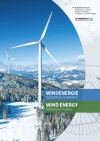
This brochure examines the existing domestic value-added in the wind energy sector as it stands today.
Herausgeber: IG Windkraft supported by BMK (2024)
Englisch, 16 Seiten
Downloads zur Publikation
IEA Heat Pump Workshop
The presentations of the IEA workshop on a technological vision for the heat pump industry on November 9th, 2010 are available for download.
IEA-IETS Task 19: Electrification of Industry
The electrification of industry can make a major contribution to CO2 reduction. The aim of the task was a transfer of knowledge between the international and the state levels. Nationally, the aim was to spread and establish the topic of “electrification of industry” through stakeholder involvement. A comparison of electrification based on roadmaps and resources was carried out and, above all, systemic aspects of electrification of industry were analysed.
Bioenergy - The Impact of Indirect Land Use Change (2010)

Summary and Conclusions from the IEA Bioenergy ExCo63 Workshop
Englisch
IEA C3E Workshop Women in Energy
11. April 2019
Haus der Forschung, Ground floor, Sensengasse 1, 1090 Vienna
Learning from International Initiatives and Austrian Good Practices
Facade Integrated Solar Collectors
Within the framework of this project system-, structural- as well as building physical basis theories should be elaborated, which will serve as a basis for constructional and aesthetically attractive solutions for the production of facade integrated solar collectors without thermal separation. The recyclability of the materials used and resource efficiency play a central role when it comes to the development of constructional solutions.
Solar Heating Worldwide
Markets and Contribution to the Energy Supply 2001
Schriftenreihe
13/2004
W. Weiss, I. Bergmann, G. Faninger
Englisch, 42 Seiten
Downloads zur Publikation
Design Guidelines - Solar Space Heating of Factory Buildings With Underfloor Heating Systems (Jaehnig/Weiss 2008)
The energy required for the space heating of factory buildings and warehouses can be a major percentageof the energy consumption of a company. While in some cases, waste heat from other processesin the company is available and is the most cost effective way to heat a factory building, aninteresting option is to use solar energy to cover the heat demand of an industrial building.
Englisch
Solar Combisystems - IEA SHC Task 26
Documentation, comparison and optimisation of solar combisystems for domestic hot water preparation and space heating in the framework of an IEA research project
European Smart City Initiative - Assessment of Best Practices to StimulateMarket-/Demand-Pull
This study analyses endeavours of several European cities of becoming Smart Cities. The Kyoto Protocol from 2002 as well as the participation in different energy initiatives play a crucial role. The comparison of the results from the different cities shows that Austria has to become more ambitioned and thorough in the realm of its Smart City strategies. The study delivers valuable contributions, examples and motivations.
ASPO Conference 2012
30. May - 1. June 2012
Palais Niederösterreich, Herrengasse 13
1010 Vienna, AT
The conference will bring together decision makers, scientists, the business sector, public authoritities and NGOs to discuss challenges and opportunities of Peak Oil and review scenarios on energy supply and demand.
Repair & Do-It-Yourself Urbanism (R&DIY-U)
The project follows the aim to analyze and to strengthen the transformative potential of Repair & Do-It-Yourself Urbanism with regard to a fundamental change of the existing poor sustainable handling of commodities in selected urban districts, their infrastructures and dominant business and private household practices into resilient areas.
G2G – Innovation axis Graz-Gleisdorf
Development of testbeds and demonstration zones within already designated areas for urban development along the Graz-Gleisdorf Innovation-Axis with a focus on energy, integrated building technology, smart city-spaces, compact settlement structures, generational living, and ‘cities of short ways’. It will pay specific attention to intermodal mobility as well as ICT-based solutions.