
Suchergebnisse
SPRINKLE - Smart city governance processes in small and medium-sized cities
The project aimed at comprehensively analyzing existing approaches for the coordination and regulation of Smart City development in small and medium-sized cities. In the context of case studies, this study combines the analysis of relevant legal-institutional frameworks as well as of governance processes for selected, energy-related fields of urban activity.
Economical Utilisation of residues from slaughtering and meat processing
By utilising fresh raw materials, the process of producing meat and bone meal can be avoided and products of higher quality may be obtained.
Congress: 7th EE & RES Congress and Exhibition for South-East Europe
13. Apr 2011 -
15. Apr 2011
Inter Expo CenterSofia, BG
International Congress and Exhibition on Energy Efficiency and Renewable Energy Sources.
22nd International Conference On Fluidized Bed Conversion (FBC)
14. - 17. June 2015
Radisson Blu Marina Palace HotelTurku, FI
The 22nd FBC-Conference will cover the latest issues in fluidized bed combustion technology for power production, co-generation and waste incineration including fundamental research, equipment design, application and performance experience in pilot and demonstration plants as well as in industrial sites.
aspern Vienna´s Urban Lakeside - subproject 6a: Energy Consumption Monitoring
This subproject of the flagship project "aspern plus" derived the basis for a centralised monitoring of the energy consumption in Seestadt aspern.
Technology development for sustainable buildings
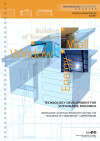
Innovative Austrian Products within the "Building of Tomorrow" Subprogram
Forschungsforum
3/2007
Herausgeber: BMVIT
Englisch, 6 Seiten
Downloads zur Publikation
Inhabitants-friendly passive house renovation in Klosterneuburg / Kierling
Renovation of an apartment house from the 1970s as passive house using renewable energy.
RAILWASTE - Production of railway sleepers by mixed plastic waste (SUSPRISE Joint Call)
Production of railway crossties ("sleepers") from an alternative (renewable) raw material
Analysis for positioning a R&D-focus on "Building integrated Photovoltaic" in Austria
This study investigates if technologies of building integrated Photovoltaic could be developed and produced in Austria for being competitive on the global market. What starting position of the national PV industry and research is given and what steps are needed in order to seize this opportunity.
Operational and maintenance costs in passive houses and low energy houses
How much energy does a passive house actually save? Does a passive house pay-off by itself? What are the costs for maintancence? For the first time an approximation for the running costs of a passive house were systematically documented and compared.
ÖkoInform - Platform for Exchange of Information in Green Building
A platform for the exchange of information to promote the better integration of ecological materials and renewable resources in the research programme "Building of Tomorrow"
Berichte aus Energie- und Umweltforschung 32/2002Policy Pathways for PromotingEnvironmental Management Accounting
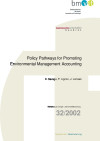
Implementation of EMA as a standard tool regarding the calculation of environmental and material (flow) costs - a project report on a procedure that may form a new basis for the calculation of financial profitability of business optinons of sustainability.
Schriftenreihe
32/2002
D. Savage, P.Lignon, J. Lomsek
Herausgeber: Im Auftrag des Bundesministeriums für Wissenschaft und Verkehr
Englisch, 99 Seiten
Downloads zur Publikation
Sustainable Regional Planning In Austria
The project "Ökofit" - research for integrated technology
Forschungsforum
4/1996
Herausgeber: BMVIT
Englisch, 6 Seiten
City Cooling - Intelligent district cooling implementation, Vienna
Development of an intelligent district cooling concept and alternative solutions for heat rejection from central absorption chillers at the example of the neighbourhood TownTown in Vienna.
The Passive House Catalogue of Building details for renovations
"Building of Tomorrow" funded research reports dealing with building renovation will be analysed for solutions of construction details. This information will be supplemented with structural-physical descriptions, ecological ratings and technical discussions. All the information will be collected and systematically presented in a catalogue of building details for renovation.
Smart Grids Projects in Austrian R&D Programmes 2003-2010
This publication presents results of projects within the subject area "Smart Grids" in Austrian R&D Programmes 2003-2010. The participating research institutes and companies have achieved many remarkable and internationally acknowledged results.
Industry´s Efforts Towards Zero Emissions
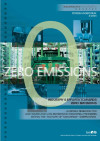
Austrian Research for Low-Waste and Low-Emissions in Industrial Processes within the "Factory of Tomorrow" Subprogram
Forschungsforum
3/2004
Herausgeber: BMVIT
Englisch, 6 Seiten
Downloads zur Publikation
Photovoltaics - a key technology
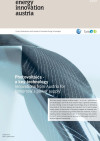
Innovations from Austria for tomorrow`s power supply
energy innovation austria
2/2017
Herausgeber: BMVIT und Klima- und Energiefonds
Englisch, 8 Seiten
Downloads zur Publikation
Development of a clay - buildingboard with a surface ready to paint
Development of a building board consisting of a wood fibre board, coated with clay-plaster reinforced by natural plant-fibres (BioFaserLehm) for reinforcing planking of timber-constructions and also for statical not stressed inner wall surfaces.
SUPOSS - Sustainable Power Supply for Supermarkets and Surroundings
Developing technical and business concepts and strategies for a sustainable power supply of supermarkets and local consumers - supply of heat, electric power and cooling energy on the basis of solar energy and solid biomass.