
Suchergebnisse
Effective Comfort in a Climatic comfort house
Sophisticated implementation of different passive house-building services systems on a basis of four similar parts of a structure of multi-storey dwelling houses.
Quality criteria for the Building of Tomorrow
Development and implementation of contributions to the quality control of innovative technologies in the areas of building services and insulation that are derived substantially from HAUSderZukunft findings.
EU Circular Talks: Critical Raw Materials - Improving existing life cycles of products to supply European markets
11. October 2023
Online
The ECESP Leadership Group on Critical Raw Materials is holding this #EUCircularTalks to highlight opportunities to improve existing life cycles for products containing CRMs.
Cooling Citites
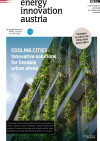
Innovative solutions for liveable urban areas
energy innovation austria
2/2019
Herausgeber: BMVIT und Klima- und Energiefonds
Englisch, 12 Seiten
Downloads zur Publikation
DW² - Thermal improvements on diaphragm walls
New materials and installation methods for diaphragm walls will be investigated in laboratory and field tests in order to improve the thermal properties of the construction elements. Additional numerical and ecological aspects are considered to ensure an energetic enhancement of underground constructions such as underground garages or thermal energy storages.
HotCity - Gamification as a possibility to generate data for energy-oriented neighbourhood planning
The aim of the project was a functional test to determine whether an up-to-date data set of energy-oriented data can be collected for neighbourhood planning through gamification, cost-efficiently, quickly and reliably. This had been determined using the example of the potential determination of industrial and commercial waste heat sources in Vienna and Graz.
ParaSol - Multifunctional solar canopies for urban streets and places
With the city of Leoben as a use case this exploratory project will, for the first time ever, examine the spatial effects, synergy- and energy potentials of newly developed wide-span light-weight solar canopies for streets and squares in urban public space as well as their implications on the townscape, the image of the city and the city function.
STP2030, St. Pölten 2030: KlimaNEUTRAL + KlimaFIT
A broadly based, participatory strategy process for the co-creative development of the “Roadmap to Climate Neutrality” St. Pölten by 2030. The roadmap is based on a shared vision, which is differentiated into transformation paths in different fields of action. The result is a “climate of change” in urban society that serves as the basis for participation in tenders, cooperation and implementation on the way to climate neutrality.
BiBi-TGA, Potential for the ecological optimization of technical building equipment through the usage of biogenic materials
Assessment of the substitution potential of conventional components of technical building equipment by biogenic materials. The aim is to provide new data on the ecological improvement potential of the usage of biogenic resources in the technical building equipment in office buildings. The potentials are analyzed by means of LCA screenings and technical feasibility studies.
Multi-WP – High-efficiency multivalent heat pump concepts for the thermal use of external air with geothermal storage
Optimization of multi-WP systems consisting of air-source heat pumps and geothermal storage with regard to increasing flexibility and efficiency from 30 kW for individual buildings as well as neighbourhood solutions and addressing aspects such as PV utilization optimization, mode of operation, utilization conflicts and noise pollution from air-source heat pumps. The project will establish the use of the heat source external air in combination with seasonal storage as a particularly efficient alternative for heating, cooling and hot water supply.
Sol4City - Integrated solar supply concepts for climate-neutral buildings for the "city of the future"
Intelligent technology coupling to achieve high solar coverage of the buildings (multi-storey residential building) heat and electricity demand. At the end of the project, integrated energy supply concepts for multi-storey residential buildings based on high network interaction and flexibility potential, maximum surface efficiency of conversion technologies on site and high economic competitiveness are available for the broad applicability in the "City of the Future".
VITALITY - Energy optimised design rules and integral planning approach for building-integrated photovoltaics in urban areas
The VITALITY project aims to provide supporting tools, design rules and robust information in the early decision and design phase of building projects. By providing the right information at the right time, building-integrated photovoltaics (BIPV) is part of the discussion in the concept phase and the implementation is strongly prepared and supported.
FEELings - User Feedback for Energy Efficiency in Buildings
User behavior is a key factor for the energy consumption and the actual energetic performance of a building. A new type of user feedback system will be investigated in this research project. Users provide feedback on the sensed room quality. The data obtained by the feedback system are used to optimize settings of building services in order to improve the energy efficiency and the comfort in the building. A basic proof of concept of this system will be undertaken by means of two use cases.
metaTGA - Metadata and process models for open BIM in building service engineering
The objective of this research project is to design a methodology for developing data and process models and to apply them by modelling selected MEP systems. A particular but not exclusive focus is put on the renewable heating technologies, e.g. heat pumps, solar heat and biomass as well as ventilation systems. The data and process models developed in this research project will be scientifically evaluated in two pilot projects. The models, the approaches taken during development and the project team’s experiences with the pilot application of the models will be disseminated openly.
AIA4ALL - development of open, modular and automatable employer’s information requirements (EIR) and BIM execution plan (BEP)
The Employer's Information Requirements - EIR (German: AIA) - serves the client to define goals and use cases for a BIM-based construction project. The aim of this project is to create a modular, machine-readable AIA that can be seamlessly integrated into the tool landscape of openBIM projects. This is done by developing an open platform for creating use cases for the AIA.
Earth movement: Clay - a climate- and resource-friendly building material
Manufacturing processes and transport of building materials are energy-intensive and cause high CO2emissions. In addition, many building materials pose a health and disposal problem due to their content of disruptive and harmful substances. Locally available clay can replace conventional materials if appropriately prepared and processed, and helps to save both manufacturing processes and transport routes.
OPENing Re-Use – Optimal planning decisions in the re-use sector
In an operational context, companies in the circular economy are faced daily with the question of whether a used product should be repaired, remanufactured, refurbished or recycled. The decision on what to do with used products is fraught with a great deal of uncertainty and must be made on a case-by-case basis - product-individually and depending on factors such as brand, condition, age, demand or recycling possibilities. As part of the "OPENing Re-Use" project, a business planning tool is being developed to support companies in their re-use planning, thereby increasing the efficiency of re-use processes and making re-use activities even more competitive with the purchase of new products.
CircularBioMat – Recyclable biogenic materials for building installations and supply equipment
As part of CircularBioMat, numerous bio‐based materials – including bio‐polymers reinforced with natural fibers as well as recycled materials – are being tested for their suitability as a replacement for the petroleum‐based polymers that dominate technical building installations (TGA) and supply equipment.
Post City Linz - Biodiversity in the CO2-neutral urban quarter
The project "Post City Linz" aims to show that a currently unattractive industrial wasteland can be transformed into a microclimatically ambitious, energy- and resource-efficient quarter with 150,000m² of gross floor area by means of an innovative mix of office, commercial, hotel and residential uses. The focus is on the integration of biodiversity promotion, a CO2 neutral energy supply and innovative energy management in the quarter, animal aided design as well as rainwater management based on the principle of the "sponge city".
baubehoerde.at - Development of a Vision 2030 for a Digital Building Authority and Recommendations for Action in Austria
In Austria, planning permission applications are submitted and managed largely manually. The aims of the baubehoerde.at project are to evaluate the potential and limitations of digitizing building approval processes and to create a Vision 2030 strategy for a digital building authority.