
Suchergebnisse
100% erneuerbare Wärme- und Kälteversorgung im sozialen Wohnbau – das Demonstrationsprojekt Käthe-Dorsch-Gasse (Sozial100%Erneuerbar)
100 % erneuerbare (Vor-Ort) Wärme- und Kälteversorgung im sozialen Wohnbau bei Erreichung eines guten Wohnkomforts. Umsetzung, Monitoring und Optimierung eines Gesamtsystems der Wärme- und Kälteversorgung, das in dieser Kombination noch nicht umgesetzt wurde (insbesondere im sozialen Wohnbau).
Schriftenreihe
77/2025
Ernst Schriefl, Felix Burian, Julian Schöberl, Helmut Schöberl, Edith Haslinger, Nándor Mihály, Stephan Kling, Annemarie Schneeberger, Franz Pranckl
Herausgeber: BMIMI
Deutsch, 119 Seiten
Downloads zur Publikation
Eisspeicher NEU - Neues wirtschaftliches Eisspeicherkonzept zur optimierten Wärmespeicherung durch Wärmepumpen und Windkraftspitzennutzung
Entwicklung eines technisch und wirtschaftlich optimierten neuen Eisspeicherkonzepts als thermischer Windstromspitzenspeicher und zur Performanceverbesserung von Wärmepumpen als Beitrag zur Spitzenglättung des elektrischen Lastprofils.
Ice-storage NEW - New economical ice storage concept for optimized heat storage using heat pumps and peak use of wind power
Development of a technically and economically optimized new ice-storage concept as a thermal wind power peak storage and to improve the performance of heat pumps as a contribution for peak smoothing of the electrical load profile.
Neues wirtschaftliches Eisspeicherkonzept zur optimierten Wärmespeicherung durch Wärmepumpen und Windkraftspitzennutzung (Eisspeicher NEU)
Entwicklung eines technisch und wirtschaftlich optimierten neuen Eisspeicherkonzepts als thermischer Windstromspitzenspeicher und zur Performanceverbesserung von Wärmepumpen als Beitrag zur Spitzenglättung des elektrischen Lastprofils.
Schriftenreihe
79/2025
Ernst Heiduk, Marlene Sayer, Reinhard Haas, Amela Ajanovic, Helmut Schöberl
Herausgeber: BMIMI
Deutsch, 112 Seiten
Downloads zur Publikation
Klimapionierstadt Wien
Systemisches Lernen, ein beschleunigter Wissenstransfer und neue Kapazitäten sowie innovative Impulse und die ambitioniertere Ausgestaltung laufender Aktivitäten sollen unterstützen, Prozesse der Wiener Stadtverwaltung so auszurichten, dass sie die Erreichung der Klimaneutralität und -resilienz bis 2040 bestmöglich beschleunigen. Die Klimapionierstadtpartnerschaft trägt außerdem dazu bei, ausgewählte Pilotquartiere auf den Weg zur Klimaneutralität bis 2030 zu bringen.
Mission2030 – Klimaneutrale Smart City Klagenfurt 2030
Als Österreichs einzige Stadt ist Klagenfurt Teil der EU-Cities-Mission 2030. Neben Rom, Barcelona, Laibach und weiteren europäischen Städten hat sich die Kärntner Landeshauptstadt zum Ziel gesetzt, bis 2030 klimaneutral zu sein. Ein Vorhaben, das keine Utopie, sondern durchaus realistisch ist. Ein wesentlicher Bestandteil und Rückgrat dieser Mission ist das österreichische Pionierstädte Programm.
Pionierstadt - Partnerschaft für klimaneutrale Städte 2030
Die Stadt Innsbruck verfolgt mit der Teilnahme an der Mission: Klimaneutrale Stadt das Ziel die Weichen für das Erreichen der Klimaneutralität zu stellen. Neben der Schaffung magistratsinterner Strukturen werden, gemeinsam mit den Stakeholdern, klimaeffektive Maßnahmen im Bestandsquartier „Eichhof“ getestet und anschließend bestmöglich stadtweit umgesetzt. Der intensive Austausch mit den anderen Pionierstädten, die bewusste Nutzung der Synergie und das damit verbundene breite Spektrum an Wissen und Erfahrung sind dabei notwendige Ressource zur Umsetzung dieses Projekts.
Klimapionierstadt Salzburg
Ziel ist es, einen Masterplan zur Erreichung der Klimaneutralität bis 2040 für die Stadt Salzburg zu erstellen. Gemeinsam mit Stakeholdern sollen Entwicklungs- und Städtebauliche Prozesse analysiert, Zielvorgaben erarbeitet und die dafür notwendigen Beschlüsse eingeholt werden. Durch den Austausch mit den anderen Pionierstädten soll ein möglichst breiter Wissensaustausch erfolgen und Synergien genutzt werden.
PionierstadtDornbirn - Transformation der Stadt Dornbirn hin zu einer klimaneutralen Stadt
Das Projekt "PionierstadtDornbirn" zielt darauf ab, die Stadt Dornbirn hin zur Klimaneutralität zu transformieren. Es werden interne Kompetenzen aufgebaut, Prozesse verbessert und erste Umsetzungen vorangetrieben um die Dekarbonisierung der Stadt bis 2040 zu unterstützen.
Villach KlimaFit - Kommunaler Transformationsprozess zur Erreichung der Klimaneutralität in Villach
Die strategischen Rahmenbedingungen zur Erreichung der Klimaneutralität sind in Villach beschlossen und die Stadt selbst kann bereits auf gute Ergebnisse im eigenen Wirkungsbereich (Gebäude, Photovoltaik) verweisen. Das Fehlen eigener Energie- und Mobilitätsbetriebe, Art und Umfang von Bau/Investitionsprojekten (Projekte von Dritten) und der geringe Handlungsspielraum bei strategischen Entwicklungsthemen (wenig Flächen im Besitz der Stadt Villach) erfordern jedoch die Anpassung (Transformation) kommunaler Instrumente, um Klimaneutralität gesamtheitlich umzusetzen.
STPionier - St. Pölten: Von der Industriestadt zur Klima-Pionierstadt
Bis zum Jahr 2022 gab es in der Stadt St. Pölten weder eine Strategie noch ein Konzept für den Umgang mit der Klimakrise. In der Verwaltung war bis dahin für dieses Thema noch keine zuständige Stelle vorgesehen. Der Pionierstadtprozess ermöglichte es nun eine eigene Stabsstelle einzurichten, die sich den Klimaagenden annimmt und diese in städtische Prozesse und Vorhaben einbindet.
Leuchtturm St. Veit - Klimaneutralitätsfahrplan St. Veit/Glan
St. Veit/Glan möchte ein Leuchtturm für andere österreichische Kleinstädte werden und zeigen, wie Strategien, Maßnahmen und ein notwendiger Kapazitätsaufbau für die Erreichung der Klimaneutralität bis 2040 entwickelt und umgesetzt werden können.
Climate neutrality roadmap St. Veit/Glan
St. Veit/Glan aims at advancing to a beacon for other small Austrian towns by developing strategies, measures and for building the capacity, necessary for achieving climate neutrality by 2040.
MEIDLINGER „L“ – Partizipative und skalierbare Klimawandel- Anpassungen im Bestand an der Schnittstelle von öffentlichem und privatem Raum
Das Projekt verfolgte einen integralen und interdisziplinären Ansatz zur Klimawandelanpassung im baulichen Bestand an der Schnittstelle von öffentlichem und privatem Raum. Es wurde ein skalier- und multiplizierbares Modell für Wien und andere Städte entwickelt.
Schriftenreihe
19/2024
S. Formanek, A. K. Briefer, L. Franta, V. Gebhart, I. Haymerle, C. Henöckl, I. Homeier, C. Kirchmair, S. Kotrba, S. Mayer, P. Minixhofer, J. Preiss, A. Rauch, C. Scharinger, L. Seel, J. Simhandl, R. Stangl
Herausgeber: BMK
Deutsch, 119 Seiten
Downloads zur Publikation
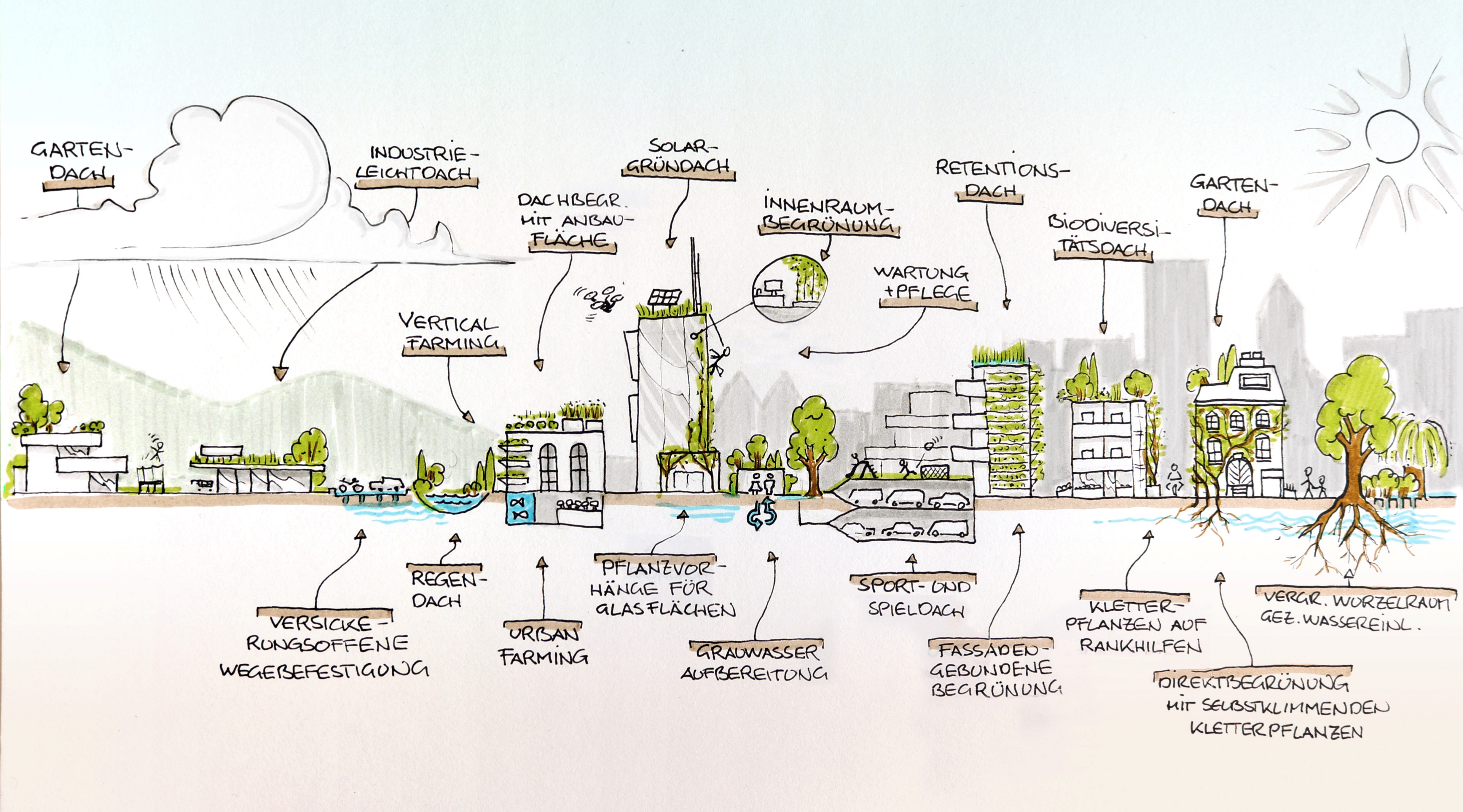
Folder: Innovative nature based solutions for greening cities
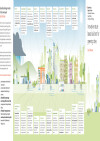
Densely built-up areas, the associated soil sealing and a lack of green spaces are enormous challenges in times of climate change. The folder shows a variety of ways in which innovative greening technologies can help cities adapt to climate change.
Herausgeber: BMK (2020)
Mehrsprachig, 2 Seiten
Downloads zur Publikation
Exkursion zur seriellen Sanierung nach Erlangen
21. – 22. November 2024
Exkursionsziel: Erlangen, Deutschland
Erleben Sie serielles Sanieren live – mit fliegenden Fassaden und der Montage vor Ort.
Urban cooling demand in Austria 2030/2050 (UKÖ 2030/2050)
Systematic processing of the increasing cooling demand and presentation of the geographical location of the cooling demand in Austria. The result serves as a decision-making aid for the development of climate protection measures and climate change adaptation strategies as well as an estimate of future cooling demand.
Salzburg: Klimaneutrale Stadt (Salzburg:KanS)
Salzburg:KanS richtet die Vision und Klimaschutzziele der Stadt Salzburg am Thema der Klimaneutralität und den Landeszielen aus, um, darauf aufbauend, eine Abschätzung der sektorspezifischen CO2 Reduktions-Beiträge bis 2030 vorzunehmen sowie Umsetzungsstrategien für die gesamte Stadt sowie die Schwerpunkte „klimaneutrale Mobilität“ und „klimaneutrales Quartier“ auszuarbeiten.
Schriftenreihe
13/2023
C. Kainz, N. Mostegl, M. Radermacher, H. Strasser, P. Lüftenegger, B. Gugg, S. Herbst, S. Gadochar
Herausgeber: BMK
Deutsch, 26 Seiten
Downloads zur Publikation
Konzeptentwicklung und Vorbereitung eines Wiener Innovationslabors zur Beschleunigung am Weg zur Klimaneutralität (Klima Hub Wien)
Vorbereitung eines urbanen Innovationslabors zur Unterstützung der Dekarbonisierung in Wien bis 2040. Gesetzt wird auf systemische Innovation und beschleunigten Roll-out von FTI-Vorhaben durch Infrastruktur, Dienstleistungen, Vernetzung und die systematische Einbindung von Stadtverwaltung und Nutzer:innen. Das Innovationslabor soll die Wirksamkeit von Innovationen und die Teilhabe der Wiener:innen an der Transformation stärken.
Schriftenreihe
39/2023
W. Schmid, A. Harrucksteiner, G. Thell, I. Homeier, C. Kirchmair, S. Hartmann, H. Scheller, S. Haas, F. Kesicki, P. Schließelberger, M. Pöschko, M. Schnur, R. Schmidt, T. Tötzer, R. Stollnberger, B. Iglár
Herausgeber: BMK
Deutsch, 41 Seiten
Downloads zur Publikation
HPZ-Mauerwerk - Dämmstofffreie High-Performance-Außenwand aus Ziegelmauerwerk

Um nachhaltige Quartiere in Ziegelbauweise realisieren zu können, muss die Festigkeit des thermisch optimierten Hochlochziegels verdreifacht werden. Dies soll durch Veränderung des Lochbilds, nämlich durch Verkleinerung des Luftspalts von 8 auf 4 mm gelingen. Ein erfolgreicher Projektabschluss bildet die Basis für dämmstofffreie, 8-geschossige Wohn- und Bürogebäude in Ziegelbauweise.
Schriftenreihe
41/2023
B. Freytag, H. Ferk, H. Gamerith
Herausgeber: BMK
Deutsch, 38 Seiten