
Suchergebnisse
Project-Imagepool
Project images created as part of the City of Tomorrow, House of Tomorrow and IEA Research Cooperation programs.
CETPartnership Annual Conference 2025 - System Transition
21. - 22. October 2025
Online
The conference will explore how CETPartnership can enhance its role in supporting this evolution—across technologies, regions, and policy frameworks.
IEA Bioenergy Task 39: Biokraftstoffe zur Dekarbonisierung des Verkehrs (Arbeitsperiode 2022-2024)
Das langjährige Ziel von IEA Bioenergy Task 39 ist das Vorantreiben der Dekarbonisierung im Transportsektor mithilfe von biogenen, nachhaltigen Treibstoffen mit niedriger Kohlenstoffintensität. Dies schließt konventionelle und fortschrittliche Biokraftstoffe ein, die über verschiedene technologische Routen (oleochemische, biochemische, thermochemische und hybride) hergestellt werden können. Im Triennium 2022-2024 lag der Fokus zunehmend auf dem schwieriger zu elektrifizierenden Langstreckenverkehr.
10 Jahre Mission Innovation: Jubiläumstreffen bei CEM16/MI10 in Busan
Eine Dekade Wirkung – wie Mission Innovation die globale Landschaft sauberer Energietechnologien gestaltet hat.
Mission Innovation Net-Zero Industries Award 2025 - noch bis 30. September einreichen!
Der „Mission Innovation Net-Zero Industries Award“ zeichnet auch 2025 herausragende Unternehmen und visionäre Persönlichkeiten aus, die mit innovativen Ansätzen den Übergang zur klimaneutralen Industrie aktiv mitgestalten.
Anna Wang, MA
Anna Wang wechselte mit Oktober 2022 ins BMIMI, Sektion III, Abteilung 3, Energie- und Umwelttechnologien. Sie wird im Kernteam "Klimaneutrale Stadt" sowie in der Koordination der "Driving Urban Transitions Partnership" mitwirken.
Wärmespeicher im Energiesystem der Zukunft
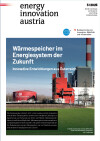
Innovative Entwicklungen aus Österreich
energy innovation austria
3/2025
Herausgeber: BMIMI gemeinsam mit dem Klima- und Energiefonds
Deutsch, 12 Seiten
Downloads zur Publikation
13. Internationale Anwenderkonferenz "Biomassevergasung"
25. November 2025
BMIMI, Radetzkystraße 2, 1030 Wien
Wir richten unseren Blick auf den Weltmarkt und aktuelle Entwicklungen im Bereich der Biomassevergasung. Nach Berichten zum Stand der Forschung vertiefen wir die Thematik anhand von Anwendungsbeispielen aus der Praxis. Im letzten Themenblock befassen wir uns mit dem heutigen und zukünftigen Stellenwert der Biomassevergasung.
ReKEP
ReKEP relies on reusable transport containers instead of (disposable) cardboard packaging. These should be affordable, effective and flexible to use in the CEP sector (courier, express, parcel). The logistics processes involved are examined and adjustments are proposed to achieve economic, ecological and social sustainability.
ReKEP - Mehrweg: Mehrwert für die Paketlogistik
ReKEP setzt auf Mehrwegtransportgebinde statt (Einweg)-Kartonverpackungen. Diese sollen leistbar, effektiv und flexibel in der KEP-Branche (Kurier, Express, Paket) einsetzbar sein. Die involvierten Logistikprozesse werden untersucht und Anpassungen zur Erlangung der ökonomischen, ökologischen und sozialen Nachhaltigkeit vorgeschlagen.
GAP-Analyse: CCUS-Technologien Österreich
Der Bericht bewertet bestehende Entwicklungen systematisch und macht Lücken zwischen dem Stand der Technik, den regulatorischen und wirtschaftlichen Rahmenbedingungen sowie den praktischen Umsetzungsoptionen sichtbar.
Schriftenreihe
80/2025
Philipp Korntner, Arthur Oehler, Bernhard Windsperger, Andreas Windsperger
Herausgeber: BMIMI
Deutsch, 118 Seiten
Downloads zur Publikation
sustAIn4Build – KI-Kompetenz für nachhaltiges Gebäudemanagement in klimaneutralen Städten
Das Projekt sustAIn4Build zielt darauf ab, die Energieeffizienz und Nachhaltigkeit im Gebäudetechniksektor durch den gezielten Einsatz von Künstlicher Intelligenz (KI) zu steigern. Durch branchenspezifische Weiterbildungsmaßnahmen werden österreichische Unternehmen befähigt, KI-Technologien effektiv in ihre Prozesse zu integrieren, um ressourcenschonende, kosteneffiziente und nachhaltige Lösungen zu entwickeln. Dies stärkt deren Wettbewerbsfähigkeit und trägt zur Erreichung der europäischen Dekarbonisierungsziele bei.
sustAIn4Build - AI competence for sustainable building management in climate neutral cities
The objective of the project sustAIn4Build is to increase energy efficiency and sustainability in the building sector by using artificial intelligence (AI). Industry-specific training programs support Austrian companies to develop a workflow for integrating AI technologies into their processes, enabling them to develop resource-saving, cost-effective and sustainable solutions. This strengthens their competitiveness and contributes to the achievement of European decarbonisation goals.
SmartControl - Standardisierte und smarte Steuerung von kommunalen Energiesystemen
Das Ziel ist die Entwicklung eines standardisierten und einfach implementierbaren Verfahrens für die Kommunikation, Überwachung und Steuerung von dezentralen Technologien innerhalb von kommunalen Energiegemeinschaften. Dazu werden innovative Schnittstellen und selbstlernende Algorithmen entwickelt, welche sicherstellen, dass das Konzept auf Kommunen bzw. Quartiere - ohne großen Daten- und Messaufwand - übertragen werden kann.
Standardisierte und smarte Steuerung von kommunalen Energiesystemen (SmartControl)
Das Ziel ist die Entwicklung eines standardisierten und einfach implementierbaren Verfahrens für die Kommunikation, Überwachung und Steuerung von dezentralen Technologien innerhalb von kommunalen Energiegemeinschaften. Dazu werden innovative Schnittstellen und selbstlernende Algorithmen entwickelt, welche sicherstellen, dass das Konzept auf Kommunen bzw. Quartiere - ohne großen Daten- und Messaufwand - übertragen werden kann.
Schriftenreihe
82/2025
Stefan Aigenbauer, Pascal Liedtke, Christine Mair, Bernhard Wüster
Herausgeber: BMIMI
Deutsch, 47 Seiten
Downloads zur Publikation
IEA EGRD-Workshop: Building Resilient and Robust Clean Energy Supply Chains - Challenges and Opportunities for a Sustainable Energy Transition
27. – 28. November 2025
JRC premises, Petten, The Netherlands
As governments and industries worldwide accelerate clean energy transitions, building resilient supply chains is crucial for economic competitiveness, energy security, and climate goals. This workshop gathers global experts to discuss innovative solutions, research priorities, and policy instruments for monitoring and strengthening clean energy technology supply chains.
IEA AMF Task 66: Online Seminar Series "Recent progress in SAF research" - Seminar #3/10
03. December 2025, 03:30 - 05:30 PM (CET)
Online, AT
This free online seminar will highlight recent developments on Sustainable Aviation Fuel (SAF) projects and perspectives.
Wiener Neustadt Climate neutral
Wiener Neustadt as a pioneering city, is making a conscious and ambitious transition towards climate neutrality. This complex transformation requires different measures. The measures shall both be developed in-house or developed by others and transferred to Wiener Neustadt. The effect of the entire bundle of measures from the different areas (e.g. governance, implementation districts, learning environment or energy, mobility, buildings, etc.) is subject to fact-based climate monitoring.
Forschung und Innovation für Bauträger (Workshop)
8. Oktober 2025, 10:00 – 11:30 Uhr
Online
Der Workshop ging der Frage nach, wie das Thema der Innovation (im Spannungsfeld von Kosten, Nachhaltigkeit, Soziales) in der Quartiersentwicklung vorangebracht werden kann. Anhand konkreter Projekte wurden Wege und Lösungen gezeigt, wie Bauträger das Thema der innovativen und nachhaltigen Quartiersentwicklung in Angriff nehmen können bzw. welche Faktoren dabei unterstützend wirken.
Wiener Neustadt Klimaneutral
Wiener Neustadt führt als Pionierstadt einen bewussten und ambitionierten Wandel hin zur Klimaneutralität durch. Diese vielschichtige Transformation bedingt unterschiedliche Maßnahmen. Die Maßnahmen sollen sowohl selbst entwickelt, als auch von anderen Städten nach Wiener Neustadt transferiert werden. Die Wirkung des gesamten Maßnahmenbündels aus den unterschiedlichen Bereichen (z.B.: Governance, Umsetzungsquartiere, Lernumgebung bzw. Energie, Mobilität, Gebäude etc.) wird faktenbasiert einem Klima-Monitoring unterzogen.