
Suchergebnisse
IEA-IETS Annex 15: Industrial Excess Heat Recover (Phase 2)
In the framework of IEA IETS Annex 15 potentials of excess heat and technologies for their integration were collected from national research projects, bundled and elaborated on. This way, a broad knowledge base was built on experience gained in carrying out surveys for potential use of excess heat. Experiences with questionnaires, process integration tools and extrapolation of data using existing knowledge about the respective energy systems were exchanged. A process database with detailed process information could also be established, which can be used for further research activities. Also, in the area of policy instruments, recommendations for future measures to increase the use of surplus heat were derived on the basis of national contributions.
IEA DHC Annex TS9: Digitalisation of District Heating and Cooling – Improving Efficiency and Performance Through Data Integration (Working period 2024 - 2028)
To successfully digitalize district heating and cooling (DHC), it is important to understand the benefits of incorporating digital processes into DHC networks. The purpose of this project is to investigate solutions for data transfer and processing between the components of DHC networks, with a focus on interoperability and standardization. Furthermore, non-technical hurdles and enablers to digitization processes in the DHC sector are assessed.
The Paper Factory in the Year 2030
Paper factory in the year 2030 as an integrated part of a sustainable economy and a supplier of sustainable paper products fulfilling criteria for sustainability at highest possible level.
IEA - Advanced Fuel Cells
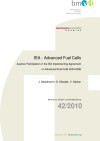
Austrian Participation in the IEA Implementing Agreement on Advanced Fuel Cells 2004-2008
Schriftenreihe
42/2010
J. Gesellmann, G. Simader, V. Hacker
Herausgeber: BMVIT
Englisch, 89 Seiten
Downloads zur Publikation
IEA IETS Annex 17: Membrane filtration for energy-efficient separation of lignocellulosic biomass components
The overarching goal of IEA IETS TCP Annex 17 is to strengthen the network of the Austrian membrane and biorefinery landscape.
Exhibition: SolarExpo
8. - 10. May 2013
Verona, Italy
SolarExpo represents not only the place to be for national players involved in the solar energy sector but also for all major international solar companies. Parallel to the exhibition, an extensive calendar of conferences and seminars covers technical, scientific, communication and policy topics.
Development of a Cost-Benefit-Tool: costs and benefits of energy efficient and ecologic buildings
Development of a cost-benefit-tool which reaches beyond a pure cost approach and also recognizes the benefits of a building for its inhabitants and users. The inclusion of benefits is based on existing evaluation systems, especially on the Austrian building evaluation system TQB - Total Quality Building, which has been revised in 2009.
Recommendations for funding criteria to promote system benefits for medium and large battery storage systems
Market analysis and stakeholder process
World Circular Economy Forum (WCEF)
15. - 18. April 2024
Busseles (BEL) and Online
WCEF2024 will feature impactful circular solutions from around the world, guided by the latest scientific evidence.
IEA CERT-EGRD Discussion: Evaluating the impacts of energy innovation policies
29. October 2021, 13:00 - 16:00
Online
The event brings together practitioners from governments with distinguished international scholars to exchange experiences and recommendations about how to design and implement evaluations clean energy innovation policies effecitiveness, from R&D funding programmes to broader support for the energy innovation ecosystem, as well as how to use these findings to improve policy design.
M-ERA.NET Call 2021 Project Conference
1. - 2. April 2025
Elbflorenz Dresden Hotel in Dresden (D)
The M-ERA.NET network is preparing a conference “Connecting materials innovation actors in Europe and beyond” dedicated to the 70 transnational projects funded under the Call 2021.
Visualisation of IEA TCPs 2020
International activities for the energy supply of the future are taking place within the framework of IEA's technology cooperation. Visualisations based on a graph database show the extensive activities of the individual technology cooperation programmes (TCPs). The collaborations of countries on individual topics were made clearly visible, too.
IEA Experts Group "R&D Priority Setting and Evaluation" (EGRD) - Working period 2017 - 2019
The IEA Experts Group (EGRD) was established by the Committee on Energy Research and Technology (CERT). It examines analytical approaches to energy technologies, policies, and research and development and evaluates the benefits of RTI policies. Its results and recommendations feed into IEA analysis, and enable a broad perspective of energy technology issues.
NAMA Guidelines for Land-Use and Bioenergy (2010)
The land use and bioenergy sectors from an integrated system. This system has features that are likely to require approaches distinct from those suitable for other sectors. Thus, although a general framework for NAMAs has been developed, requirements appropriate to specific sectors are needed.
Mehrsprachig
Photovoltaic - Industry and Research in Austria
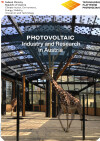
This brochure examines the existing domestic value creation in the field of photovoltaics and provides an overview of the Austrian research landscape, along with open research questions related to photovoltaic technology.
Herausgeber: Austrian Photovoltaic Technology Platform - TPPV supported by BMK (2024)
Englisch, 13 Seiten
Downloads zur Publikation
Active networks
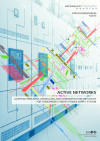
Austrian research, modelling and demonstration initiatives for tomorrow`s smart power supply system
1/2013
Herausgeber: BMVIT
Englisch, 6 Seiten
Downloads zur Publikation
Fuel cells for distributed power: benefits, barries and perspectives (2003)
Detailed study of fuel cells covering a wide range of issues from the basics till to the market potential. The focus is put on stationary fuel cells.
Englisch
Energy Technology Perspectives 2015
Mobilising Innovation to Accelerate Climate Action
Herausgeber: International Energy Agency (IEA), ©OECD/IEA 2015 Energy Technology Perspectives, IEA Publishing
Englisch, 412 Seiten
Downloads zur Publikation
Putting Carbon back into the ground
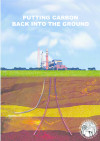
Die Publikation "Putting Carbon back into the ground" des IEA Greenhouse Gas R&D Programme vom Februar 2001 zeigt die Möglichkeiten der Einspeicherung von CO2 und behandelt Fragen wie Umweltauswirkungen, Speichersicherheit und Kosten.
International Energy Agency
Englisch, 32 Seiten