
Suchergebnisse
IEA EBC Annex 84: Demand Management of Buildings in Thermal Networks
The concept of demand-side management (DSM) in buildings to reduce peak loads in the grid is well established in the power sector. The same concept can be applied to shift thermal loads in buildings connected to thermal networks. This project addresses the topic of demand response in buildings, focusing on the collection of case studies, technologies and collaboration models.
IEA EBC Annex 83 - Positive Energy Districts
A positive energy district (PED) is an urban area/neighbourhood that is able to generate more energy than it consumes and is agile/flexible enough to respond to energy market fluctuations. This is where the IEA-Annex 83 and commissioned leading Austrian research institutions come in to collect, systematise, synthesise and process the knowledge and experience of the international scientific community on PEDs in a form that is understandable for practitioners.
JPP SES Information Session for Joint Call 2022 on Integrated Regional Energy Systems (TRI 5)
20. September 2022
Online
At this digital event, we will take a deep dive into the challenges and opportunities that come when working with Regional Energy Systems. Outcomes of the Joint Call on Integrated Regional Energy Systems 2018 will be presented and challenges will be discussed.
IEA HPT Annex 61: Heat Pumps in Positive Energy Districts
IEA HPT Annex 61 evaluates the role of heat pumps (HP) in positive energy districts (PED). Efficiency potentials of the electric and thermal energy of districts that can be unlocked with the use of HPs are evaluated in order to reach a positive energy balance. This refers to both, upgrade of waste heat and simultaneous generation of different energy use in buildings (space heating, DHW, space cooling/dehumidification) and includes self-consumption of on-site renewable electricity generation.
IEA HPT Annex 60: Retrofitting Heat Pump Systems in Large Non-domestic Buildings
Lack of knowledge about retrofit options with heat pumps currently hinders the widespread use of the technology in non-residential buildings. In this project, easy-to-use, accessible recommendations for techno-economically optimised planning / design of heat pump applications in hospitals, shopping centres, industrial buildings, educational institutions, and museums will be developed and communicated to relevant target groups in the form of guidelines and training courses.
BBI JU Stakeholder Forum 2019
4. December 2019
Egg Congress and Meeting Center Brussels, Belgium
The BBI JU Stakeholder Forum 2019 will bring together the bio-based industries community and facilitate open discussion on the impact, achievements and strategic direction of the Bio-based Industries Joint Undertaking (BBI JU) programme, as well as the latest developments in the bio-based industries sector.
IEA EBC Annex 63: Implementation of Energy Strategies in Communities
As part of the "Annex 63" project, Austria has worked with 10 other countries to develop guidelines for the successful implementation of energy strategies at local level. The results include support for nine strategic measures, descriptions of case studies, support materials and recommendations for different target groups.
Summer University Vienna: Green. Building. Solutions.
July 20 - August 11, 2019
Vienna
First-hand ecological knowledge and engineering expertise bundled in a three-week program in the capital of energy-efficient building, Vienna. Think sustainable, take care of your future - now!
World Energy Outlook 2014

Herausgeber: International Energy Agency (IEA), ©OECD/IEA 2014 World Energy Outlook, IEA Publishing
Englisch, 748 Seiten
Net Zero Energy Buildings
International Projects of Carbon Neutrality in Buildings
Voss K., Musall E., et al.
Herausgeber: München 2011 (Internationale IEA Publikation)
Englisch, 40 Seiten
IEA-4E Jahresbericht 2014
IEA Implementing Agreement for a Co-operative Programme on Energy Efficient
End-Use Equipment (4E)
Herausgeber: 4E
Englisch
Downloads zur Publikation
The IEA Bioenergy Annual Report 2006
Of the available biomass conversion technologies for production of more usable energy forms, fast pyrolysis is the least developed, but offers the benefits of a liquid fuel with concomitant advantages of easy storage and transport as well as higher power generation efficiencies than fossil fuelled systems at the smaller scales of operation that are likely to be realised from bioenergy systems.
Englisch
Biobased Industry
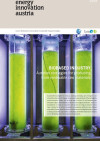
Austrian strategies for producing from renewable raw materials
energy innovation austria
3/2015
Herausgeber: BMVIT and Klima- und Energiefonds
Englisch, 8 Seiten
Downloads zur Publikation
Energy efficiency in industry
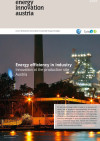
Innovation at the production site Austria
energy innovation austria
3/2013
Herausgeber: BMVIT
Englisch, 8 Seiten
Downloads zur Publikation
IEA AMF - Newsletter 2/2013
Herausgeber: International Energy Agency - Advanced Motor Fuels
Englisch, 14 Seiten
Downloads zur Publikation
IEA-4E Jahresbericht 2015
Herausgeber: IEA - 4E
Englisch, 39 Seiten
Downloads zur Publikation
IEA-4E Jahresbericht 2013
Der Jahresbericht umfasst die wichtigsten Errungenschaften des Jahres 2013, sowie eine Zusammenfassung der Aktivitäten der einzelnen 4E Annexes.
Herausgeber: IEA 4E
Englisch, 46 Seiten
Downloads zur Publikation
The IEA Bioenergy Annual Report 2005
Bioenergy is increasingly utilised to reduce emissions of greenhouse gases (GHG). Various options exist for trading bioenergy and bioenergy services between countries.
Englisch
Eco-Services
Strategies for sustainable development
Forschungsforum
4/1999
Herausgeber: BMVIT
Englisch, 6 Seiten
Downloads zur Publikation
Contracting Platform for SME´s
Evaluation of requirements and framework conditions for the implementation and the operation of a Contracting Platform for SME´s in Austria for the cost efficient identification and realisation of energy efficiency measures.