
Suchergebnisse
Measures for Minimisation of Rebound-Effects Concerning Residential Building Renovation (MARESI)

Development of a pragmatic assessment scheme applicable to building practice for the impact of building products on human health
Energy Performance Contracting (IEA DSM Implementing Agreement - Task X)
The objective of this task within the IEA DSM programme is to facilitate the use of performance contracts and other energy service company (ESCO) contracts. In this scenario, the ESCO has taken on the project's performance risk by guaranteeing a specified level of energy savings. Its compensation for this risk is directly tied to achieving savings. The financing for such a project could come from the ESCO, the equipment supplier or a third-party company.
Industry´s Efforts Towards Zero Emissions
Austrian Research for Low-Waste and Low-Emissions in Industrial Processes within the "Factory of Tomorrow" Subprogram
Forschungsforum
3/2004
Herausgeber: BMVIT
Englisch, 6 Seiten
Downloads zur Publikation
Heating And Ventilation In The "building Of Tomorrow"

Studies on users' experience with ventilation and heating systems in low-energy and passive houses
Forschungsforum
2/2004
Herausgeber: BMVIT
Englisch, 6 Seiten
Downloads zur Publikation
Applying passive technologies in social housing, 1140 Vienna; Utendorfgasse 7
Multi-storey social passive house construction with 39 units in Vienna, 14 Utendorfgasse under adherence to the international passive house standard and simultaneous extremely low construction costs.
Solar thermal cooling system consisting of a parabolic trough collector field and a steam jet ejector chiller
A solar thermal cooling system consisting of a parabolic trough collector field and a steam jet ejector chiller has been developed. The necessary components were built and tested and finally put together to get an operating pilot plant at the test facility.
Renovation with passive house technology by master-builder – verified planning documentation – Guide and seminars
The project aims at an increased implementation of passive house technology by the planning as well as the operating master-builder.
Shutdown factory - Central control and communication system and overall concept for a reduction of energy cost and optimization of resources during the stand-by-mode of industry facilities
Development of solutions to reduce the energy cost during the stand-by-mode of industry facilities. Focus areas: innovative control and communication system for the problem of the shut down and start up, entire concept on energy savings cost during the stand-by-mode, creating awareness concerning the problem in the industry
Development of agitation systems in biogas plants in order to optimize mixing-behaviour and to reduce energy demand with the help of Computational Fluid Dynamics (CFD) simulation
The purpose of this project is the investigation of the mixing-behaviour and performance of the agitation systems in biogas plants, and to present them through Computational Fluid Dynamics (CFD) simulation. This EDP-tool can model and predict the actual fluid dynamics in a closed system. Thus it may help to plan optimal reactor geometries, position and combination of agitation systems as well as to minimize the energy requirements.
The "Schiestlhaus" In The Hochschwab Region - Alpine Refuge Using Passive House Technology
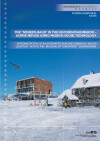
Implemantation of an integrated building design in "Island Location" within the "Buildng of Tomorrow" subprogram
Forschungsforum
2/2005
Herausgeber: BMVIT
Deutsch, 6 Seiten
Downloads zur Publikation
Development of miniaturized, ceramic high-temperature fuel-cell-components using resources-perserving mass-production processes
The application of nano scaled powder and powder injection moulding (PIM) for energy efficient co-sintering of miniaturized solid oxid fuel cells which can produce current and heat by using renewable raw materials.
High-quality refurbishment - Designing quality standards for the refurbishment of municipal buildings
Designing quality standards for ecological refurbishment (based on E. Panzhauser's proposals, 2001); applying them to characteristic types of buildings systematically selected in diverse municipalities; the achieved results shall serve as good practice examples for future refurbishment and as basis of discussion on subsidy regulations.
User Behavior And Evaluation Of Sustainable Concepts Of Residentia Buildings

A Focus within the "HAUS DER ZUKUNFT" Subprogram
Forschungsforum
4/2001
Herausgeber: BMVIT
Englisch, 6 Seiten
Downloads zur Publikation
EasyCell - Design optimization of PEM fuel cells for reducing auxilliaries and simplificating the material-management to facilitate the mass production
EasyCell - A common use of PEM fuel cells is not yet established. It is the aim of this project to optimize the design of PEM fuel cells (minimization of peripheral units, simplified handling of gases and the right design for mass production) to ease a widespread use of PEM fuel cells.
PROMISE - Production with solar energy. Study on the potential of thermal solar energy systems in trade and industry depending on the production processes
Documentation of realized plants for the use of thermal solar energy in trade and industry companies. Identification of production processes and branches, which have a demand for low-temperature heat. Determine the potential of solarthermal systems to provide low-temperature heat. Case studies for branches and processes with the highest mid-term potential for realization of a solar plant.
Raise in efficiency due to optimized waste heat management in heat intensive processes of the metal-working industry
This project drives at optimizing the energy input at the manufacturing process of oil tempered spring steel. This aim is met by investigating different options of waste heat recovery from industrial furnaces and heat insulation of heat treatment bathes. Besides, options of lead removal from anthracite will be listed.
Ways and means to increase the construction-volume by 500%, by means of standardised thermal restoration of old houses.
Development of practise-fit methods for intensification and rationalisation of processes in the field of restoration of one-and two-family houses built between 1945 and 1982 in Austria.
Hygrothermal behaviour of double-skin facades in solar irradiation - theory evaluation by means of on-location measurements
Detailed clarification of the base parameters of thermodynamic simulation calculations by means of on-location measurements on the five-storey double-skin facade of the Federal Institute of Social Education in Baden bei Wien
Sunny research! Sustainable building design with high energy performance for a modern commercial building
Commercial buildings of basic to medium standard are hardly ever designed by a high quality of innovative building services engineering. In the project Sunny research! a sustainable building design with high energy performance was developed. The aim was to adapt the aspects of Renewable Energy, thermal comfort and wellness in work.
Innovative Use Of Austrian Stove Fitting Technology For A Sustainabl Development
Tile stoves in Austria - Clay stoves in Zimbabwe
Forschungsforum
2/2000
Herausgeber: BMVIT
Englisch, 6 Seiten