
Suchergebnisse
Industrially produced residential dwellings

Potential of future development for industrially produced residential dwellings Enquiry on international tendencies in automated manufacturing and assessment of viable strategies for their implementation into the Austrian building sector
The Sahel Project
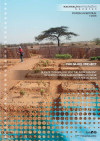
Silicate technology for the improvement of water uptake and nutrient storage in marginal soils
Forschungsforum
1/2006
Herausgeber: BMVIT
Englisch, 6 Seiten
Downloads zur Publikation
Green Biorefinery
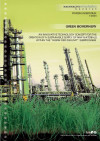
An innovative Technology Concept for the Creation of a Sustainable Supply of Raw Materials within the "Fabrik der Zukunft" Subprogram
Forschungsforum
1/2004
Herausgeber: BMVIT
Englisch, 6 Seiten
Downloads zur Publikation
Fiber And Dye Plants
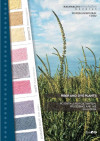
Potentials for Cultivation, Processing, and Use in Austria
Forschungsforum
1/2002
Herausgeber: BMVIT
Englisch, 6 Seiten
Downloads zur Publikation
Material utilization of end-of-term textiles
Mechanical processing of the non-reusable part of collected end-of-life apparels (e.g. cutting, sifting, etc.); development of marketable application for the obtained short fibers in the field of construction materials (e.g. bitumen modification)
Fibre composites with natural adhesive
Developing of suitable bonding agents, fibres and processing technologies for the production of form stable fibre composites made of natural components. Production of prototypes like boards and moulded parts. Material testing.
Wood Plastic Composite - Direct extrusion
Development of a wood composite direct dosing system
The Paper Factory in the Year 2030
Paper factory in the year 2030 as an integrated part of a sustainable economy and a supplier of sustainable paper products fulfilling criteria for sustainability at highest possible level.
Cascading Of Renewables
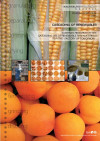
Austrian Research on the Cascading Use of Renewable Raw Materials for the "Factory of Tomorrow"
Forschungsforum
1/2005
Herausgeber: BMVIT
Englisch, 6 Seiten
Downloads zur Publikation
Natural Dyes for the Textile Industry
New cooperations between agriculture und industry are necessary to ensure the utilization of renewable materials. The project´s focus is upon natural dyes and their application in textile industry. The goal of the project is to create a contact institution which connects various suppliers of diverse plant materials, takes on the processing, and standardising of the natural dyes, and makes a product that can be used by the industry.
Adsorbent Materials of Residues from Corn Cob
Development and testing of processes to produce adsorptive materials from agricultural residues of corn production with focus on corn cob grit as oil bonding agent (e.g., applicable to the remediation of oil spills).
RAINBOW 2
Application and expansion of knowledge gained in the project Rainbow1 for the production of new, functionalised fibres using renewable resources as well as other fibre manufacturing methods in a pilot plant scale production.
Investigation of the sustainable utilisation of carbon from methane pyrolysis
One of the possible alternative production routes for renewable hydrogen is methane pyrolysis. Compared to other, alternative production routes, methane pyrolysis has the lowest energy input (less than a quarter of water electrolysis) with a very high hydrogen yield.
De-lacquering as a service
Development of the service of de-lacquering in industrial plants on the basis of pulsed high pressure water with a new, energy efficient high pressure pump. Further possible applications will be searched for and evaluated.
Bio-Minimum-Lubrication
Development of a Minimum quantity lubrication system employed in metal working industry using an oil-in-water emulsion based on renewable primary products.
Wood Plastic Composites - WPC

future-proof materials from wood composites- projects within the "Factory of tomorrow" subprogram
Forschungsforum
2/2007
Herausgeber: BMVIT
Englisch, 6 Seiten
Downloads zur Publikation
The development of fused wood-only parquet elements
The development of the wood fusing technology to an innovative, ecological process of production of wood-only parquet elements, which do not contain any wood foreign substances as glue or thermoplastics.
Watersorption - Water absorption of Wood Plastic Composites
Analysis of the water absorption in Wood Plastic Composites (WPC) in order to develop solutions to decrease and stop water absorption. This enables a big variety of new applications made of WPC and brings economical and ecological advantages for the polymer processing industries.
Chemistry, process design and sustainable economic development
The results of this project were to deliver the basics for chemical process engineering taking into account the requirements of sustainable development. The proposed results will have to be in conformity with ecological, economic and social requirements for sustainability. Hence the processes will mostly be based on renewable resources.
Wood-processing employing a superimposition of ultrasonic vibrations
Development of wood-processing techniques employing high-frequency ultrasonic vibrations in terms of applications in the woodworking industry.