
Search Results
IEA Bioenergy Task 34: Direct Thermochemical Liquefaction (Working Period 2024 - 2028)
Direct thermochemical liquefaction of biomass and residues enables the production of fuels, bioenergy and other green carbon products. The co-production of several products is particularly important for the economic efficiency of the overall process. This project provides technology overviews of decentralized pyrolysis plants and case studies on co-production of green gas and biochar as well as integration into bioenergy systems.
IEA Bioenergy Task 44: Flexibilization and System Integration (Working Period 2025 - 2027)
What are the benefits of more integrated processes and systems? How can we measure integration and what should we look for when coupling between different sectors? IEA Bioenergy Task 44 provides answers to these and similar questions, especially in relation to a circular bioeconomy and the energy transition.
IEA Bioenergy Task 37: Energy from Biogas (Working Period 2025 - 2027)
Anaerobic digestion systems are an important component in waste and wastewater management as well as in agriculture. The state of the art of the technologies and the development of the sector vary greatly internationally. The main topics of the exchange of experience in task 37 are Co-benefits of biogas in the circular economy, framework conditions for digestate utilization, monitoring of microbial cultures in biogas plants, and comparison of economic framework conditions.
Modular and standardised passive houses in solid timber construction
Concerning to an accurate and adaptable construction of 2 to 4 storey solid timber houses with the characteristics of a passive house, a digital construction and dimension system will be developed. The system which contains standardised modular ecological detailed solutions enables an exact dimensioning and installation of passive houses by small carpentering companies.
IEA Bioenergy Task 37: Energy from Biogas (Working Period 2019 - 2021)
Aim of Task 37 is to accelerate development and progress of biogas technology in the member countries. During the working period 2019-2021 the focus lies on the ecologically and economically sound implementation of biogas technology in agricultural and industrial processes.
IEA Bioenergy Task 42: Biorefining in a Circular Economy (Working Period 2019-2021)
Biorefineries can provide a wide range of products such as energy, fuels, chemicals, food, feed and materials based on renewable resources. In this project, relevant information on biorefineries regarding technologies and biobased products will be compiled at international expert level and results on an ecological and economic assessment of selected biorefineries will be provided.
Feeding Biogas Into The Austrian Natural Gas Grid
Analyses of technological, economic, and legal prerequisites as well as pilot projects within the "energy systems of tomorrow” subprogram
Research Forum
2/2006
Publisher: BMVIT
English, 6 pages
Publication Downloads
Multifunctional Energy Centres - The Biogas Example
Generating heat, power and engine fuel - projects within the subprogram "Energy systems of tomorrow"
Research Forum
1/2009
Publisher: BMVIT
English, 6 pages
Publication Downloads
Single Family Homes and Densified Low-rise Housing - an Analysis of Motives

The study concentrates on describing the reasons behind the slow uptake of space-saving, densified forms of housing, and explains the dominant preference for detached single-family homes. However, it goes beyond simply describing the decisive motives for choices of housing. The study analyses the determining factors and the basic conditions under which these motives come or came into being. Based on this analysis, alternatives will be proposed and evaluated with regard to their effectiveness and feasibility.
built in 2020 - Pictures and stories of tomorrow for building in the future
Production of a comprehensive picture of tomorrow's building using research into future trends, the societal framework and political developments in the building sector.
Energybase - The Office Building of Tomorrow
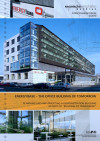
Planning and implementing a demonstration building as part of "Building of Tomorrow"
3/2010
Publisher: BMVIT
English, 6 pages
Publication Downloads
Economics of retrofit air pollution control technologies (Nalbandian, 05-2006)
English
IEA UsersTCP: “Empowering all” Gender in policy and implementation for achieving transitions to sustainable energy (Working period 2020-2022)
The Annex supports the design of a more efficient and inclusive energy system by integrating gender perspectives. Based on case studies and best practice examples, country-specific recommendations for inclusive energy policies are being elaborated.
PhaseOut – Heat pump technologies in the renovation of existing buildings
The aim is the conception, optimization, implementation, demonstration and evaluation of innovative, minimally invasive renovation solutions (thermal renovation and heating system replacement) with heat pumps and PV in multi-storey buildings on seven identical buildings. The comprehensive comparison includes various technical solution variants based on modular and scalable building technology systems as well as multifunctional building components for the exchange of decentralized gas heating by central, semi-central and decentralized heat pump solutions.
KLIMUR: climate-resilient urban resource management for the case study of Zukunftshof and Rothneusiedl
For the concept of the Zukunftshof, an innovative urban agriculture area, development scenarios for an integrated energy and resource cycle system are to be developed using optimisation tools and parametric design studies. A roadmap consisting of technical concepts and a coordinated financing strategy will provide the basis for a demo project that demonstrates in practice how the Zukunftshof can be the starting point and basis for resource-efficient and climate-resilient urban development.
SERECARB - SElective REcovery of Calcium CARBonate in paper sludge (SUSPRISE Joint Call)
Developing a new process based on selective recovery of calcium carbonate from paper mill effluents and sludge, purification, conversion into precipitated calcium carbonate (PCC) and reuse as filler in paper making.
LifeCycle Tower - Energy efficient prefabricated multi-storey timber houses
Based on the results of previous research projects, the project at hand deals with the development of a wooden prefabricated module construction for energy efficient office buildings with up to 20 storeys. This sustainable system ensures cost certainty through the whole life cycle of the building.
SPRINKLE - Smart city governance processes in small and medium-sized cities
The project aimed at comprehensively analyzing existing approaches for the coordination and regulation of Smart City development in small and medium-sized cities. In the context of case studies, this study combines the analysis of relevant legal-institutional frameworks as well as of governance processes for selected, energy-related fields of urban activity.
Webinar: Demand-Controlled Ventilation in the European context
26. November 2012
Online-Webinar
Approaches in 4 countries and at EU level
Conference: Air Source Heat Pumps in Retrofitting Applications
7th May 2015
AIT Austrian Institute of Technology, Giefinggasse 21210 Vienna, AT
During the conference you will get an overview concerning the state of the art, current development in R&D, trends and perspectives in the field of air source heat pumps for retrofitting applications in urban areas.