Project Image Pool
There are 200 results.
Terms of use: The pictures on this site originate from the projects in the frame of the programmes City of Tomorrow, Building of Tomorrow and the IEA Research Cooperation. They may be used credited for non-commercial purposes under the Creative Commons License Attribution-NonCommercial (CC BY-NC).
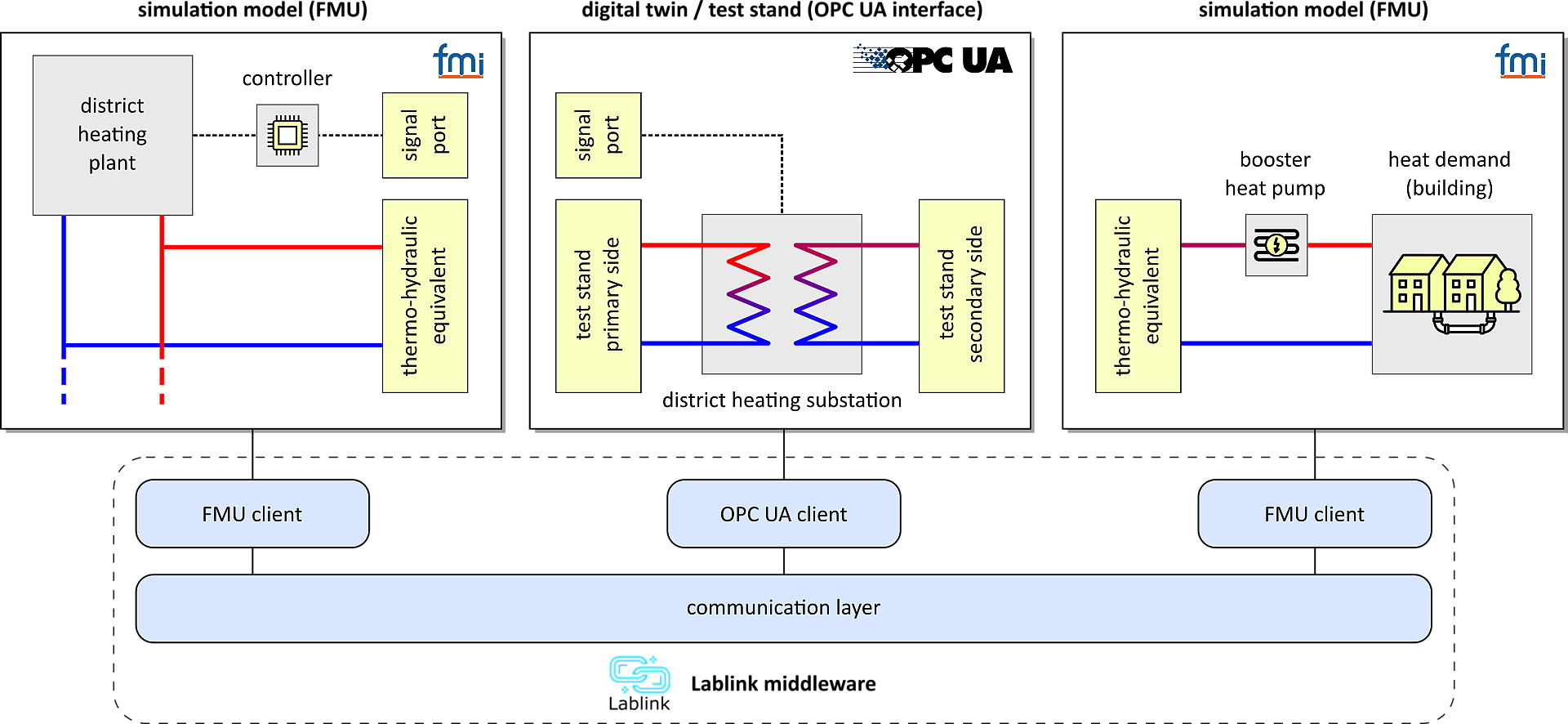
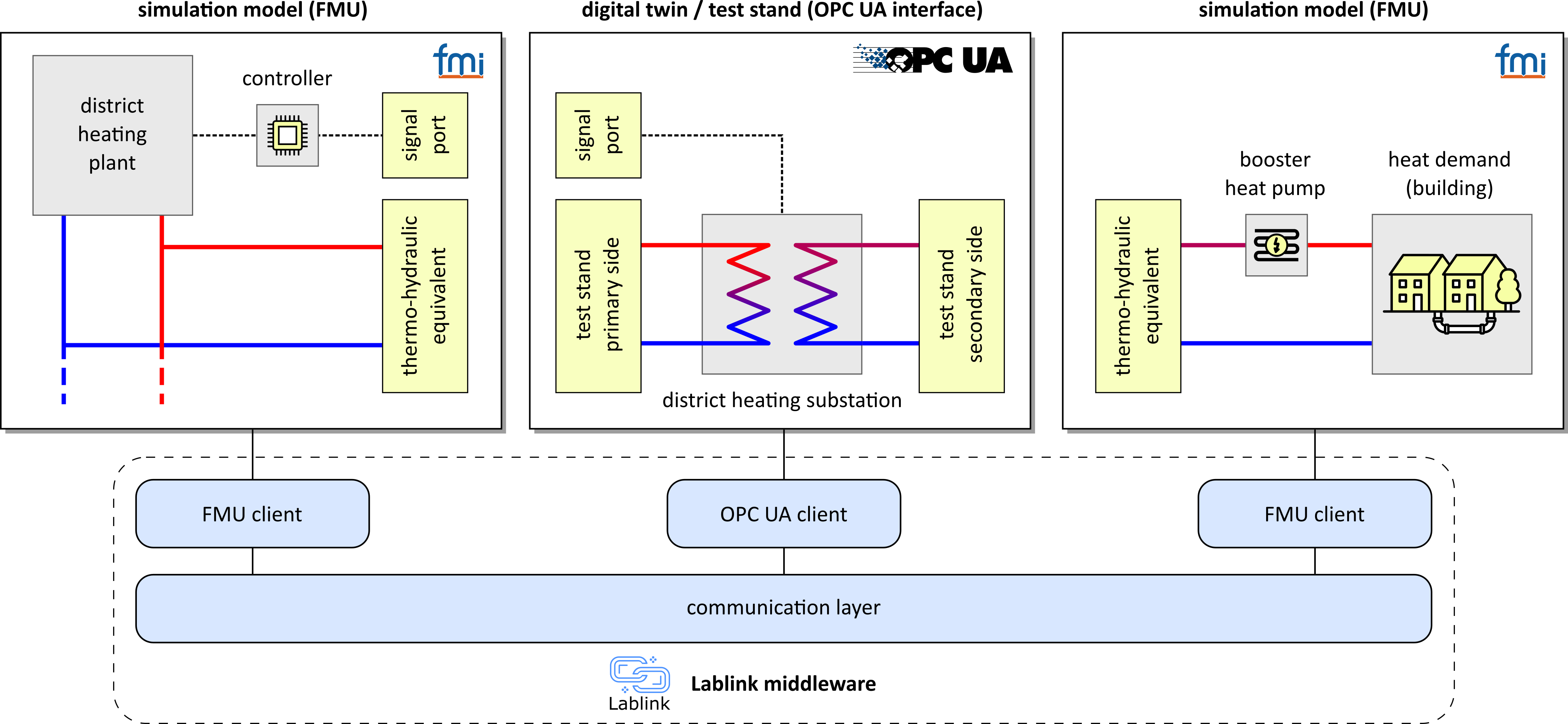
Digital Twins can serve as virtual components in lab setups.
Mapping of a proof-of-concept test case to the DigitalEnergyTestbed setup using the Digital Twin of the DH substation test stand.
Copyright: @ AIT Austrian Institute of Technology GmbH
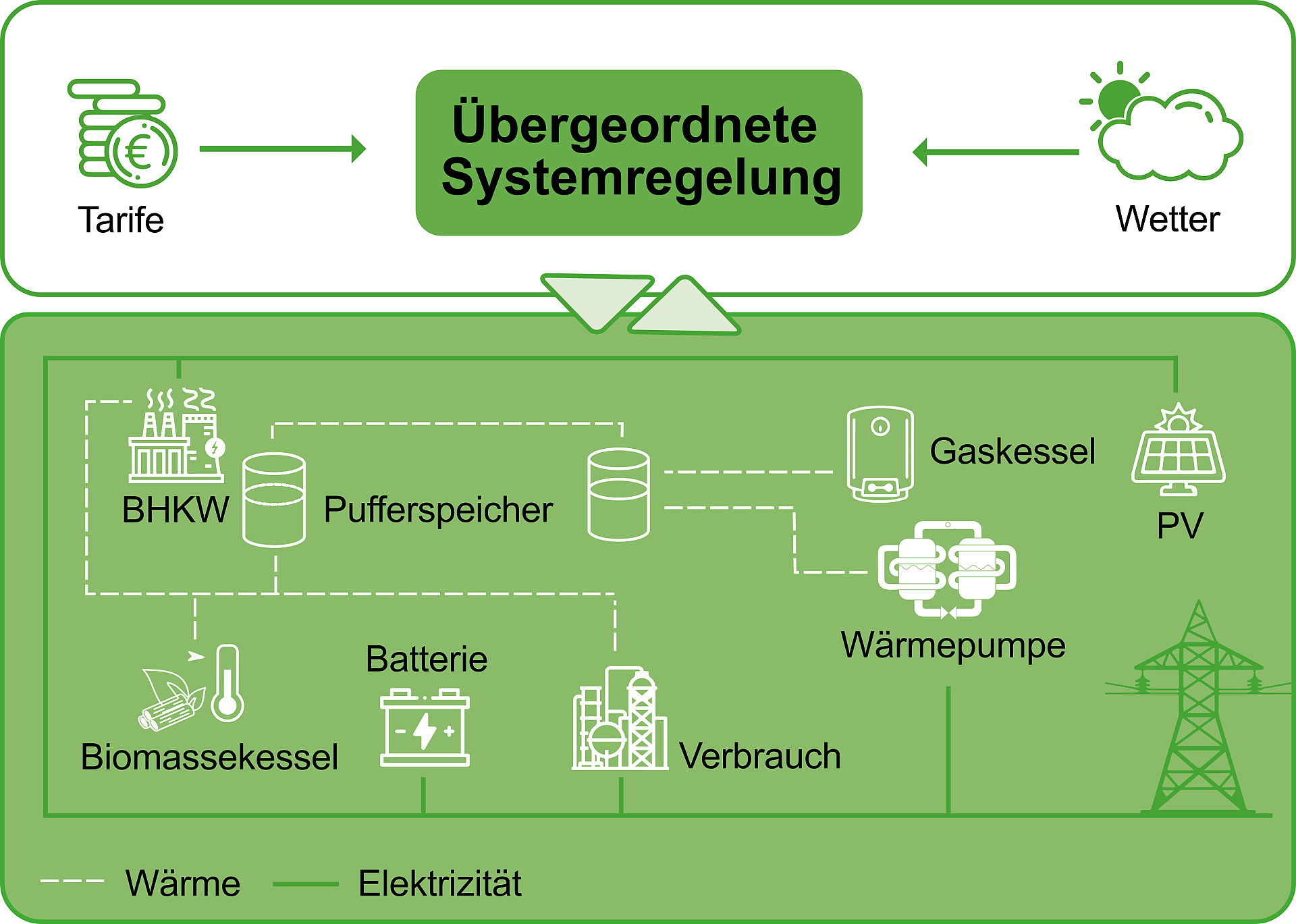
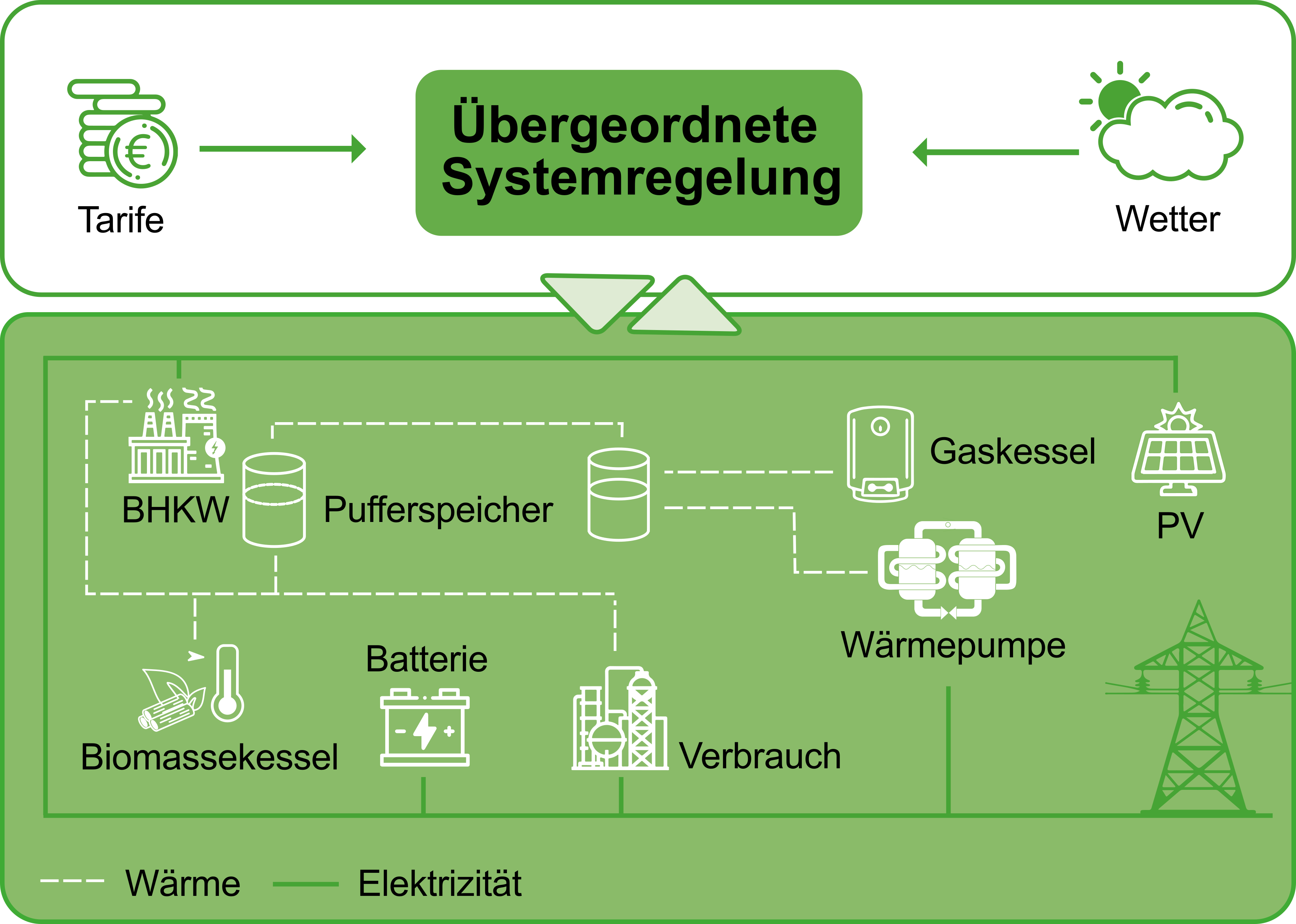
System-level Control of a Heating Grid with Sector Coupling
Exemplary Configuration of a simple heating grid, considering sector coupling through CHP and heat pump by forward-looking system control
Copyright: © BEST – Bioenergy and Sustainable Technologies GmbH

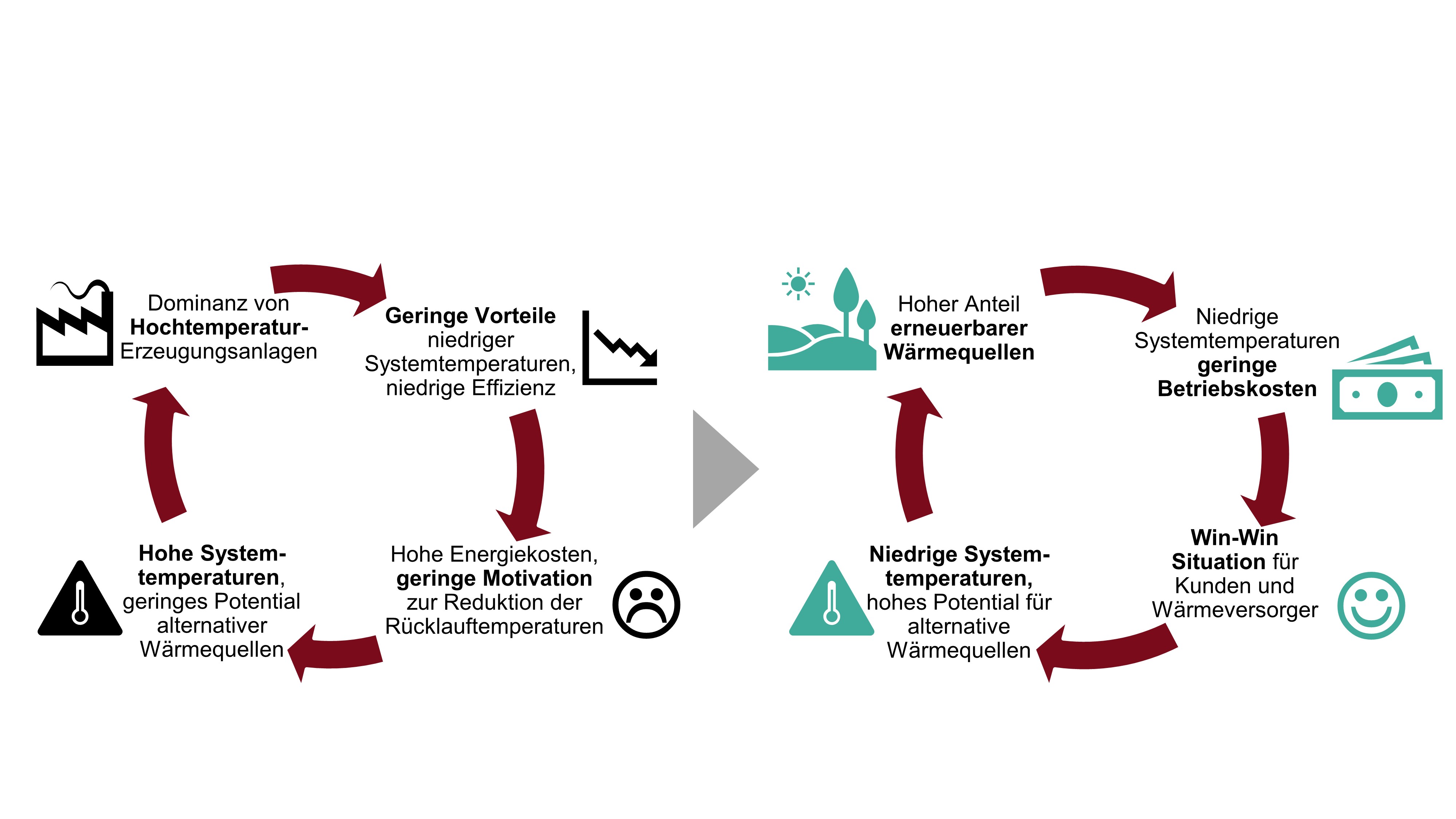
left: The vicious circle of high system temperatures (lock-in), right: The added value of low system temperatures
presentation of the different relations between system temperatures, supply structures, the effect on the system and the end users
Copyright: Ralf-Roman Schmidt, AIT
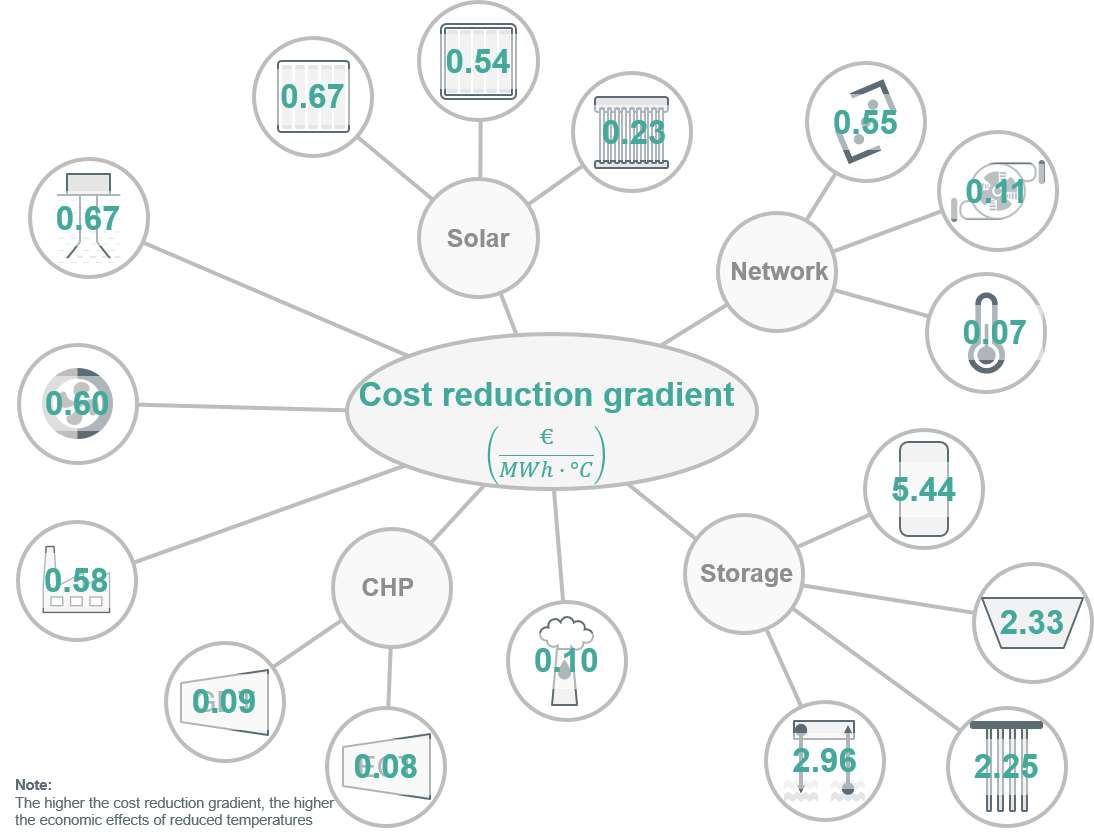
Economic effects of low system temperatures
Overview of the projected economic impact, according to the cost reduction gradient (CRG) in €/(MWh·°C), of reduced system temperatures
Copyright: Roman Geyer

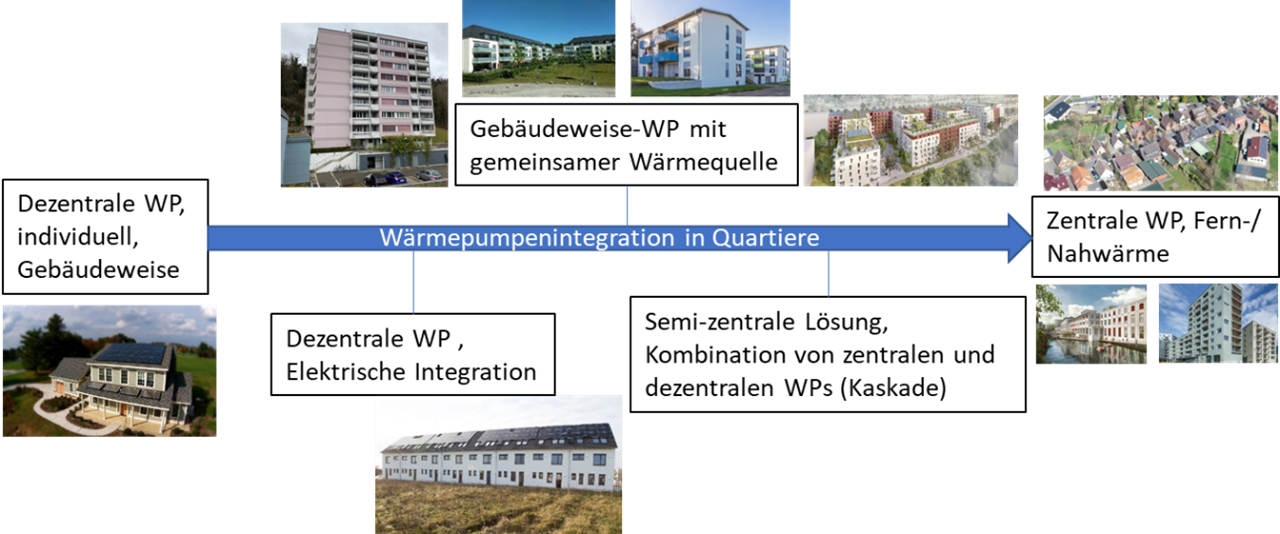
HP Inegration
Integration options of heat pumps in districts
Copyright: OST Wemhoener
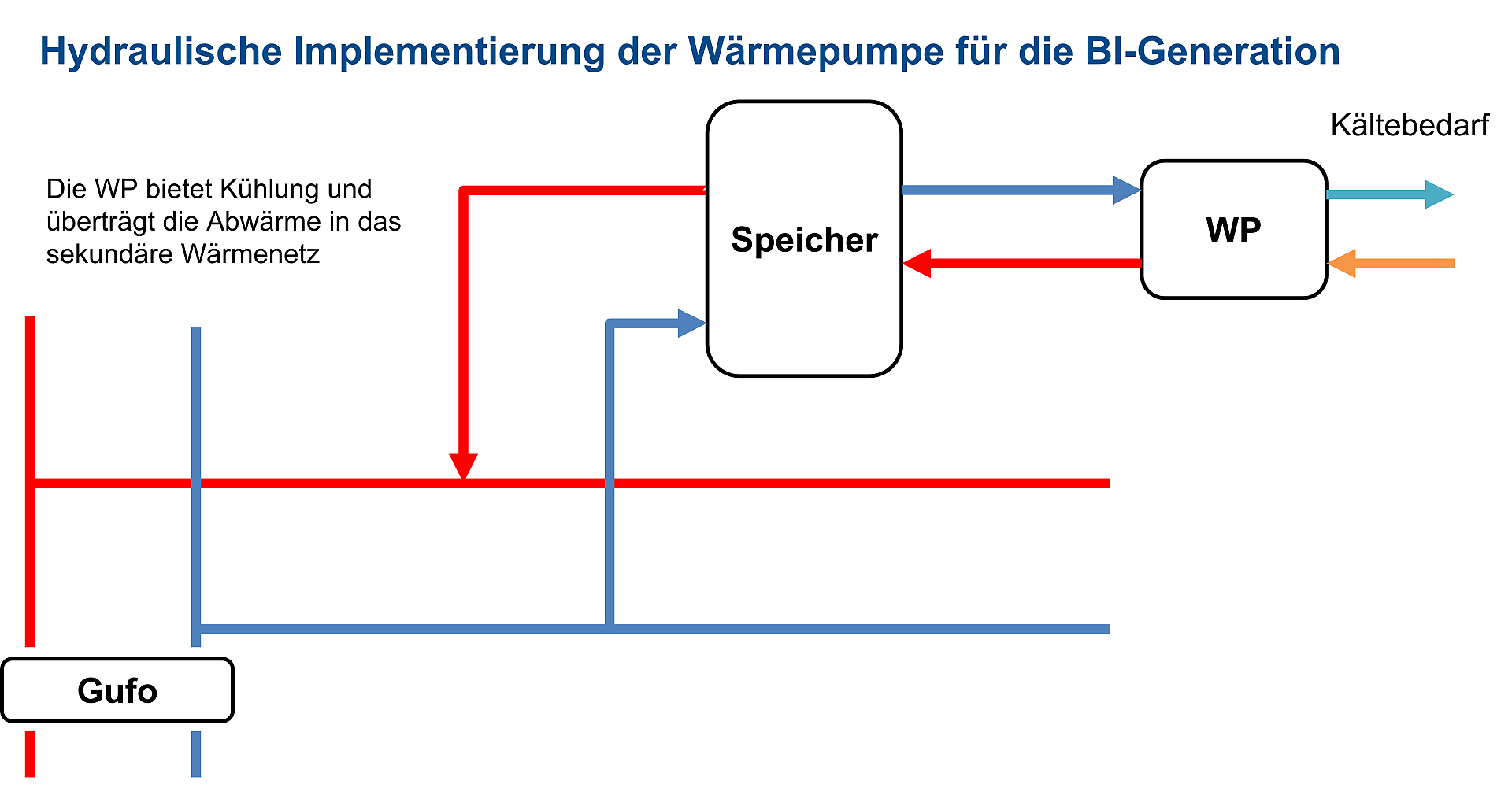
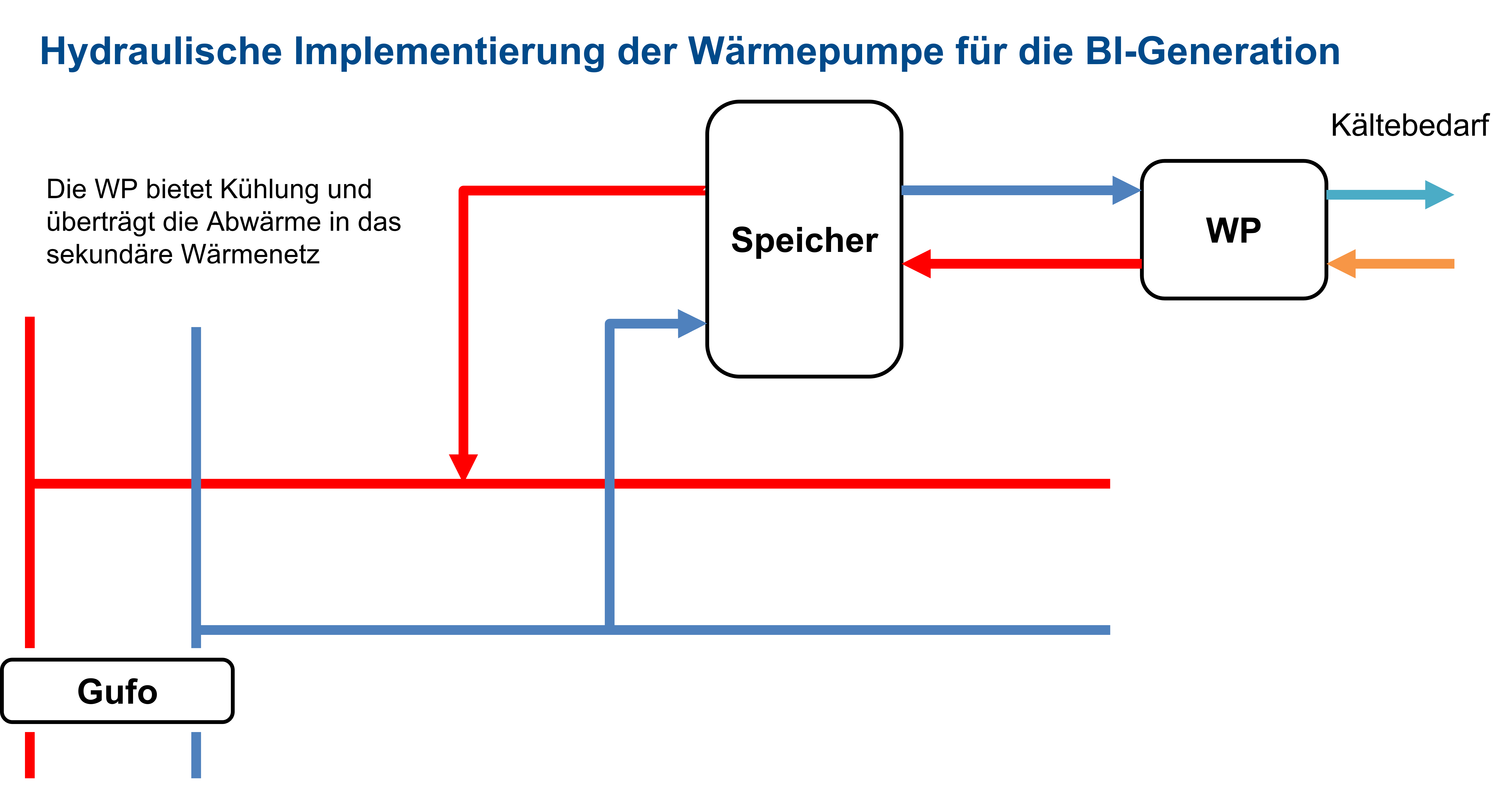
BI-Generation
Hydraulic integration of the heat pump for BI-Generation
Copyright: AEE INTEC Gradl
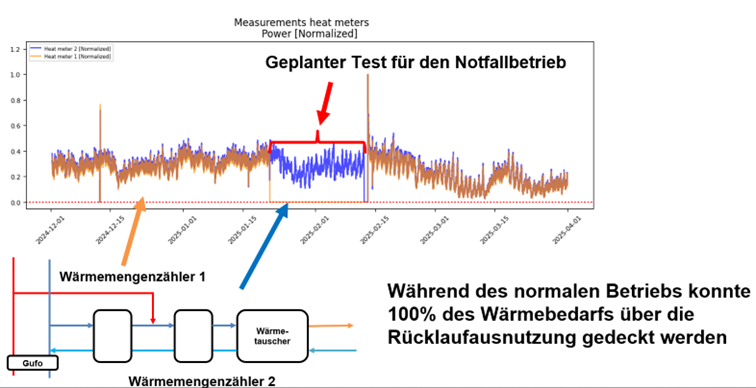
BI-Generation Monitoring Results
Monitoring Data of the Operation of the heat pump
Copyright: AEE INTEC Gradl
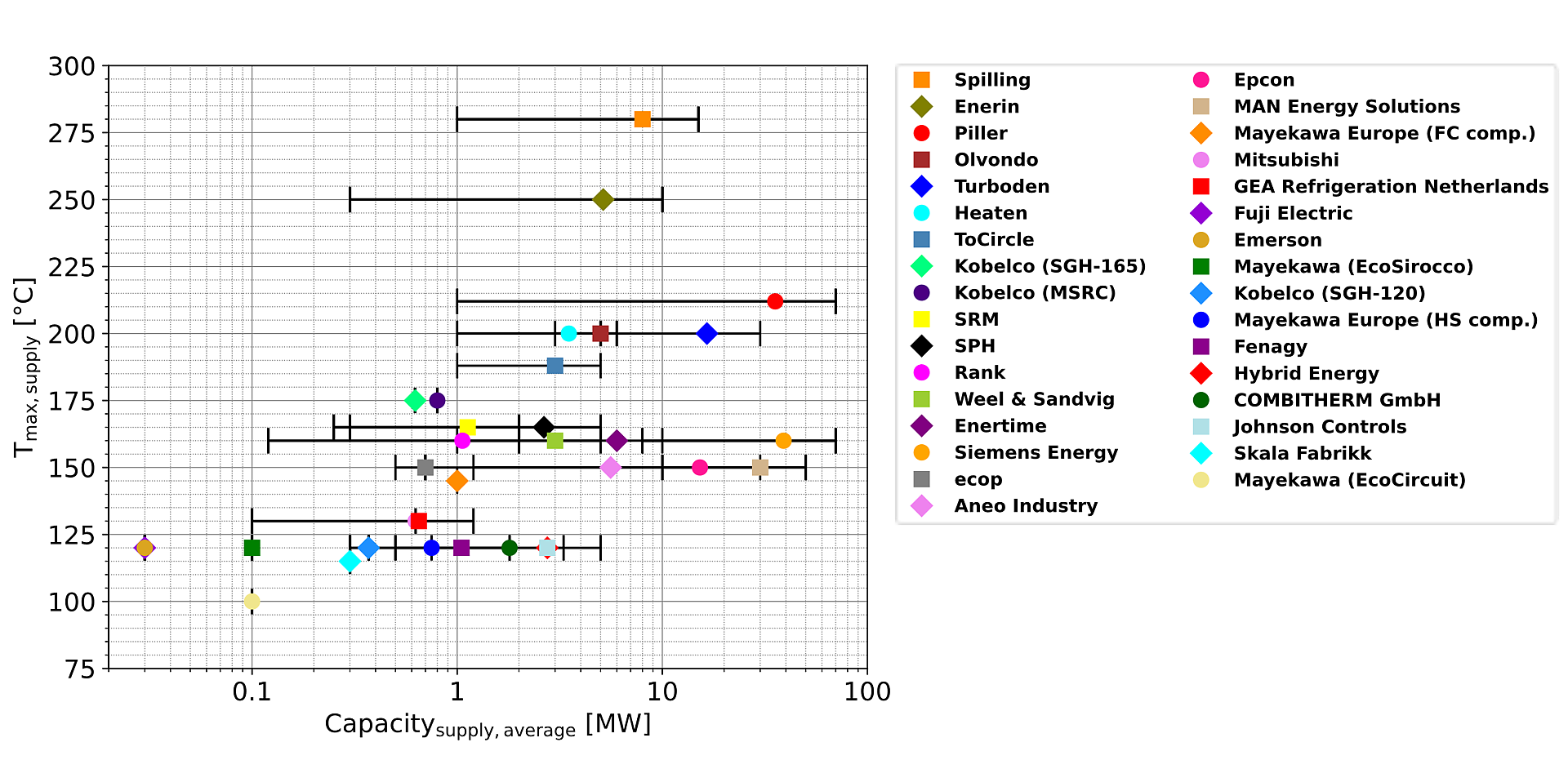
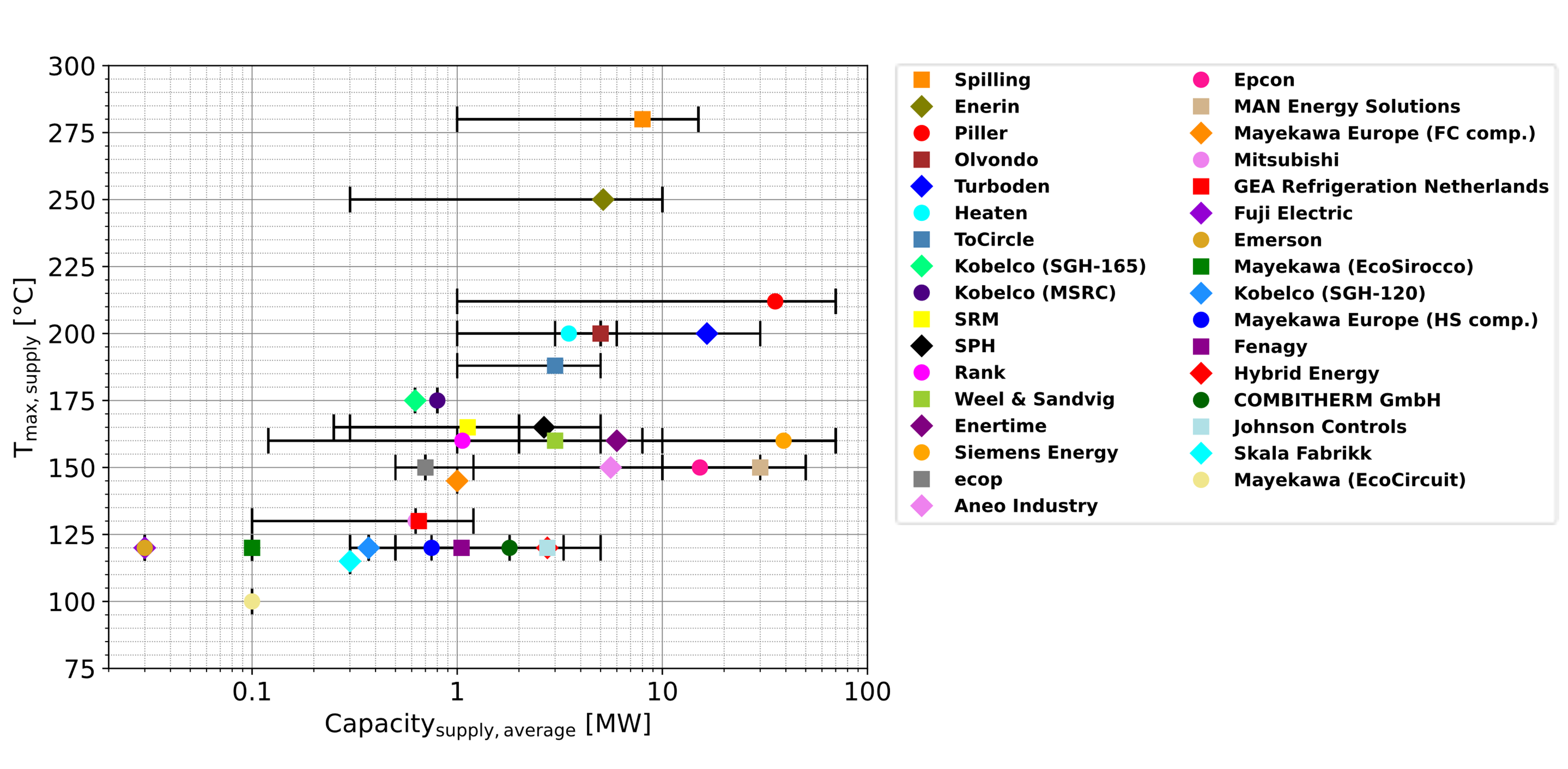
Maximum supply temperature as a function of heat capacity
The graphic shows the maximum supply temperature of high-temperature heat pump technologies from different manufacturers as a function of the heat capacity. More information on the individual technologies is published on the IEA HPT Annex 58 website (https://heatpumpingtechnologies.org/annex58/task1/).
Copyright: Danish Technological Institute
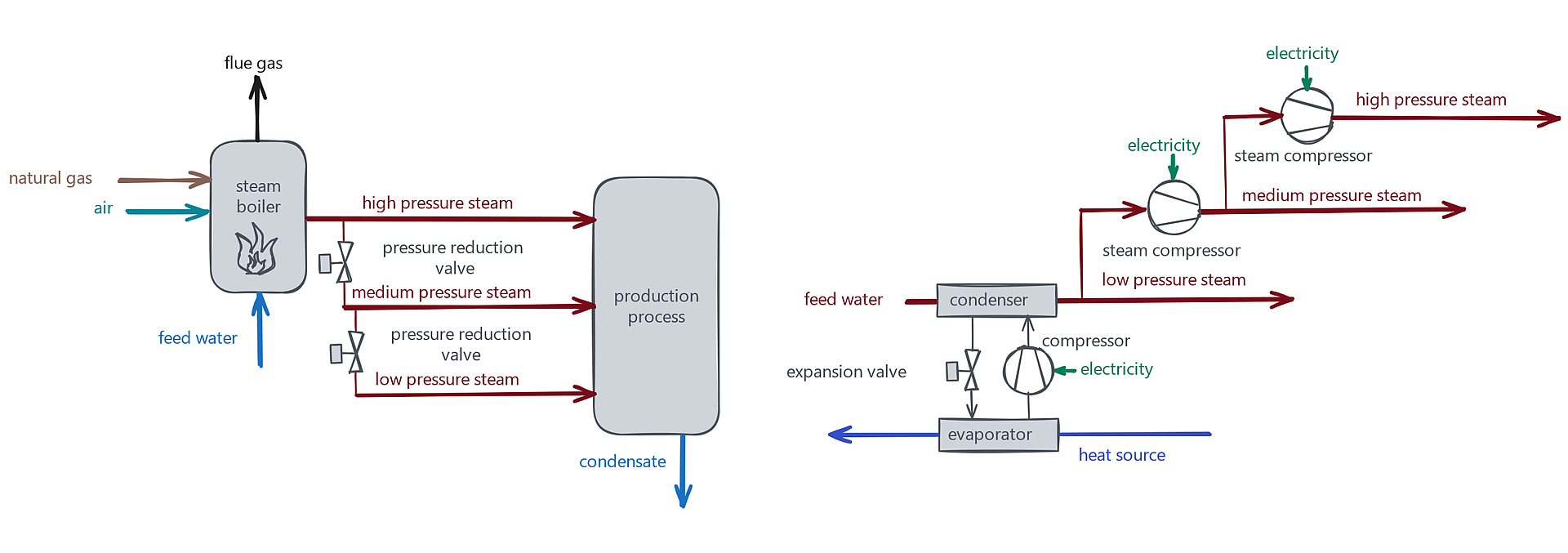
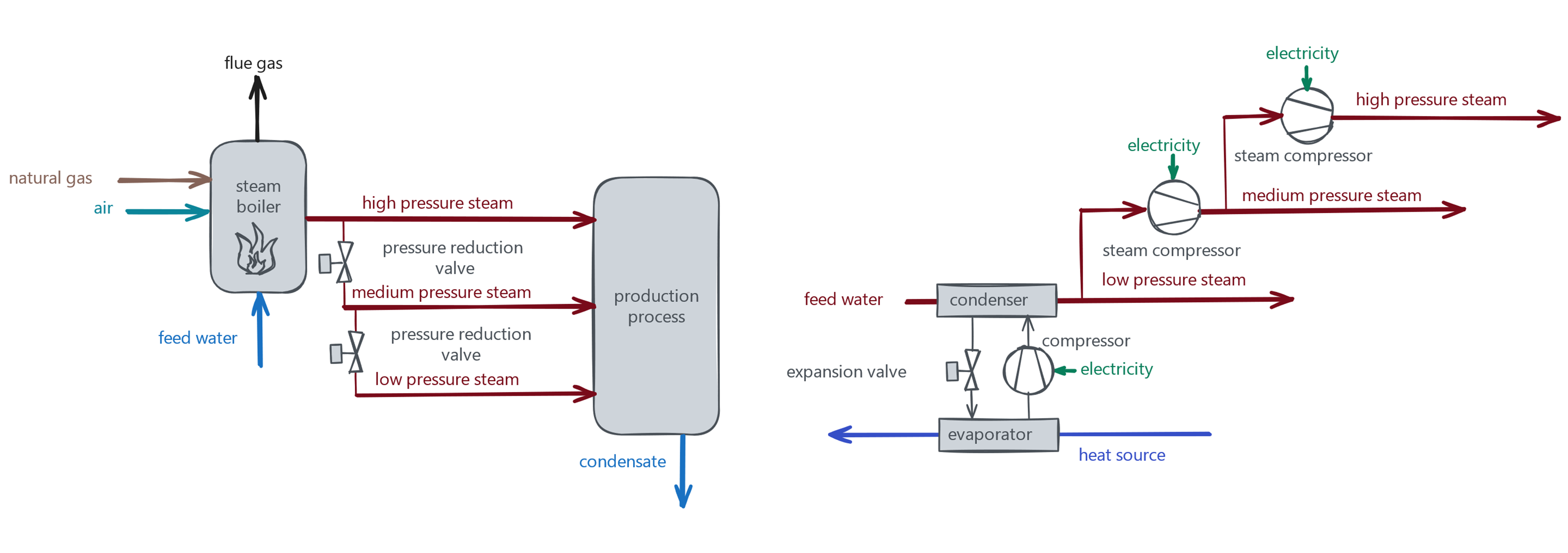
General comparison between steam generation with natural gas-fired boilers and heat pump technologies
The graphic shows conventional steam generation with natural gas-fired boilers compared to steam generation with heat pump technologies. In steam generation with natural gas-fired boilers, the steam is generated at least at the highest pressure level needed in the production process and then expanded to lower pressure levels. In comparison, when generating steam with a heat pump, it is advantageous if only the amount of steam required at the corresponding pressure level is also generated at this pressure level. Expansion to a lower temperature level should be avoided when using heat pumps. More information on steam generation with heat pumps can be found in the IEA HPT Annex 58 Task 2 report (https://heatpumpingtechnologies.org/annex58/task-2-integration-concepts/).
Copyright: AIT Austrian Institute of Technology GmbH
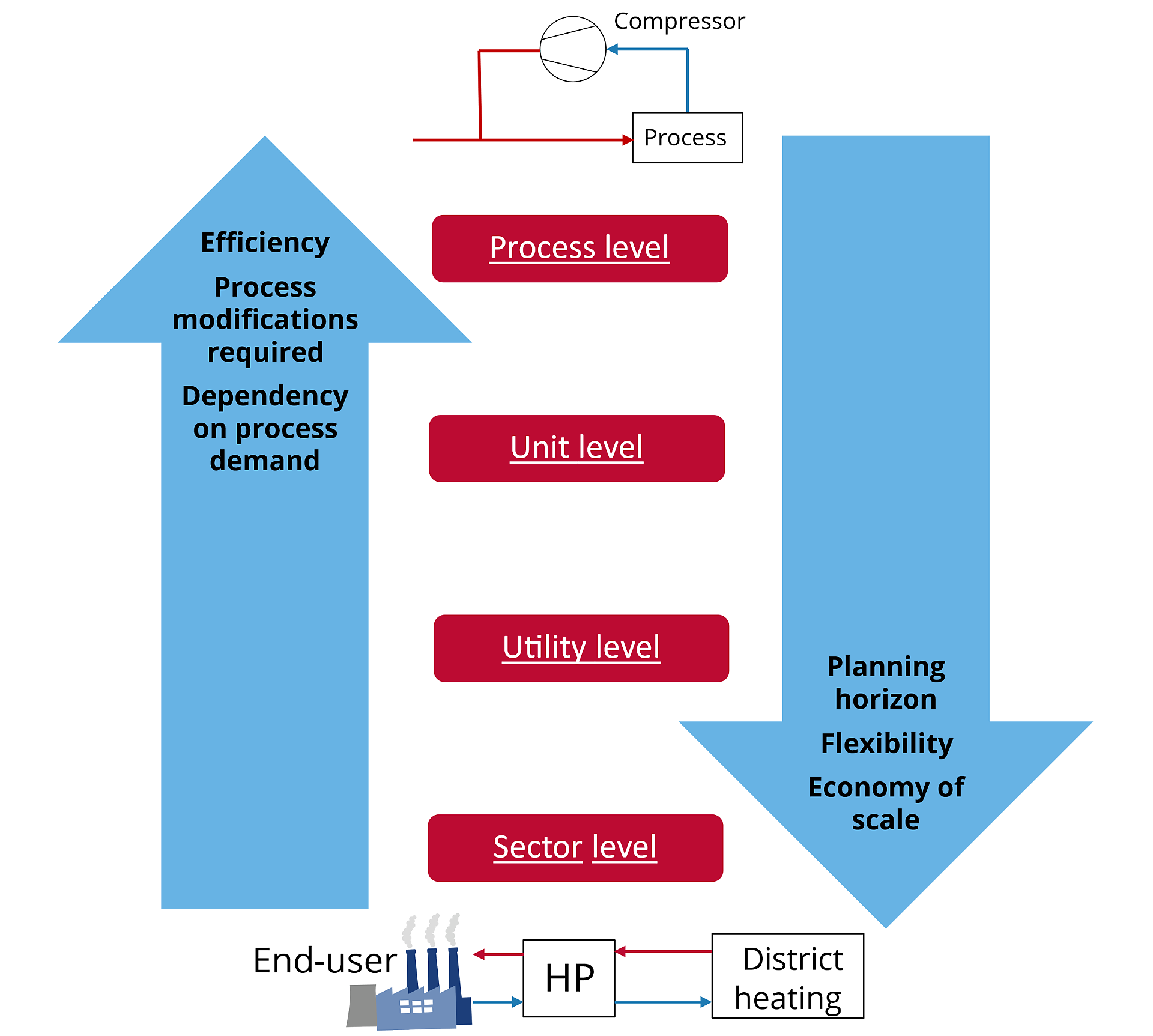
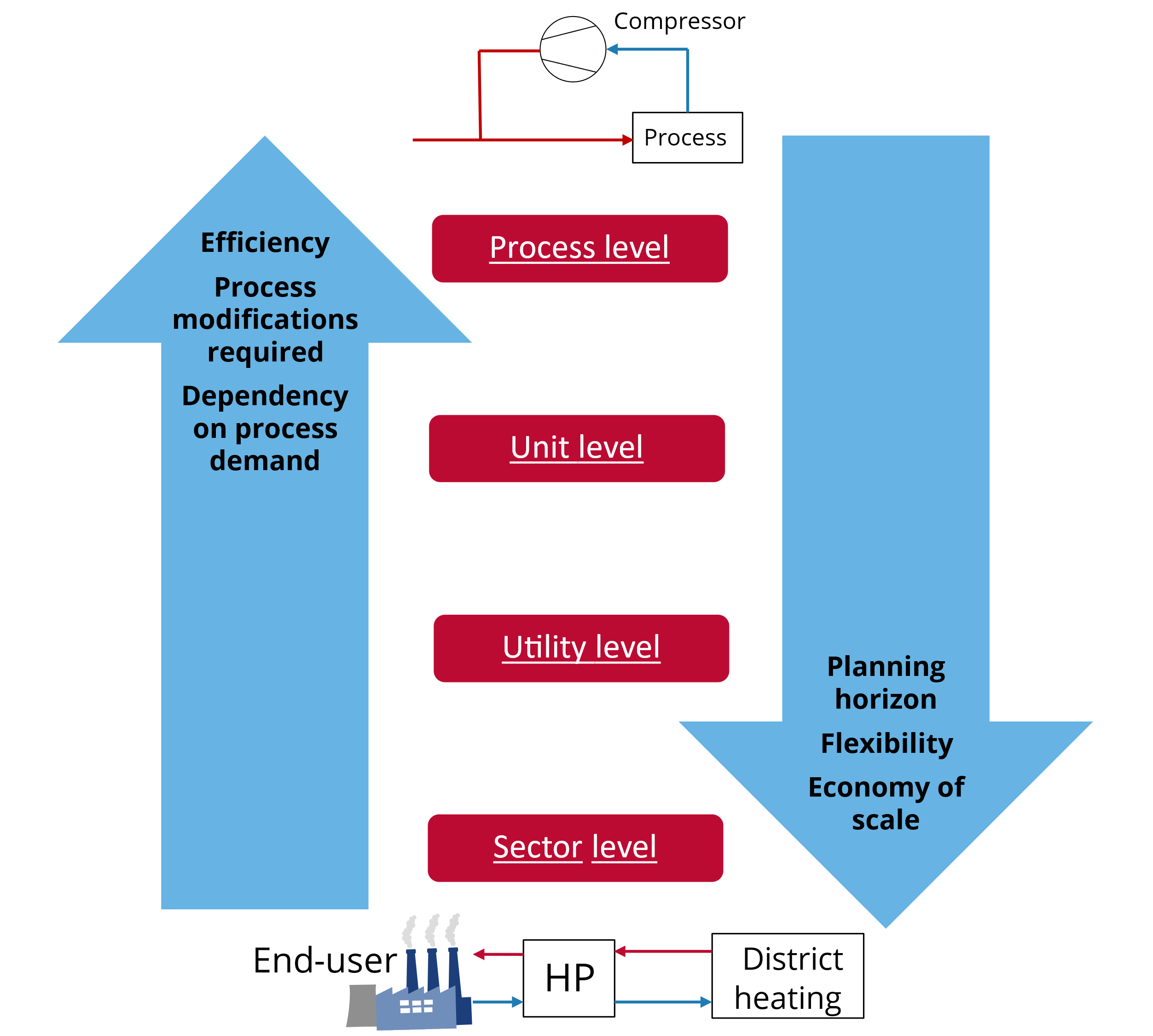
Different integration levels of high-temperature heat pumps and their effects
The graphic shows various levels at which the integration of a high-temperature heat pump can take place, as well as the effects. A more detailed description can be found in the Task 3 report of the IEA HPT Annex 58 and in the guideline for the development of a decarbonization strategy (https://heatpumpingtechnologies.org/annex58/task-3/).
Copyright: Danish Technological Institute
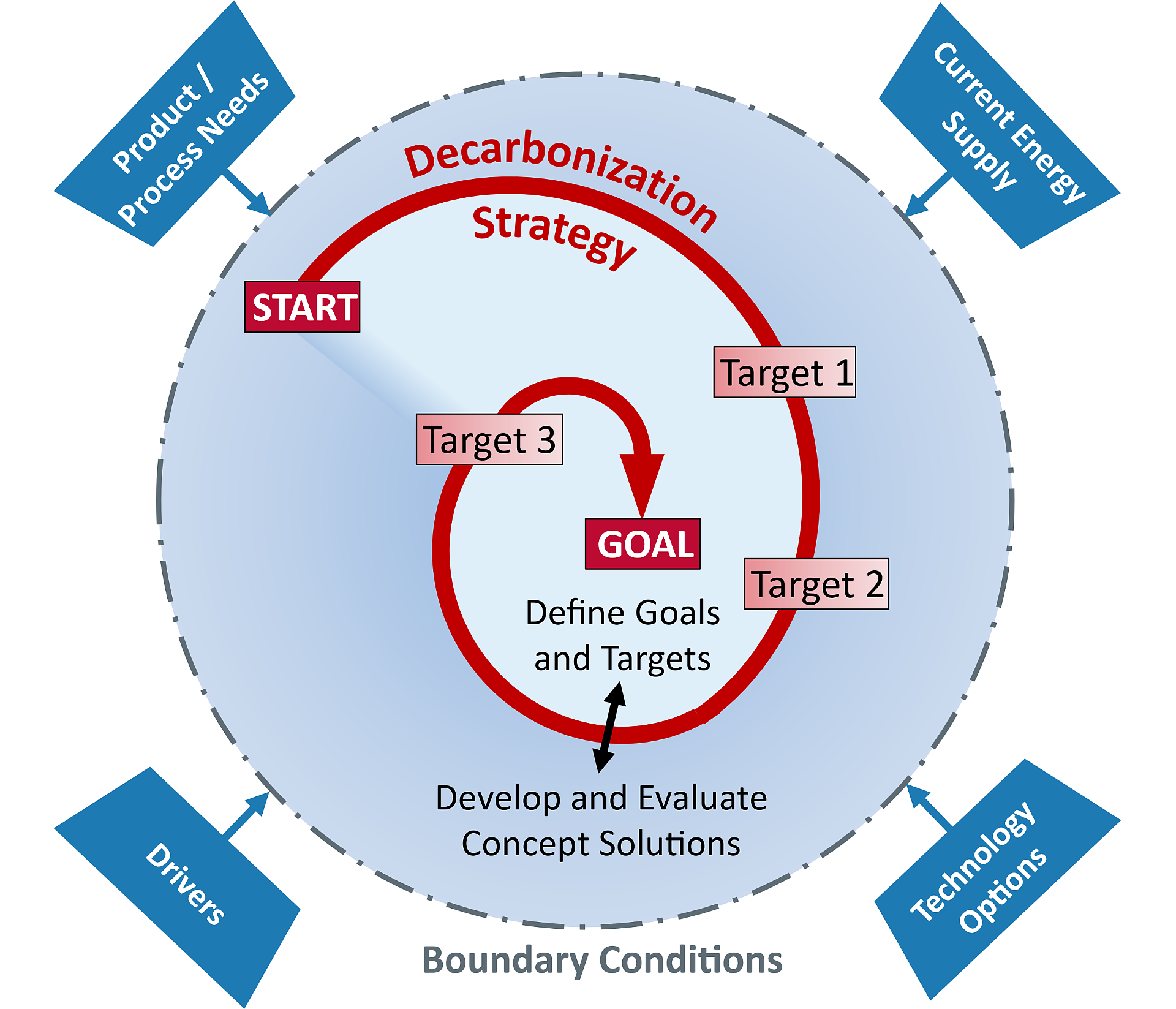
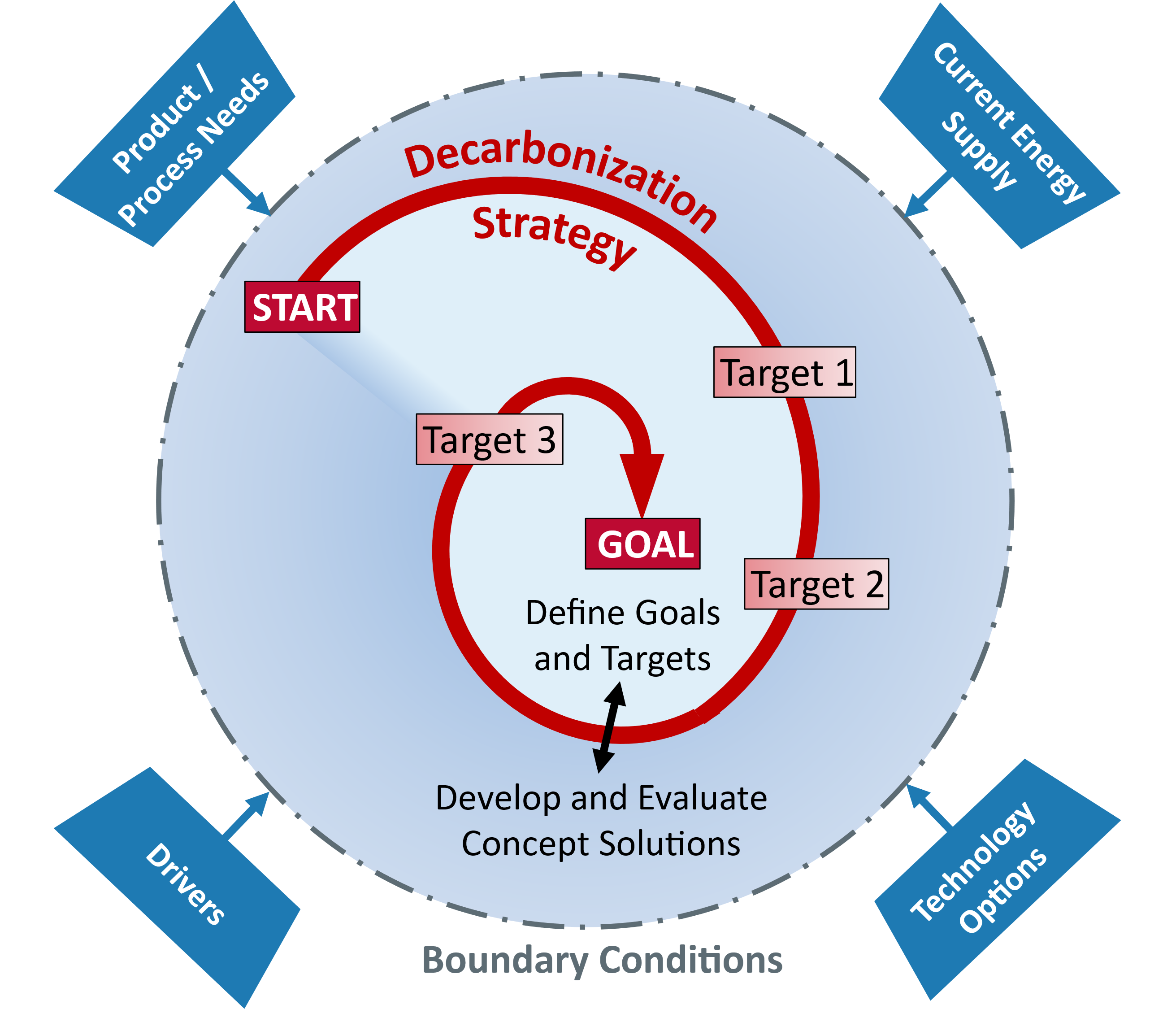
Connections in the development of a decarbonization strategy
The graphic shows different parts and influencing factors in the development of a decarbonization strategy for an industrial company. More information can be found in the Task 3 report of the IEA HPT Annex 58 (https://heatpumpingtechnologies.org/annex58/task-3/).
Copyright: TU Graz und AIT Austrian Institute of Technology GmbH
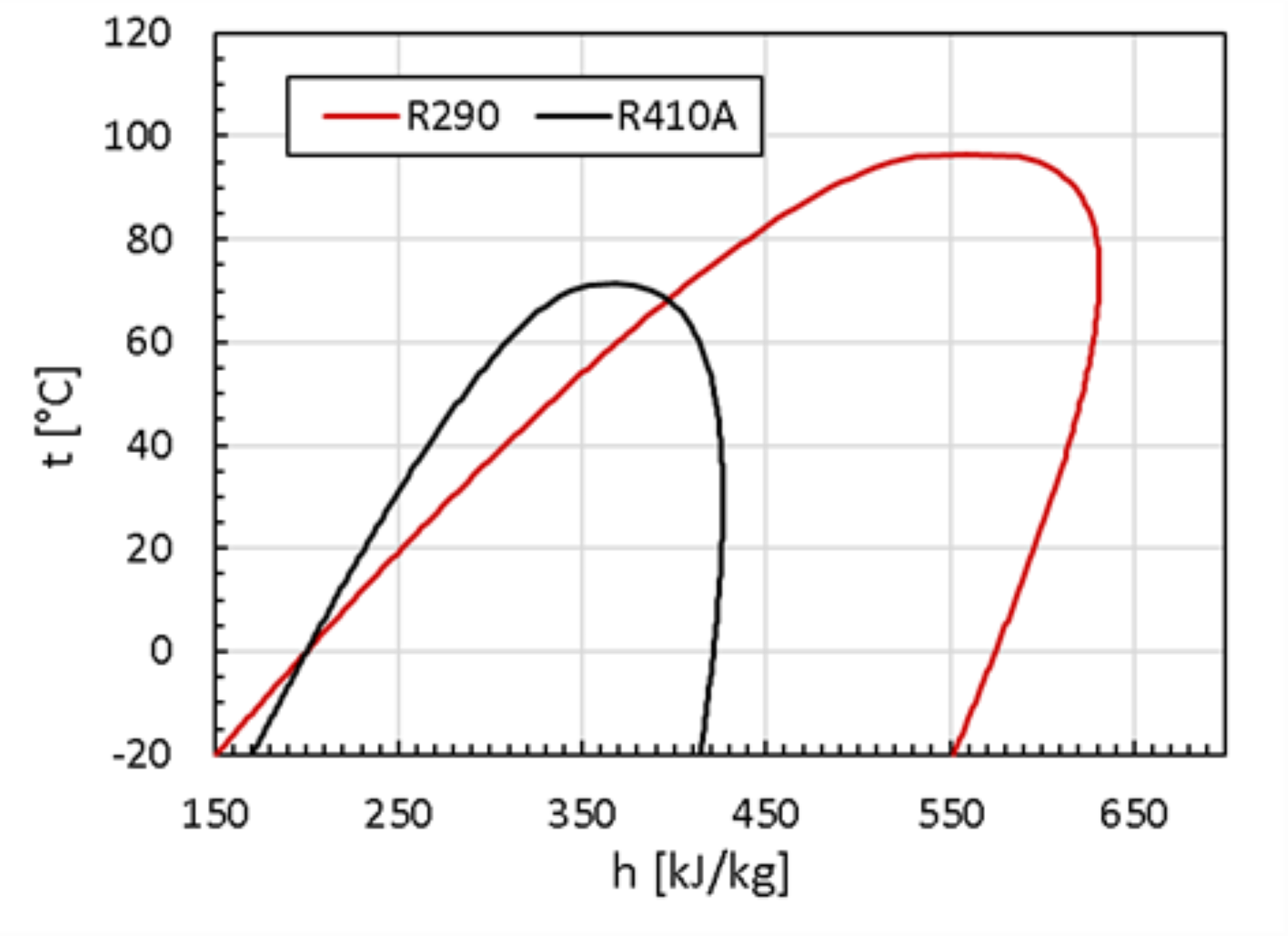
t/h diagrams of the refrigerants R290 and R410A
The comparison of the t/h diagrams of the refrigerants R410A and R290 shown in the figure shows the higher evaporation enthalpy of R290 and the difference in the critical temperatures.
Copyright: Institut für Wärmetechnik, TU Graz
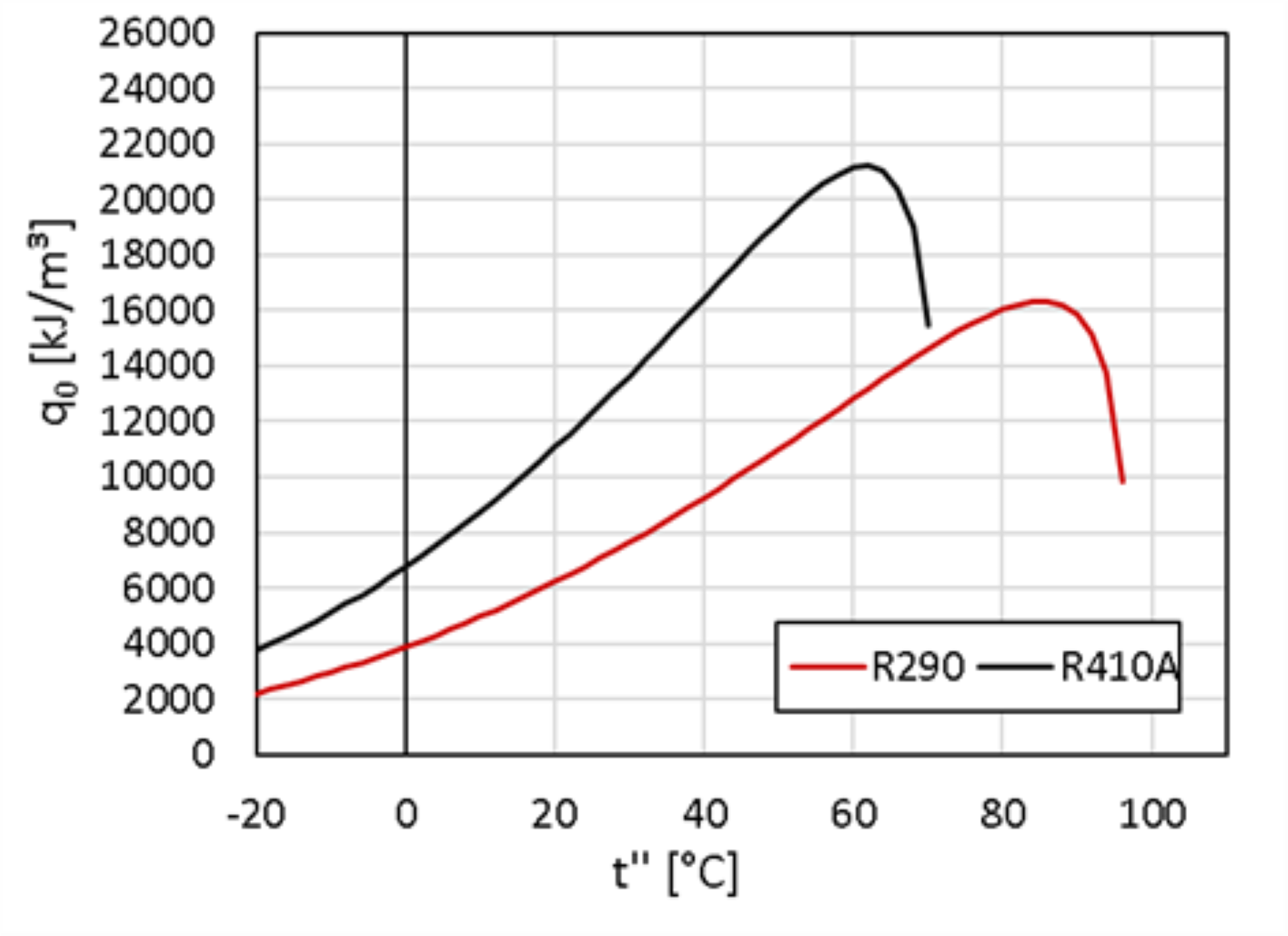
Volumetric cooling capacity of the refrigerants R290 and R410A
The figure shows the volumetric cooling capacity of R290 and R410A as a function of the dew point temperature.
Copyright: Institut für Wärmetechnik, TU Graz
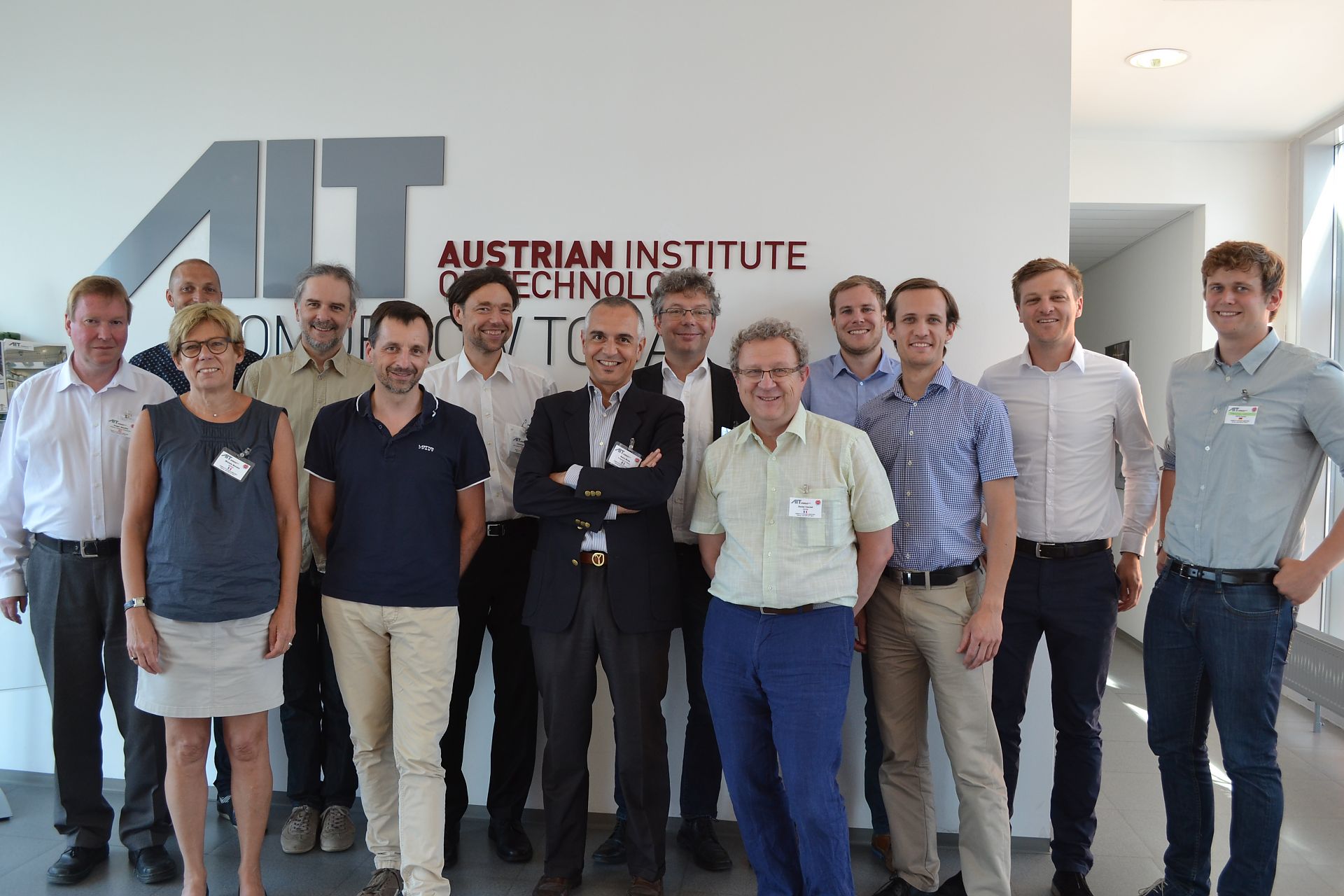
Group photo of the IEA HPT Annex 51 team
Group photo of the IEA HPT Annex 51 team at the kickoff meeting at AIT in Vienna from 20-21 June 2017.
Copyright: AIT, Österreich


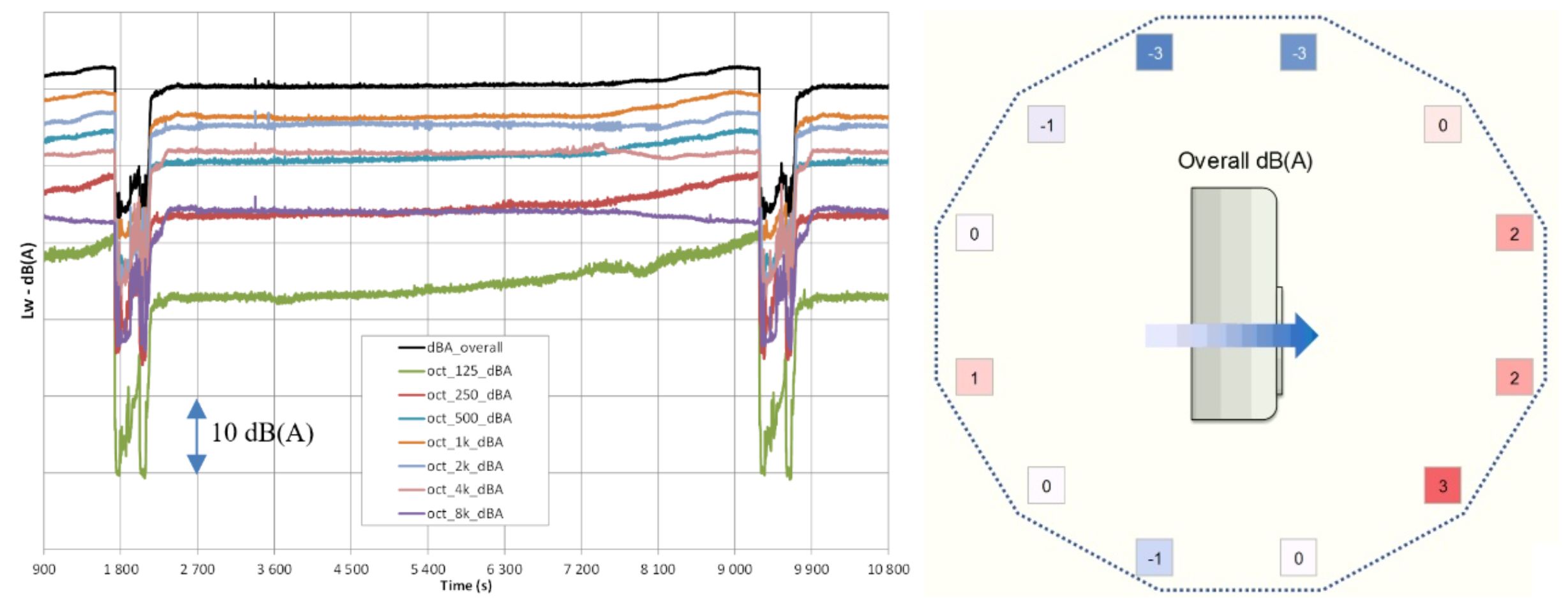
Time evolution of sound power level and radiation pattern
(left) Time-dependent A-weighted sound power level (in octave bands) between two de-frosting phases. (right) Directivity for the A-weighted total sound pressure level at a height of 75 cm.
Copyright: AIT, Österreich
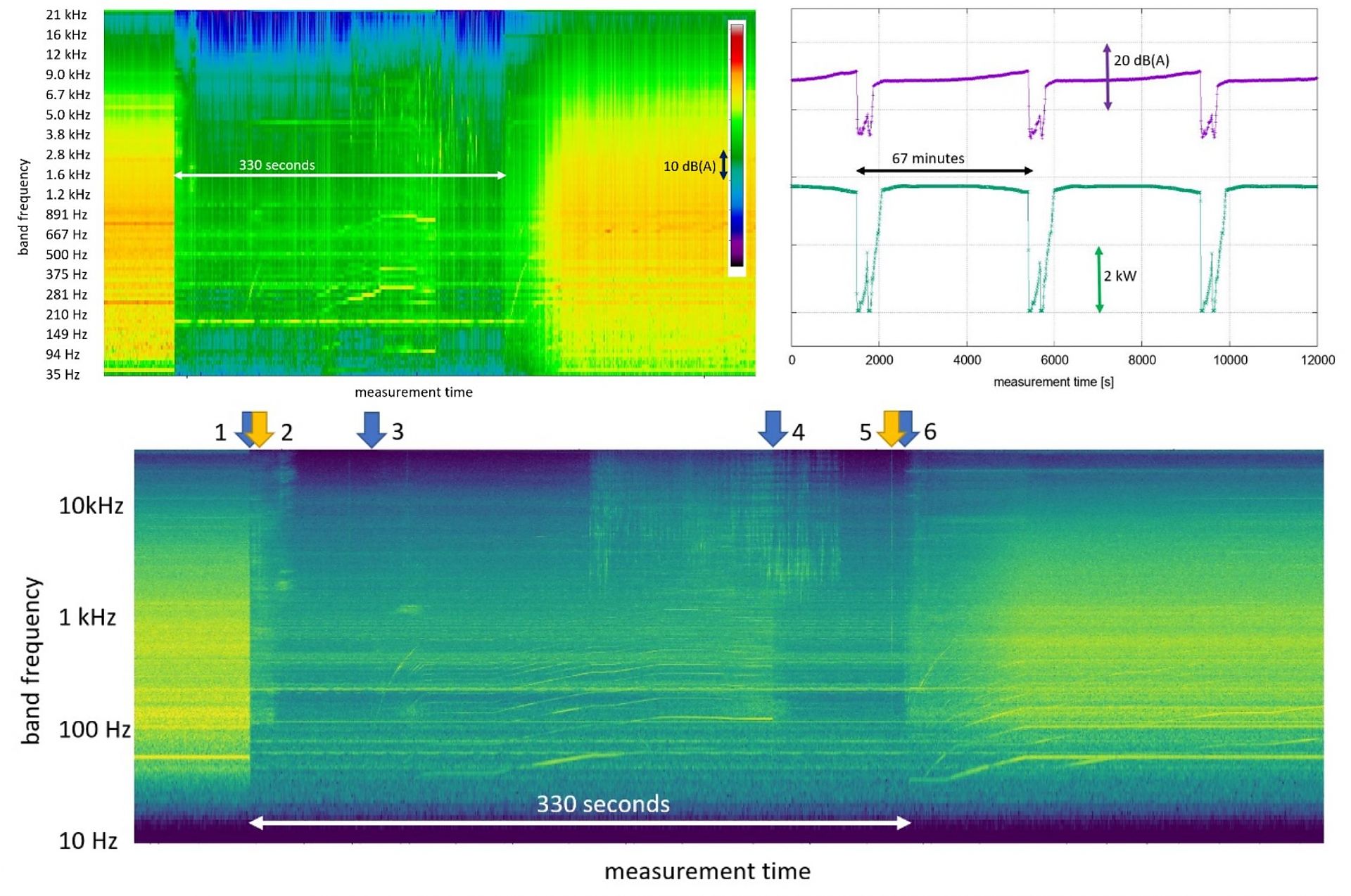
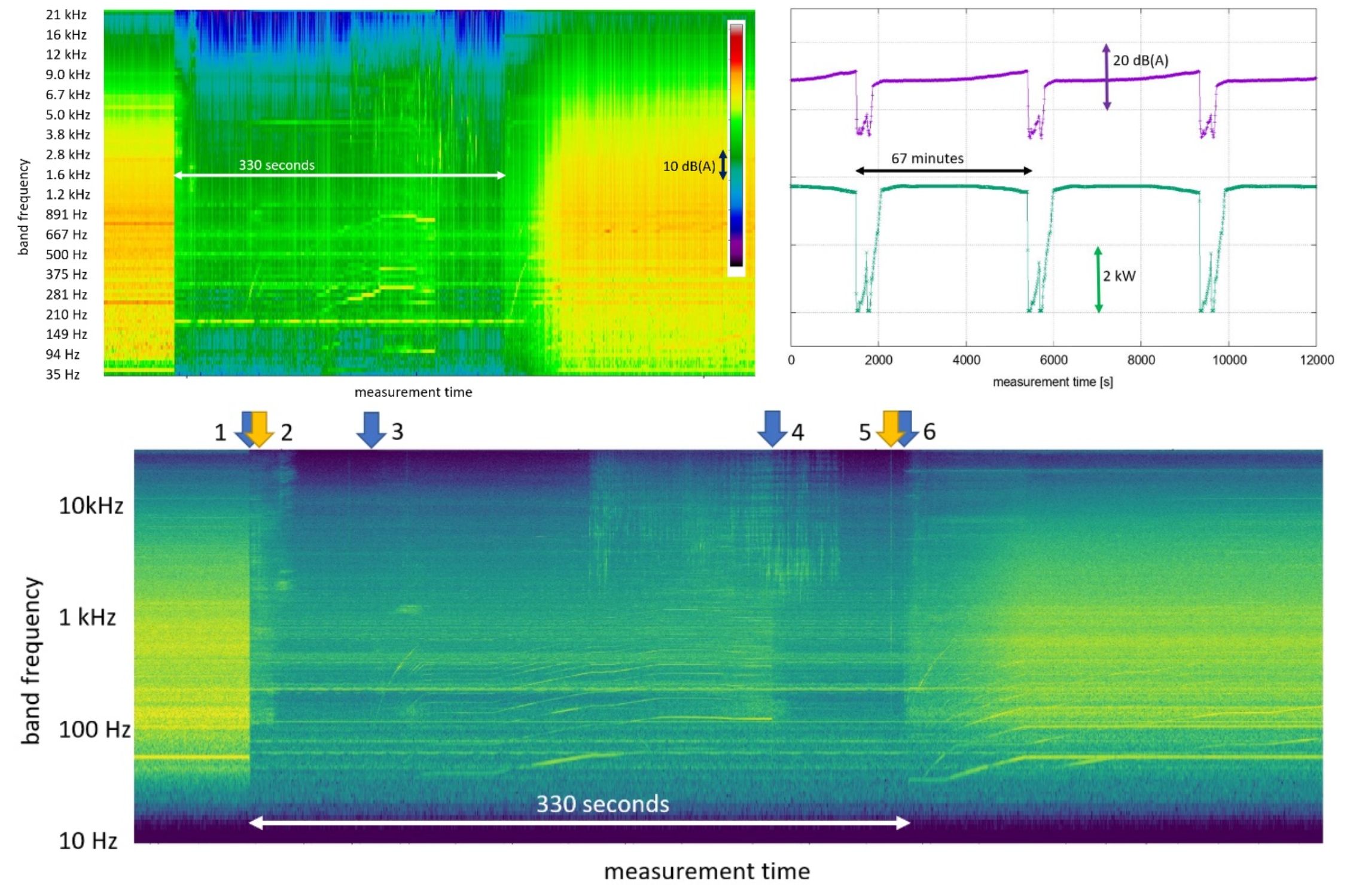
Acoustic signatus and time evolution of the sound power level during de-frosting
(top left) Frequency-resolved acoustic signatures (waterfall representation) during defrosting of an air-to-water heat pump. Time-resolved sound power level in third-octave band representation. (bottom) Time-resolved sound pressure level at a selected microphone position in narrow-band representation. (top right) A-weighted sound power level and electrical power consumption of an air-to-water heat pump with multiple defrost cycles.
Copyright: AIT, Österreich
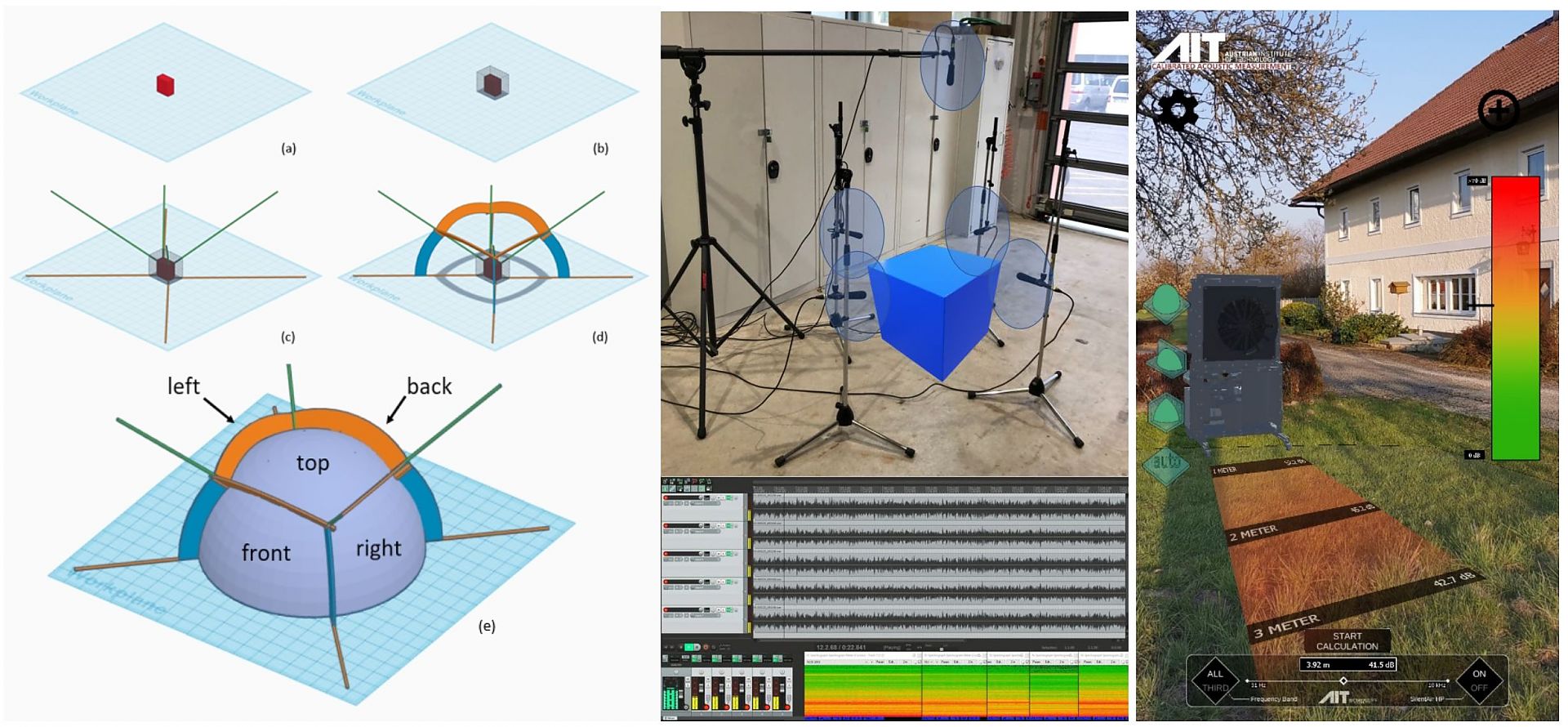
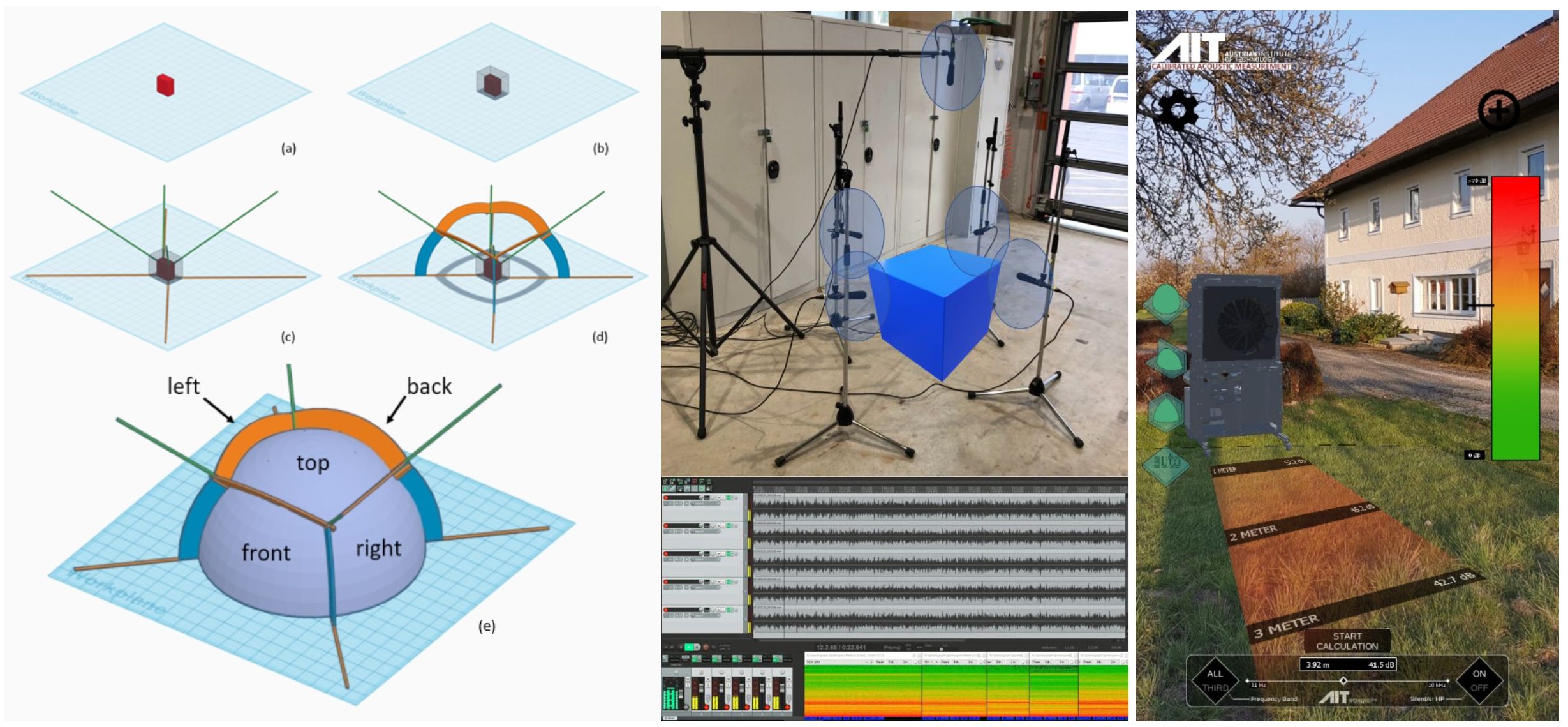
Acoustic App
(left) Visualization of the directivity measurement procedure: (a) the red box represents the sound-emitting HVAC component (e.g. heat pump); (b) sound pressure is recorded at a certain distance from the emitting surfaces at 5 locations - a measurement surface is created; (c) beams are created connecting the corners of the emitter to the corners of the measurement surface; (d) parts of the planes spanned by these beams intersect with a sphere; (e) final visualization of the 5 parts of the hemisphere associated with the 5 microphone measurement positions. (middle) 5 microphones are placed around a sound emitting object, one on each side and one from above. The lower part of the image shows the five signals and their corresponding frequency content in waterfall diagrams. (right) A laboratory heat pump (SilentAirHP) in a real environment with AR, with frequency dependent sound propagation.
Copyright: AIT, Österreich
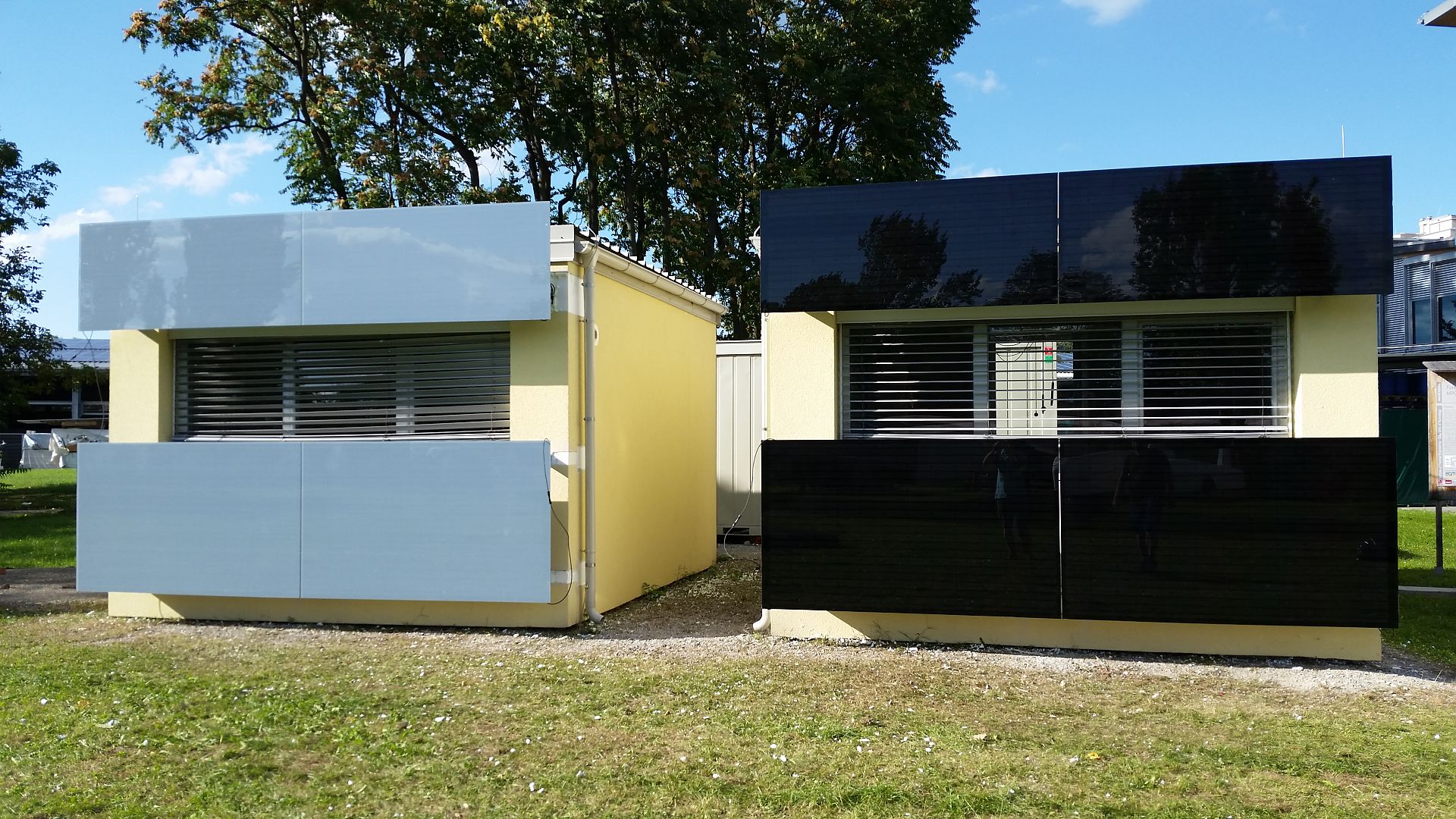
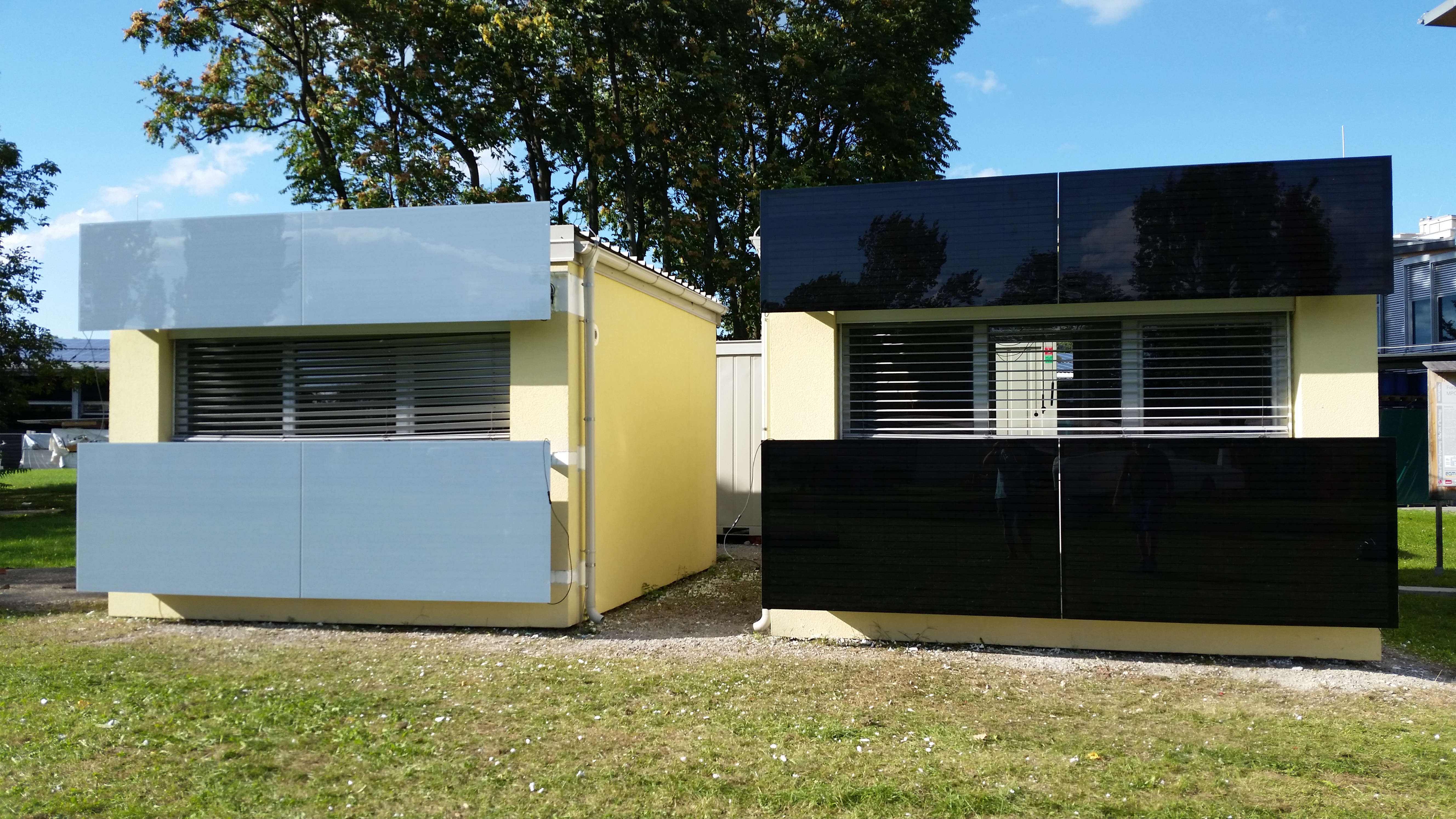
Test objects with photovoltaics from the south, left: unconditioned, right: conditioned with the COOLSKIN system
Two identical test buildings are available on the campus of Graz University of Technology, which have an almost identical thermal behaviour. The functional model of a PV-powered façade-integrated cooling and heating system developed in the COOLSKIN project was installed in one of the buildings, the second remained unconditioned. The developed system was successfully tested in a 1.5 year monitoring period.
Copyright: TU Graz

nZEB office building Post am Rochus
The building owner’s goal was to design, build and use a modern, comfortable building. The building development process aimed to have very high standards of sustainability and energy efficiency in achieving, commissioning and operation. Therefore, the construction project was supported by research experts from the Austrian Institute of Technology (AIT). The overall objective of the research project was to shorten the commissioning phase by detailed investigation and optimisation of the control strategies of the building services engineering. Through the application of integral planning, construction/operating companies were brought together with experts. The results were clearly documented and control strategies were hardware tested in advance so that malfunctions could be detected, avoided and eliminated.