
Project Image Pool
There are 439 results.
Terms of use: The pictures on this site originate from the projects in the frame of the programmes City of Tomorrow, Building of Tomorrow and the IEA Research Cooperation. They may be used credited for non-commercial purposes under the Creative Commons License Attribution-NonCommercial (CC BY-NC).
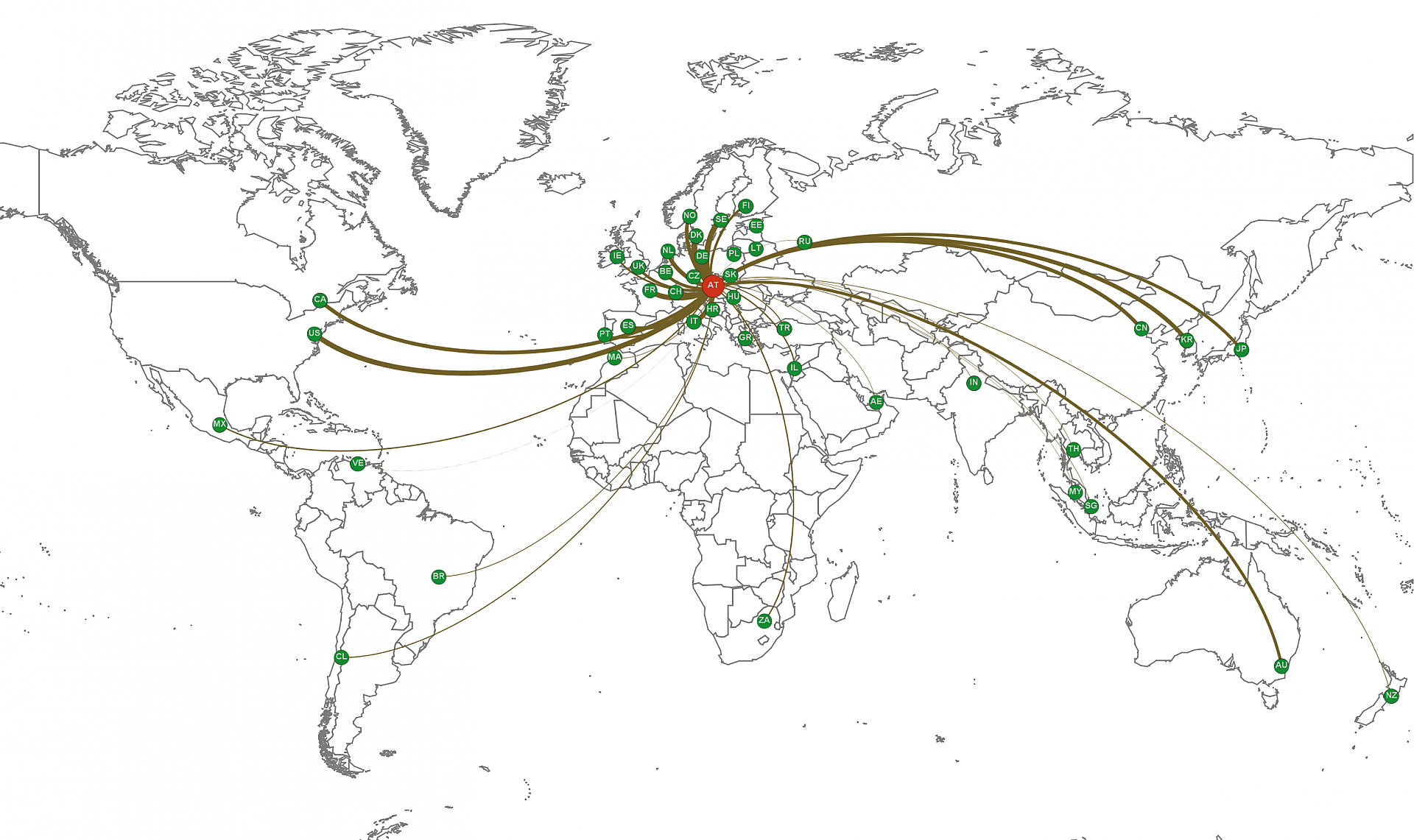
International cooperations of Austria in context of TCP activities.
Worldmap of Austrias cooperations with other countries in context of the IEA Technology Collaboration Program reasearch activities. Line thickness indicates the number of cooperations.
Copyright: Österreichische Energieagentur 2018

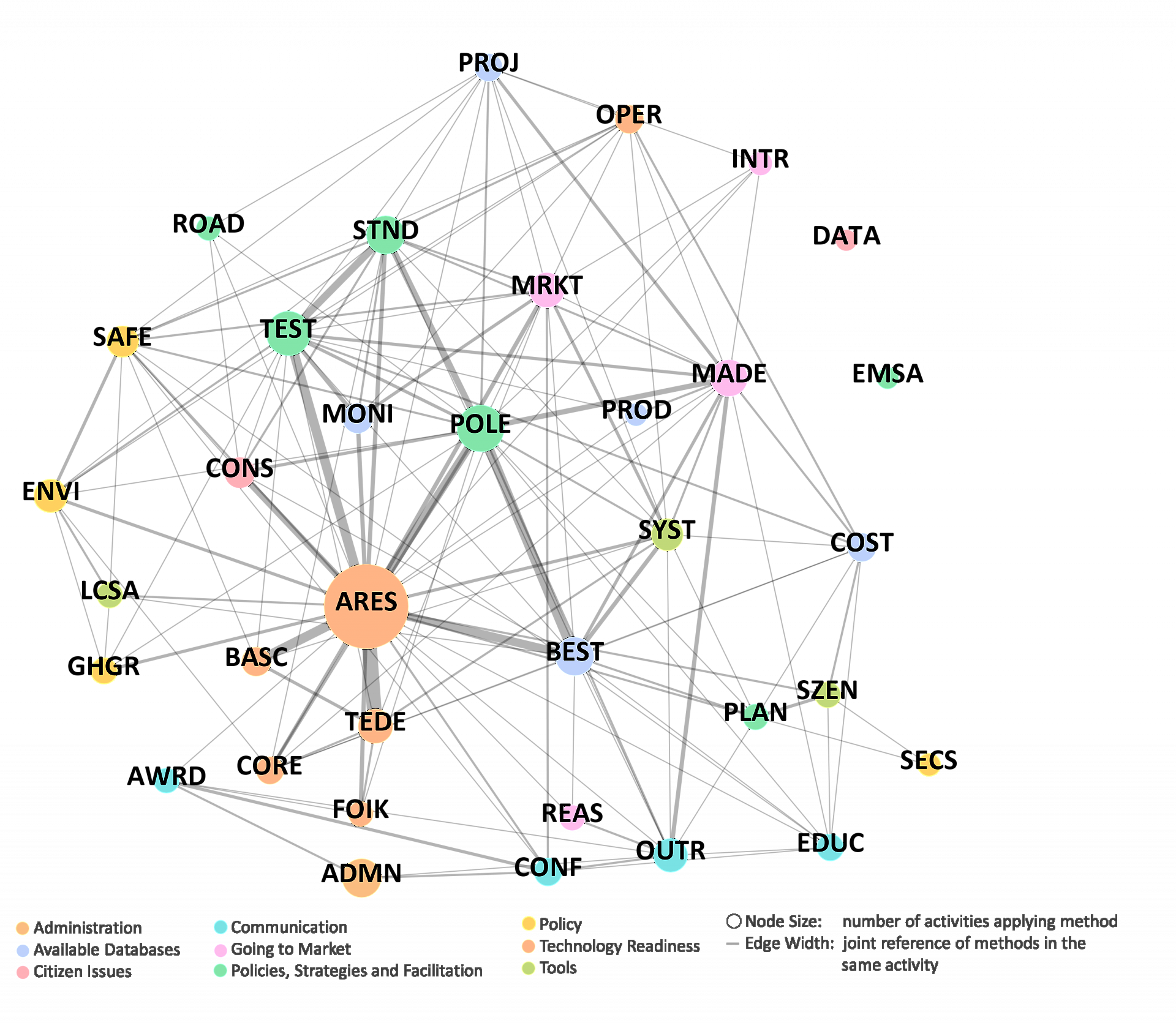
Combination of Methods used by TCP-Activities
A set of methods was developed to categorize the kind of project work that is done in the activities. The figure shows which methods are applied how often in total (node size), and which methods were frequently applied together (edge width) by activities. The color corresponds to the different method cate-gories described in chapter.
Copyright: Österreichische Energieagentur, 2018
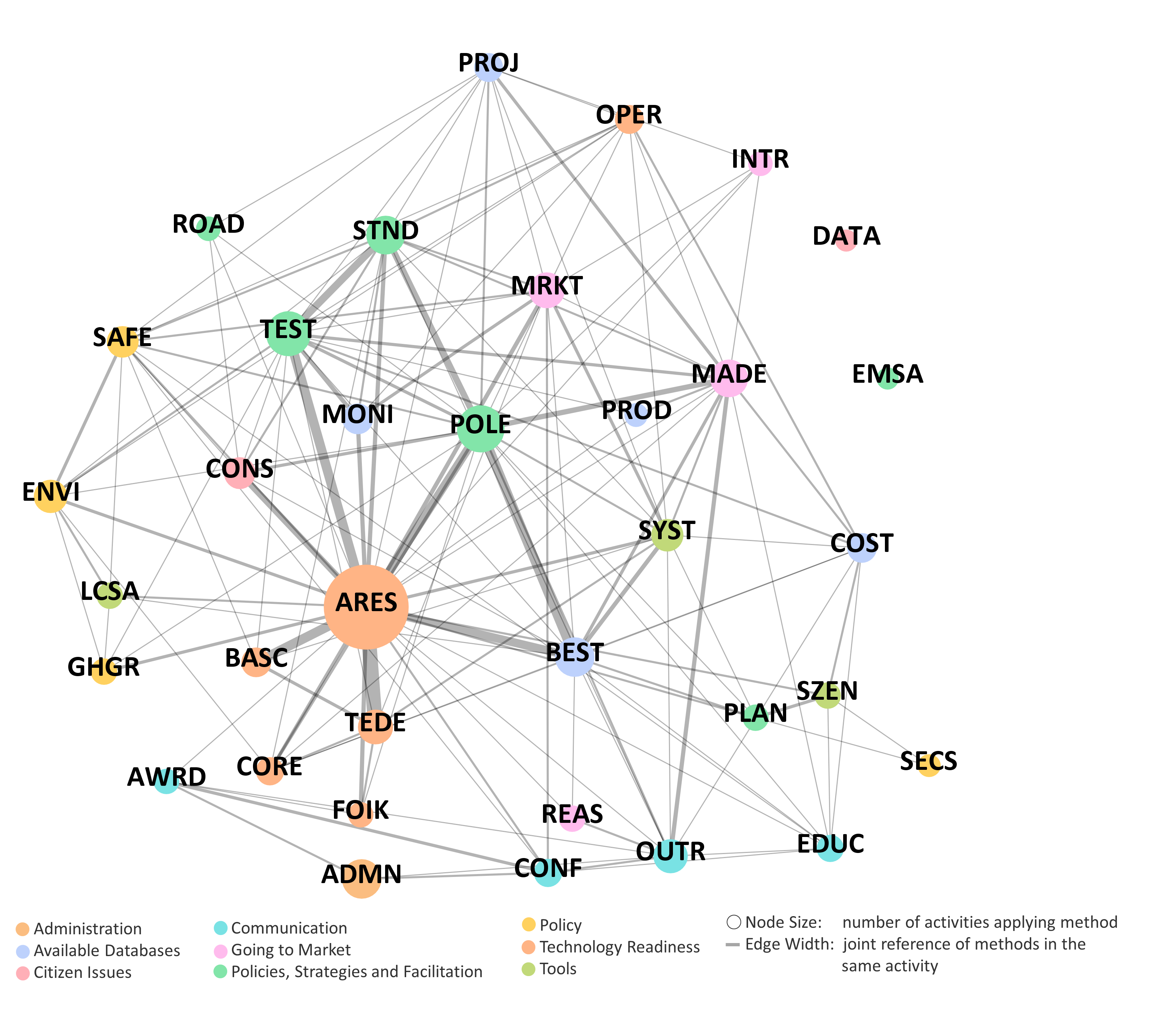
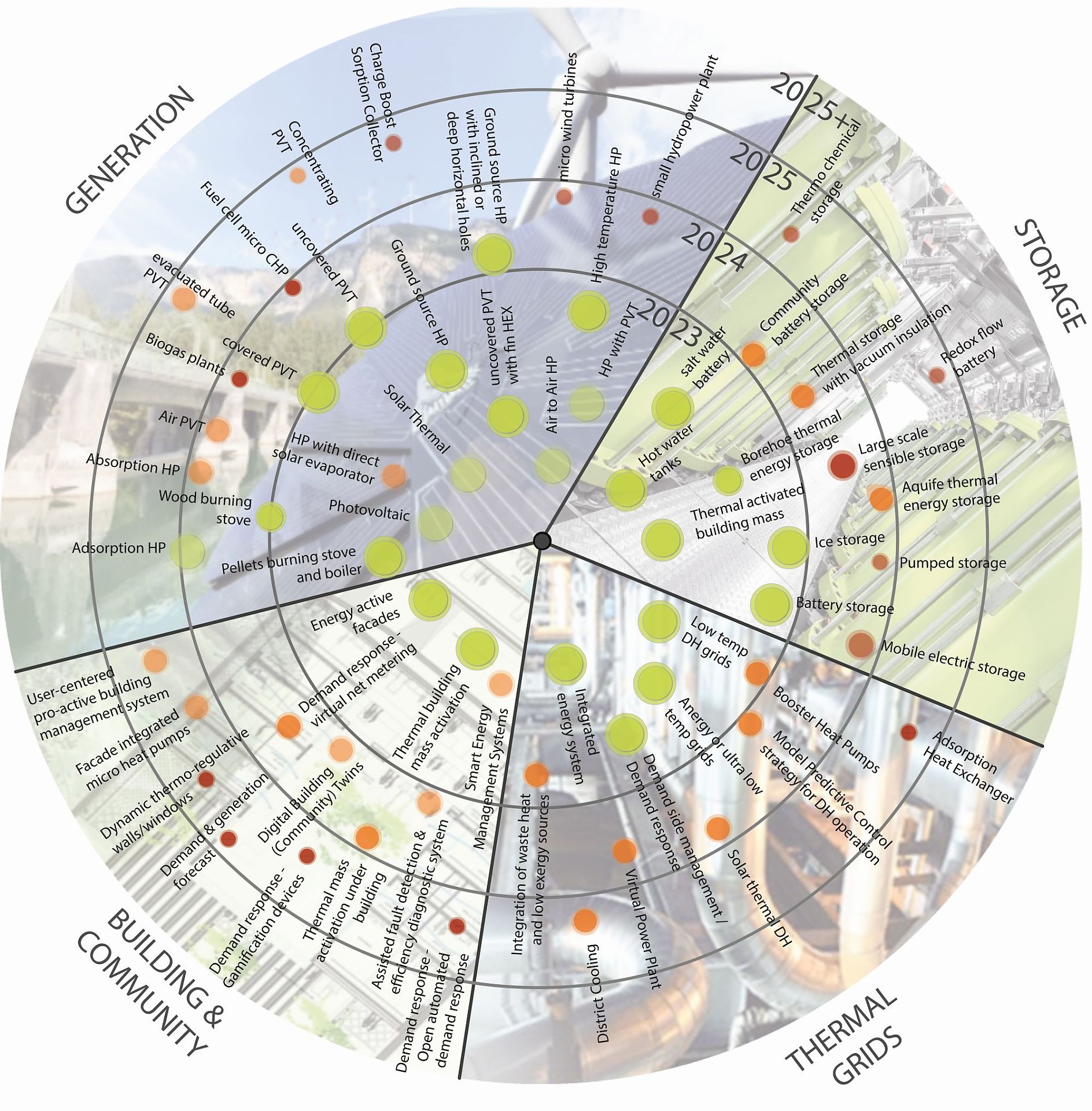
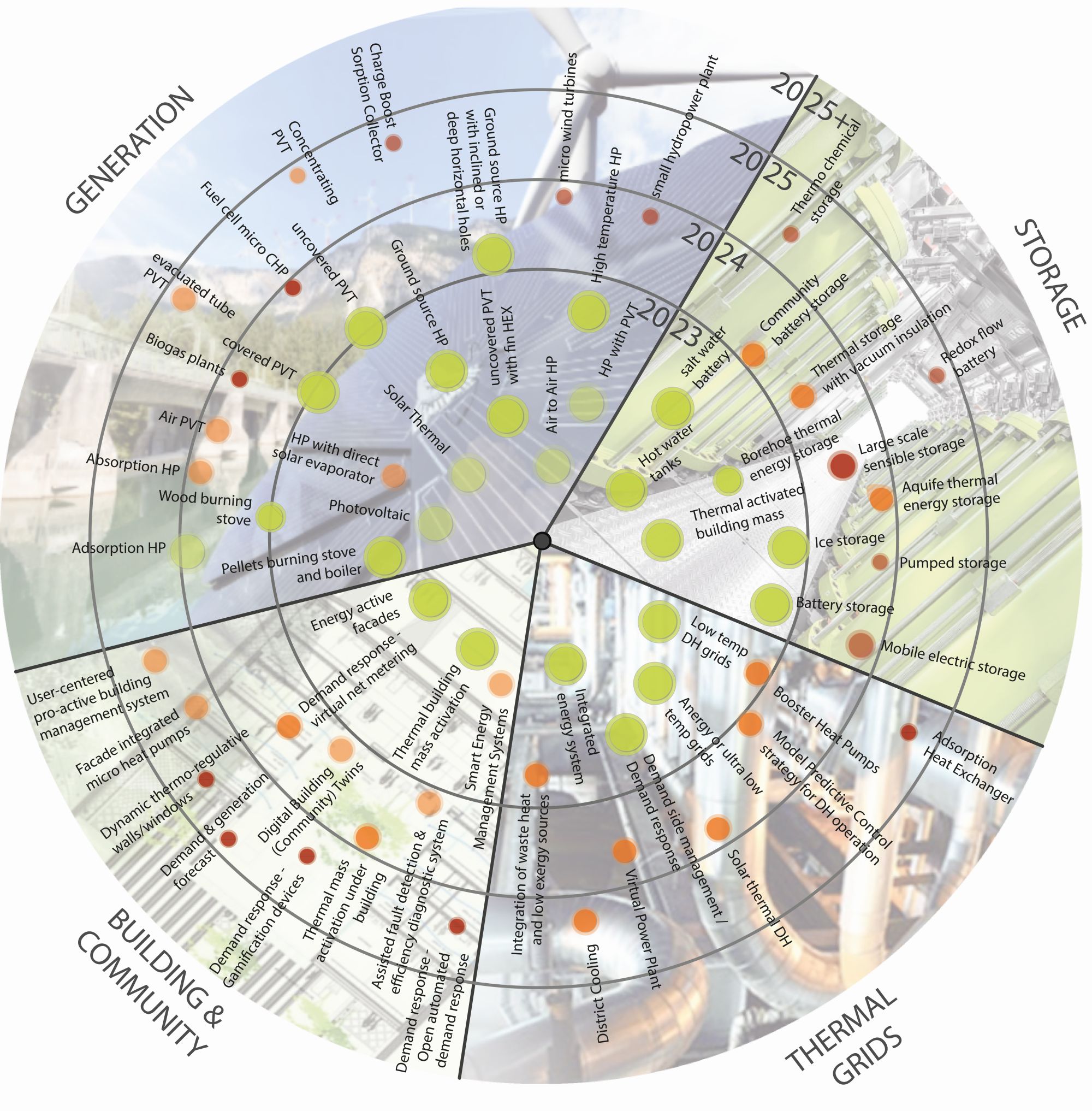
Technology Radar for Solar Energy Buildings
The Technology Radar for Solar Energy Buildings, developed by the IEA SHC Task 66 Subtask D team under the lead of AEE INTEC, provides a comprehensive evaluation of over 50 technologies and solutions contributing to solar energy buildings. It categorizes measures into four key areas: generation, storage, thermal grids, and building & community, and assesses their readiness, market competitiveness, and potential for adoption. Among these, 24 technologies, such as PV, solar thermal, biomass boilers, PVT collectors, and low-temperature district heating grids, were highlighted as having high market relevance. The analysis considers factors like barriers to market entry, regulatory impact, and the overall value and growth potential of each solution. To support stakeholders like architects and engineers, the team is compiling detailed factsheets and will publish the findings in the 2025 report New Technologies and Components for Solar Energy Buildings.
Copyright: AEE INTEC
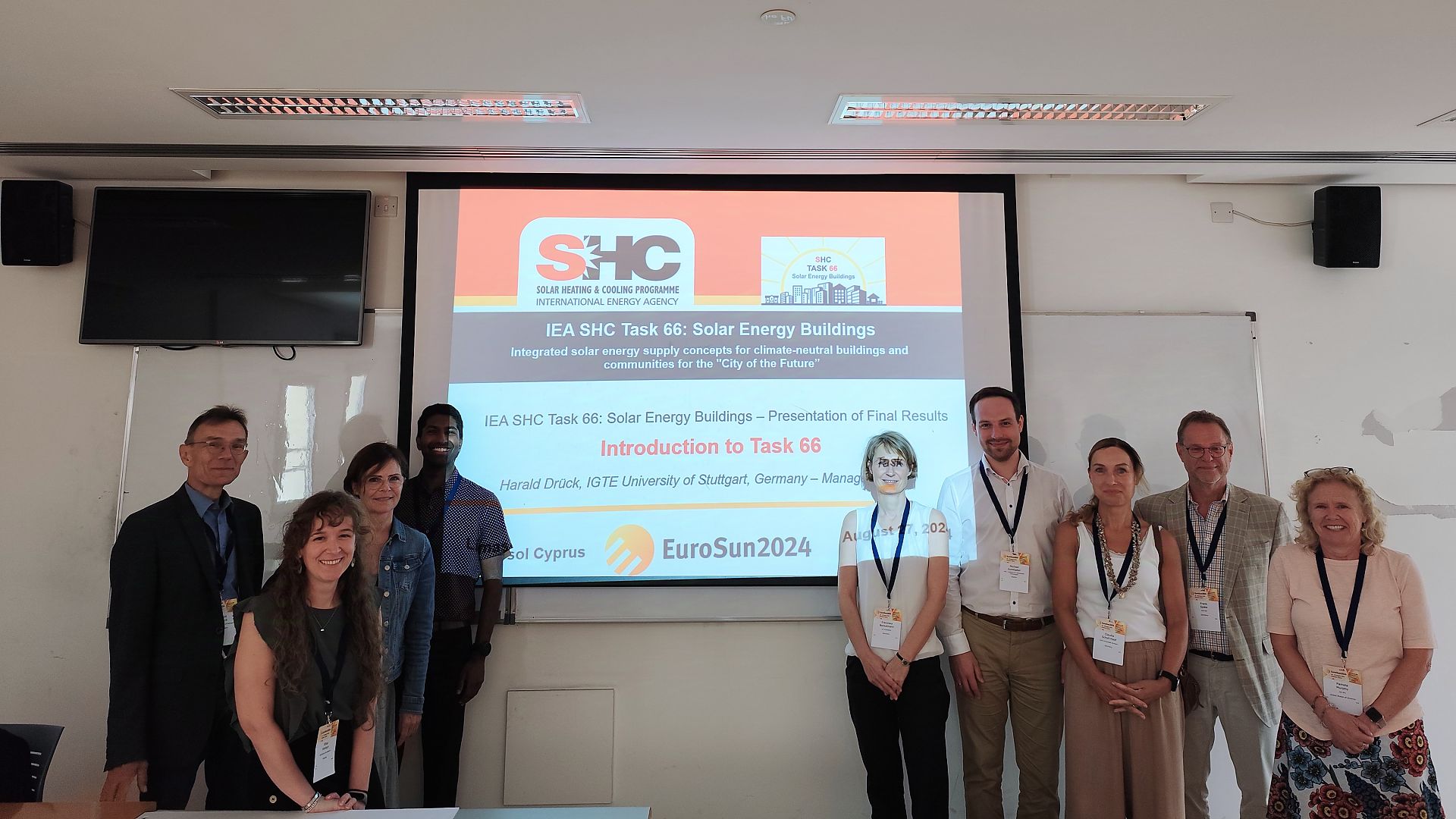
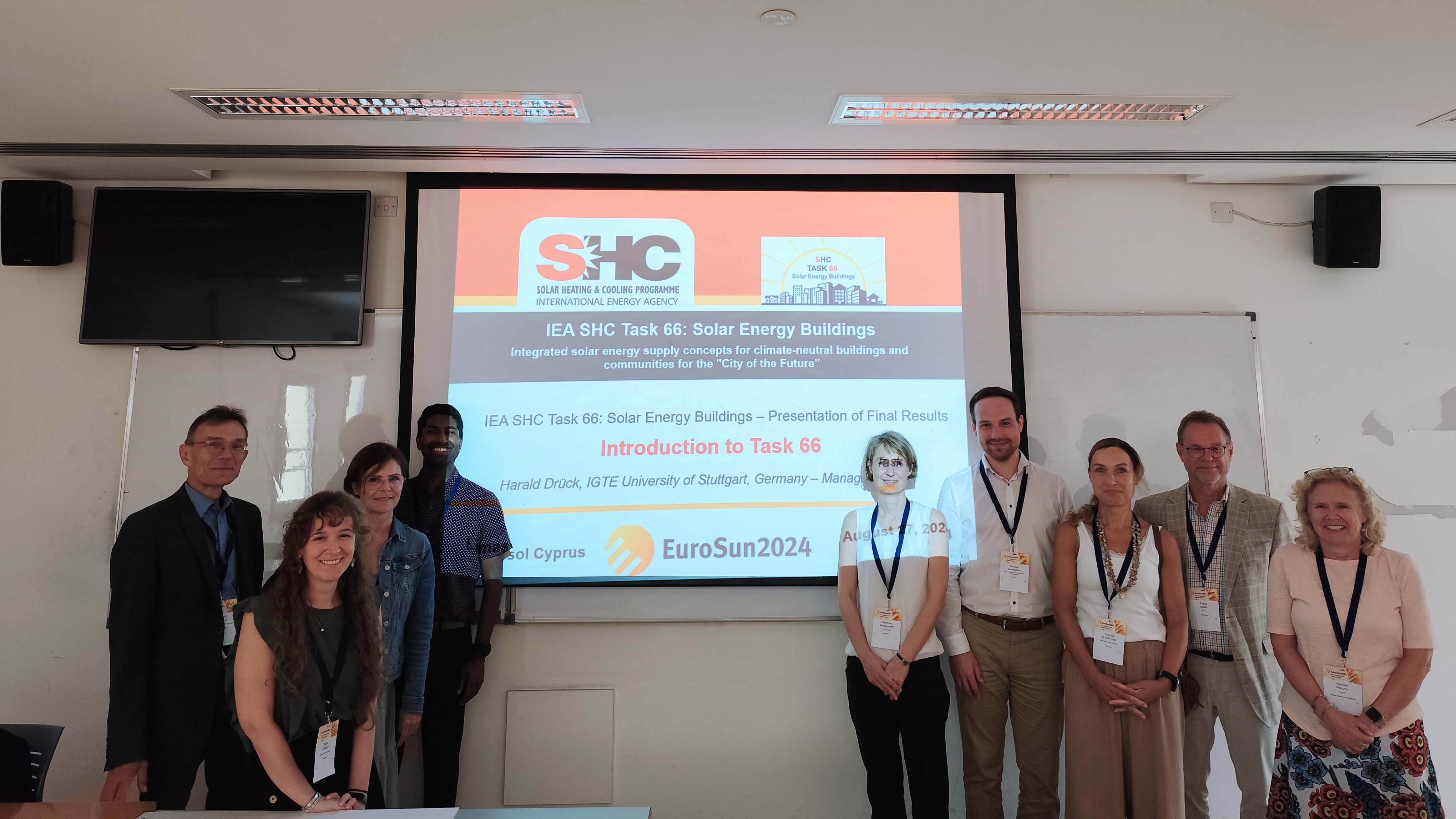
IEA SHC Task 66: Solar Energy Buildings – Presentation of final results
IEA SHC Task 66 “Solar Energy Buildings” presented the final results of their activities at the EuroSun Conference 2024 in Limassol, Cyprus, on Tuesday, 27 August, from 11:00 to 12:30 EEST. Over three years, an international team of scientists and industry representatives collaborated on the topic “Solar Energy Buildings.” The event featured presentations by the task manager, subtask leaders, and an industry representative. Dr. Harald Drück, Manager of Task 66 from the University of Stuttgart’s IGTE, provided an overview of the project and highlighted key achievements. Subtask leaders shared summaries of their findings: Prof. Frank Späte (OTH-AW, Germany) discussed key performance indicators for assessing solar energy buildings, while Elsabet Nielsen (Technical University of Denmark) showcased demonstration projects of completed solar energy buildings. Michael Gumhalter (AEE INTEC, Austria) explored current and future technologies in the field. Additionally, Zanil Narsing from Naked Energy Ltd. (UK) presented on "Solar Energy Buildings with Advanced Solar Thermal and Photovoltaic-Thermal (PVT) Collectors." More details on Task 66 are available on their website: https://task66.iea-shc.org/.
Copyright: AEE INTEC
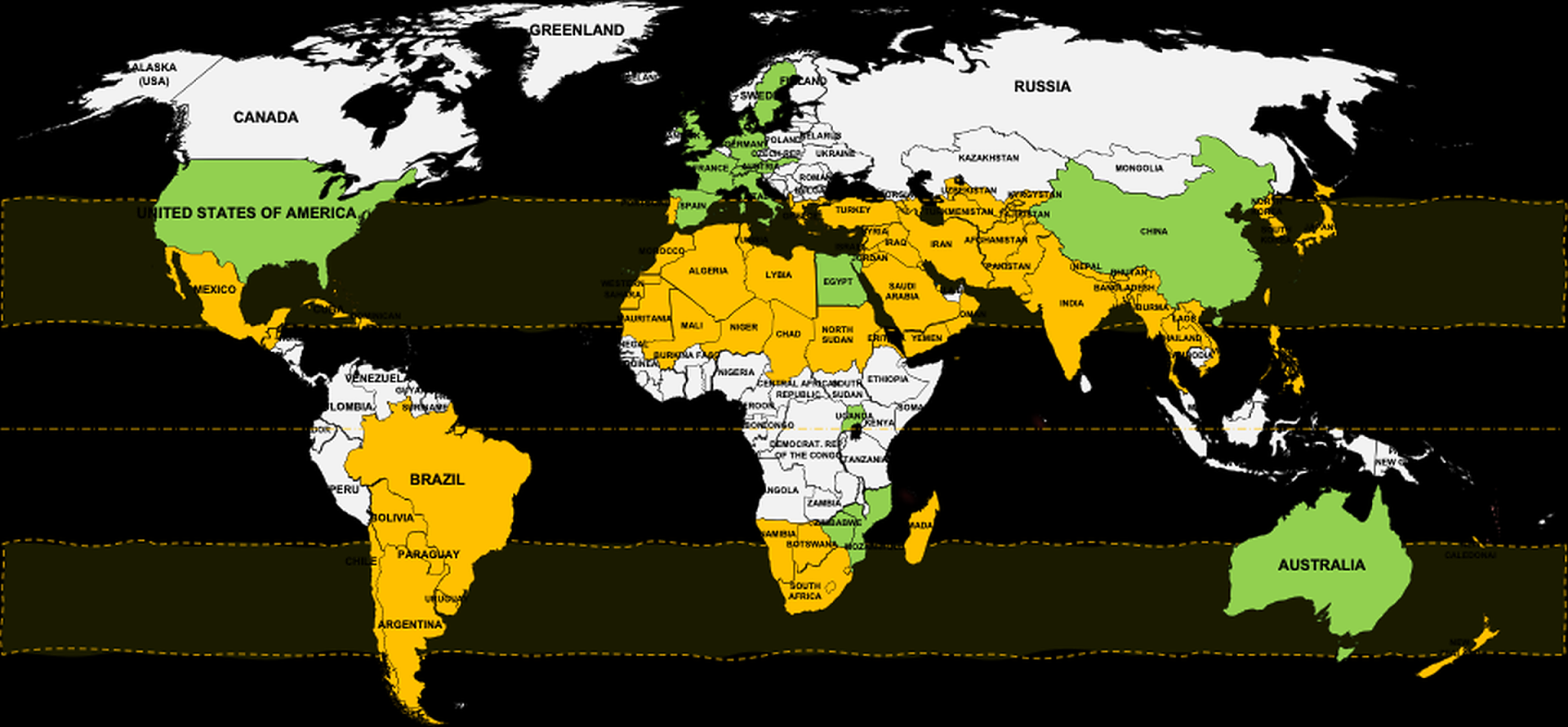
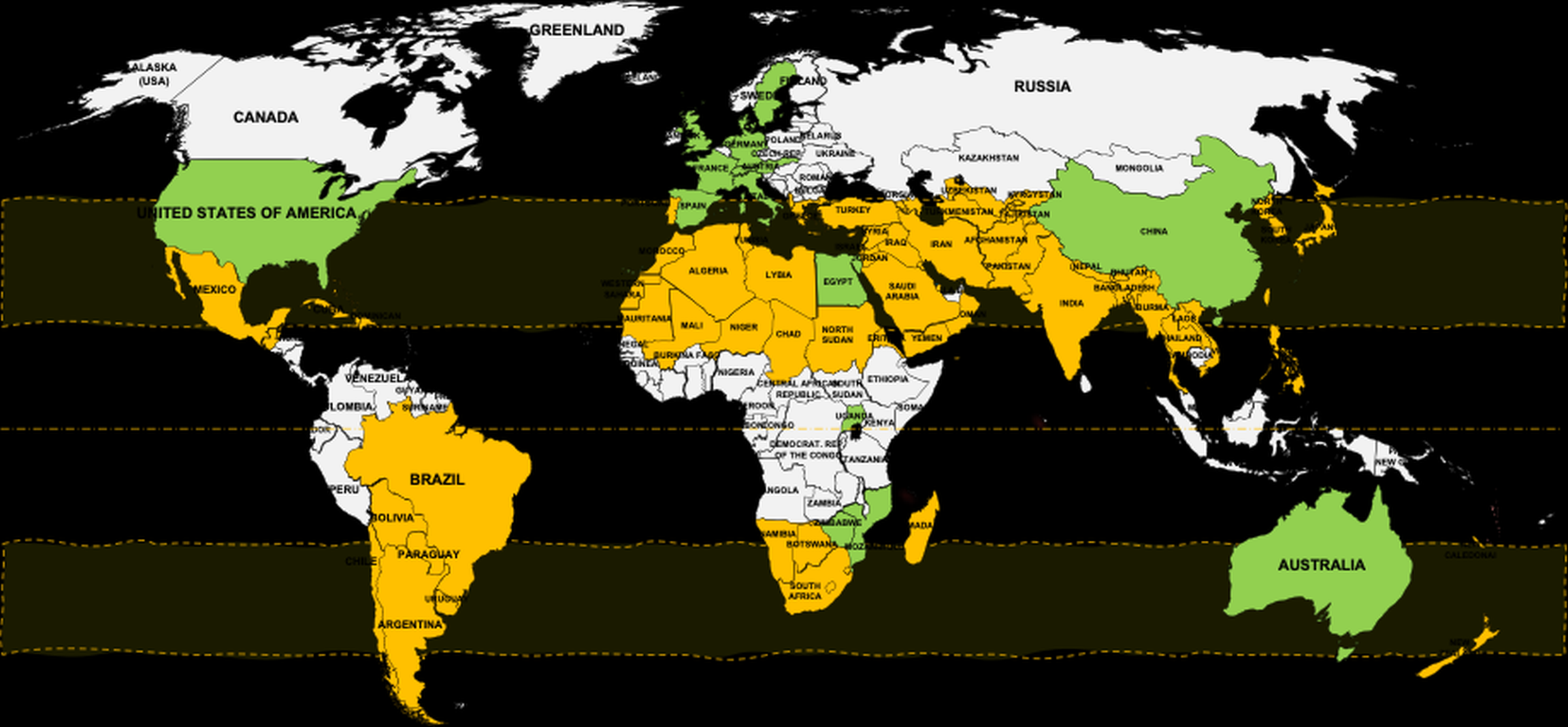
Sunbelt regions
Sunbelt countries (orange) and IEA SHC Task 65 participants (green)
Copyright: Neyer Brainworks GmbH / Dr Jakob Energyresearch GmbH
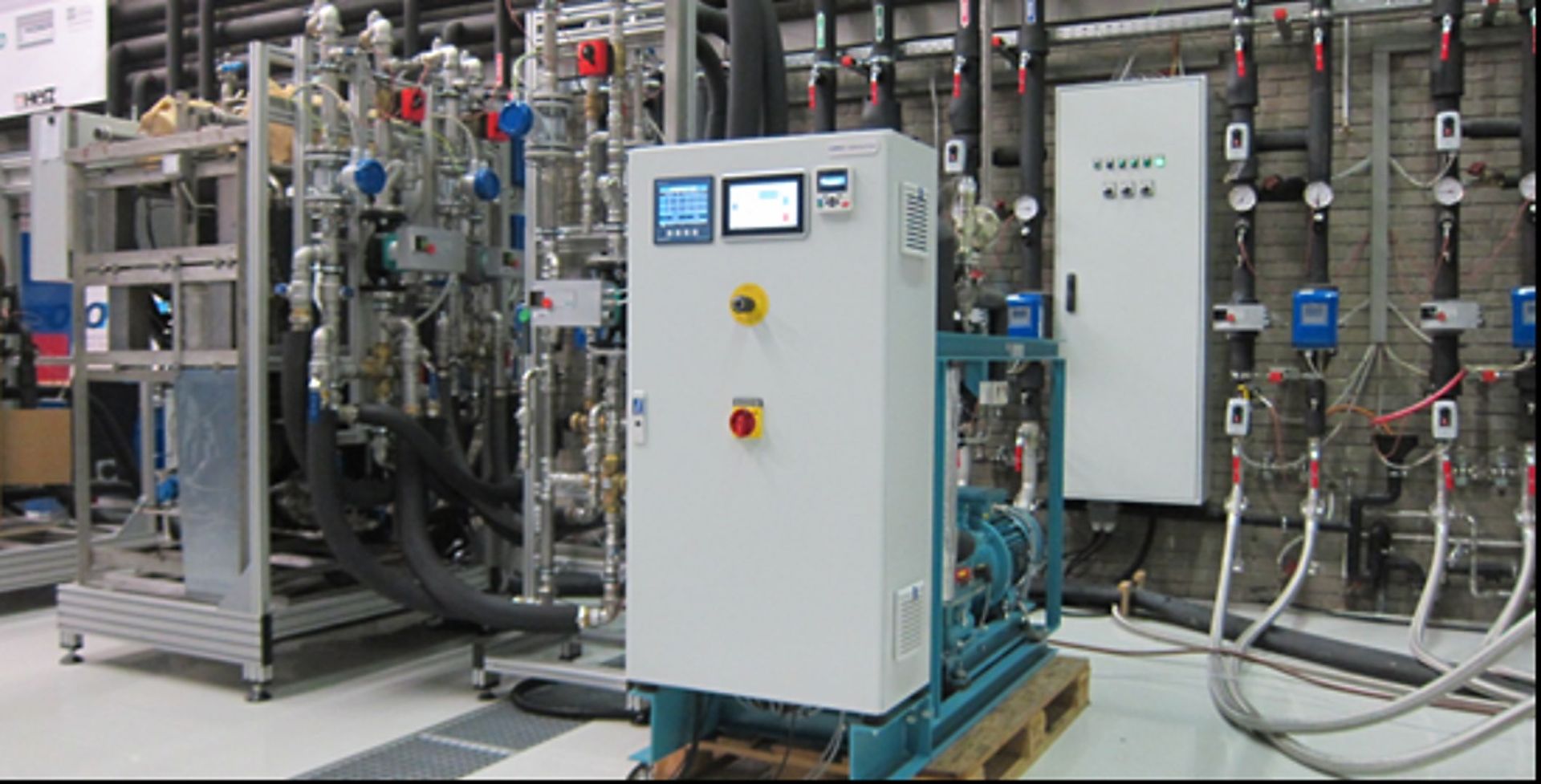
Hybrid Solar Cooling Concept
As part of the SolarHybrid project, functional models for an ammonia/water (NH3/H2O) single-/half-effect (SE/HE) absorption chiller were adapted based on the previous DAKtris project and a new NH3 compression chiller was built.
Copyright: UIBK
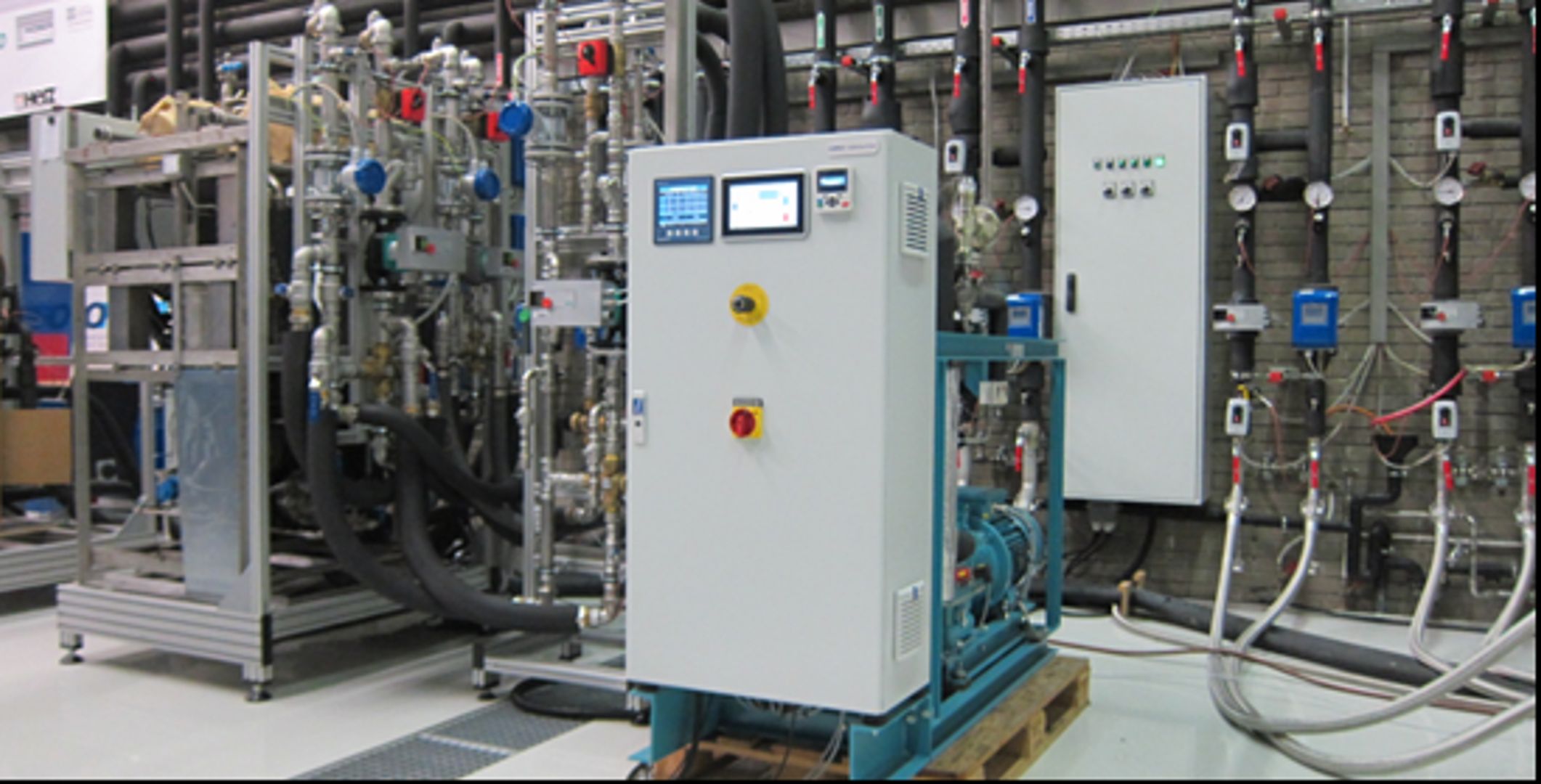
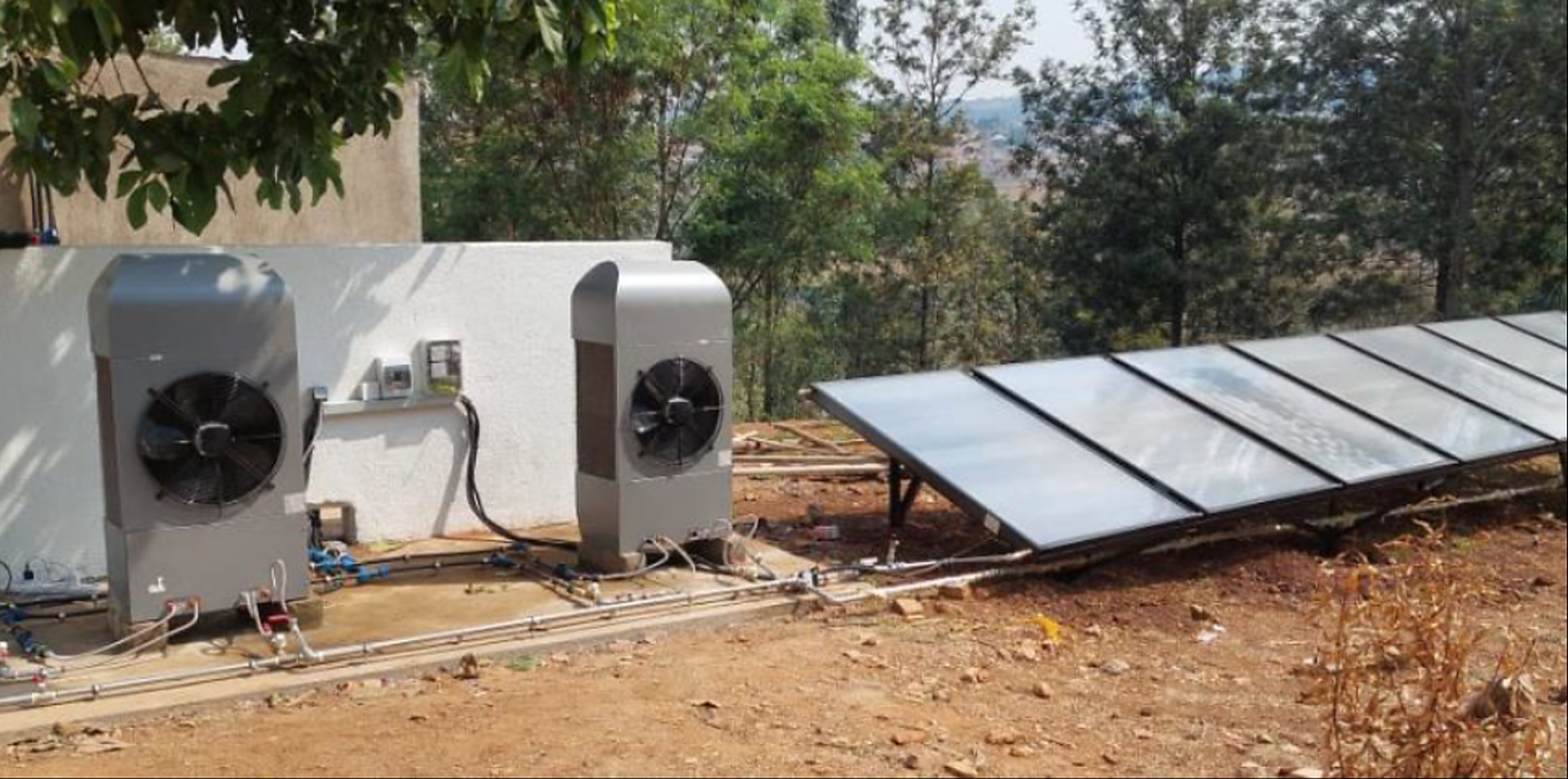
PURIX Solar Cooling System
PURIX provides sustainable cooling technologies, leveraging R718 (water), a natural, non-flammable refrigerant, to develop environmentally friendly air conditioning and cooling systems.
Copyright: PURIX
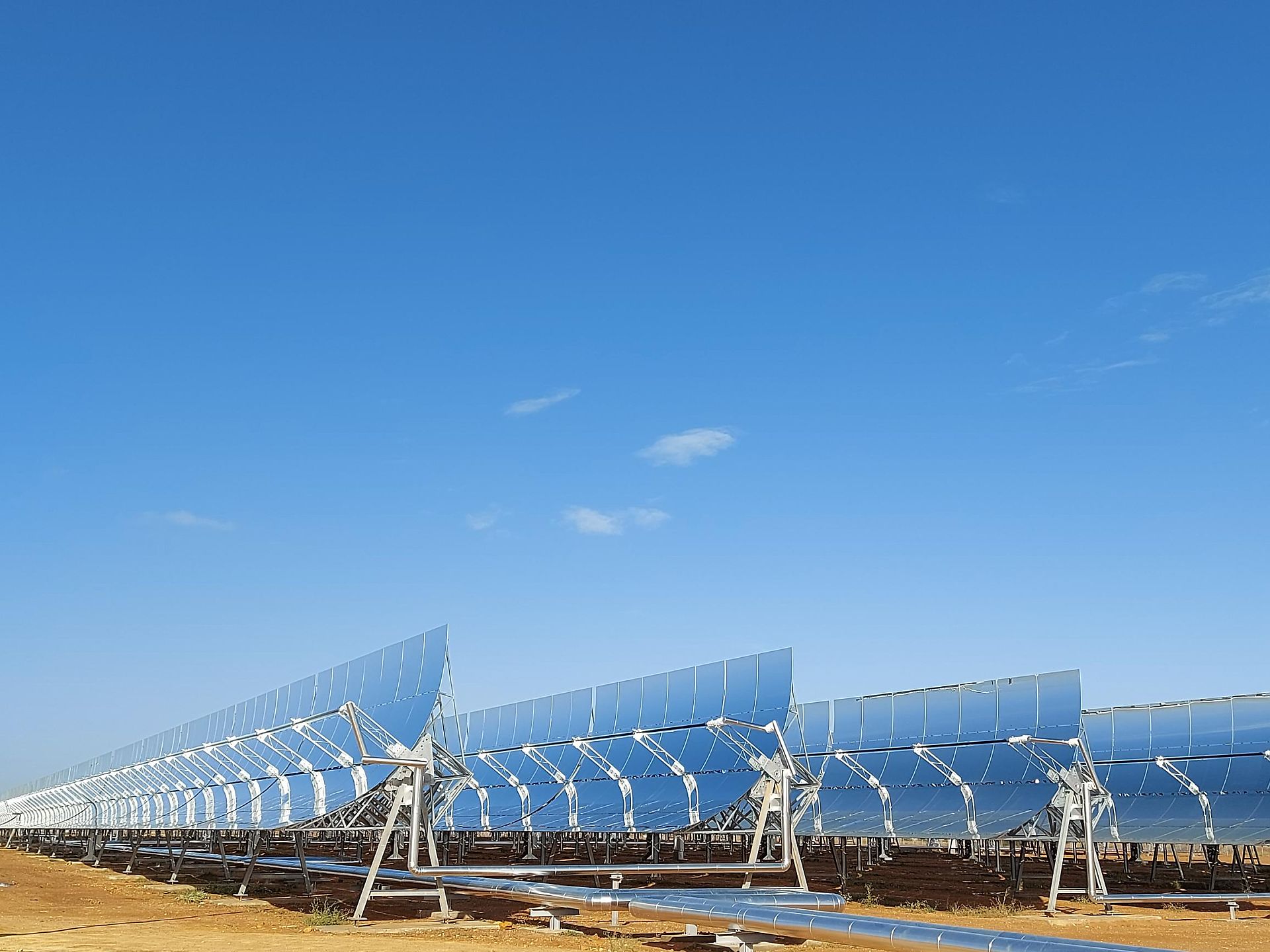
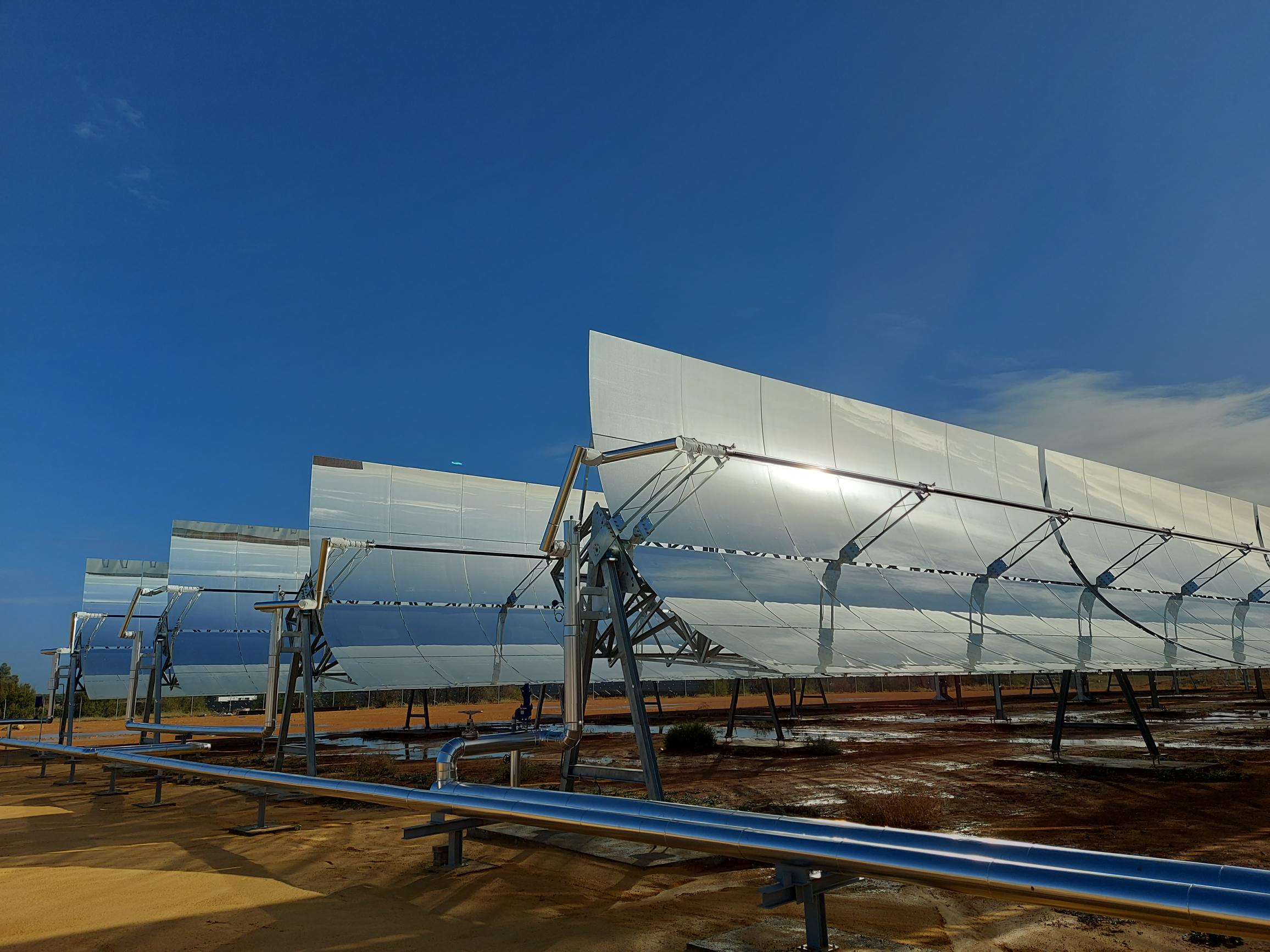
Solar process heat system for Seville brewery
The solar process heating plant was built in 2023 by Azteq/Solarlite, is operated by ENGIE Spain and supplies heat to the Heineken Sevilla brewery. In addition to the parabolic trough solar area of 43,000 m² (30 MW thermal output), high-temperature storage tanks (8 x 200 m³) ensure a high solar share of 60-70%.
Copyright: Wolfgang Gruber-Glatzl, AEE INTEC
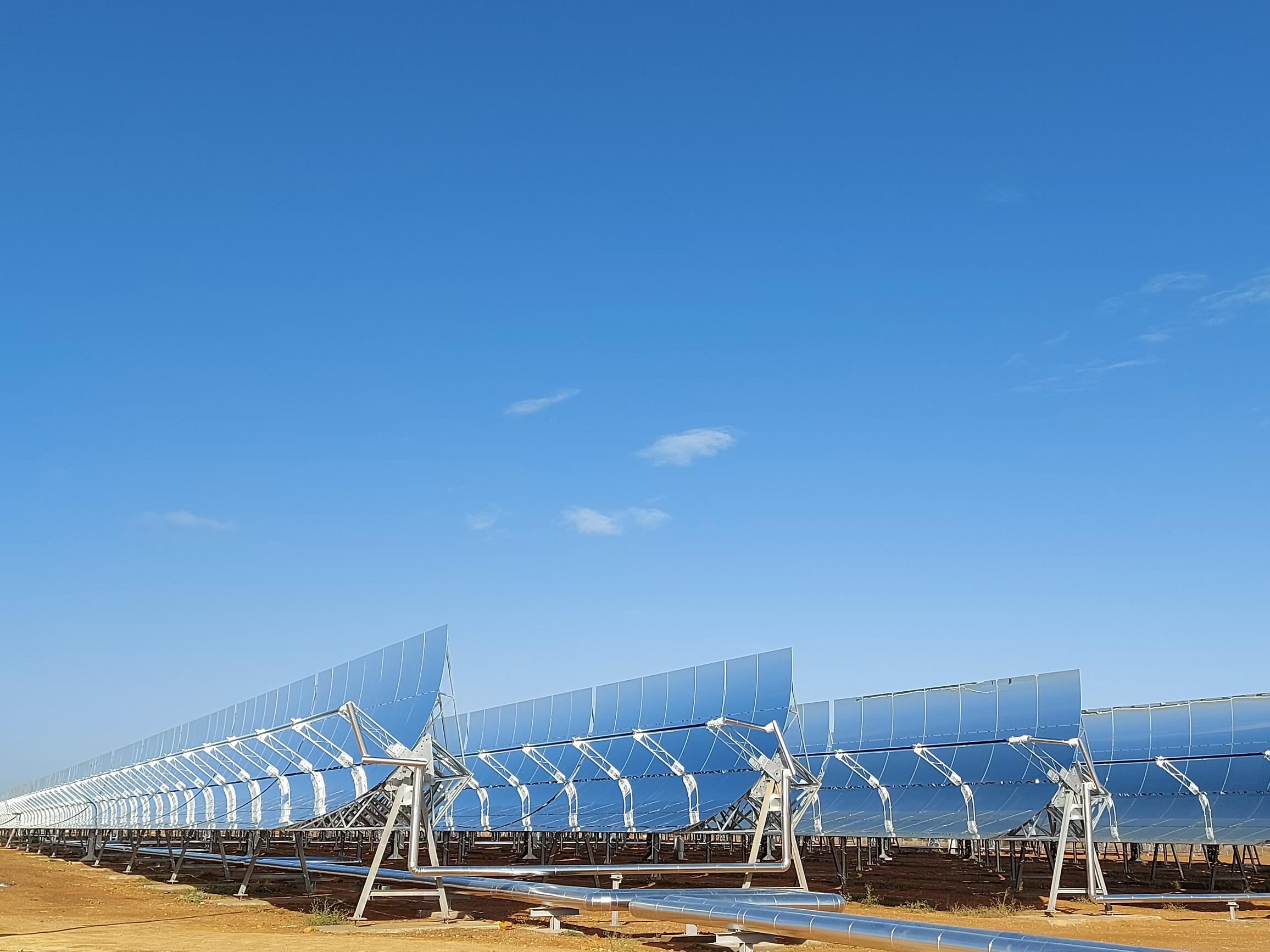
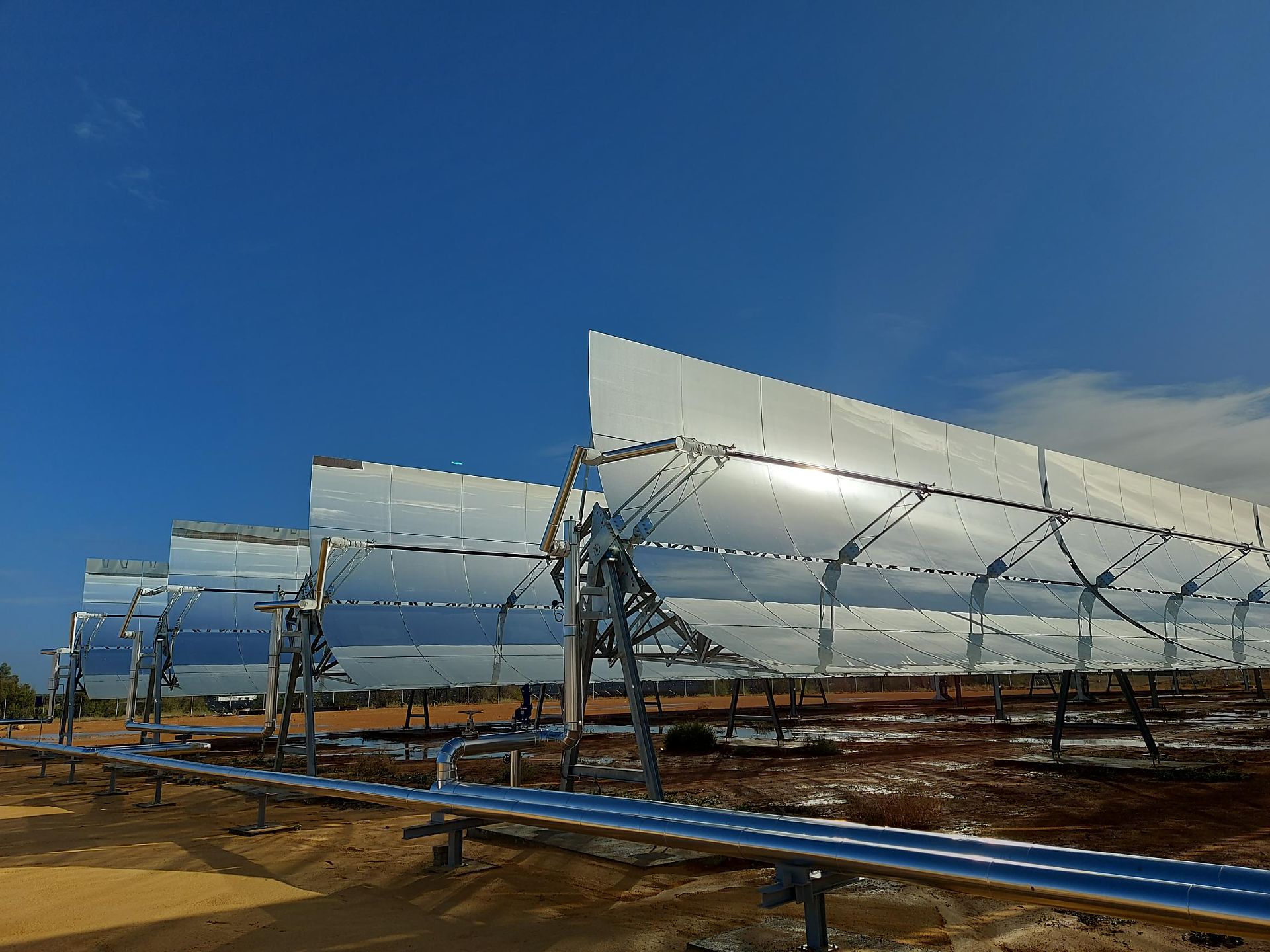
Solar process heat system for Seville brewery
The solar process heating plant was built in 2023 by Azteq/Solarlite, is operated by ENGIE Spain and supplies heat to the Heineken Sevilla brewery. In addition to the parabolic trough solar area of 43,000 m² (30 MW thermal output), high-temperature storage tanks (8 x 200 m³) ensure a high solar share of 60-70%.
Copyright: Wolfgang Gruber-Glatzl, AEE INTEC
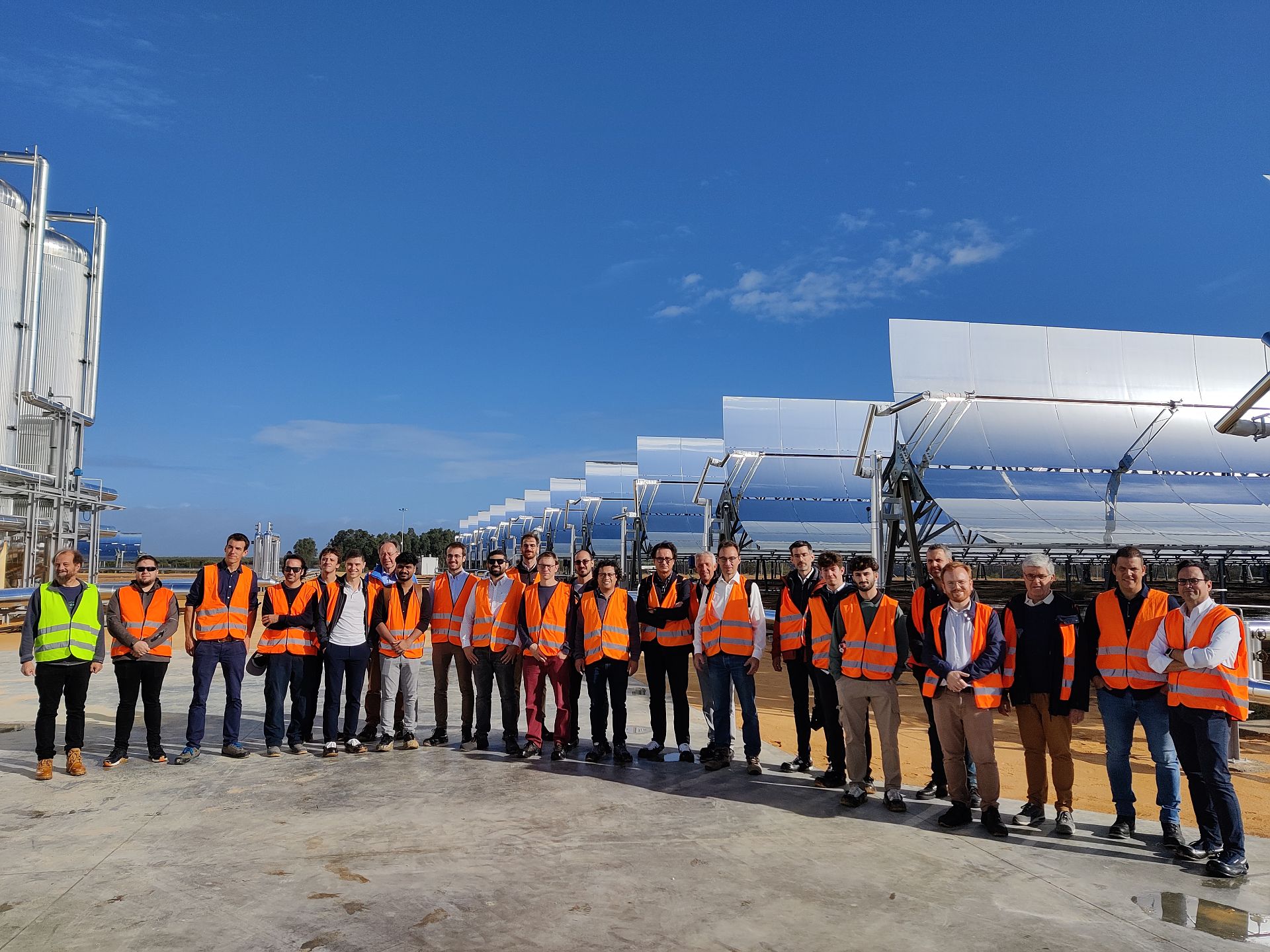
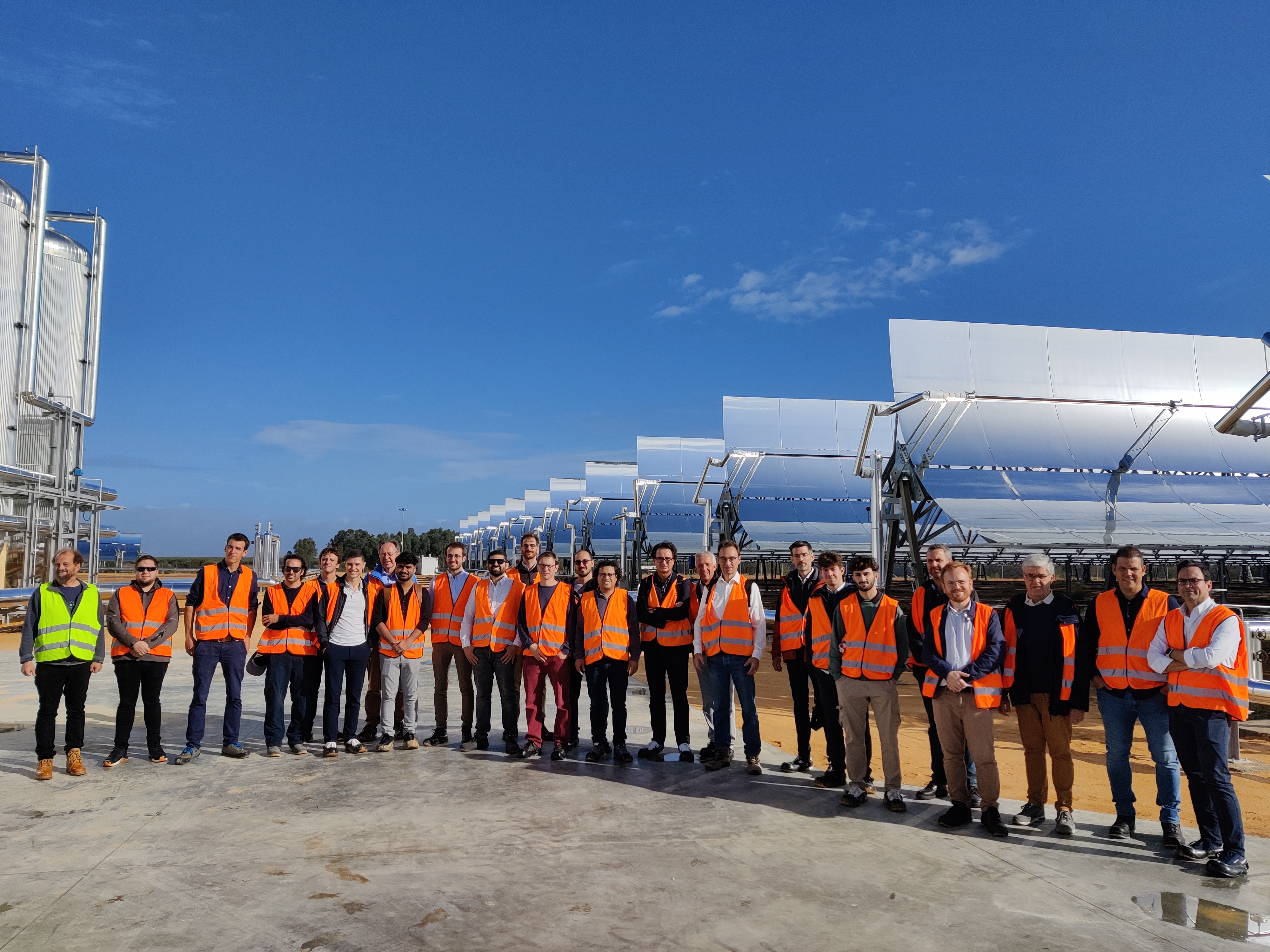
Final meeting of the IEA SHC Task 64 in Seville with a tour of Europe's largest solar process heat plant
The final meeting of the IEA SHC Task 64 took place in Seville. Europe's largest solar process heat plant was visited as part of the meeting. It was built in 2023 by Azteq/Solarlite, is operated by ENGIE Spain and supplies heat to the Heineken Sevilla brewery. In addition to the parabolic trough solar area of 43,000 m² (30 MW thermal output), high-temperature storage tanks (8 x 200 m³) ensure a high solar share of 60-70%.
Copyright: Alan Pino
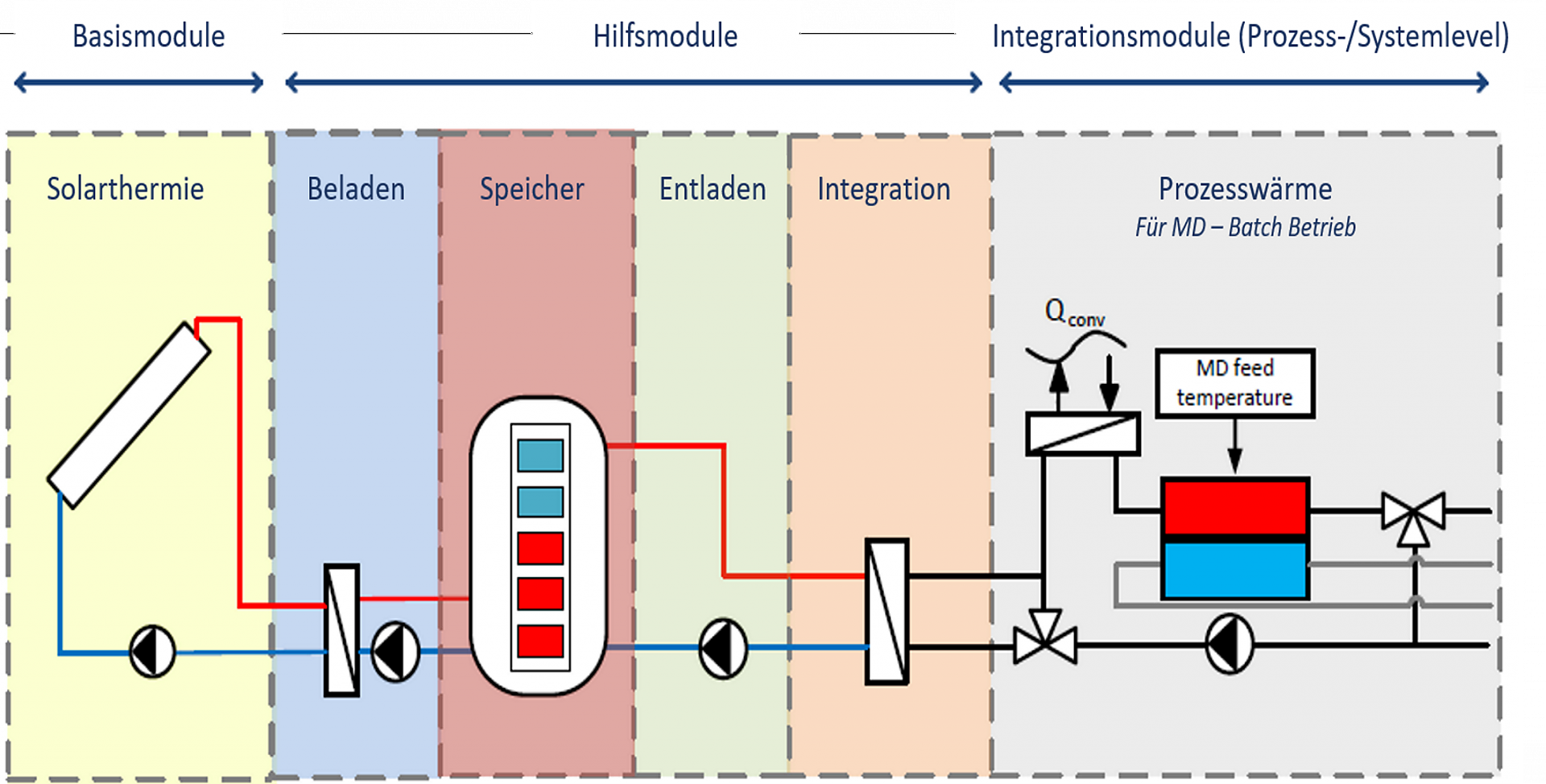
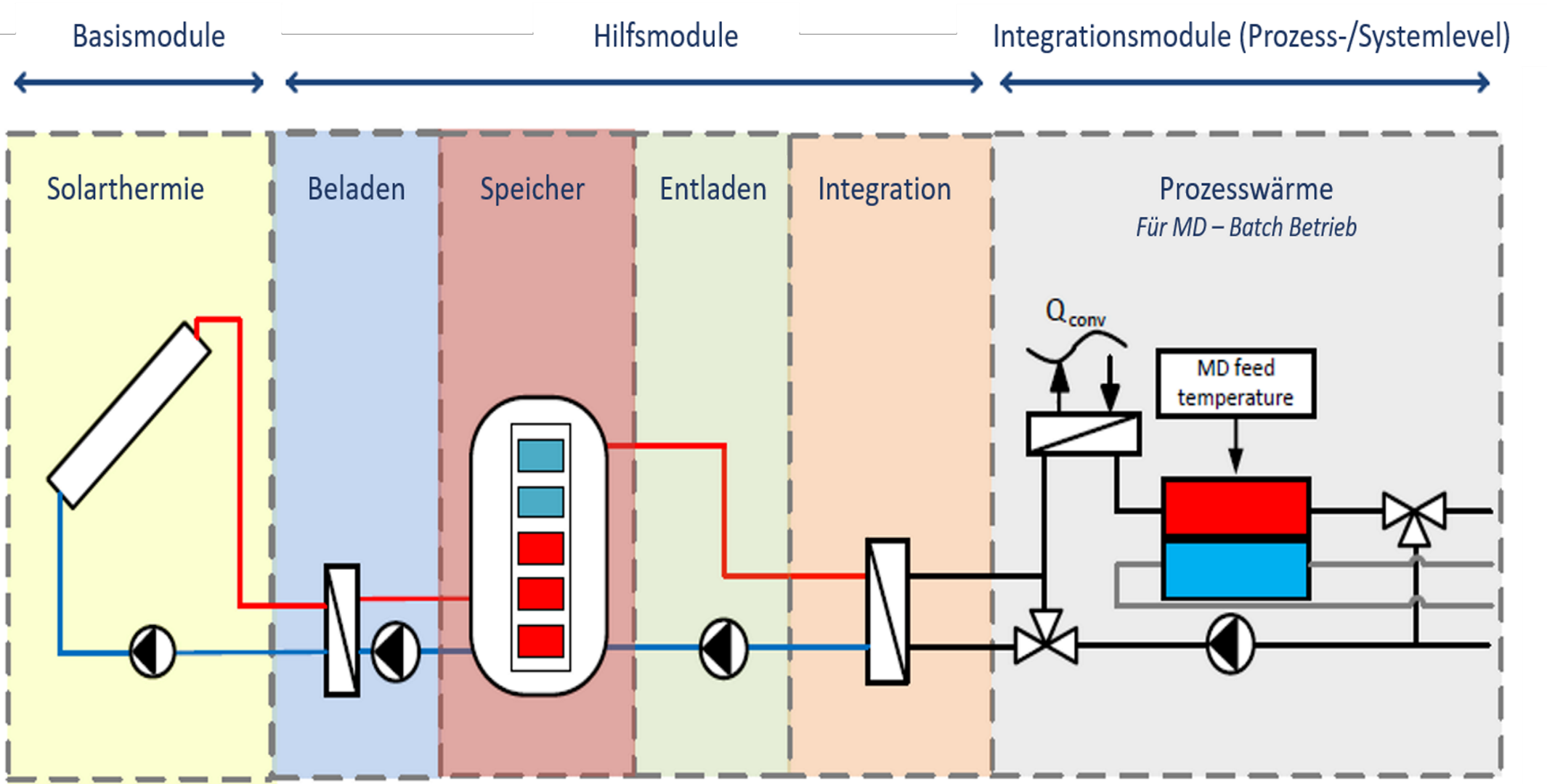
Systemintegration concept - Membrane Distillation and Solarthermal
Within the framework of the IEA SHC Task 62, system integration concepts have been developed, which represent the combination with solar thermal and processing technologies
Copyright: AEE INTEC
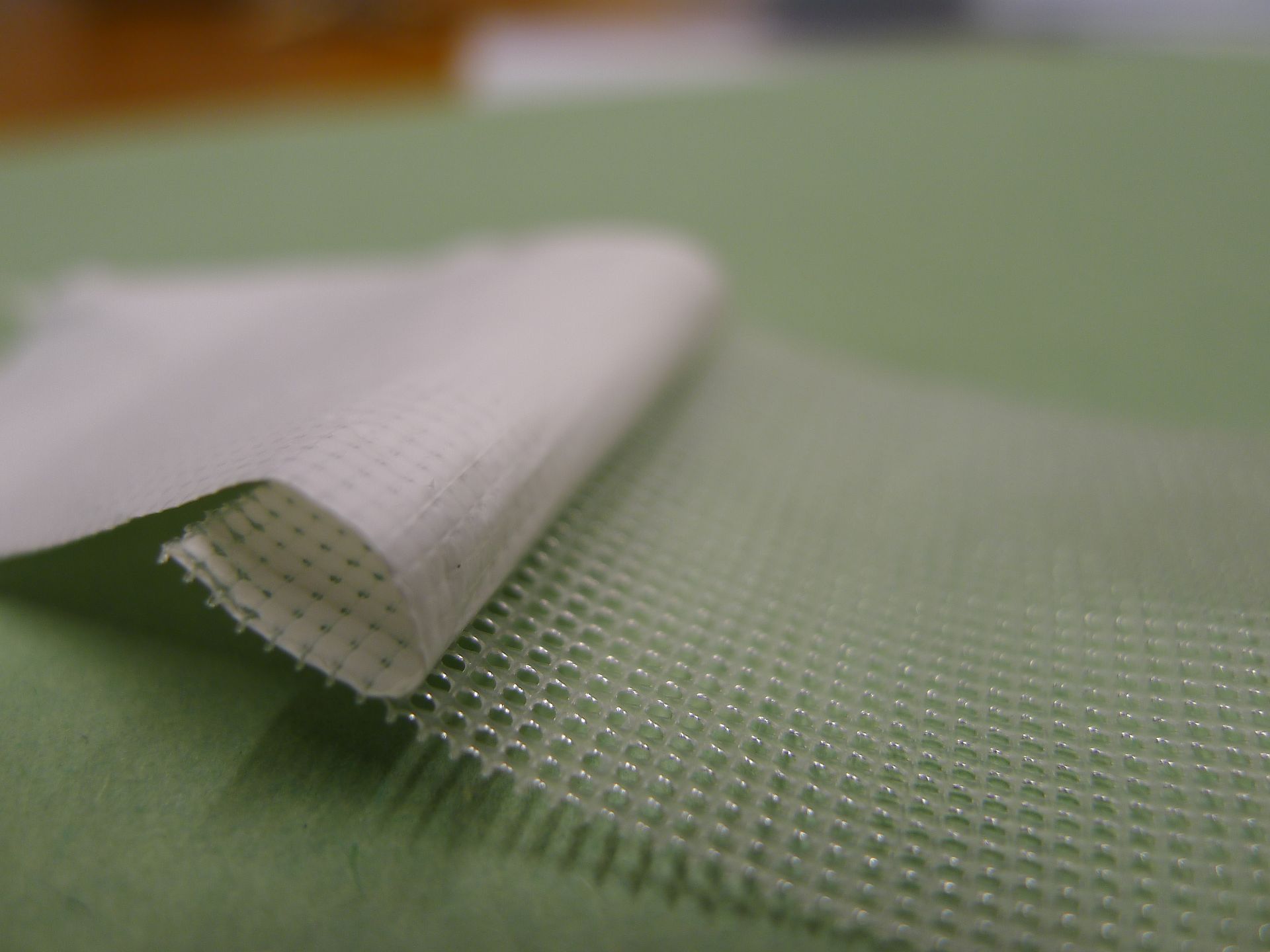
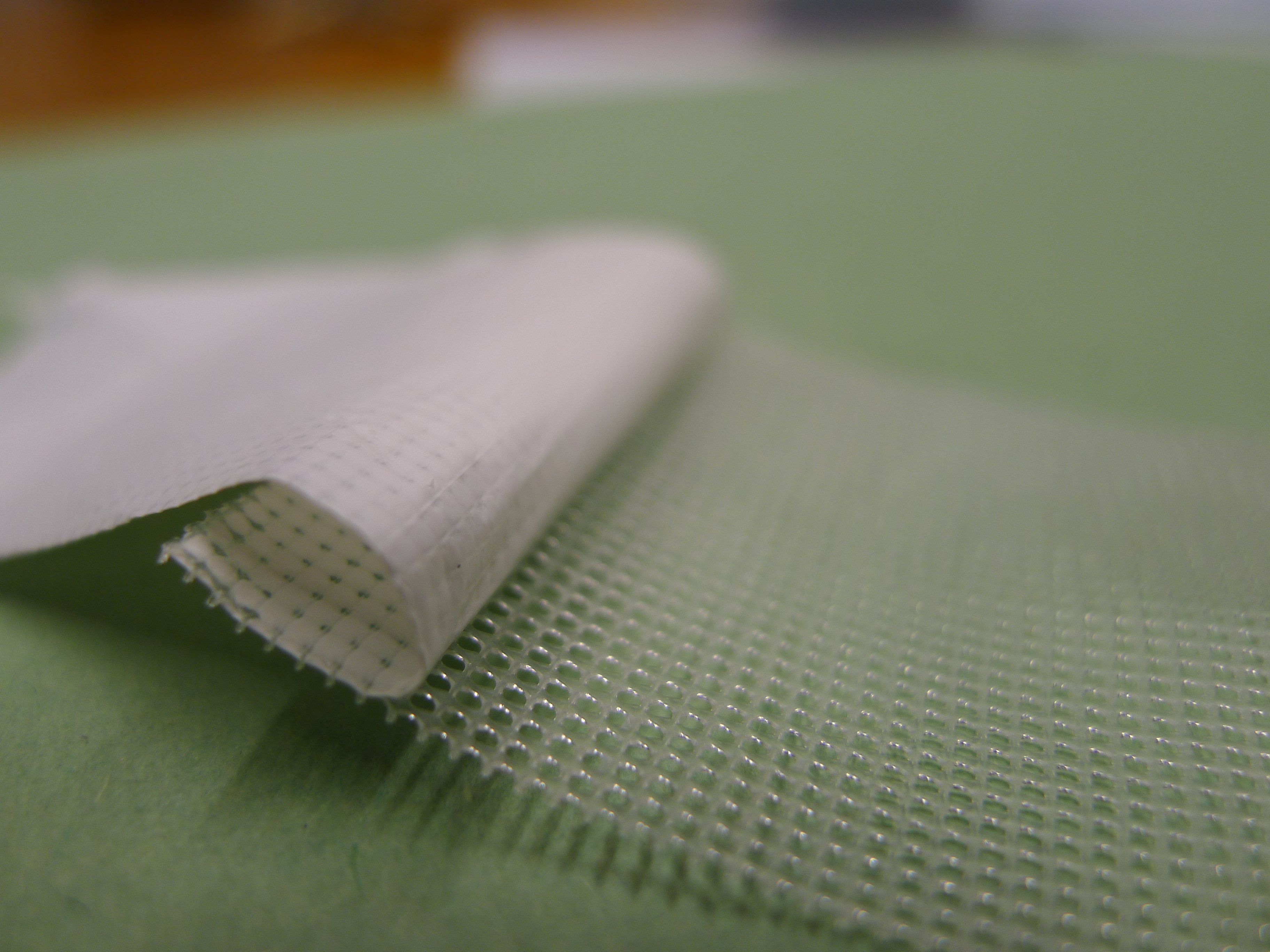
Thermal Membran Technologies show Optimization Potential at membranes
Membranes are central components in thermal membrane technologies. IEA SHC Task 62 identified that further research and development is necessary to increase the membrane efficiecy for example by membrane modification, increase in selectivity.
Copyright: AEE INTEC
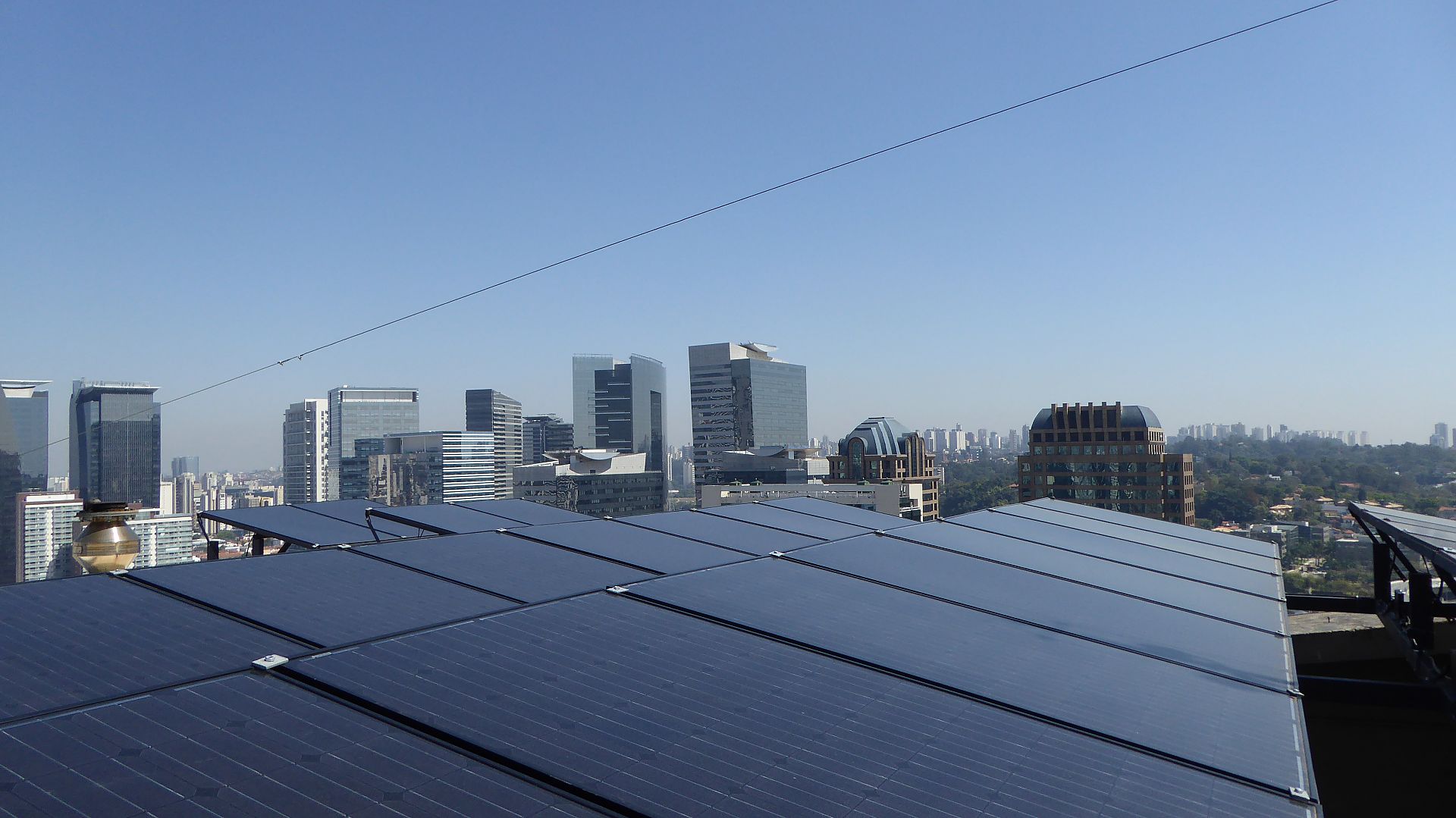
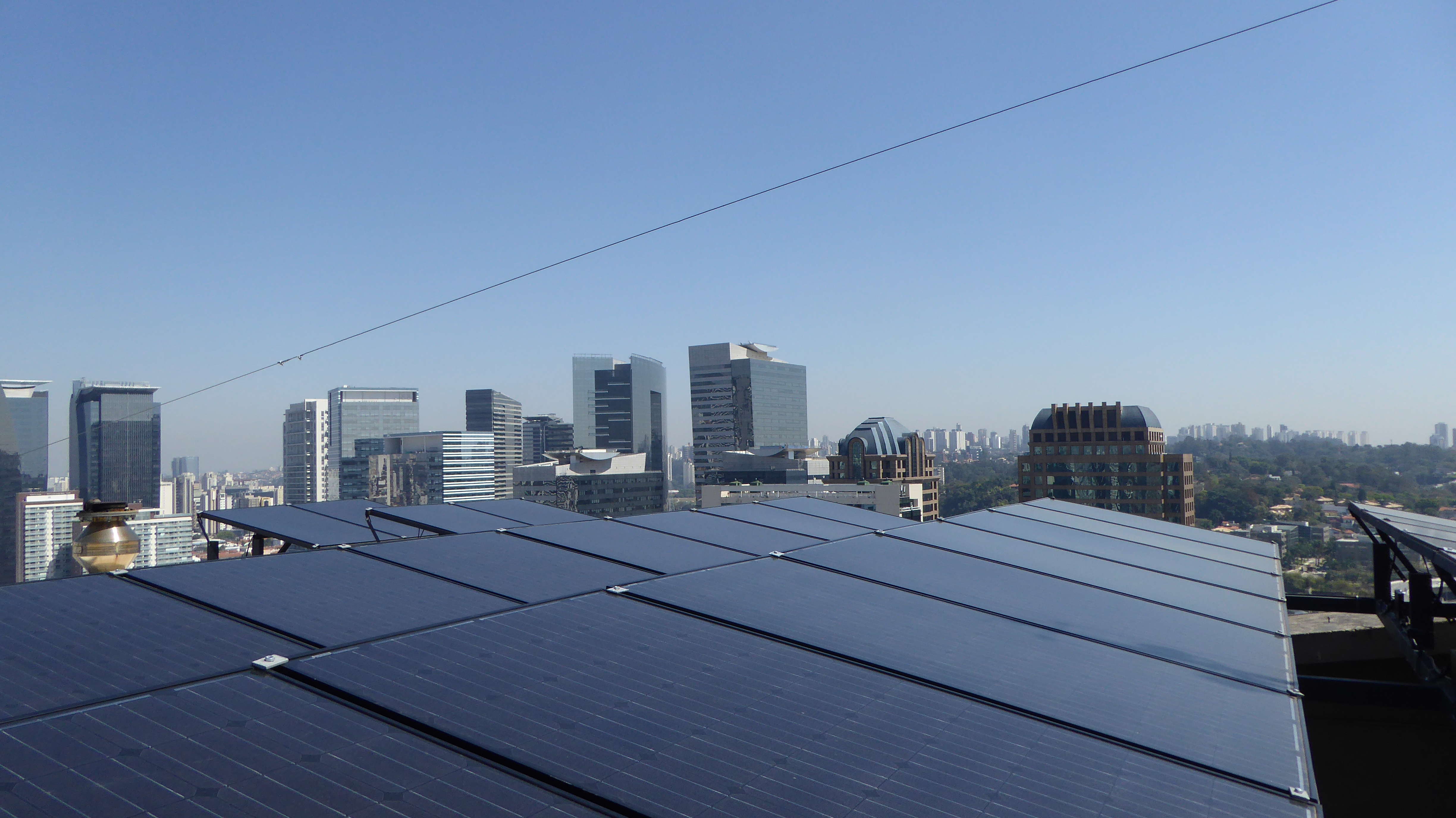
uncovered PVT collector
In Brazil, Sao Paulo, uncovered PVT collectors reduce gas consumption for hot water heating by 50 % in a hotel project
Copyright: www.2power.de
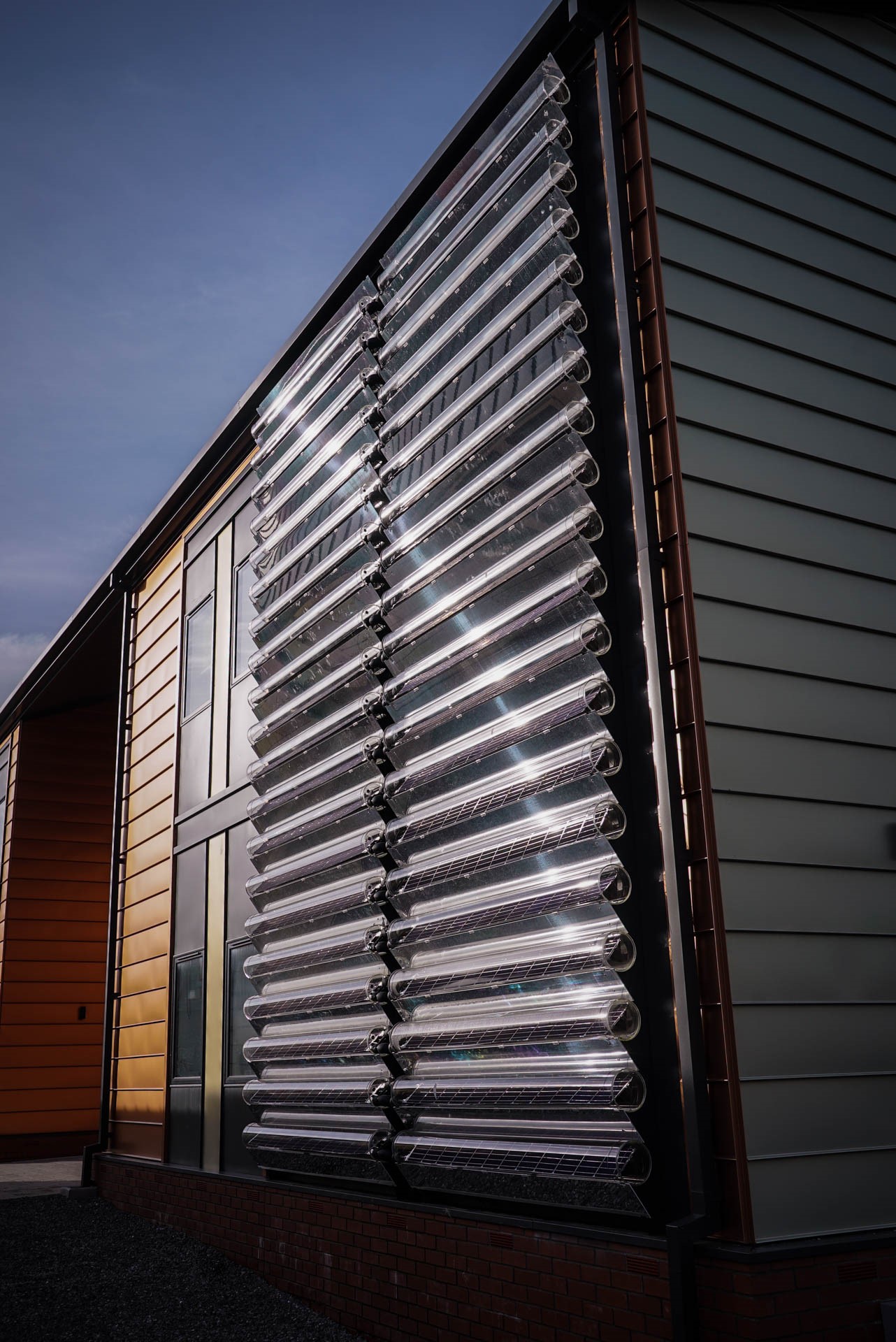
Evacuated tube PVT
The evacuated tube PVT array (Virtu PVT by Naked Energy) on the south facing façade of the Active Office building at the University of Swansea.
Copyright: Naked Energy Ltd
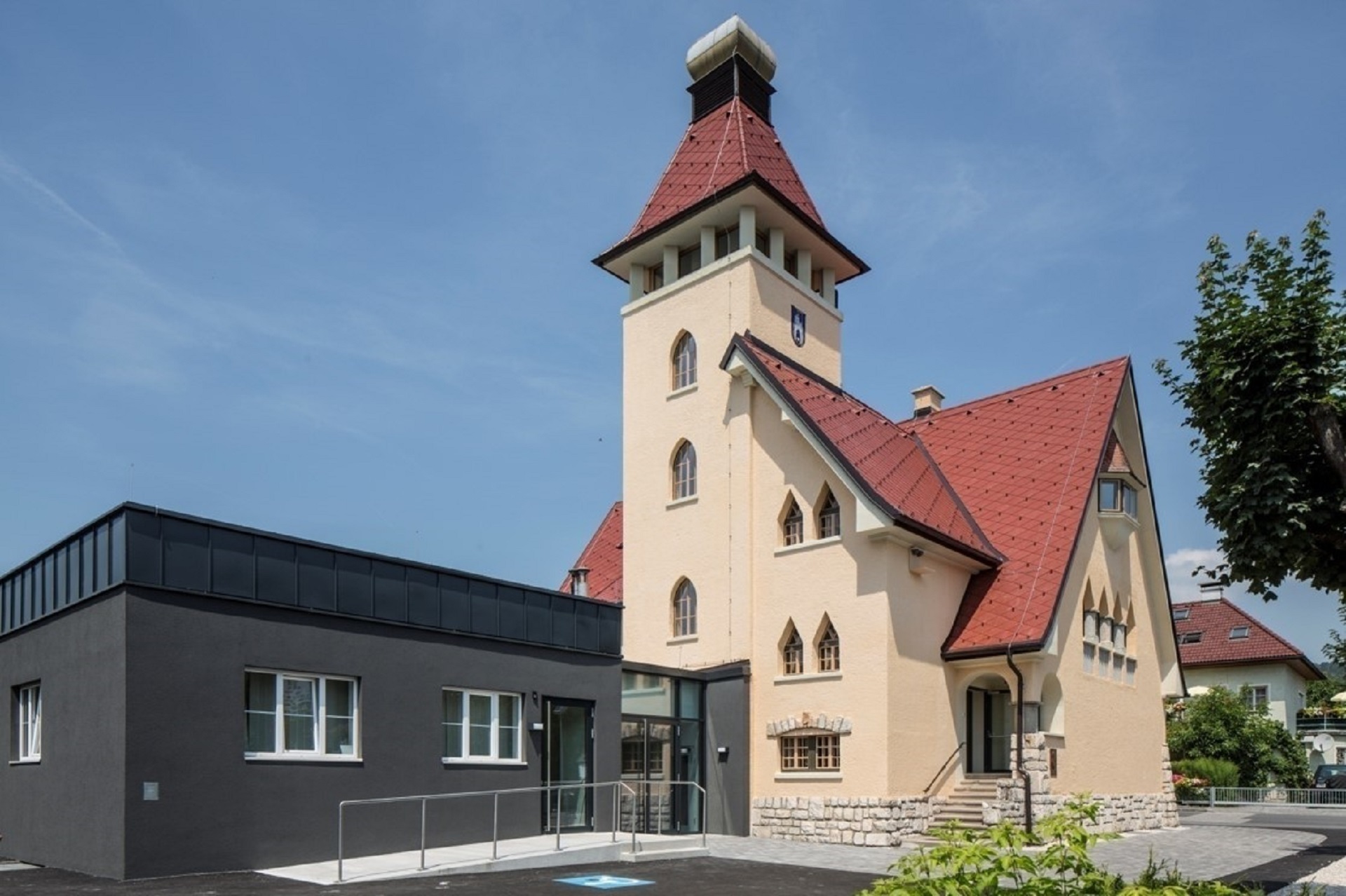
Music School Velden
Street view of the former fire station in Velden am Wörthersee - after the refurbishment used as a music school.
Copyright: blende16 /ARCH+MORE
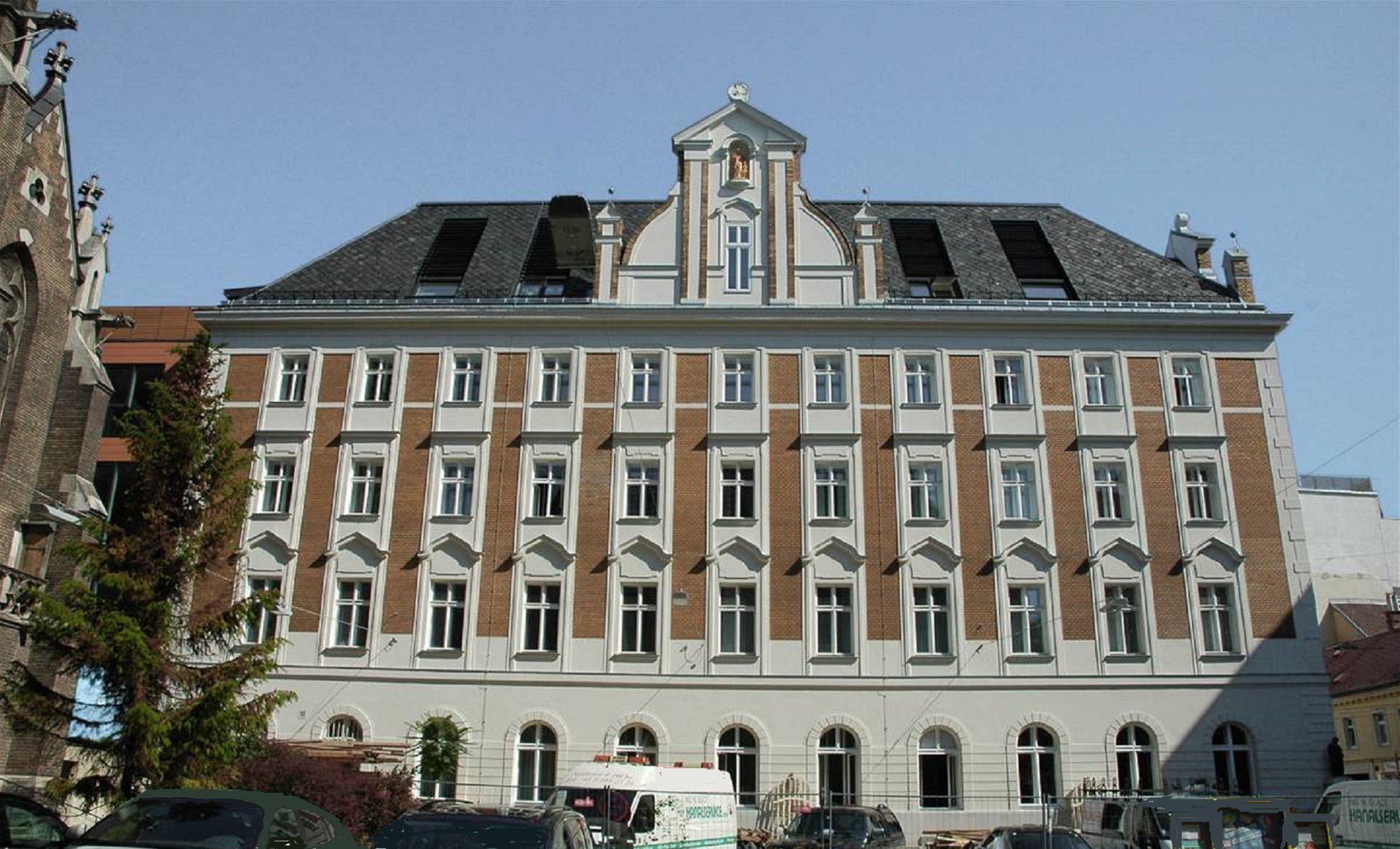
Konvent Building Kaiserstrasse in Vienna
Street view of the convent building in Kaiserstrasse, Vienna after being refurbished with particular attention to monument preservation and to a new solution for renovating Viennese-type box windows.
Copyright: trimmel wall architekten
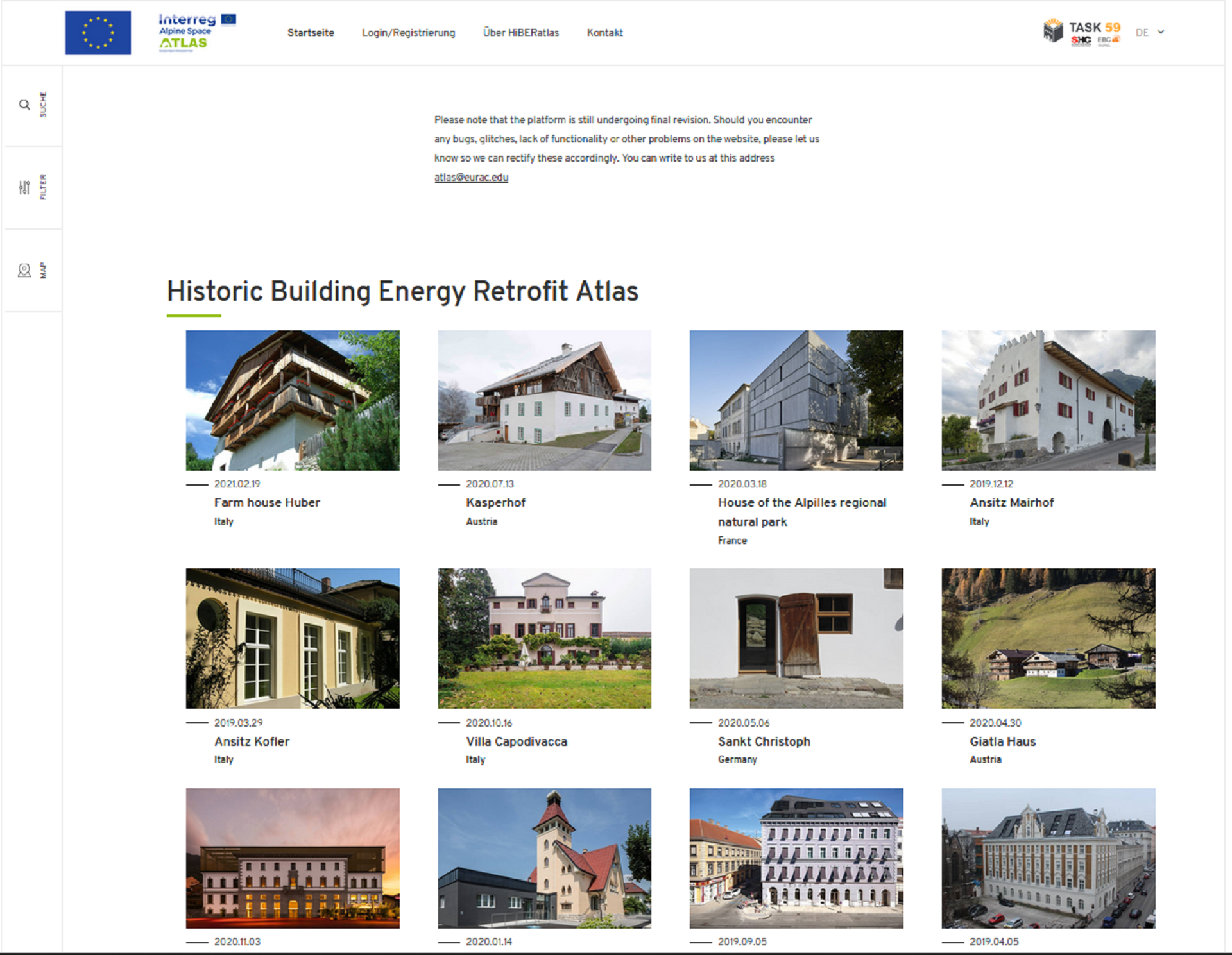
Historic Building Energy Retrofit Atlas
Starting page of the database www.HiBERatlas.com with best practice examples that show how historic buildings can be renovated so that high energy efficiency is achieved while respecting historic preservation.
Copyright: EURAC research Drususallee Bozen
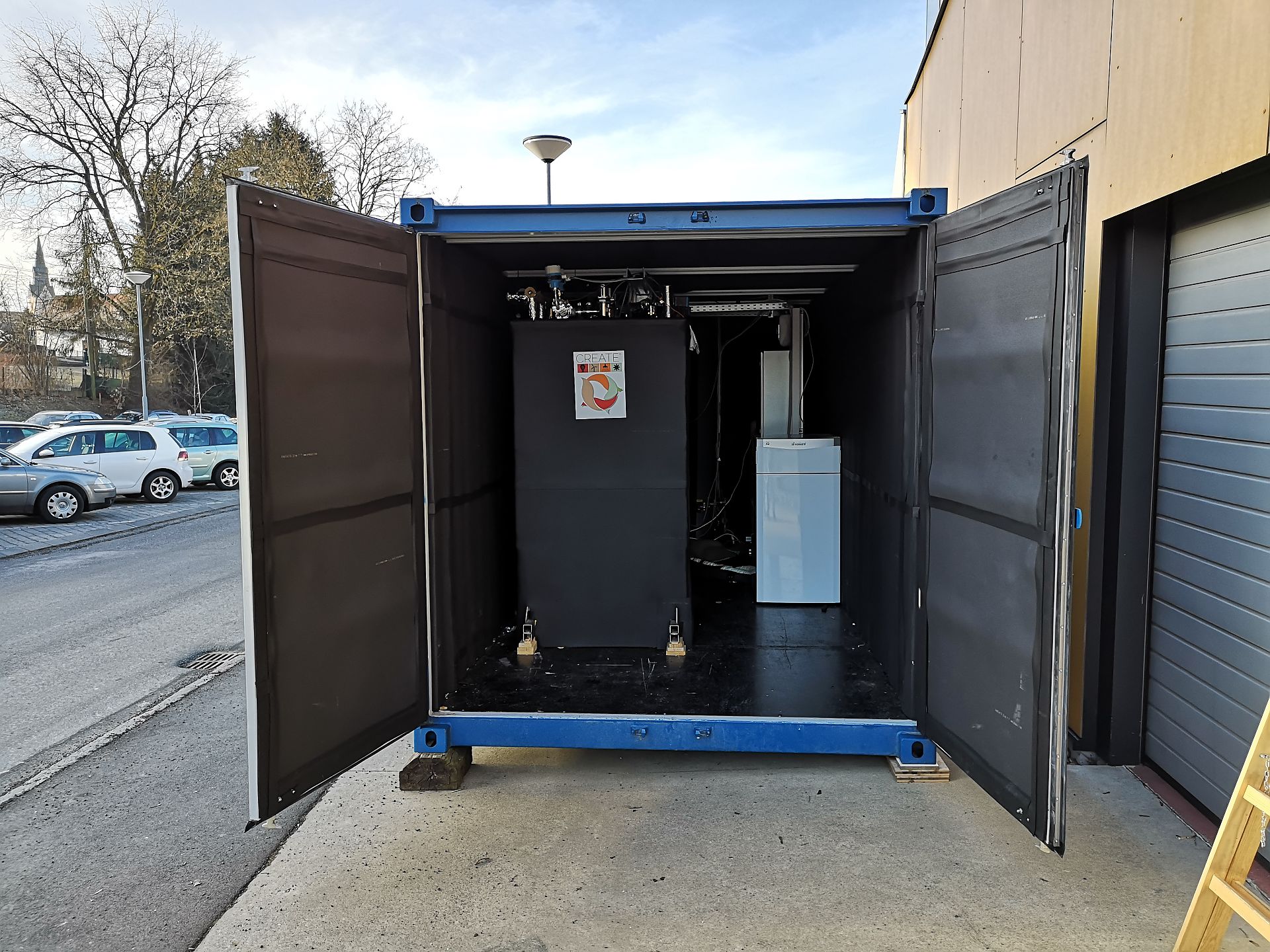
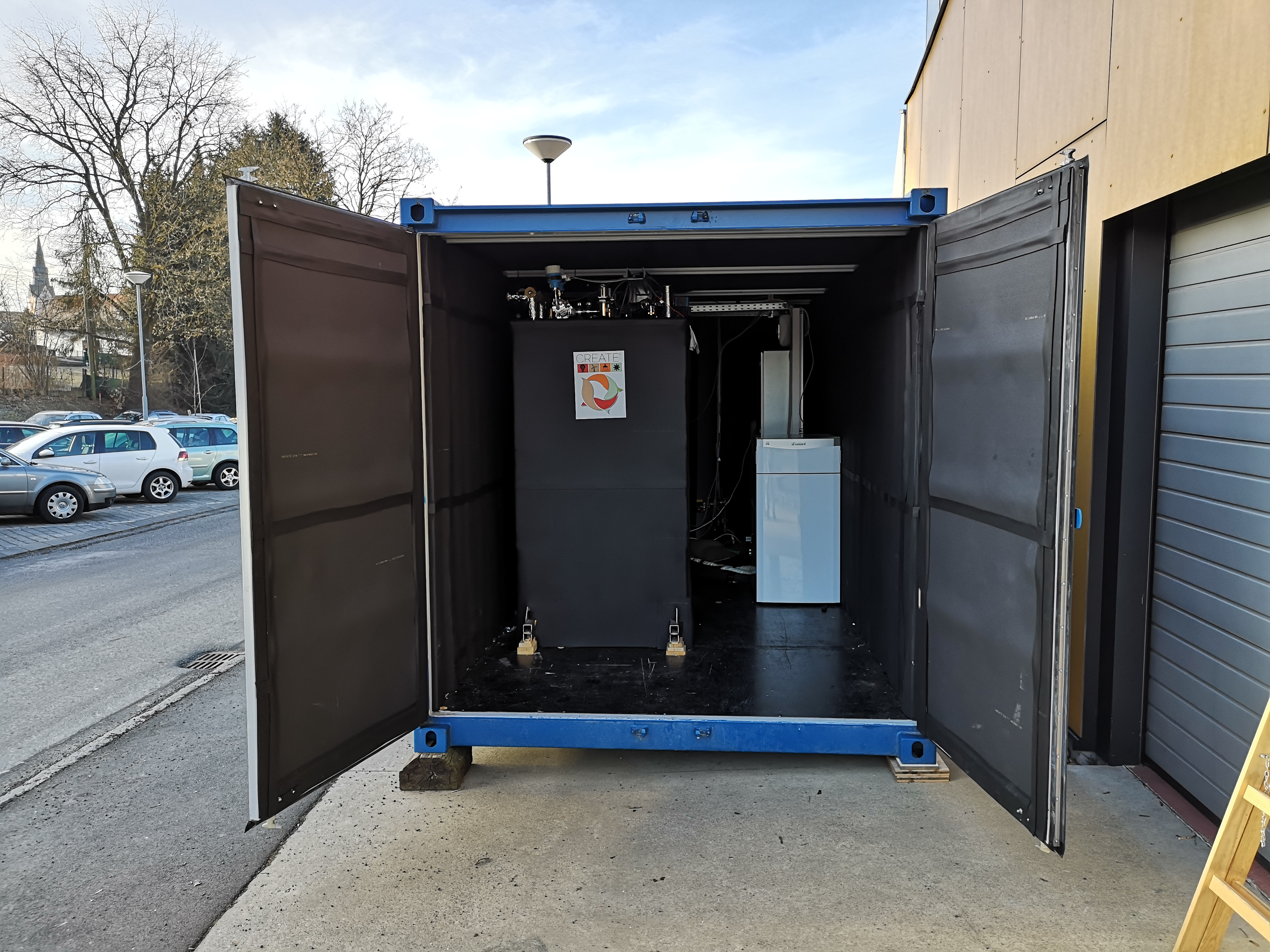
TCM Storage System Prototype in Container for integration in a single familiy house
The picture is showing a TCM storage system with 3 moduels in combination with a heat pump system and 2 m³ buffer storage installed in a container as complete storage system. The container is shipped to a single familiy housein Warsaw and installed next to the house to store surplus of solar thermal energy from summer and provide space heating in winter
Copyright: AEE INTEC
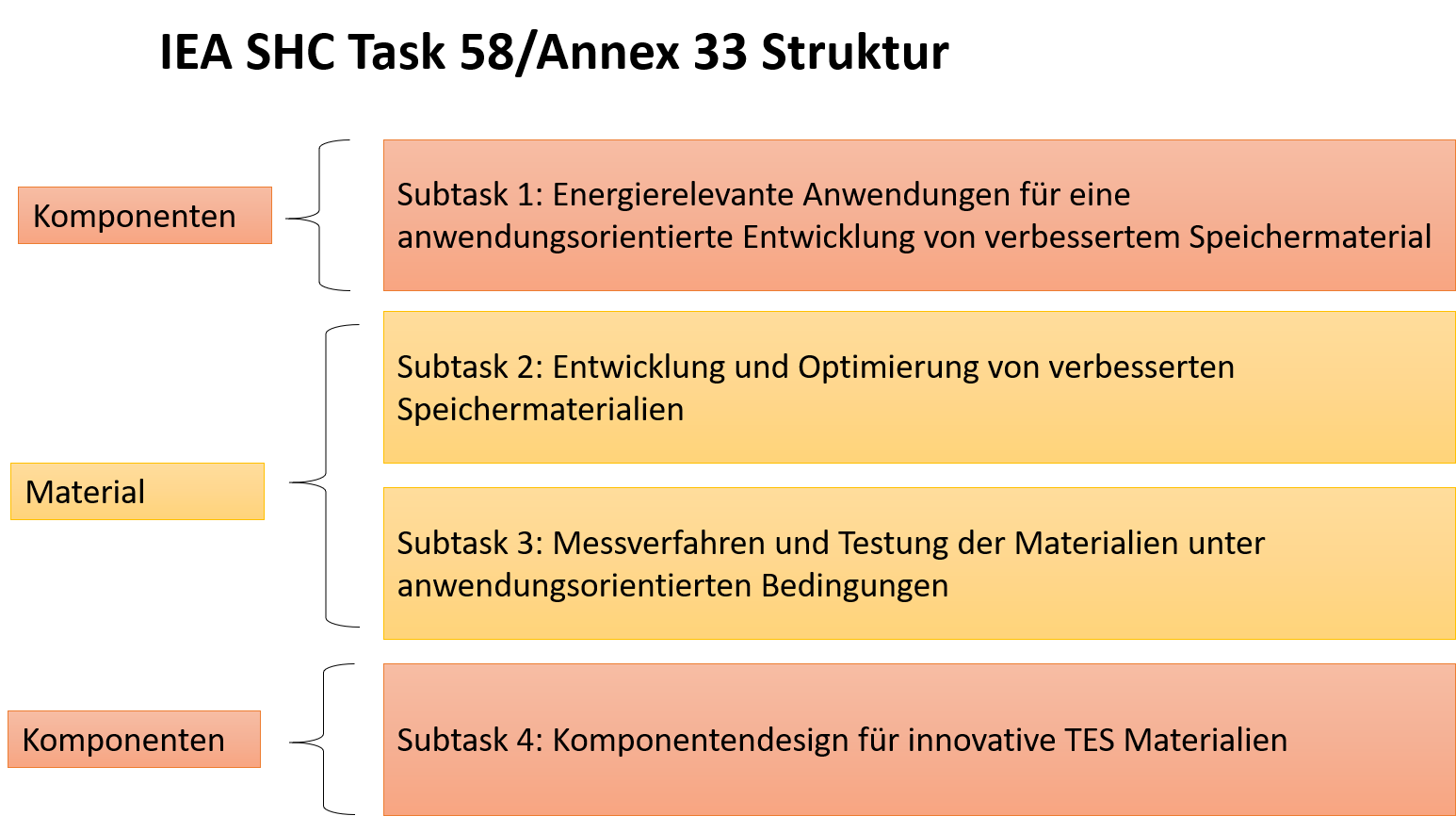
Overview Task 58 for Material and Component Development for Compact Thermal Storage Systems
The figur shows the overview and contents of the IEA SHC Task 58 for material and component development for compact heat storage. The task is divided into 4 subtasks dealing with the definition of boundary conditions, development of TCM and PCM materials, test methods and component design of compact heat storage systems.
Copyright: AEE INTEC

Passys Test Cell
Measurement of the luminance of a solar facade in the Passys test cell of the UIBK