Project Image Pool
There are 16 results.
Terms of use: The pictures on this site originate from the projects in the frame of the programmes City of Tomorrow, Building of Tomorrow and the IEA Research Cooperation. They may be used credited for non-commercial purposes under the Creative Commons License Attribution-NonCommercial (CC BY-NC).
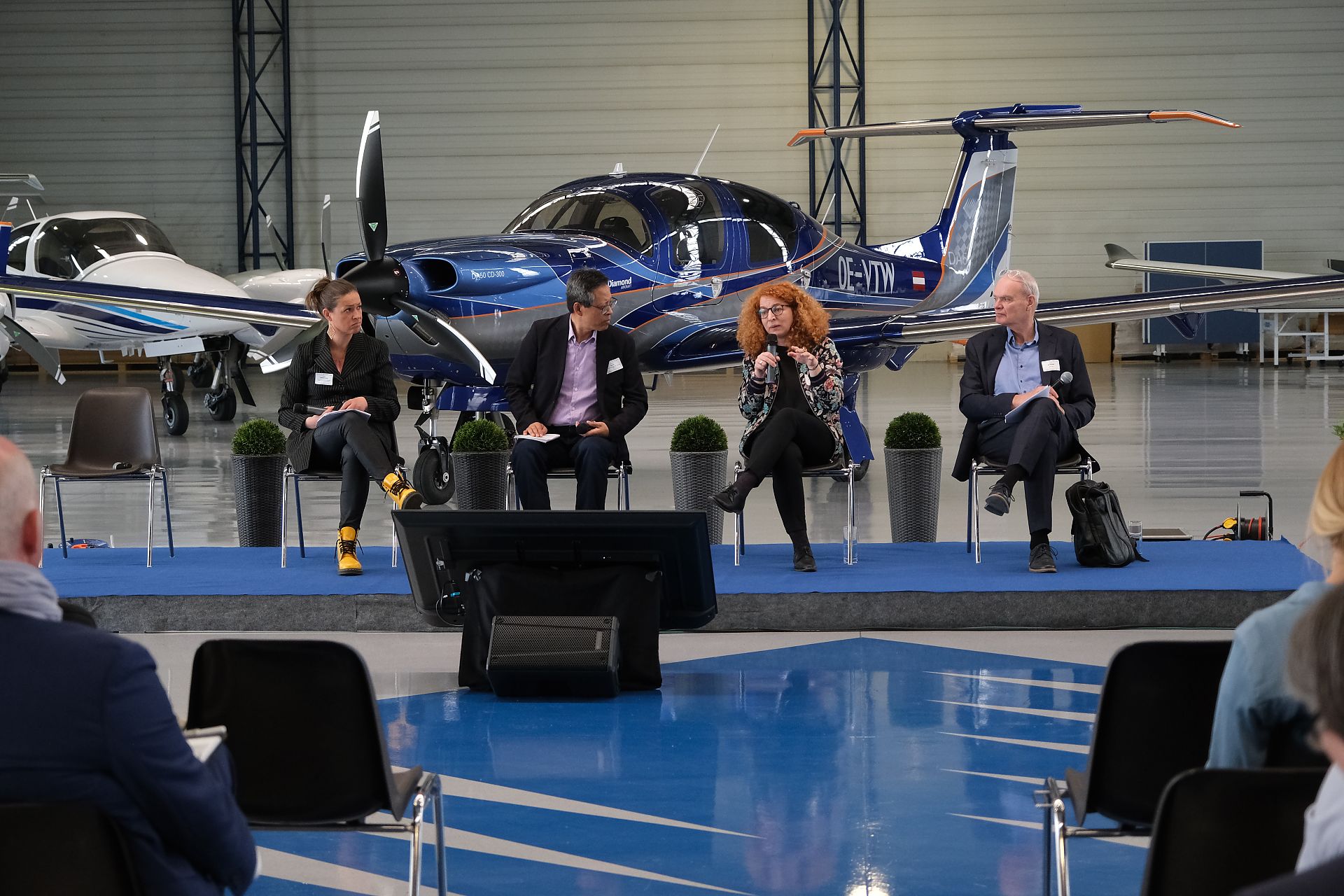
AMF ExCo 69 - International SAF Conference in Wr. Neustadt
Panel discussion at the international SAF Conference in Wr. Neustadt in 2025
Copyright: Sandra Tronigger
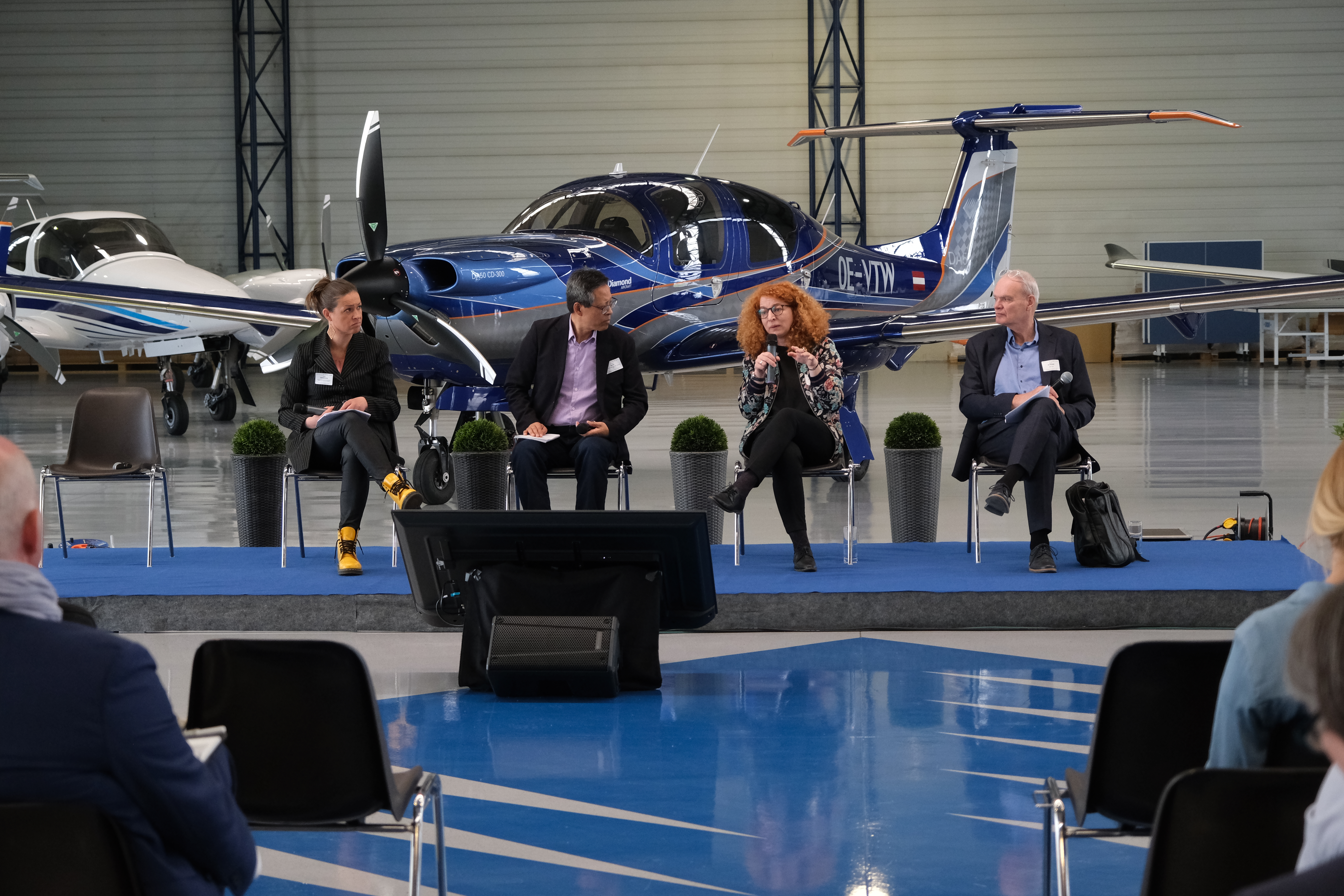
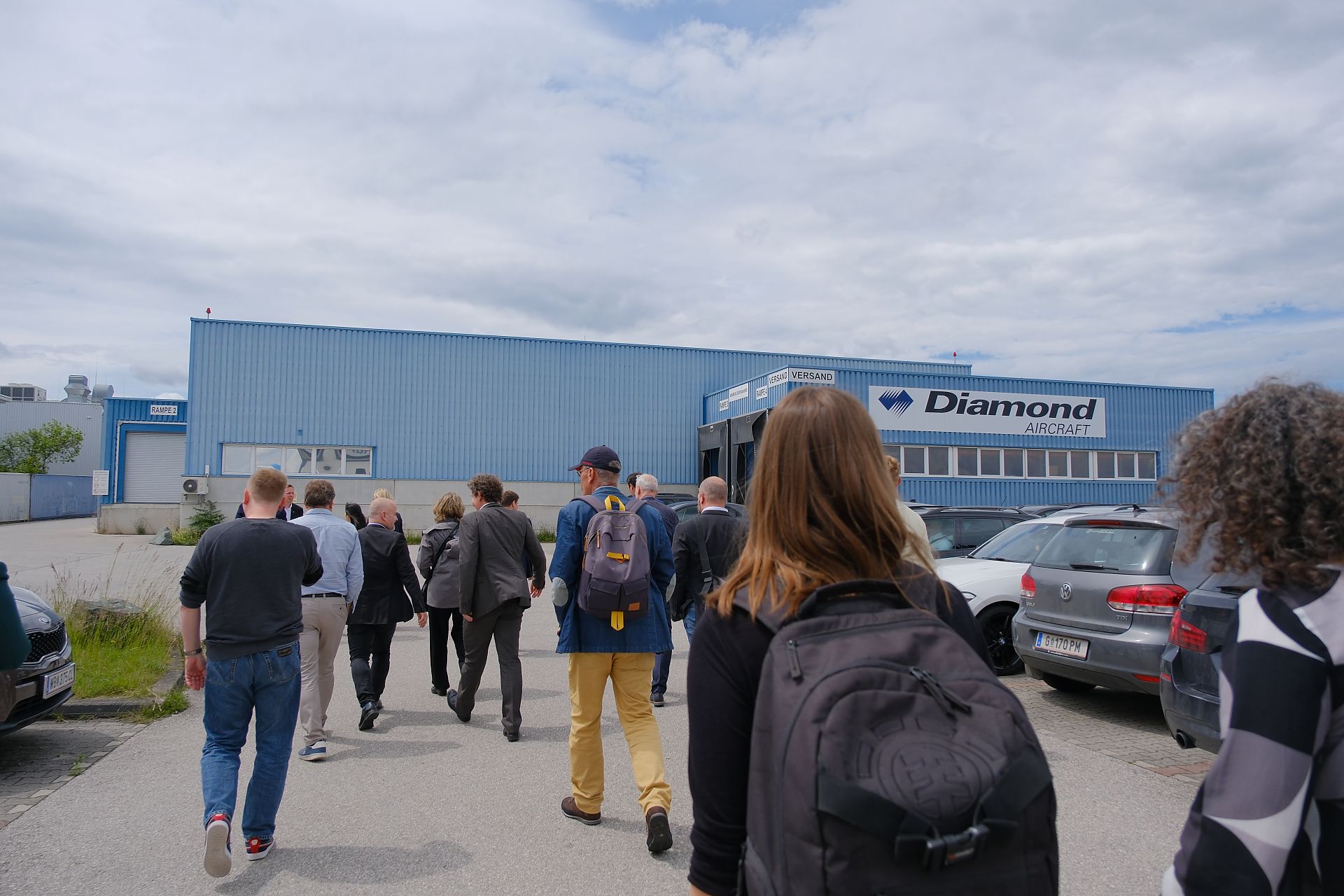
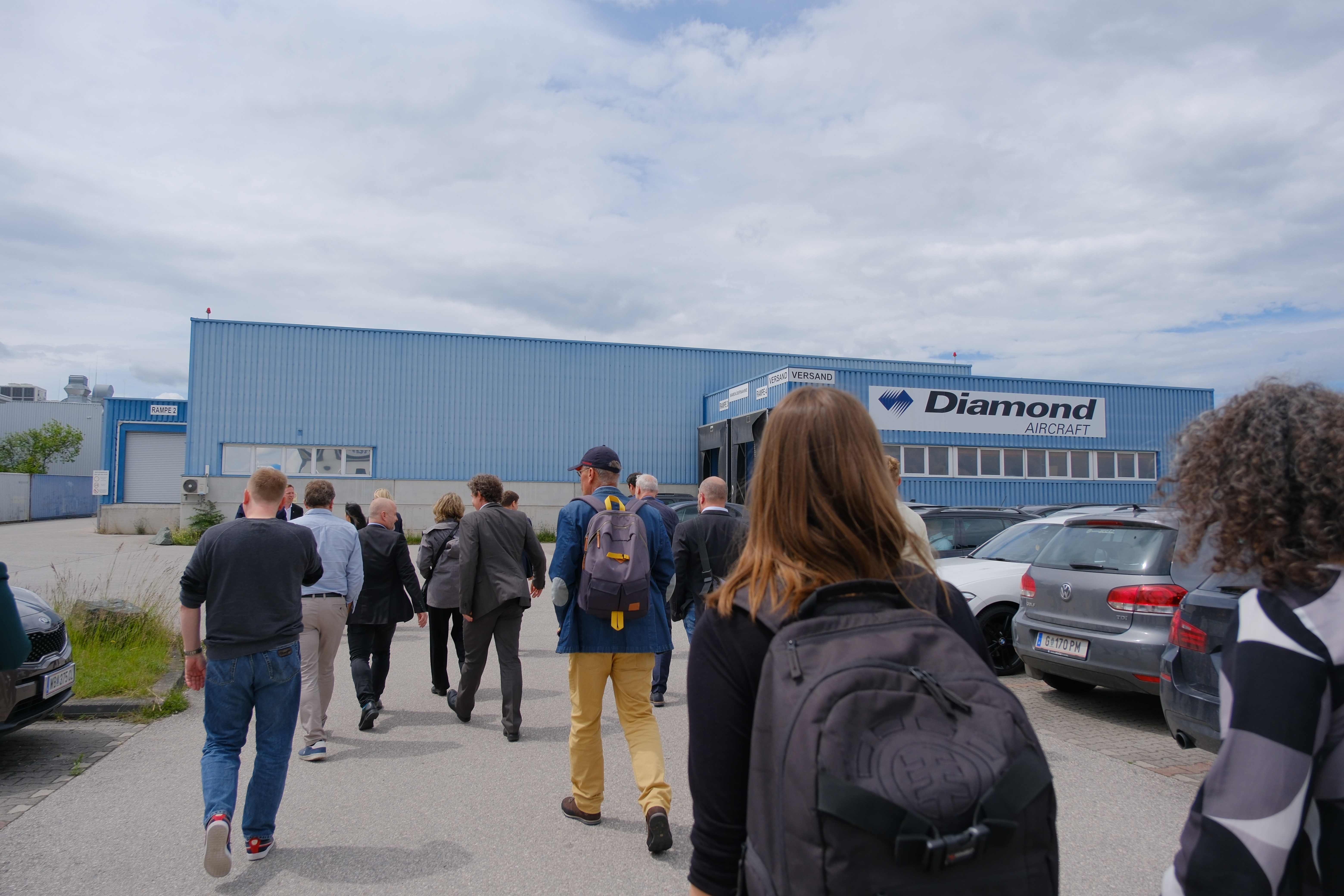
AMF ExCo 69 - Visiting Diamond Aircraft and Austro Engine
Visiting Diamond Aircraft and Austro Engine during AMF ExCO in 2025
Copyright: Sandra Tronigger
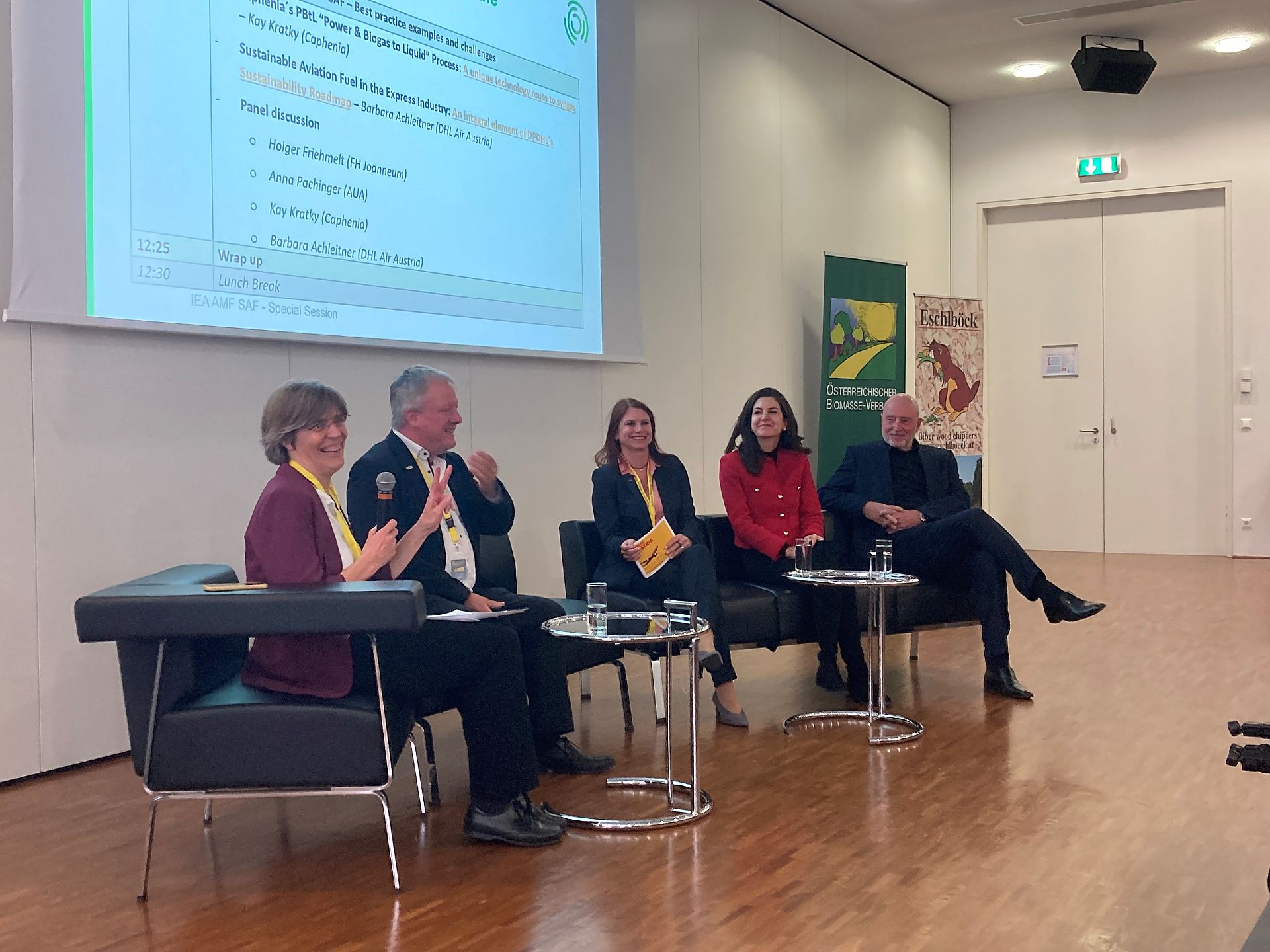
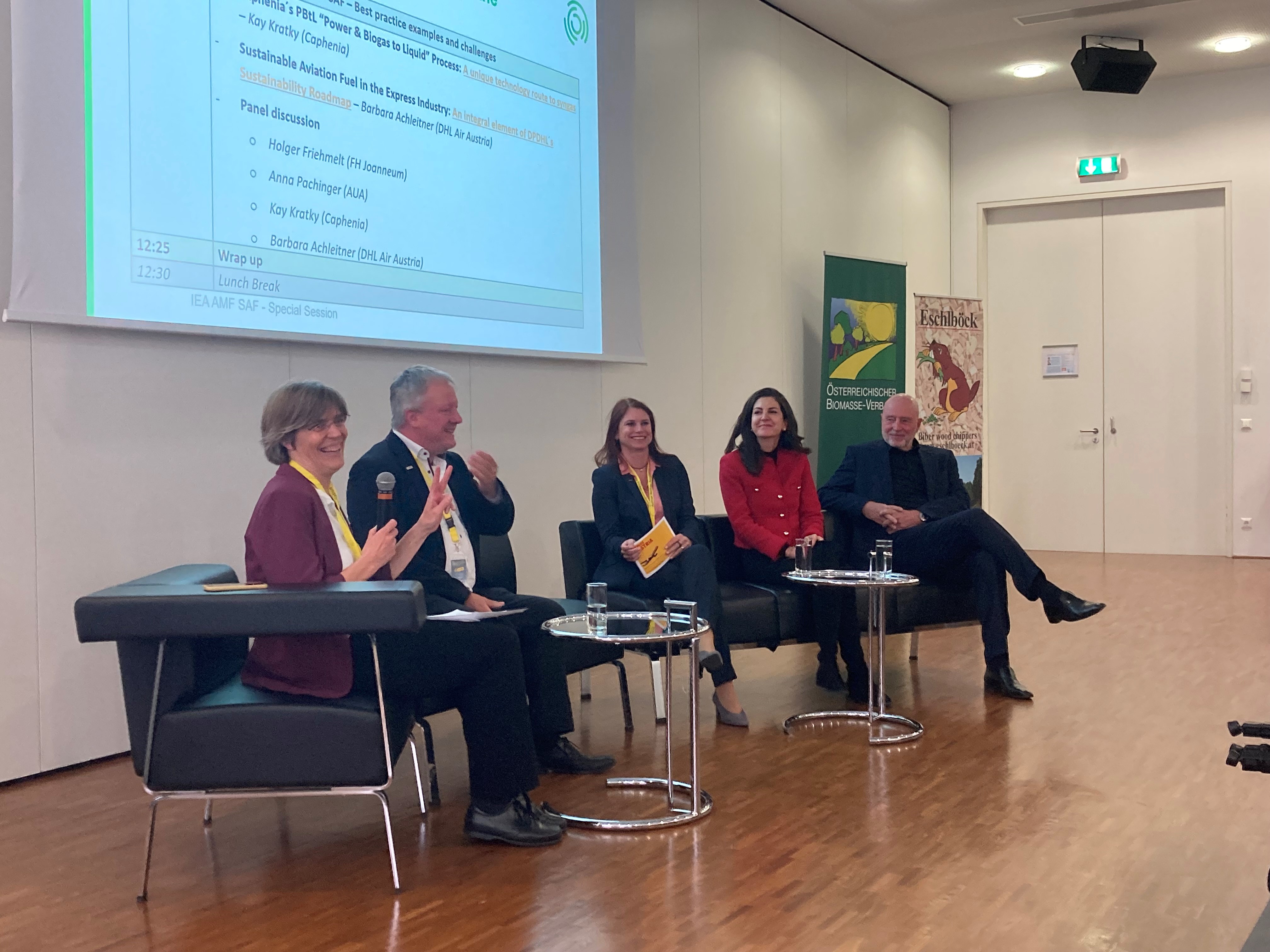
AMF Task 63: Workshop Panel
Panel discussion with Dina Bacovsky, Holger Friehmelt, Barbara Achleitner, Anna Pachinger and Kay Kratky
Copyright: Doris Matschegg
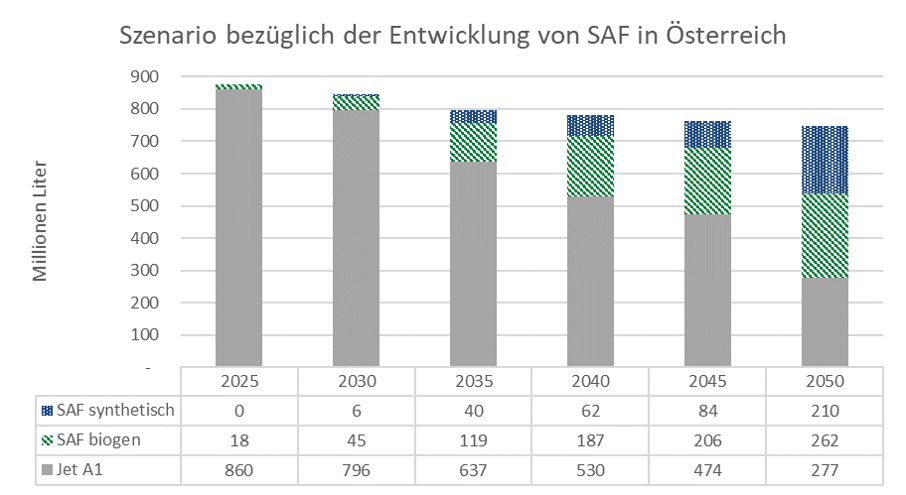
AMF Task 63: Development of SAF in Austria
Scenario regarding the development of SAF in Austria until 2050
Copyright: Doris Matschegg
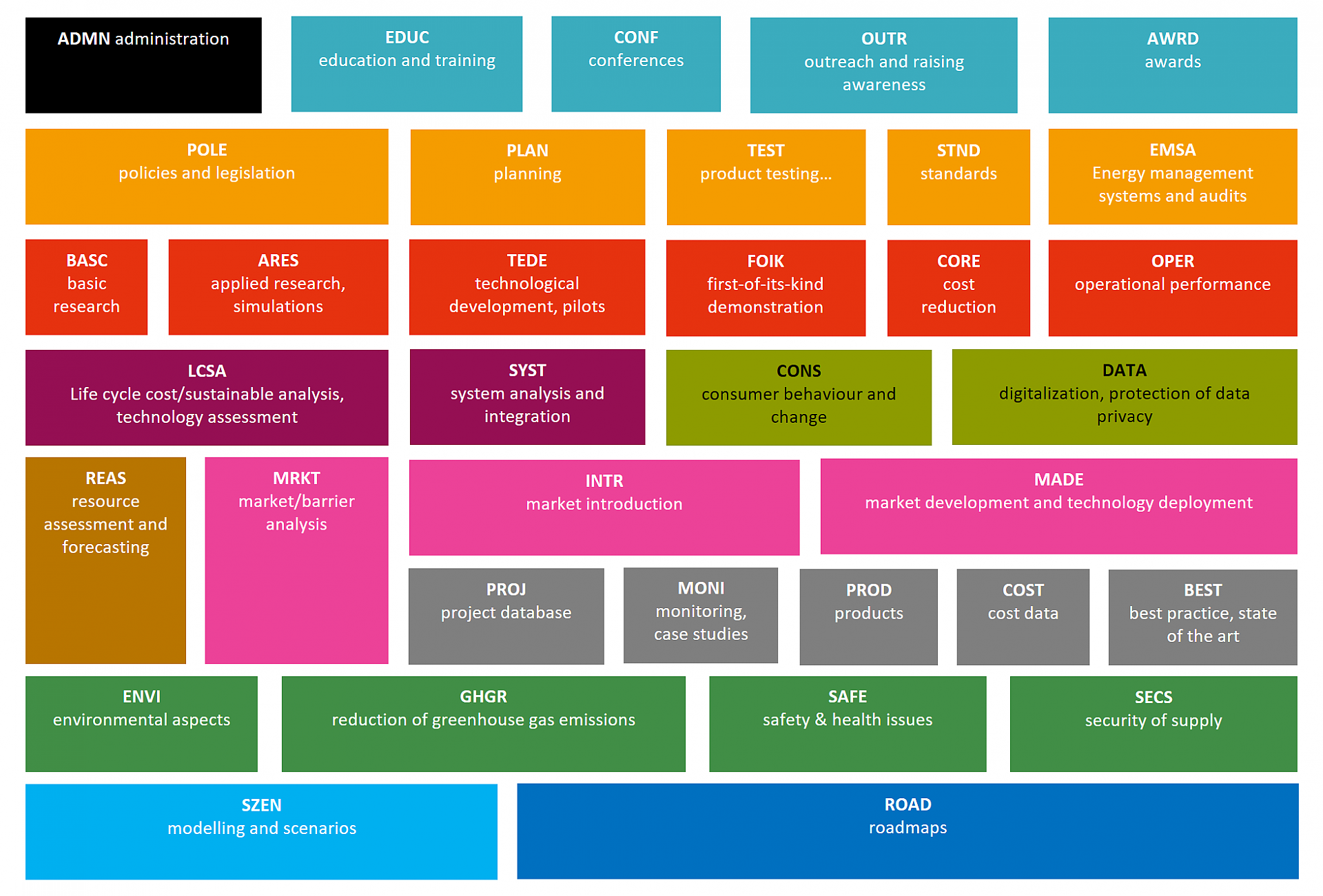
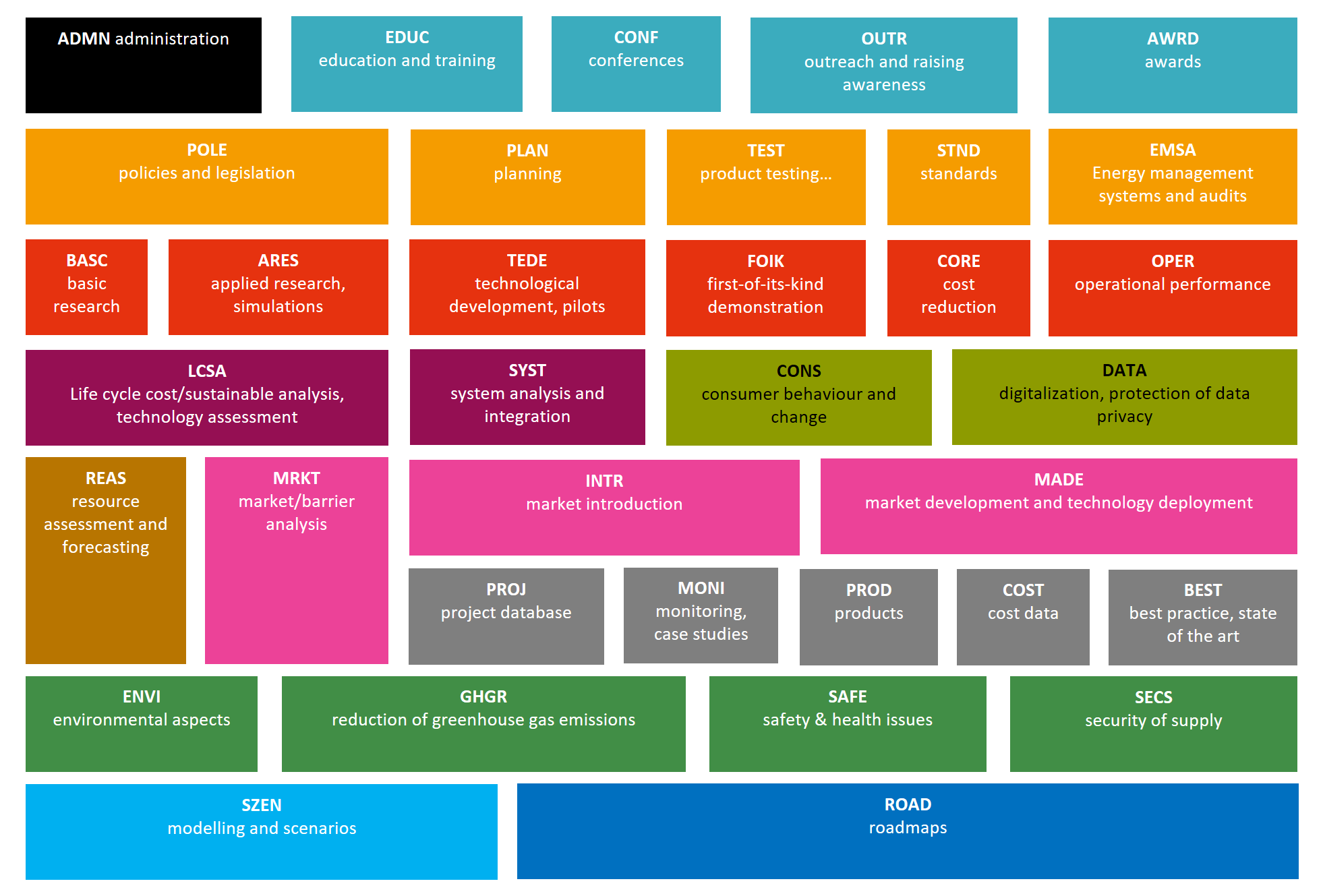
Methods
Set of methods to classify the type of activity of TCP Tasks and Annexes.
Copyright: Austrian Energy Agency
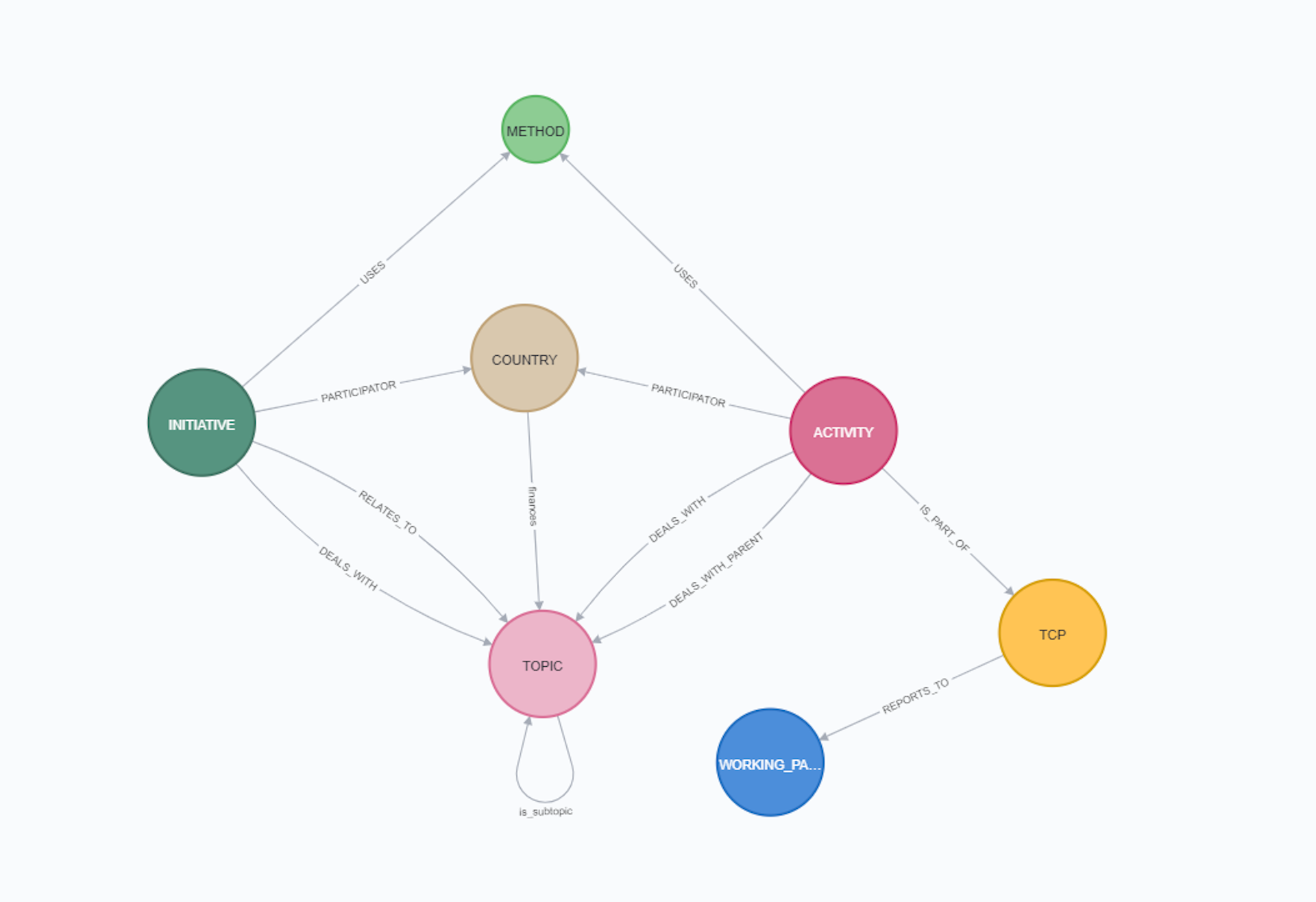
Graph Datastructure
Graphbased datastructure of the open access IEA-TCP dataset.
Copyright: Austrian Energy Agency
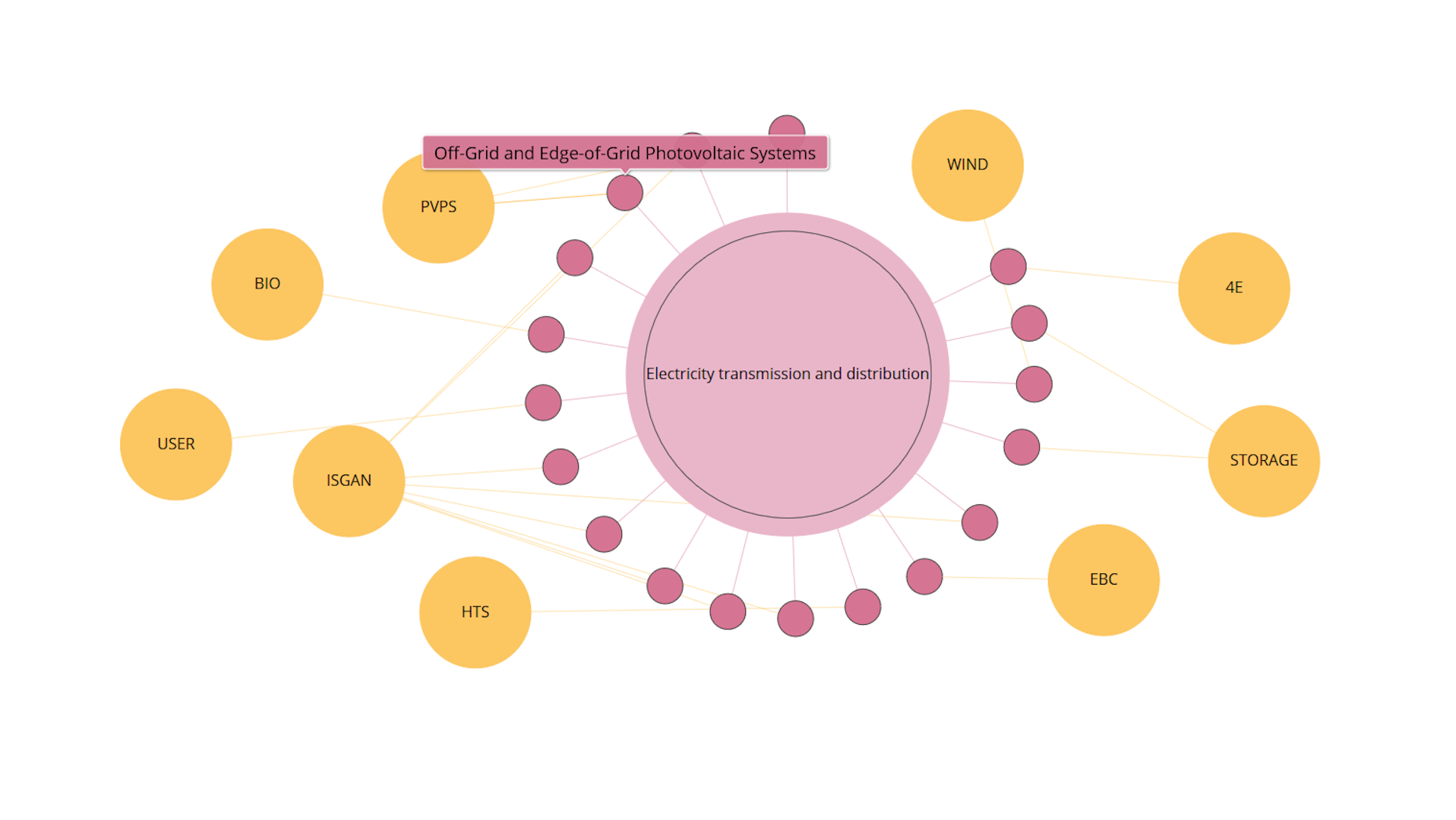
Visualisation of TCPs
After selecting a topic (in this example "Electricity transmission and distribution" was selected), this graph shows all tasks (activities) focussing on the selected topic. The topics are structured according to the IEA energy RD&D budget/expenditure statistics. Additionally, you can see the related Technology Collaboration Programmes (TCPs). Activities which had been ongoing in Summer 2020 from all IEA-TCPs are covered in this analysis. You can re-arrange the different bubbles to better meet the needs of your analysis. If a TCP consists of more than one task (activity), it also contains one entry in the database labelled “ExCo-Activities”. Available at https://nachhaltigwirtschaften.at/en/iea/visualisations/tcps-focussing-on-a-topic.php
Copyright: Austrian Energy Agency
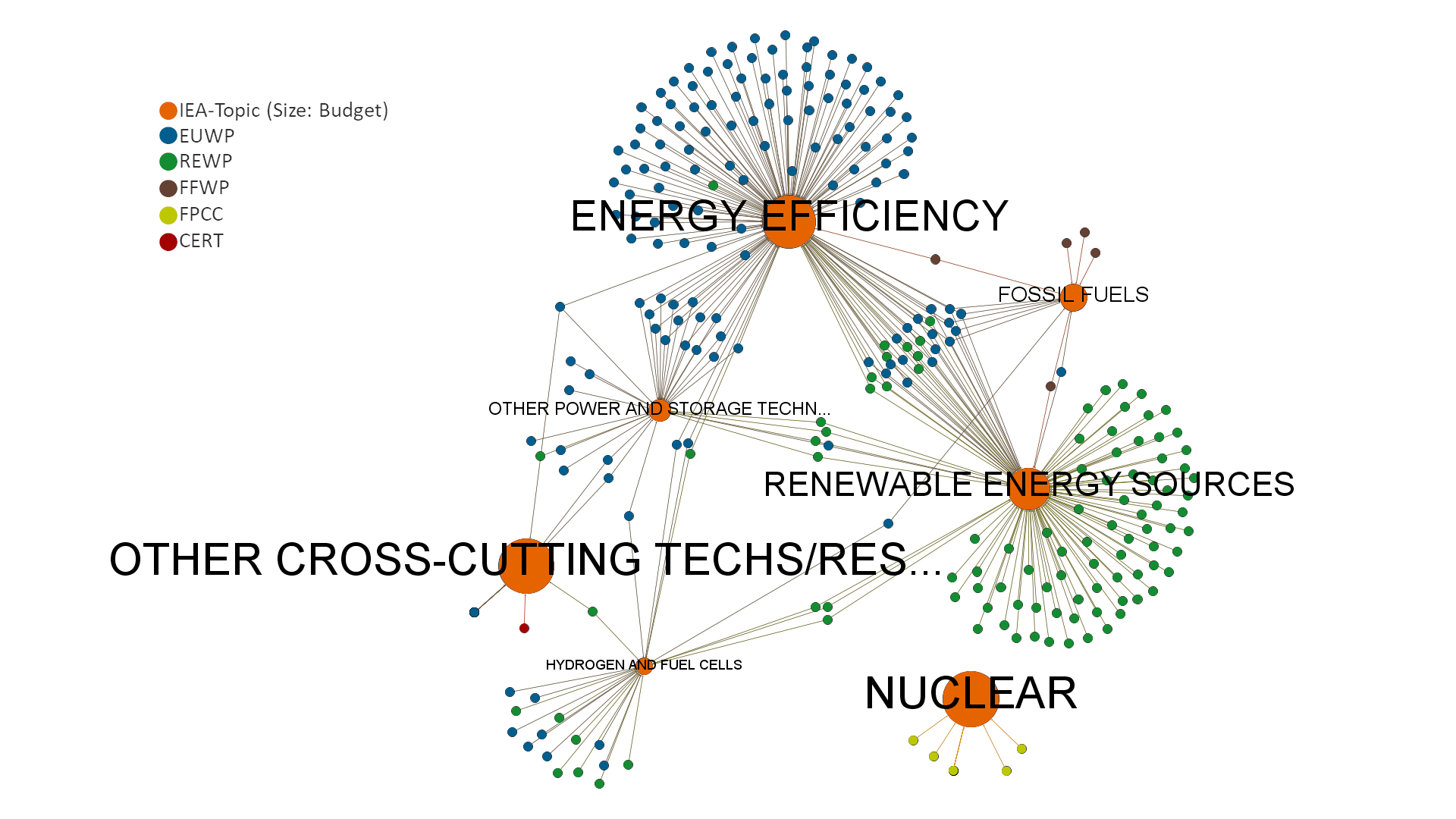
R&D Map
Visualisation of all ongoing Tasks and Annexes ("Activities") and their respective research topics.
Copyright: Austrian Energy Agency
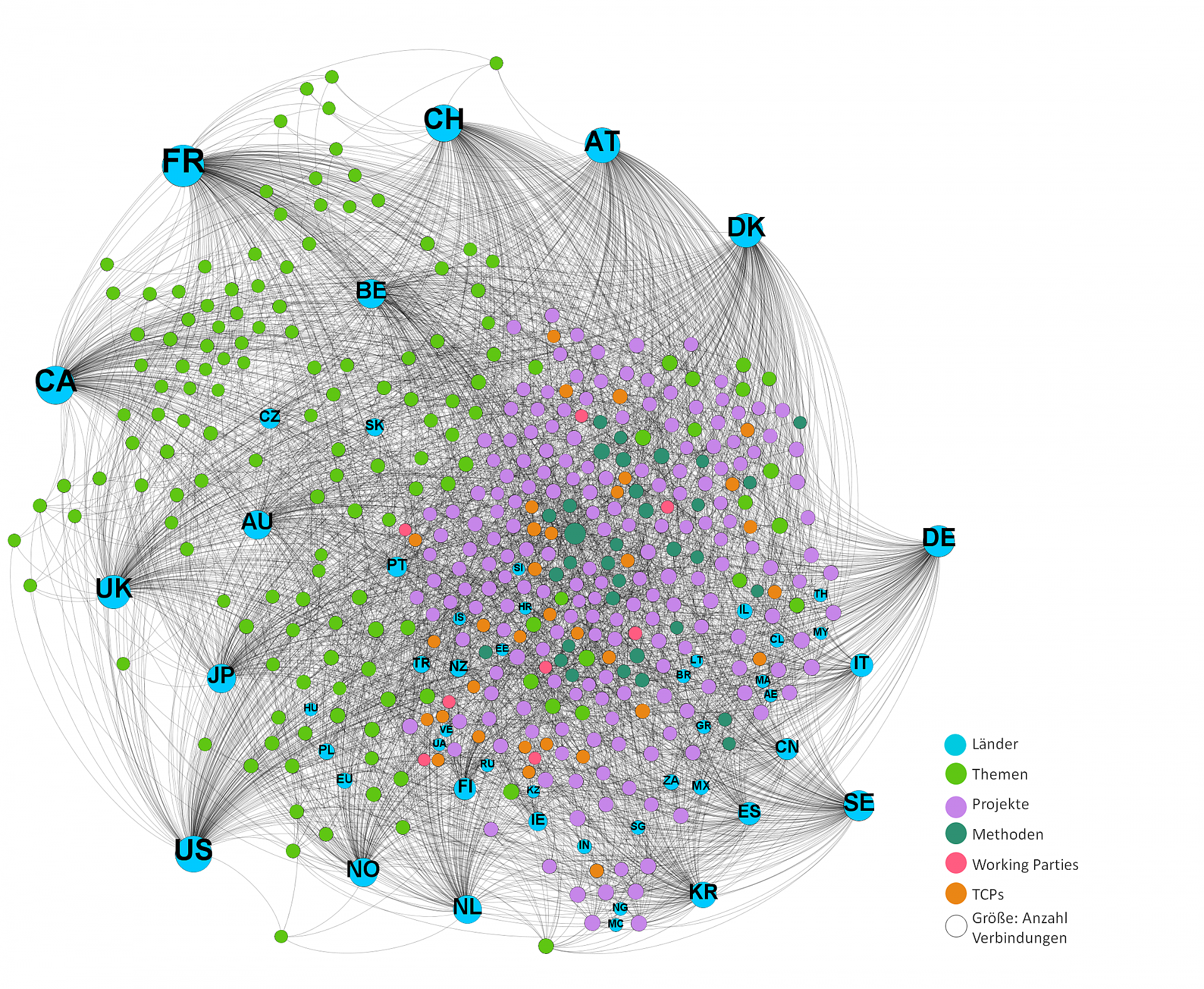
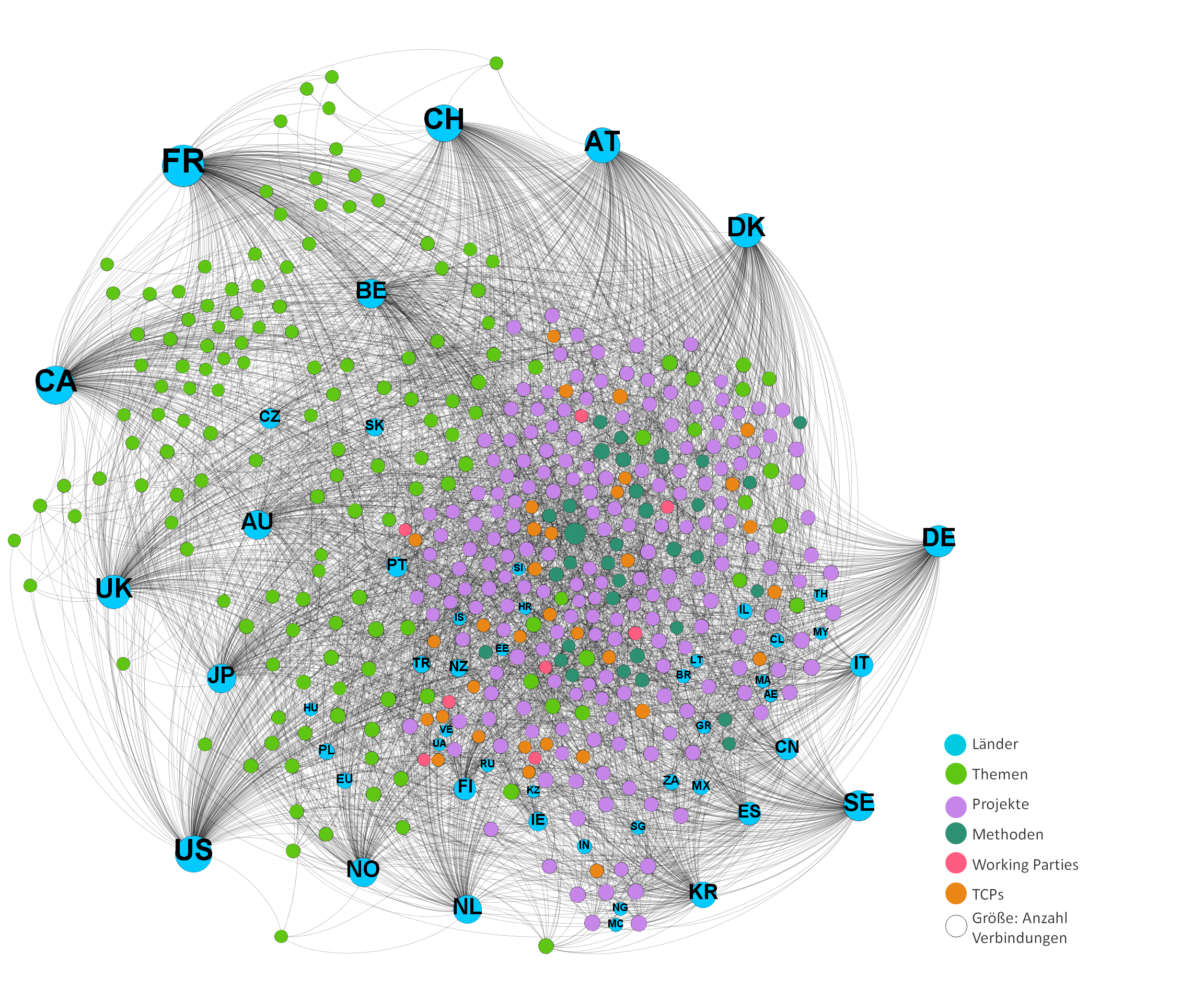
IEA-TCP Graph: Visualization of all nodes and edges in the IEA-TCP data model
Size of the nodes corresponds to the number of connections, color to the type of node (see legend).
Copyright: Österreichische Energieagentur 2018
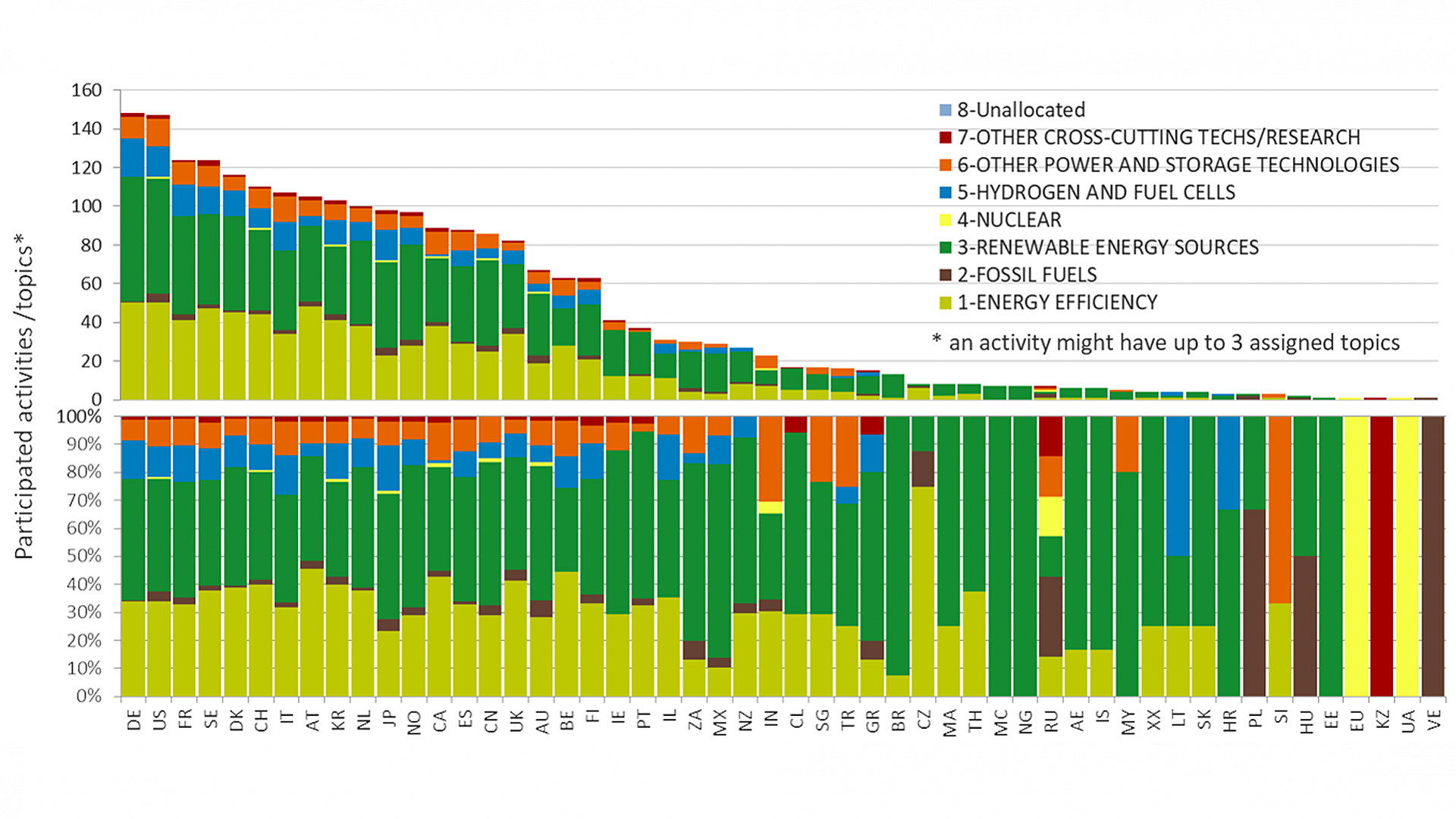
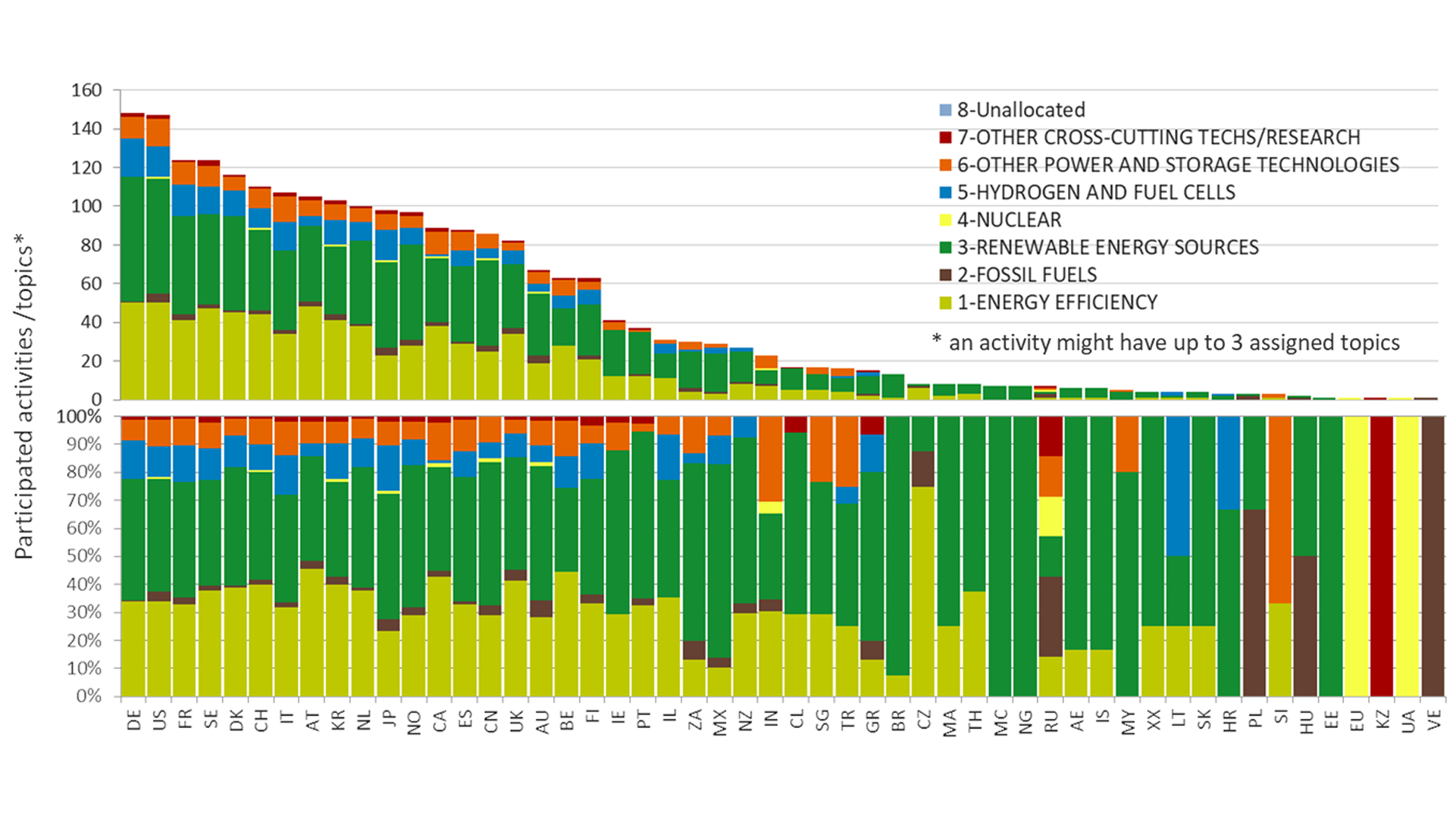
Participation of countries in IEA Technology Collaboration Programmes and Related Research Topics
Absolute (upper chart) and relative (lower chart) number of TCP-activities that countries are participating in. The color code shows how the assigned activities are related to the IEA-Topics and how the countries set their priorities with regard to the research topics (based on the IEA RD&D taxonomy).
Copyright: Österreichische Energieagentur, 2018
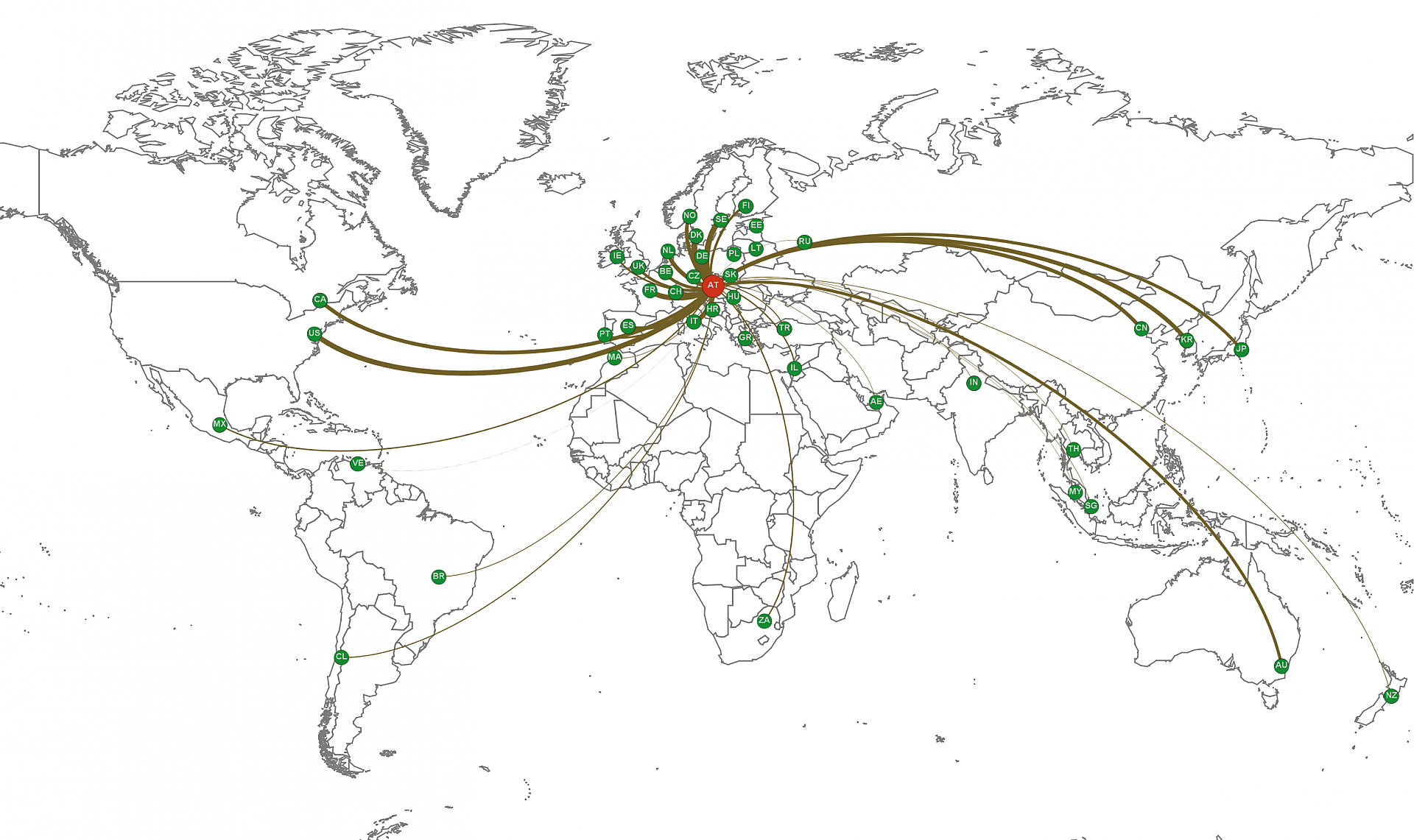
International cooperations of Austria in context of TCP activities.
Worldmap of Austrias cooperations with other countries in context of the IEA Technology Collaboration Program reasearch activities. Line thickness indicates the number of cooperations.
Copyright: Österreichische Energieagentur 2018

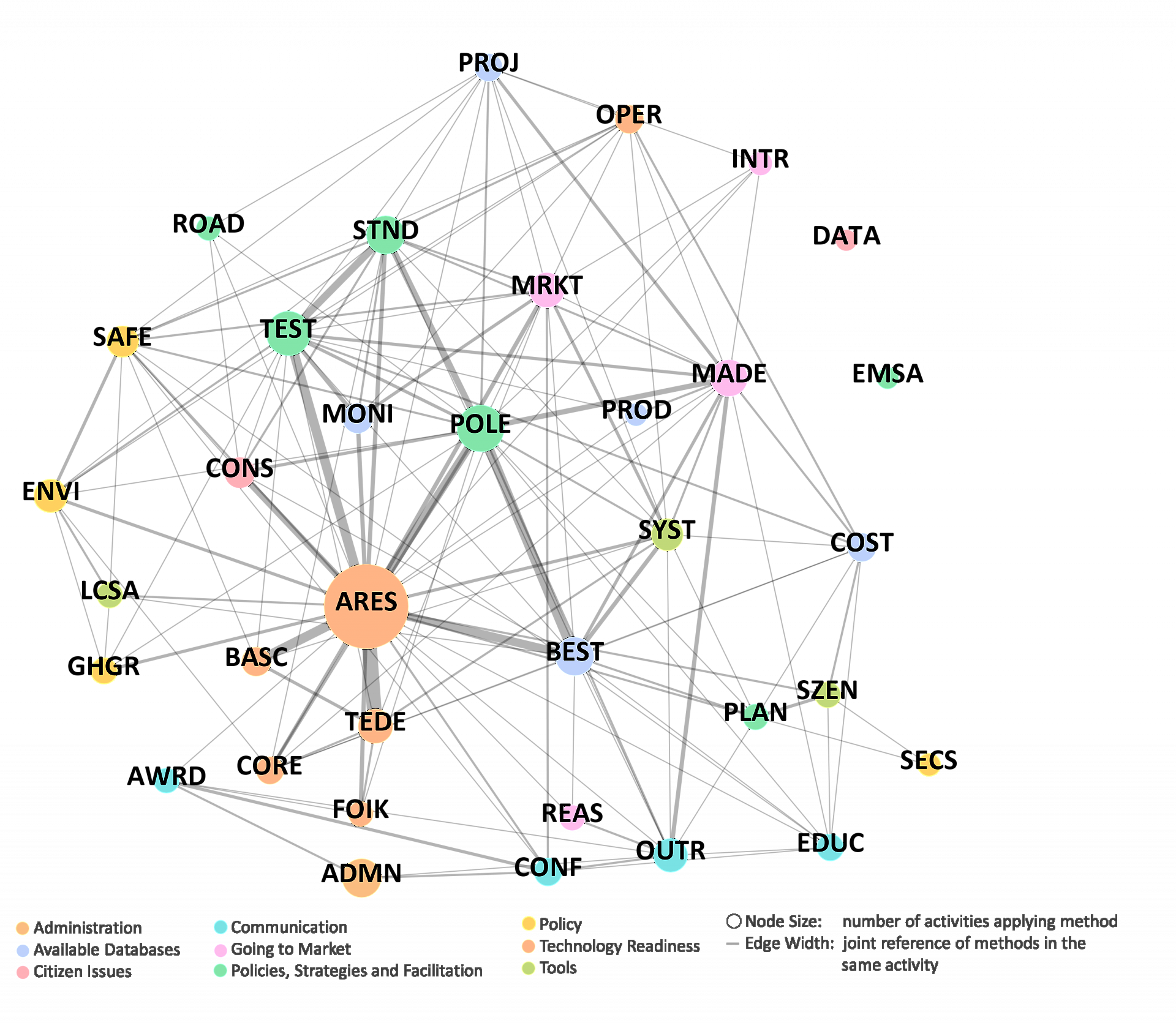
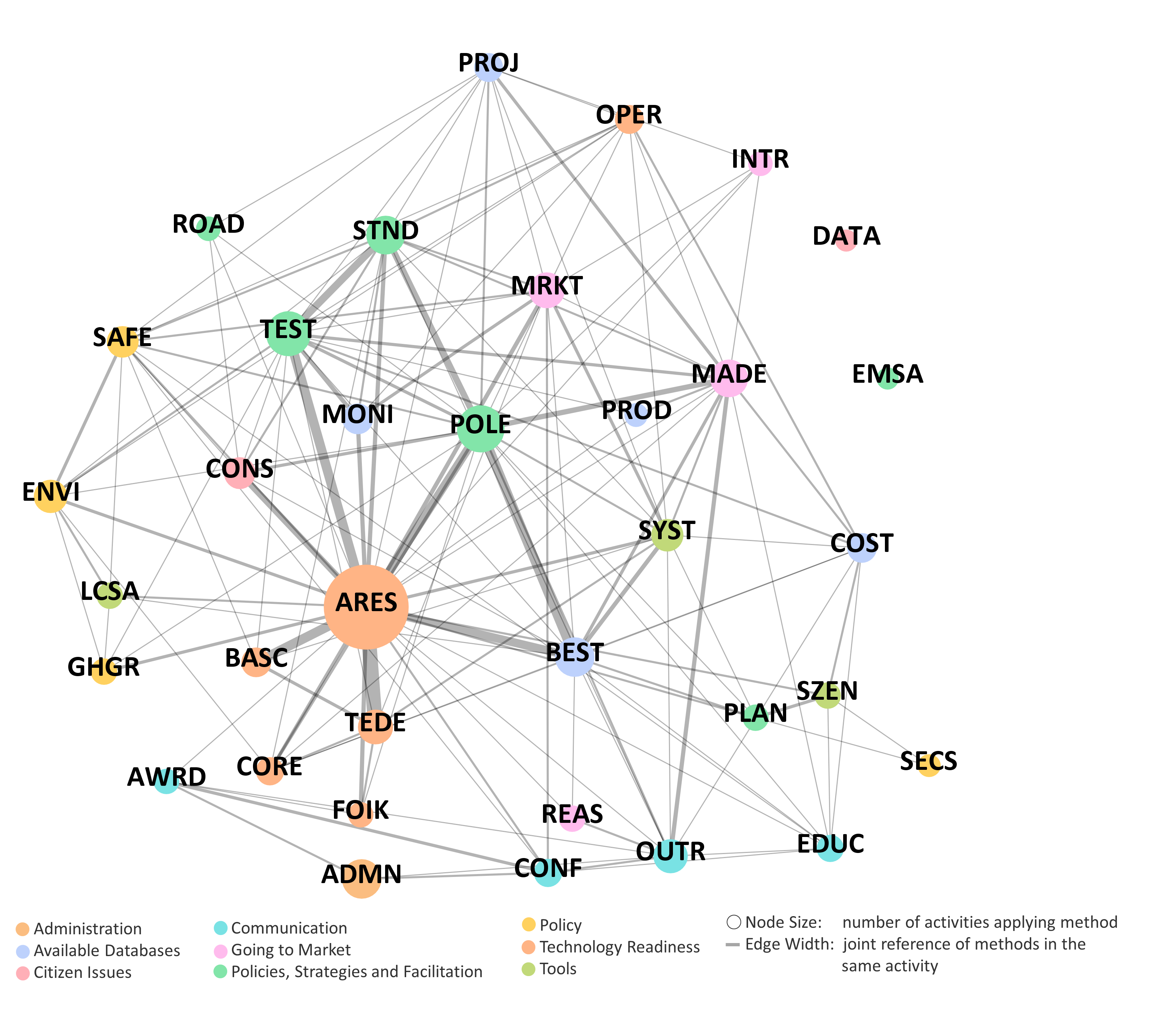
Combination of Methods used by TCP-Activities
A set of methods was developed to categorize the kind of project work that is done in the activities. The figure shows which methods are applied how often in total (node size), and which methods were frequently applied together (edge width) by activities. The color corresponds to the different method cate-gories described in chapter.
Copyright: Österreichische Energieagentur, 2018
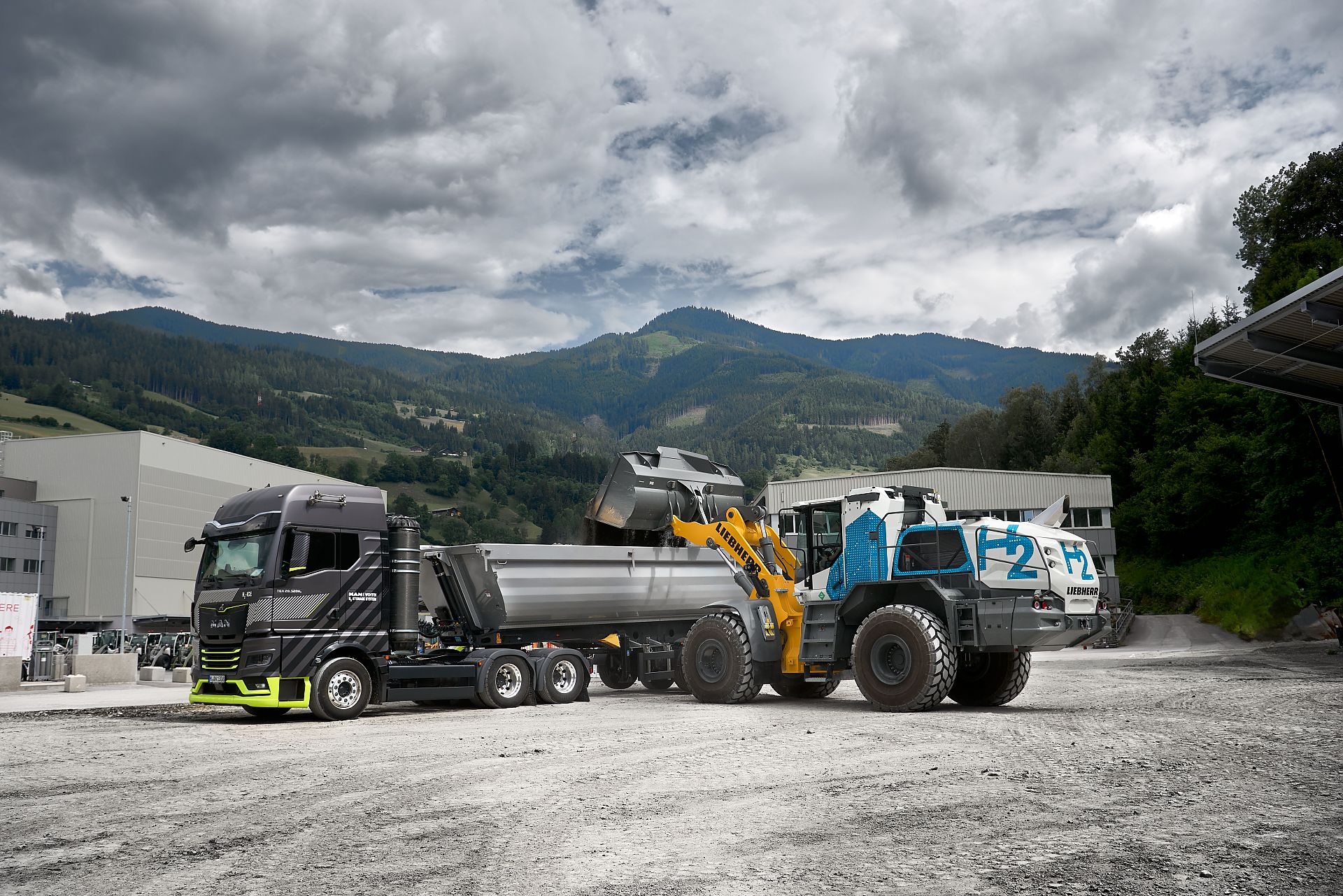
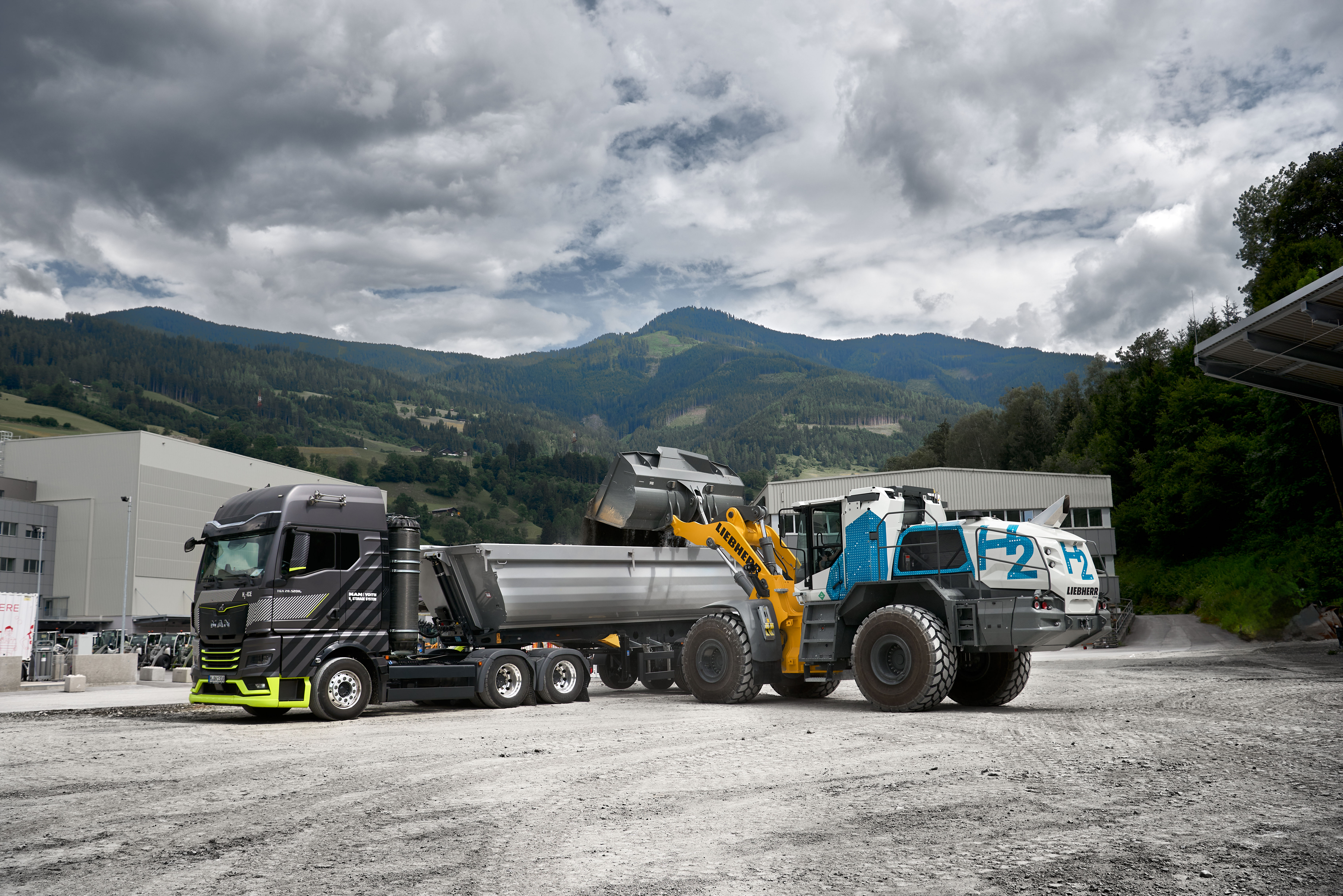
Liebherr large-size wheel loader with hydrogen engine
Premiere of hydrogen wheel loader prototype L 566H with MAN hydrogen truck in June 2024, both vehicles powered by hydrogen engines.
Copyright: Liebherr-Werk Bischofshofen GmbH
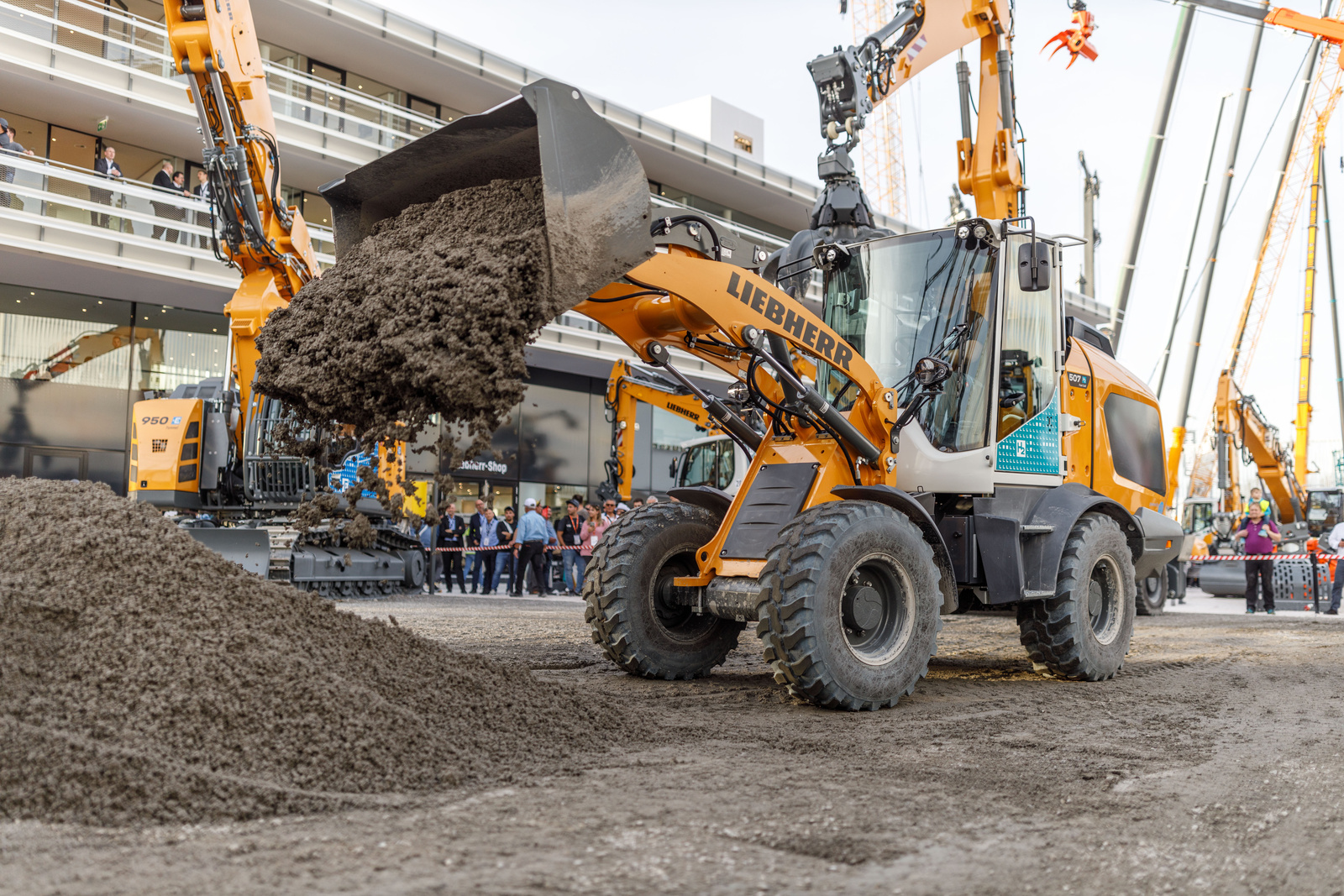
Liebherr small-size wheel loader with fuel cell drive system
Presentation of wheel loader demonstrator L 507 Fuel Cell with hydrogen fuel cell at Bauma in October 2022.
Copyright: Liebherr-Werk Bischofshofen GmbH
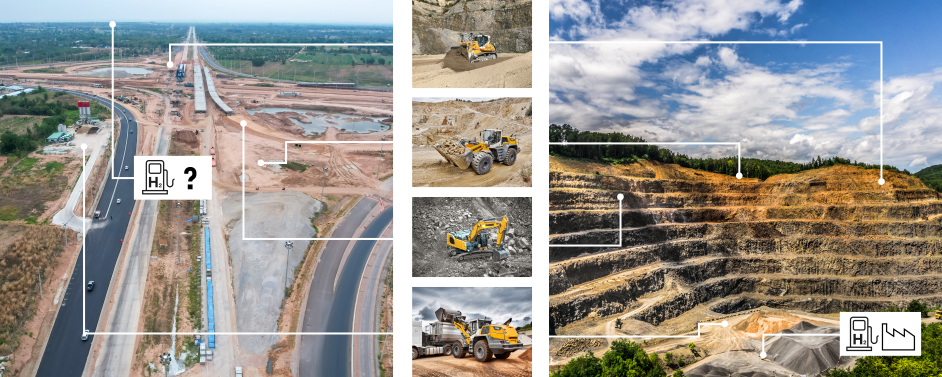
Areas of application for highly mobile hydrogen refuelling
Areas of application for highly mobile, construction site-compatible hydrogen refuelling at locations with no or insufficient refuelling and charging infrastructure.
Copyright: Liebherr-Werk Bischofshofen GmbH
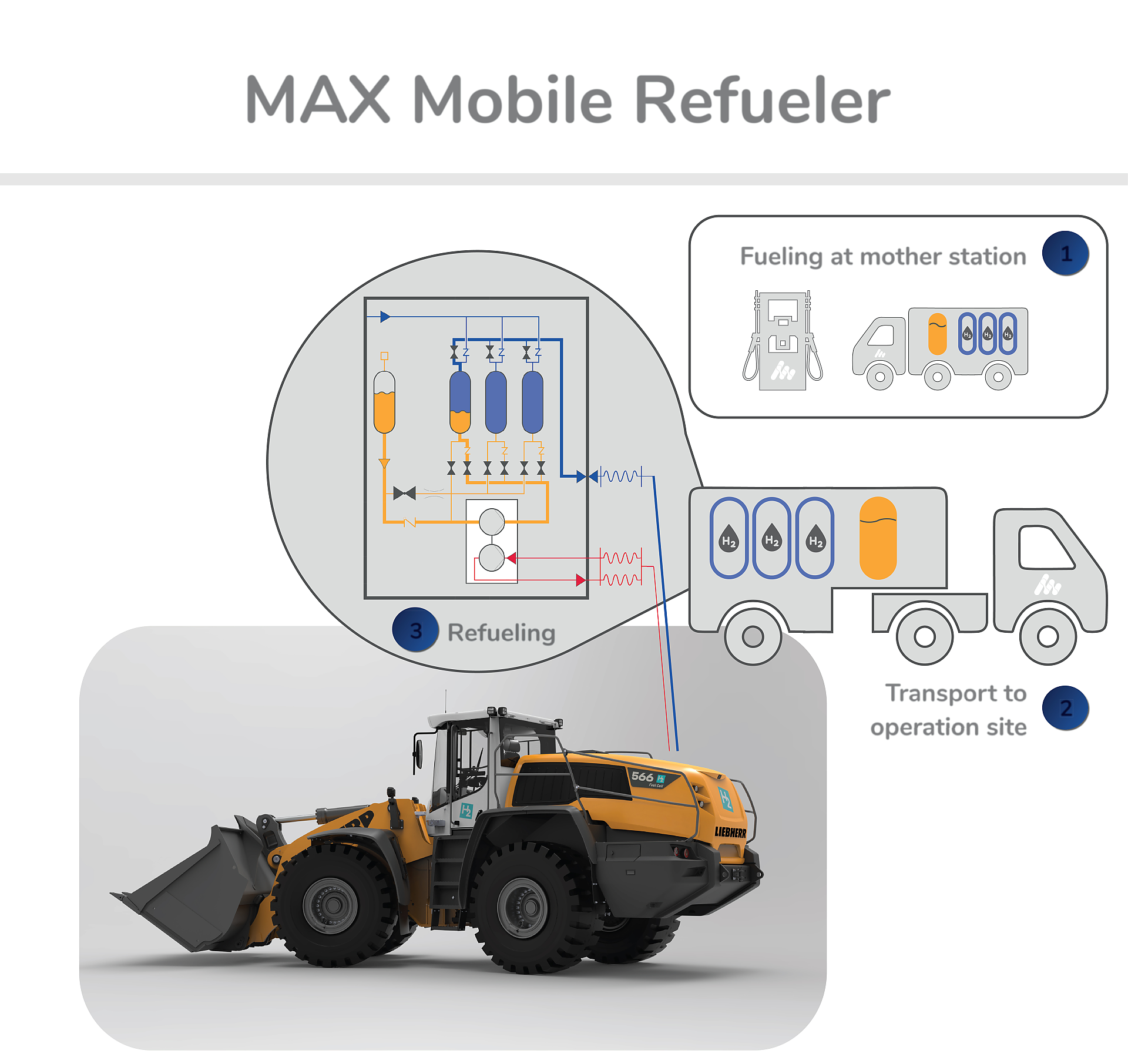
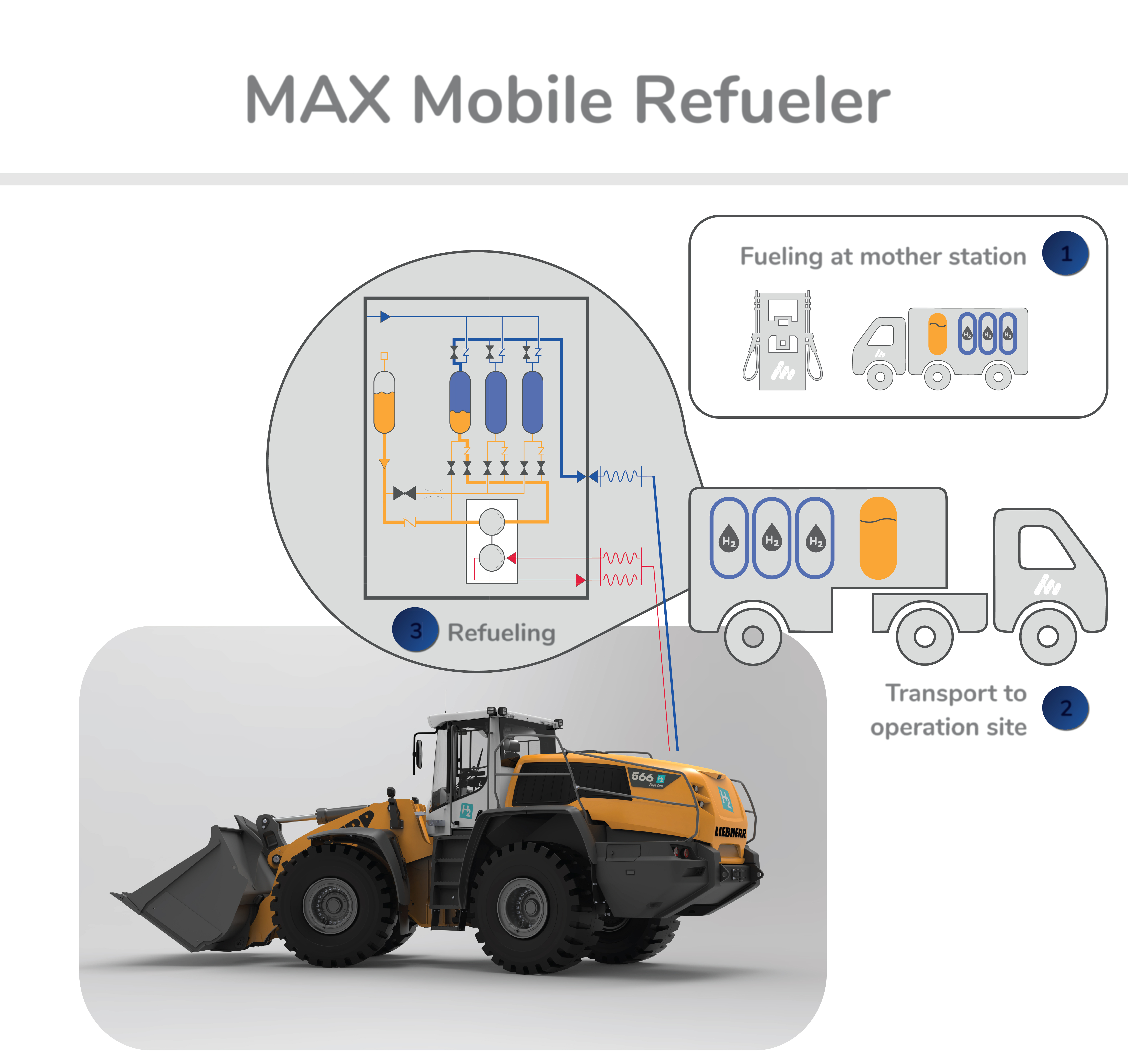
Design example for a highly mobile hydrogen refuelling station
Functionality of highly mobile hydrogen refuelling using the example of the MAX Mobile Refueler from Maximator: (1) The refuelling vehicle is refuelled at the public 700 bar truck filling station. (2) The already compressed hydrogen is brought to the machine by the transport vehicle. (3) Hydrogen is refuelled into the machine in a few minutes using a displacement principle with low energy input, whereby the highly mobile filling device is driven by the machine to be refuelled.