Project Image Pool
There are 441 results.
Terms of use: The pictures on this site originate from the projects in the frame of the programmes City of Tomorrow, Building of Tomorrow and the IEA Research Cooperation. They may be used credited for non-commercial purposes under the Creative Commons License Attribution-NonCommercial (CC BY-NC).
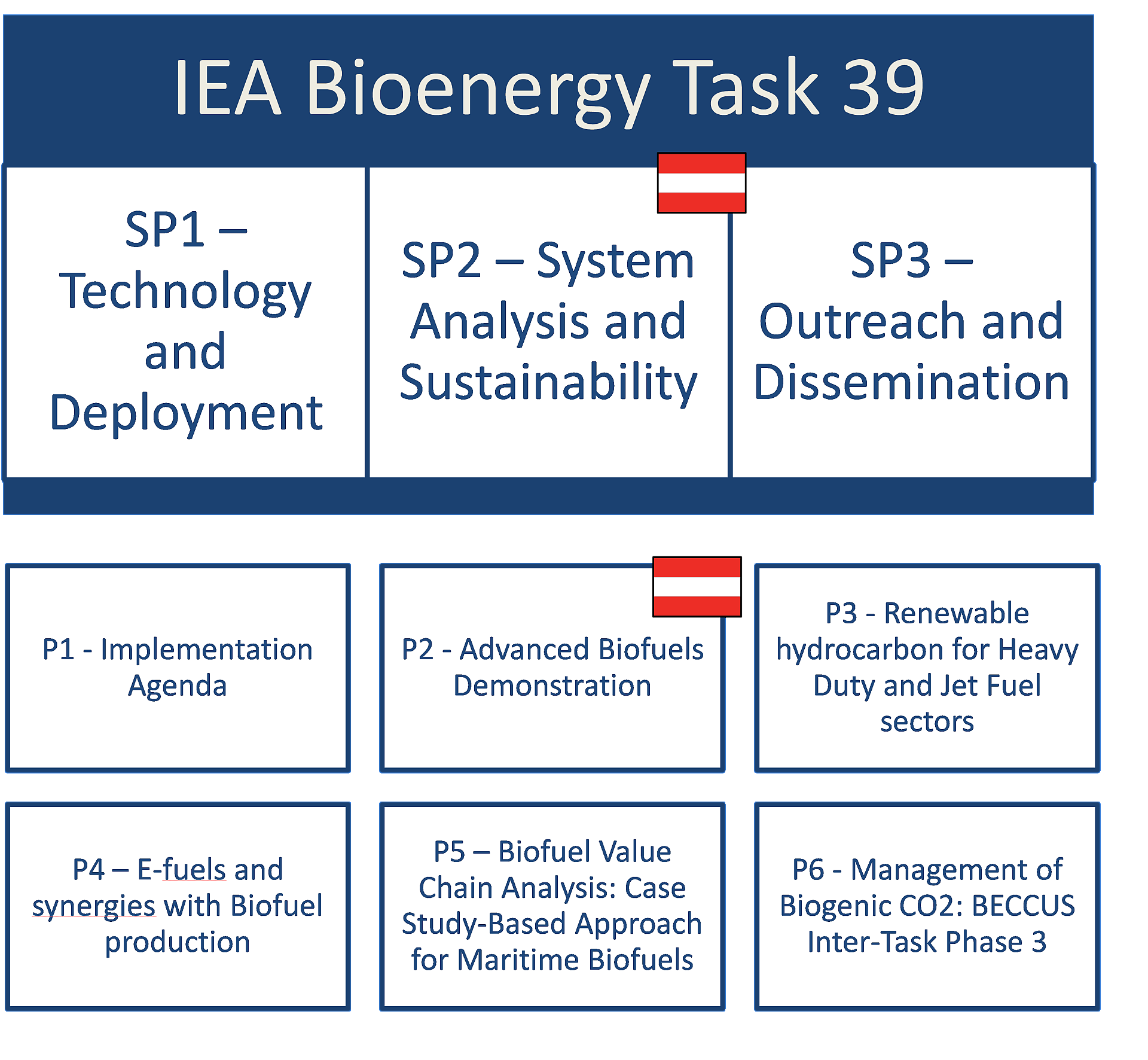
Structure and projects in Task 39
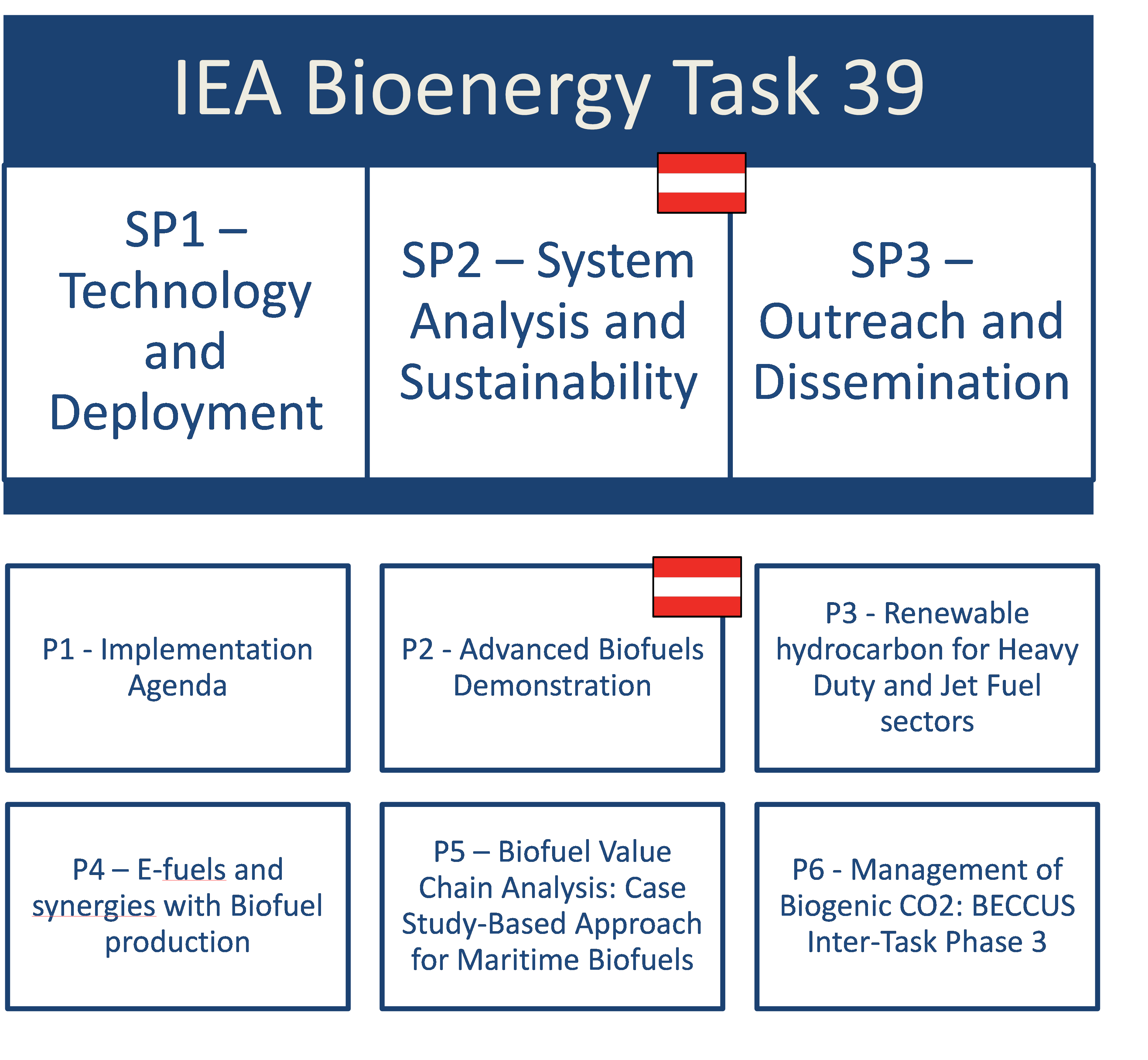
IEA Bioenergy Task 39 is structured into three subprograms: Technology and Deployment, System Analysis and Sustainability, and Outreach and Dissemination. During this triennium, six thematic projects are being implemented, as shown in the graphic. The projects and subprograms led by Austria are indicated with the Austrian flag.
Copyright: BEST
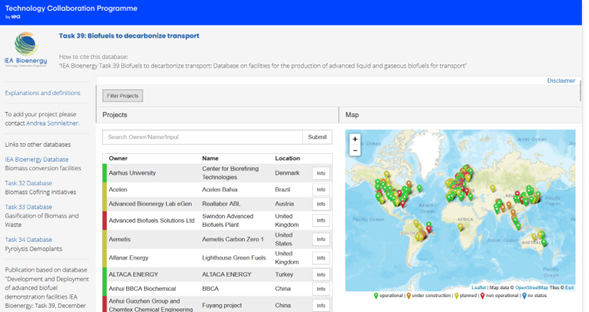
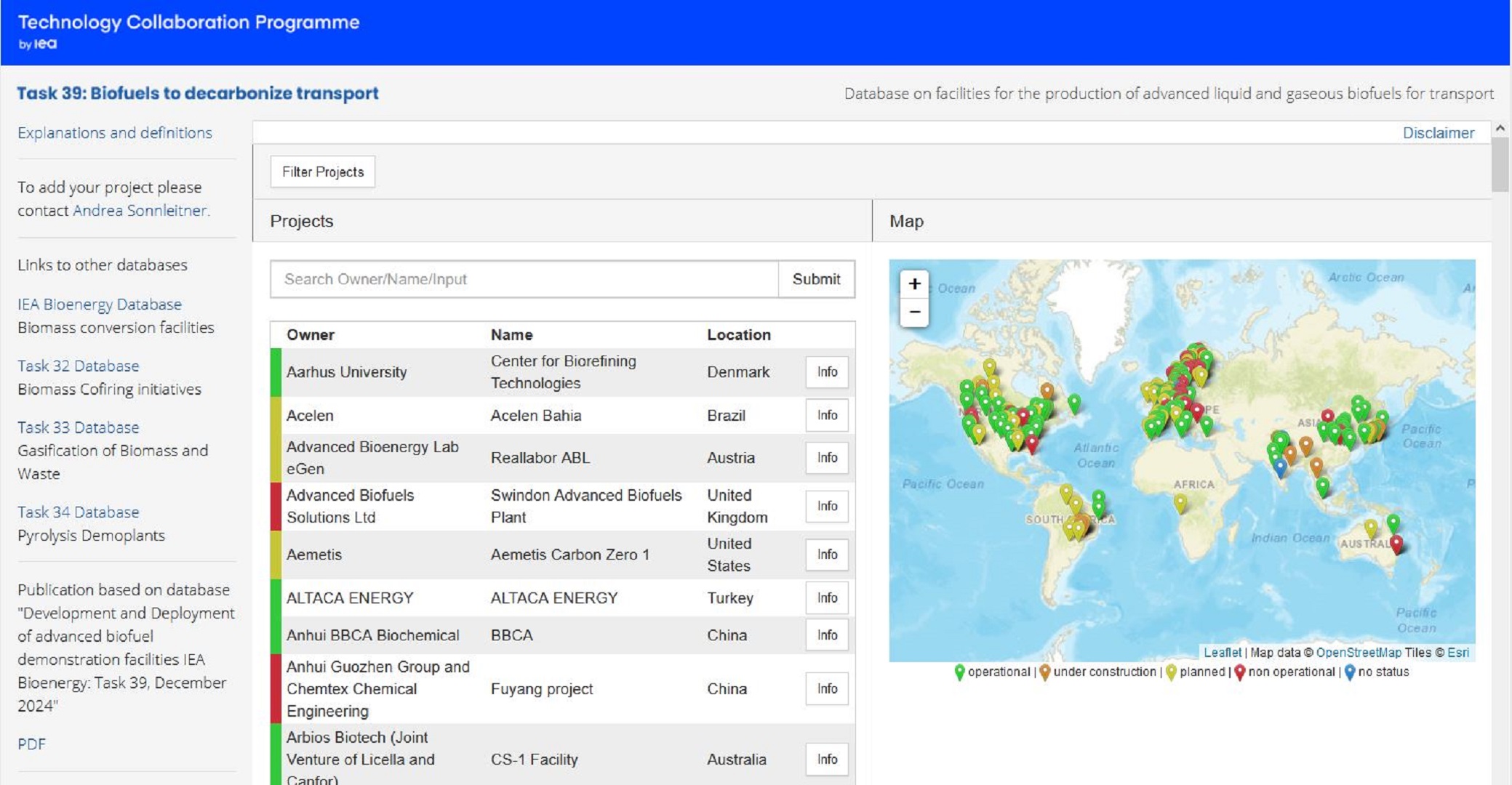
Database on facilities for the production of advanced liquid and gaseous biofuels for transport
Database on facilities for the production of advanced liquid and gaseous biofuels for transport
Copyright: BEST
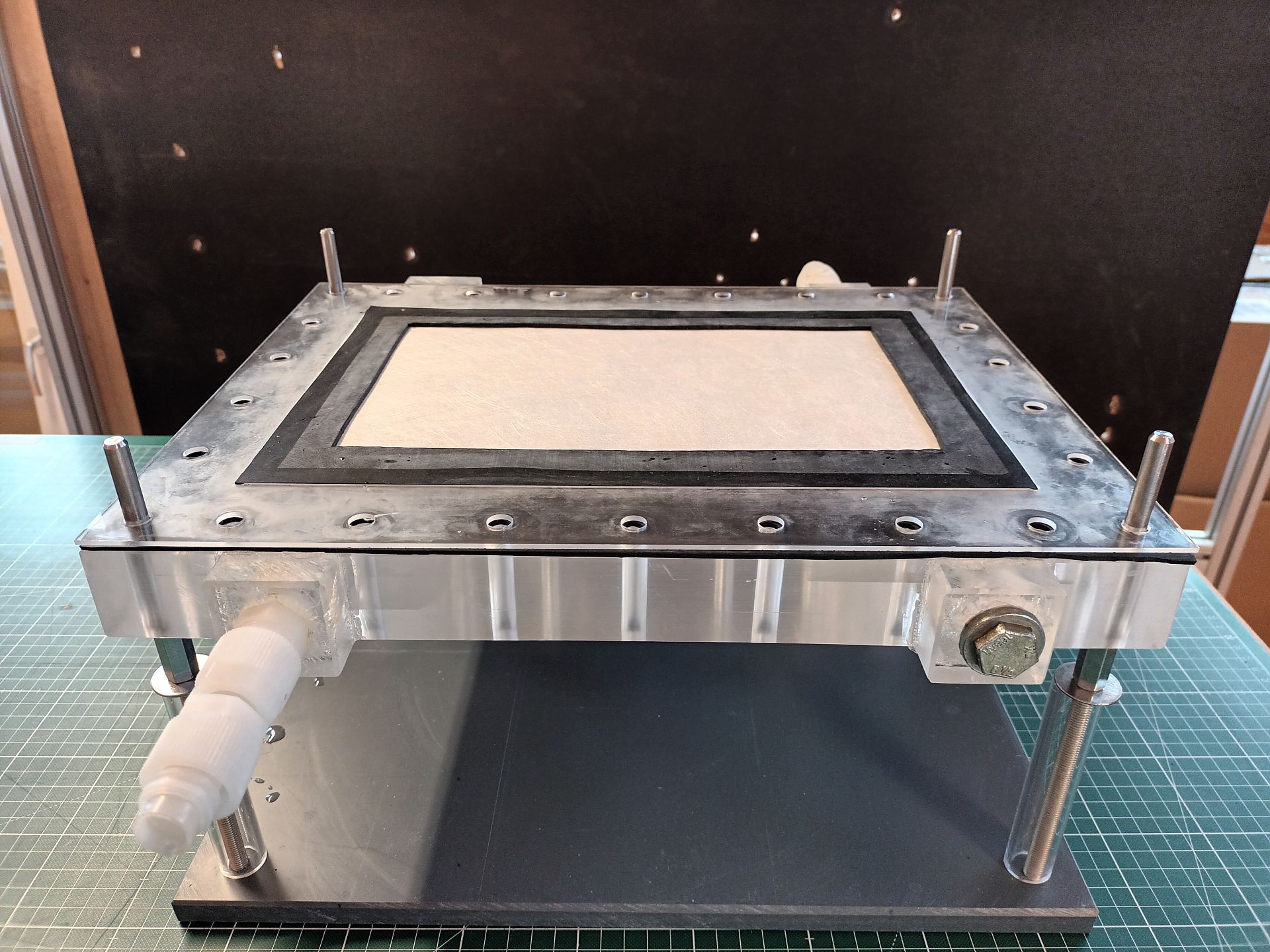
Membrane distillation test module for flat membranes
Membrane distillation test module for flat membranes in the water and process engineering laboratory at AEE INTEC, Gleisdorf, Austria
Copyright: AEE INTEC (Sara Strk)
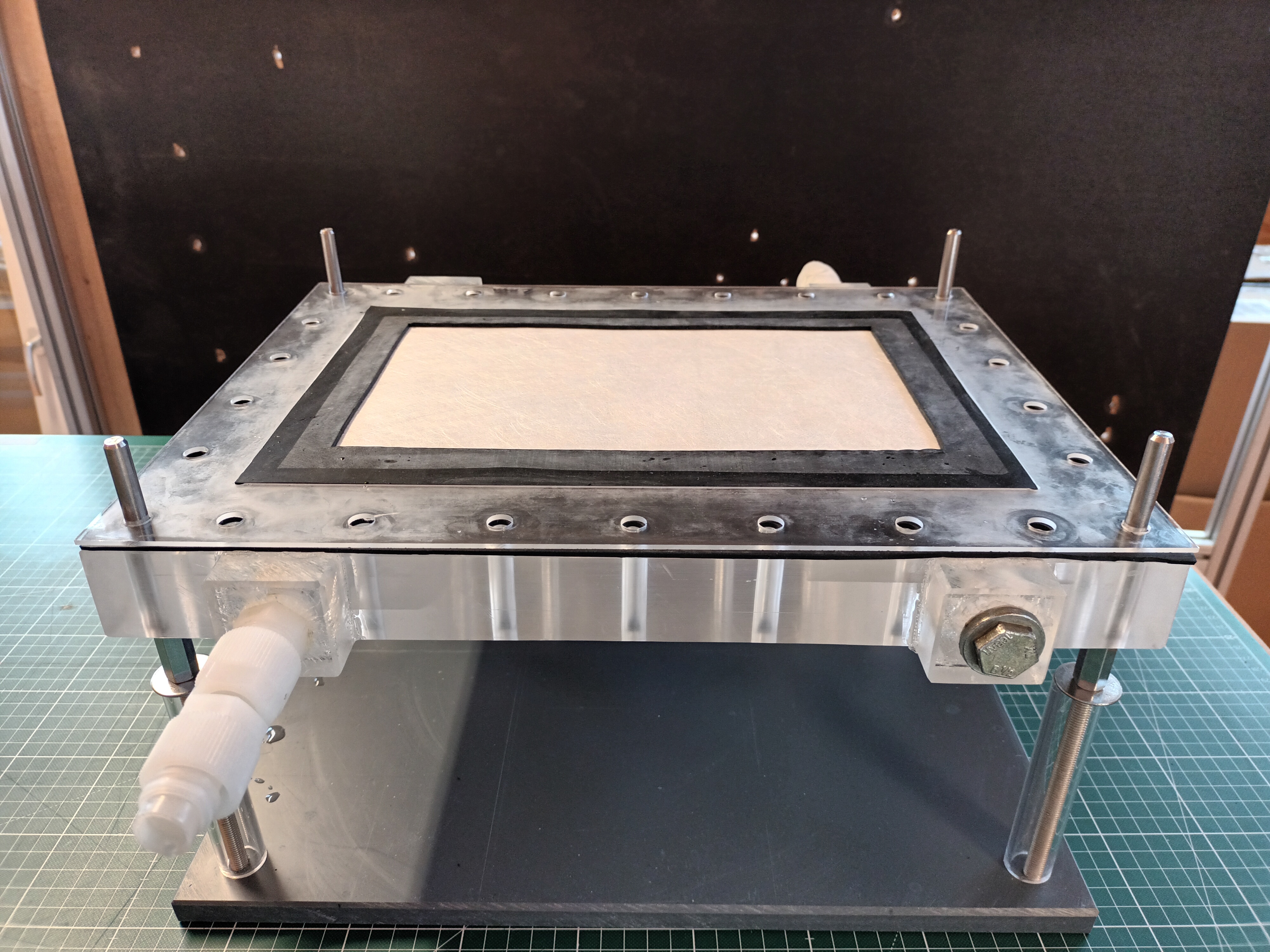
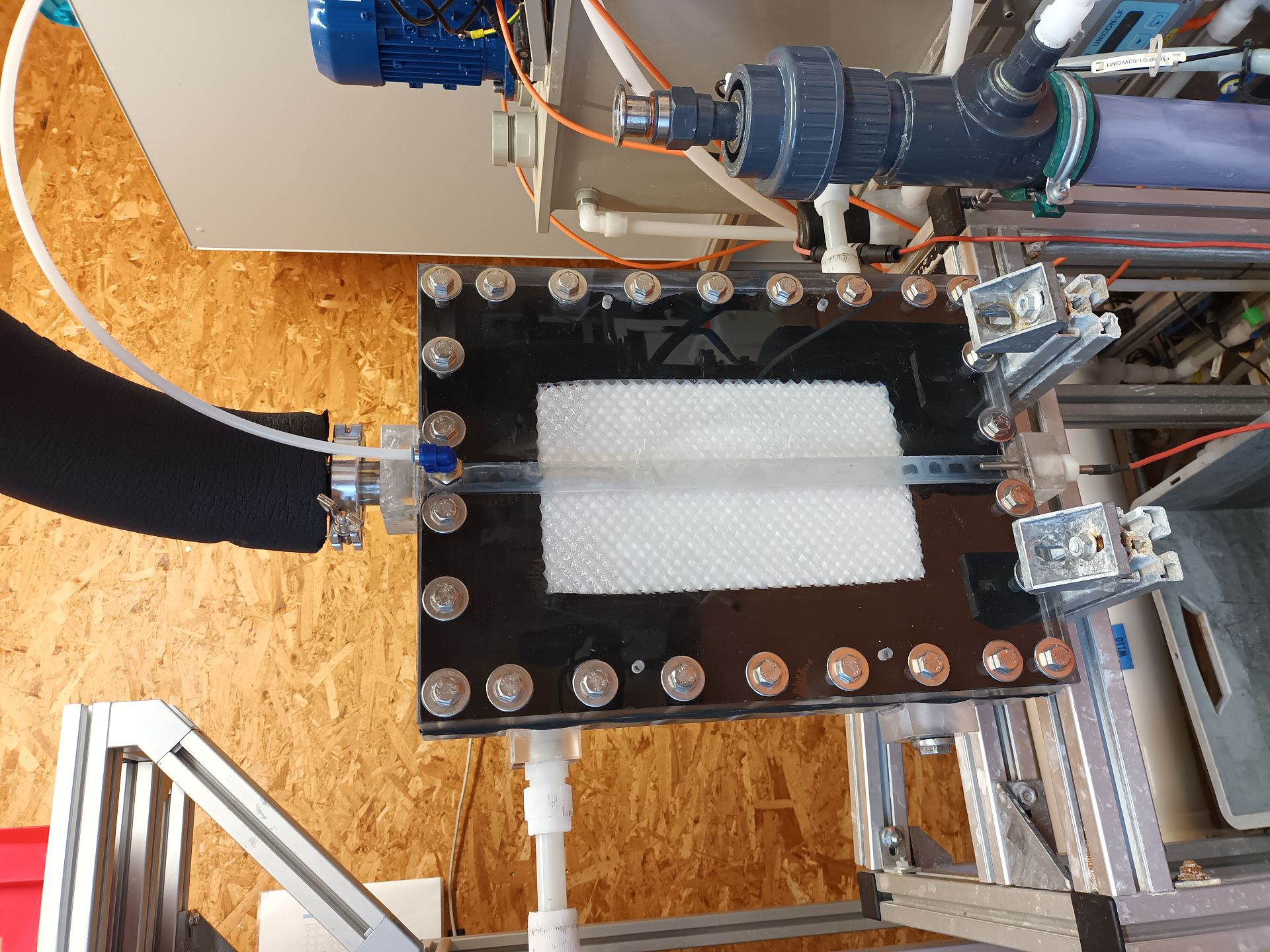
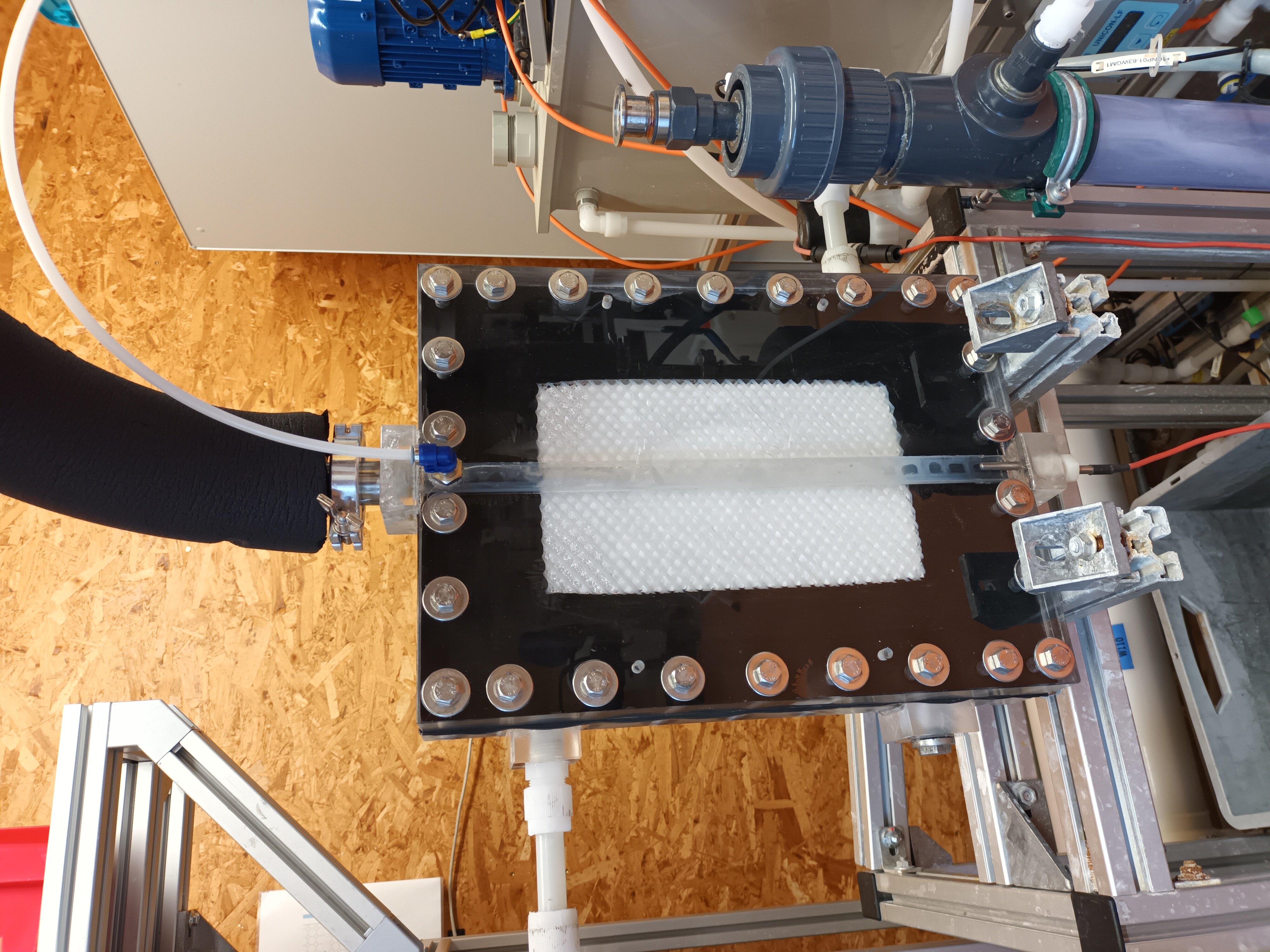
Vacuum Membrane Distillation Test Module for Flat Membranes
Vacuum Membrane distillation test module for flat membranes in the water and process engineering laboratory at AEE INTEC, Gleisdorf, Austria
Copyright: AEE INTEC (Sara Strk)
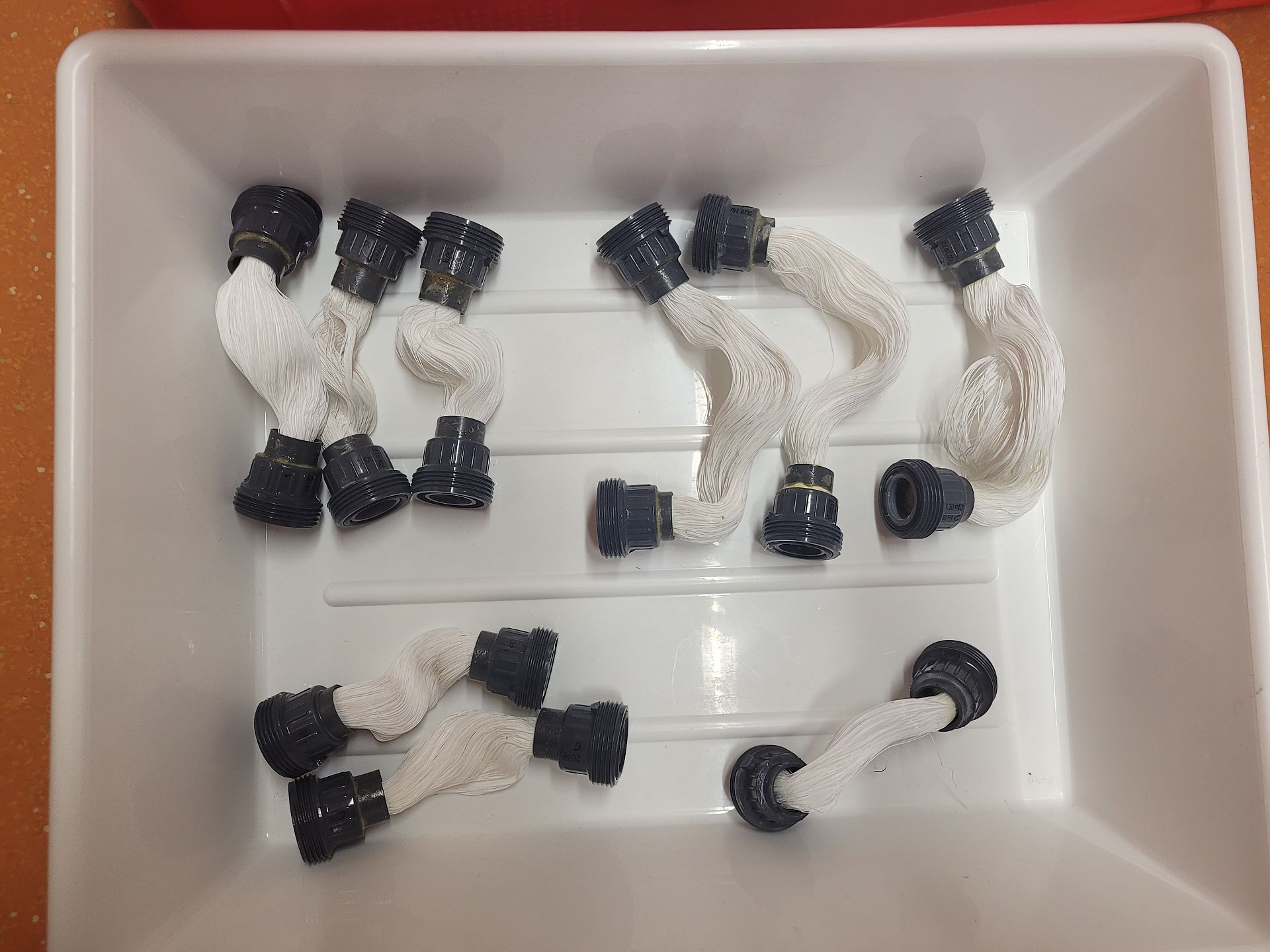
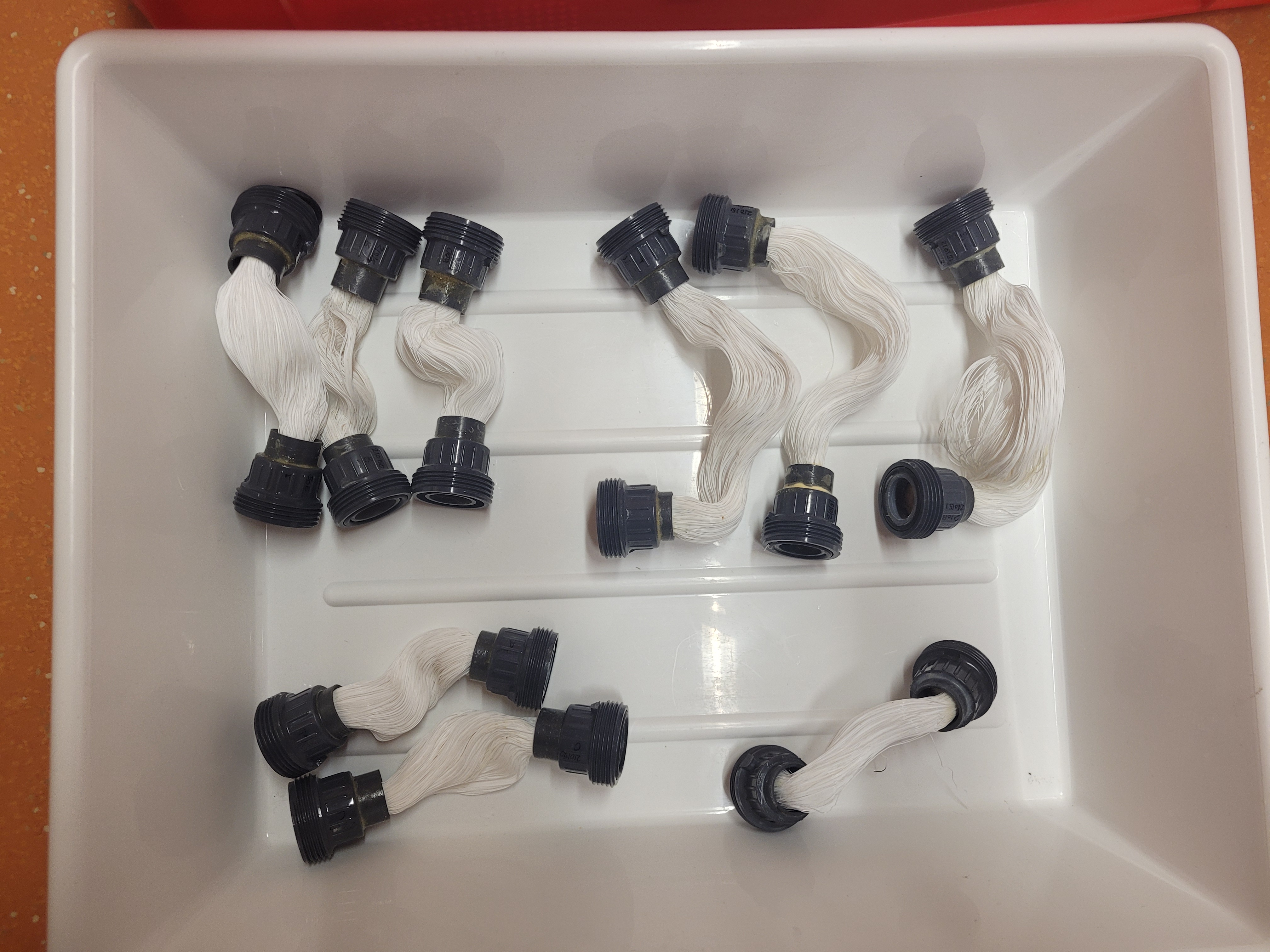
Polyolefin hollow fiber membranes for ammonia recovery
Polyolefin hollow fiber membranes from the research project: SolPol6 for ammonia recovery on a laboratory scale in the water and process engineering laboratory at AEE INTEC, Gleisdorf.
Copyright: AEE INTEC (Christoph Hoefer)
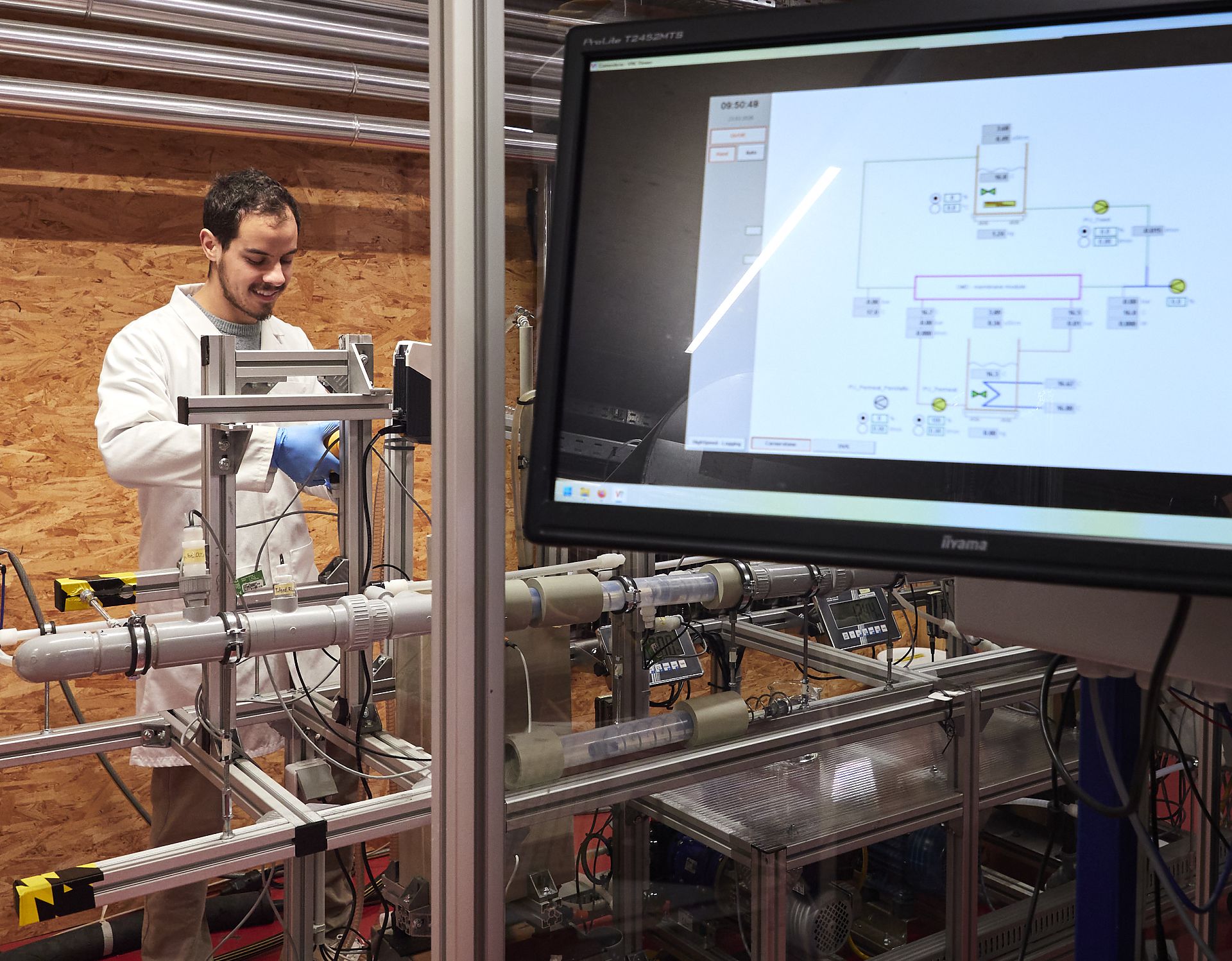
Hollow fiber membrane distillation laboratory test setup
Hollow fiber membrane distillation laboratory test facility in the water and process engineering laboratory at AEE INTEC, Gleisdorf, Austria
Copyright: ACR (Schewig Fotodesign)
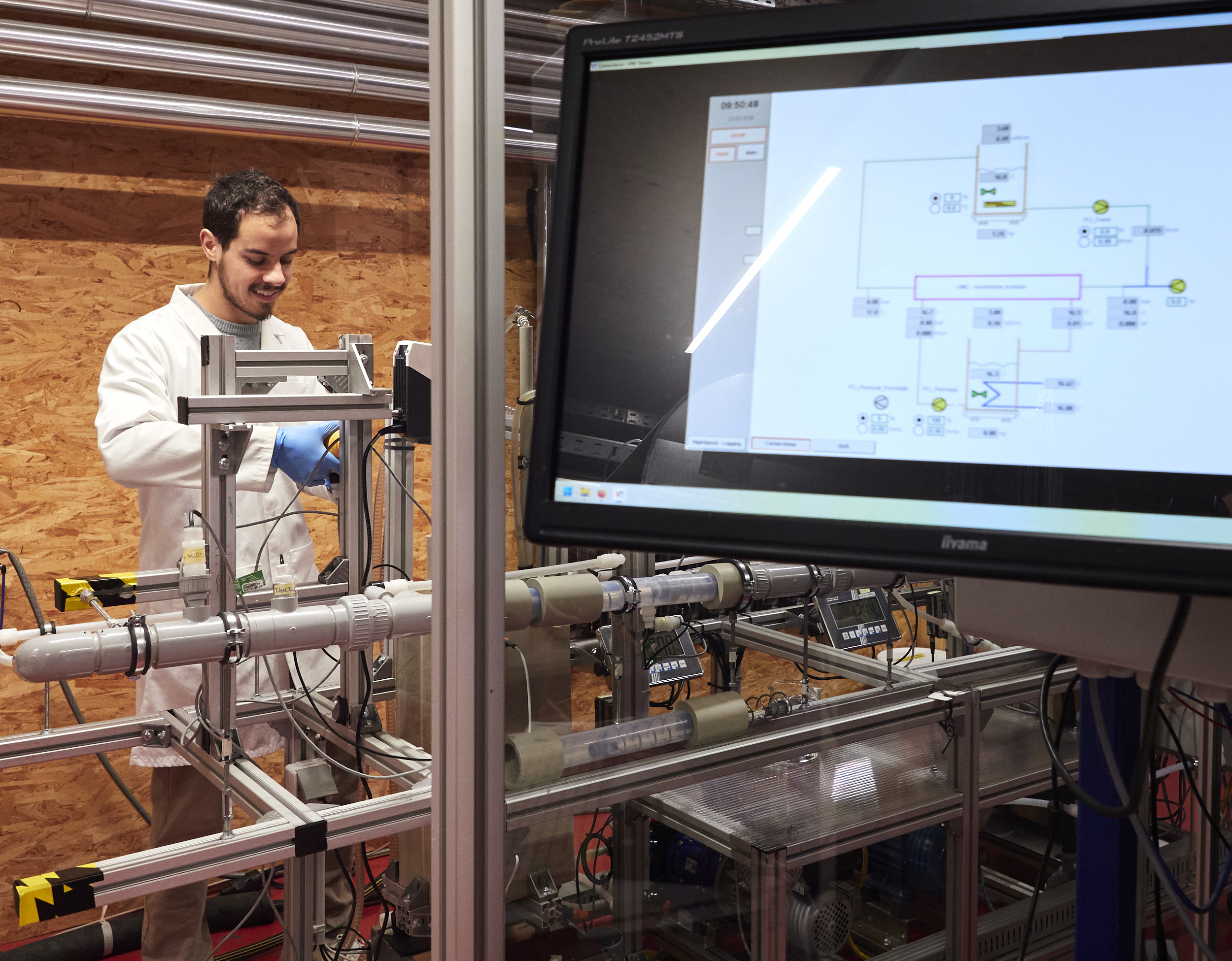
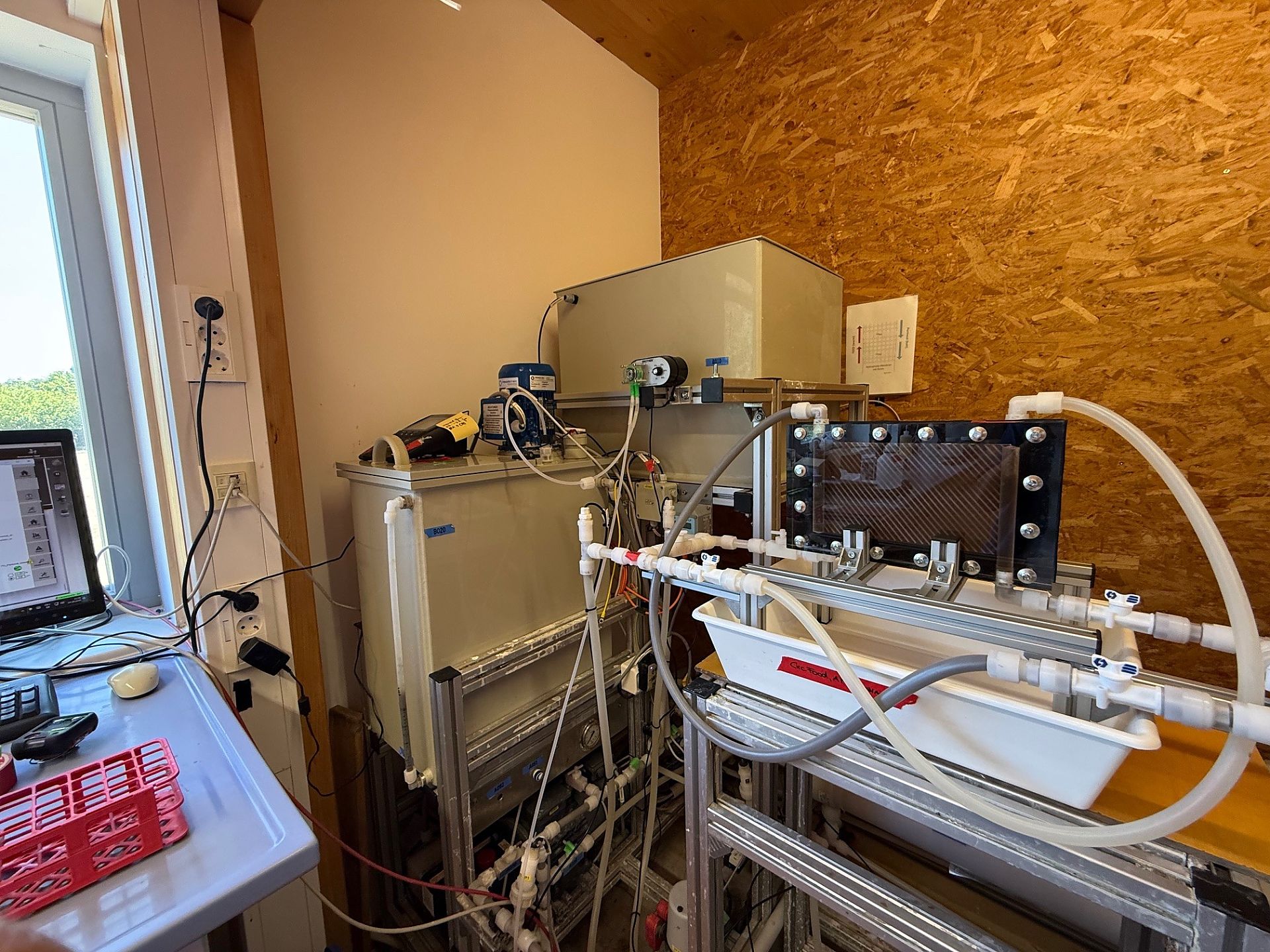
Membrane distillation laboratory test setup for flat membranes
Membrane distillation laboratory test facility for flat membranes in the water and process engineering laboratory at AEE INTEC, Gleisdorf, Austria
Copyright: AEE INTEC (Almedina Suljic)
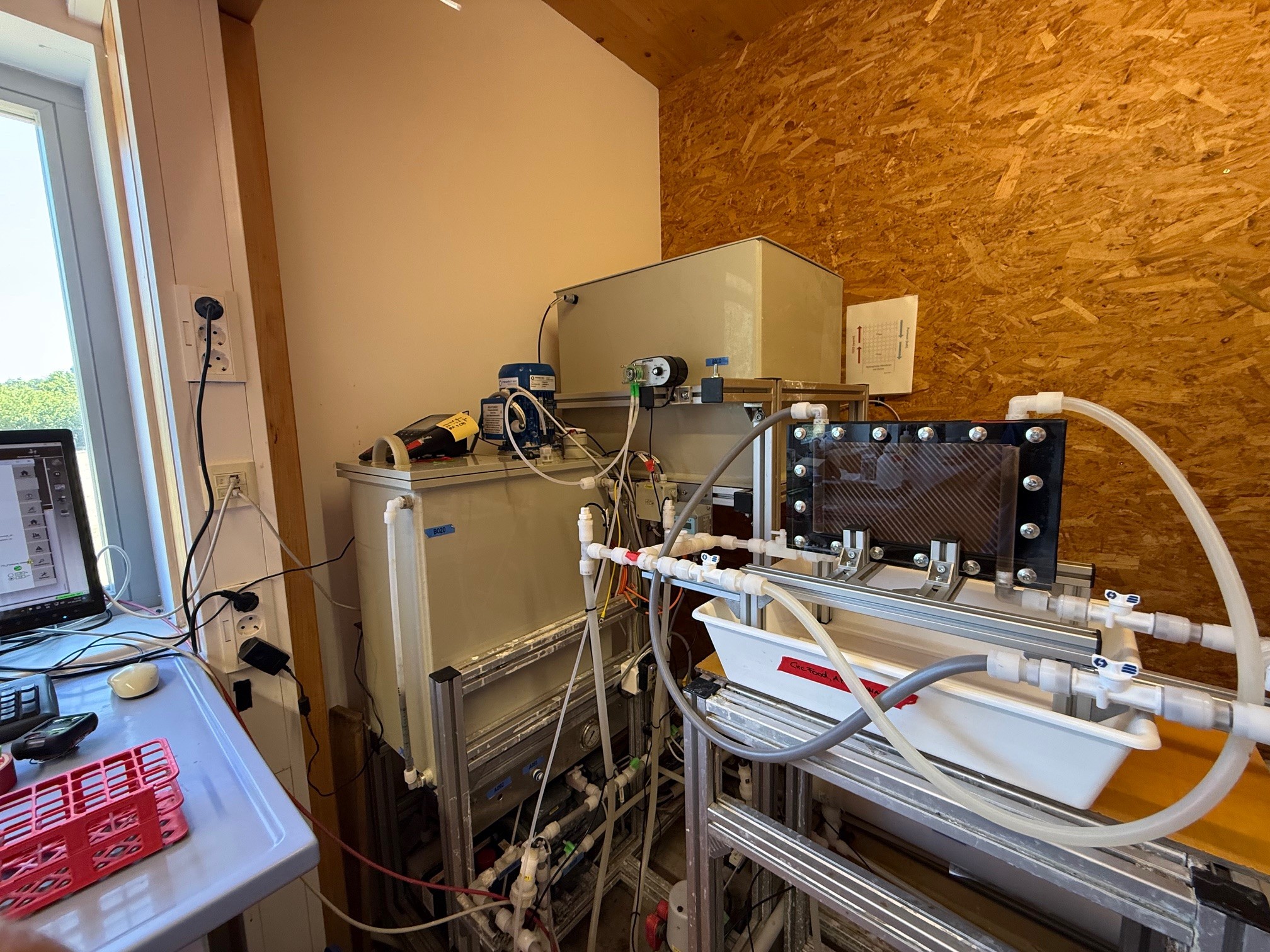
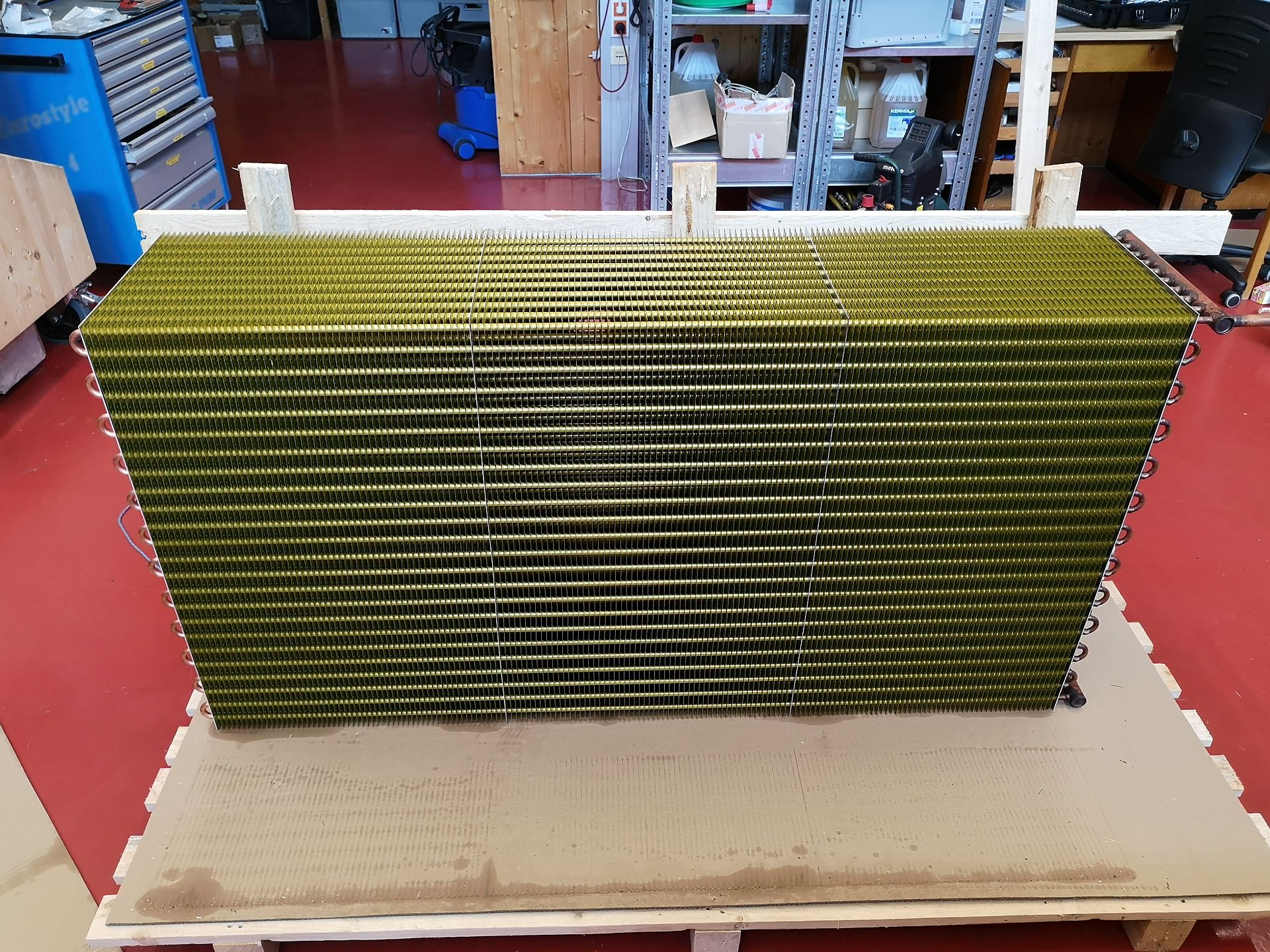
Heat exchanger for sorption thermal storage
The heat exchanger is built into a containment and the sorption material, small grains of zeolite, is filled between the heat exchanger plates. The total volume of material is about 400 liter. Heat is stored through the adsorption and desorption of water vapour in the zeolite. The water vapour is transported between the plates and collected in a header on top of the containment.
Copyright: AEE INTEC
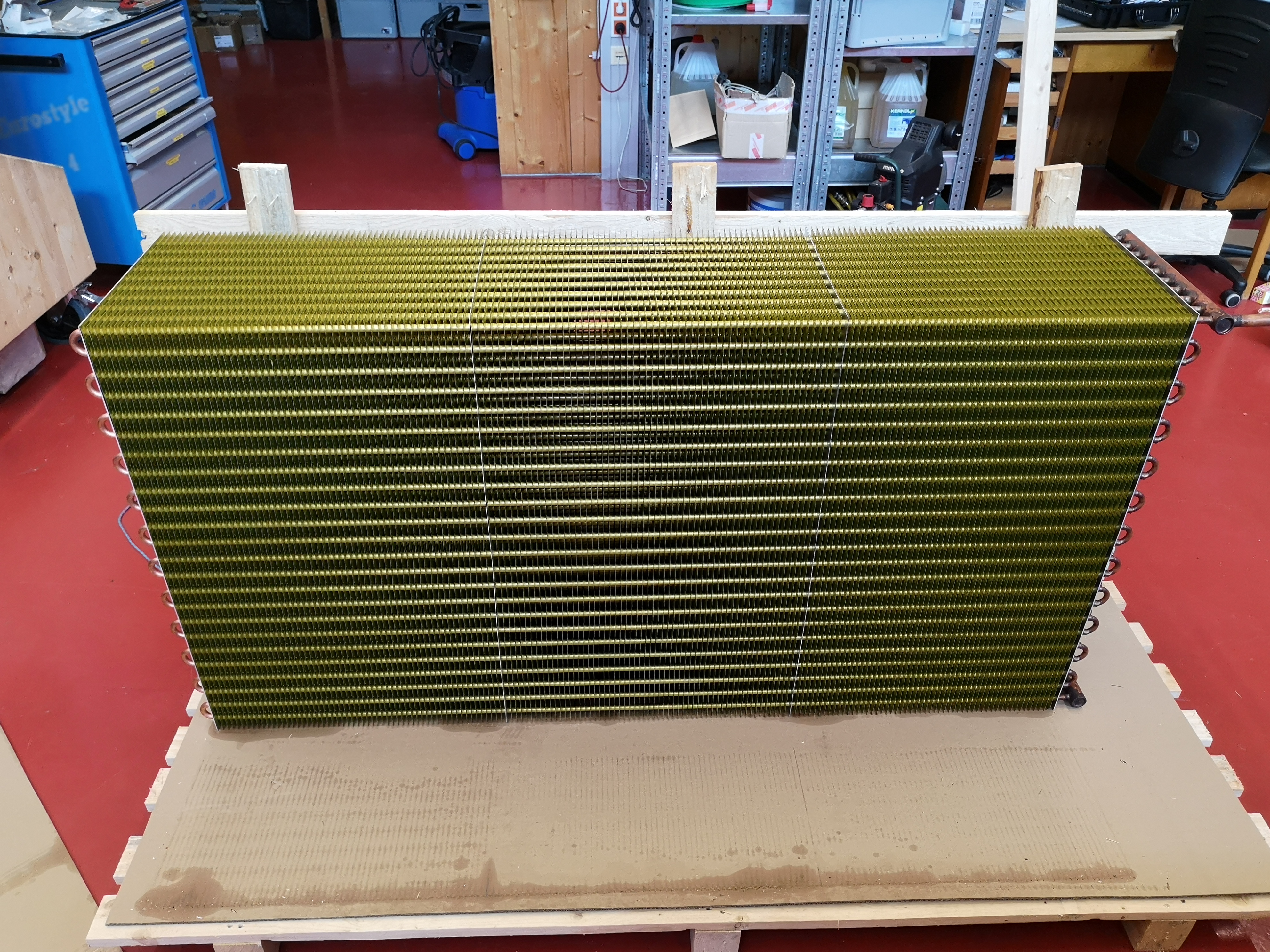
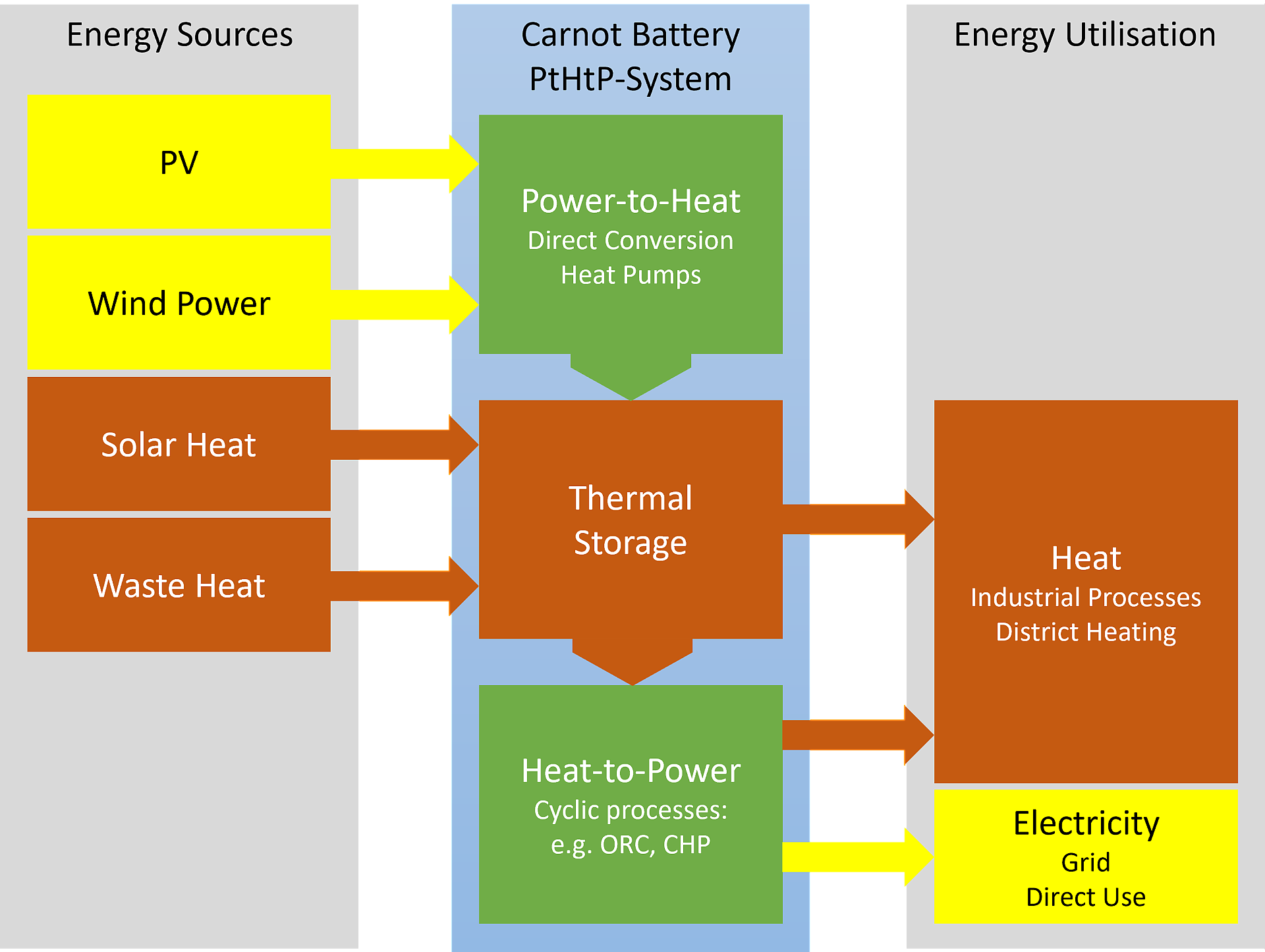
Carnot battery: power-to-heat-to-power system
A Carnot battery (power-to-heat-to-power system) converts electrical energy into thermal energy and stores it for a longer period of time before converting the stored energy back into electrical power. Carnot batteries are used for long-term, seasonal storage of electrical power and also heat, and can therefore contribute to stabilizing the power grid and storing electricity from renewable energy sources.
Copyright: AEE INTEC
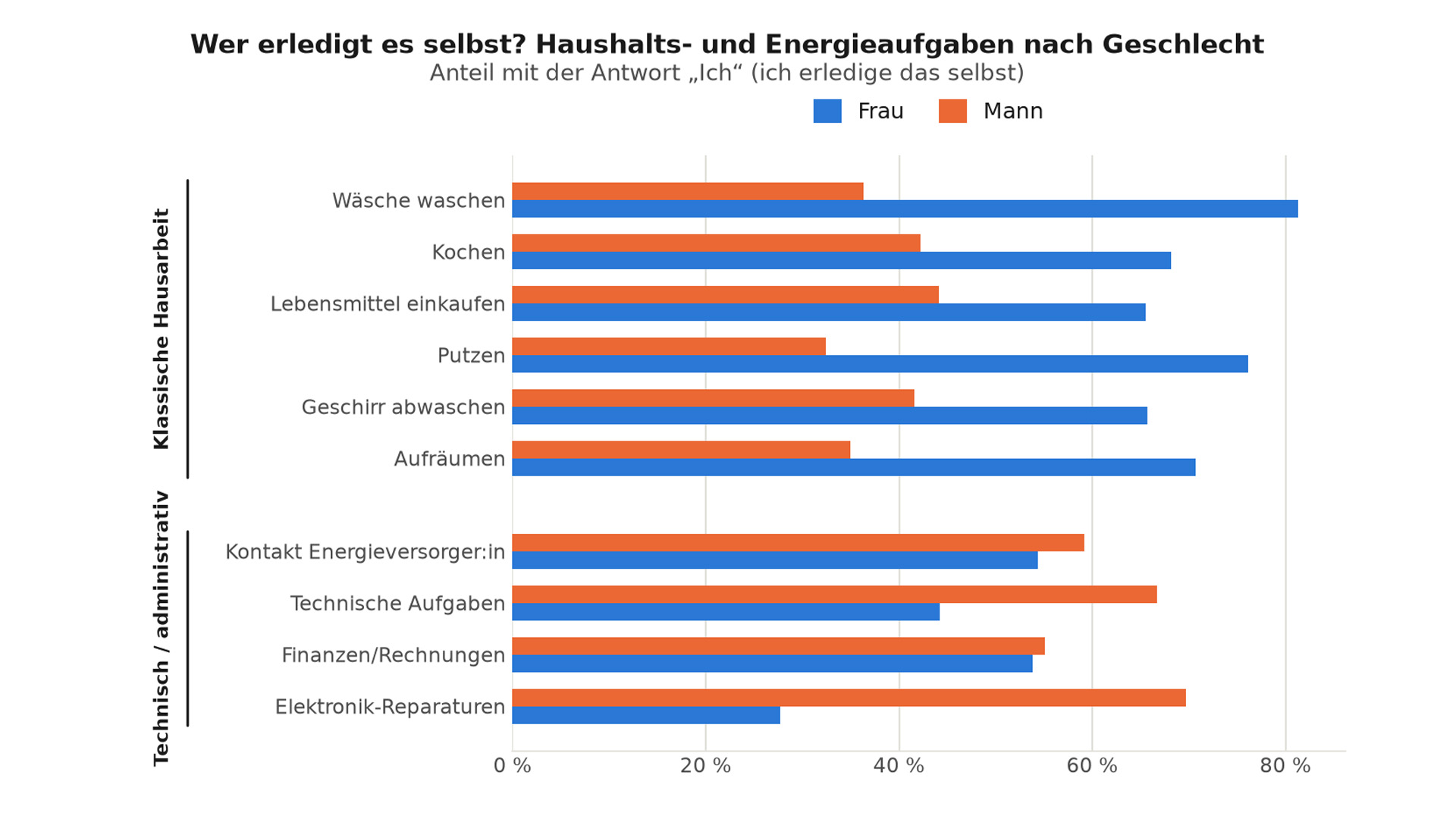
Who does it themselves? Household and energy-related tasks by gender
The chart shows the proportion of women and men who stated that they carry out the following tasks themselves: Traditional household chores such as doing the laundry, cooking, shopping for food, cleaning, washing up and tidying up are predominantly carried out by women. Technical and administrative tasks such as liaising with the energy supplier, technical tasks, managing finances and carrying out repairs are predominantly carried out by men.
Copyright: ÖGUT
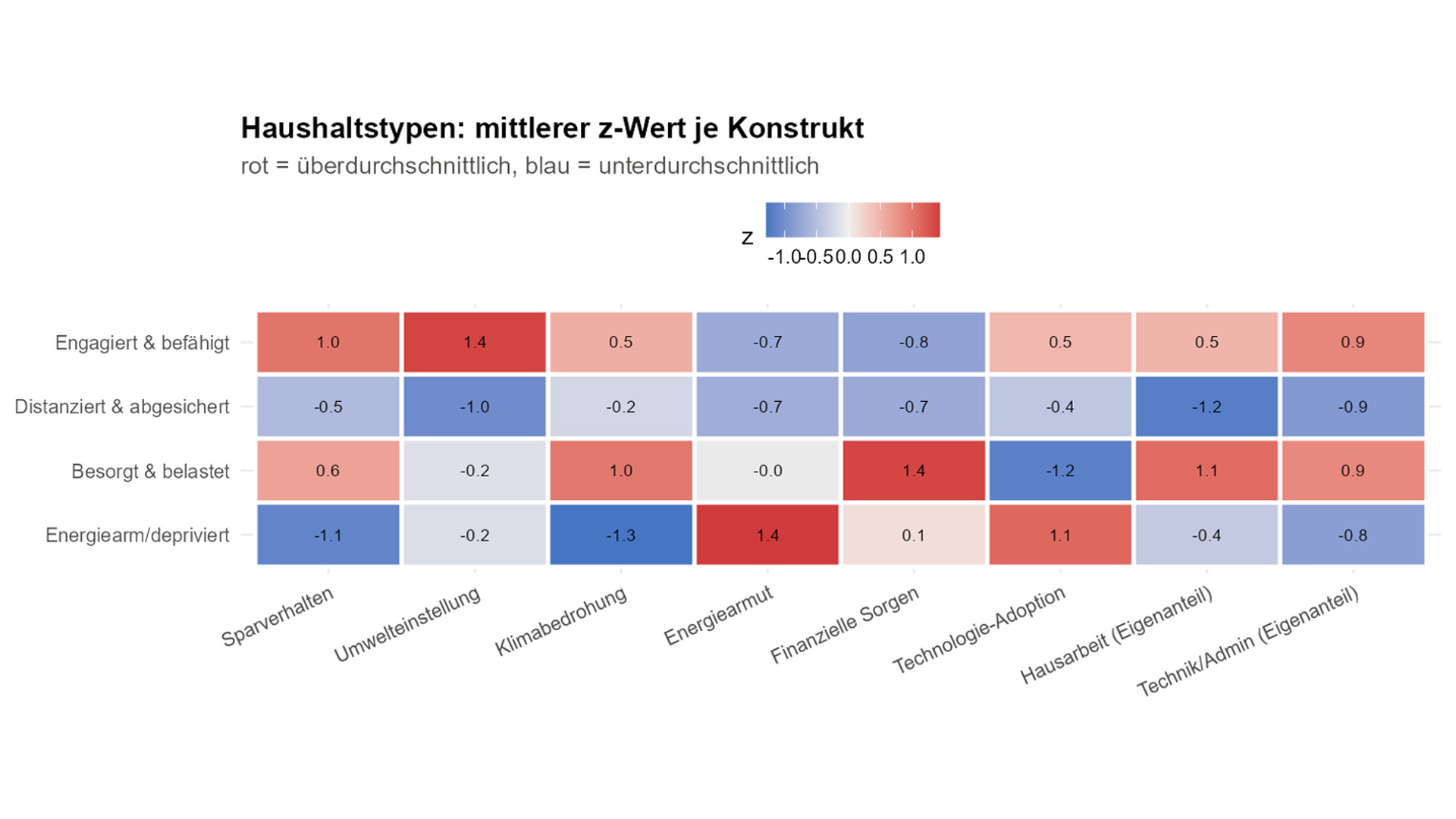
Cluster analysis of types of households
The cluster analysis identified four descriptive household types based on patterns of energy use, environmental attitudes, financial concerns and household characteristics. Typ A – „Engagiert & befähigt“ (34%) and Typ B – „Distanziert & abgesichert“ (35%) represent relatively less vulnerable households, while Typ C – „Besorgt & belastet“ (25%) captures households facing intersecting financial, housing and care-related pressures, and Typ D – „Energiearm & depriviert“ (7%) represents the most severely affected group. Given the moderate distinction between clusters, these types should be understood as indicative patterns rather than fixed or sharply defined categories.
Copyright: ÖGUT
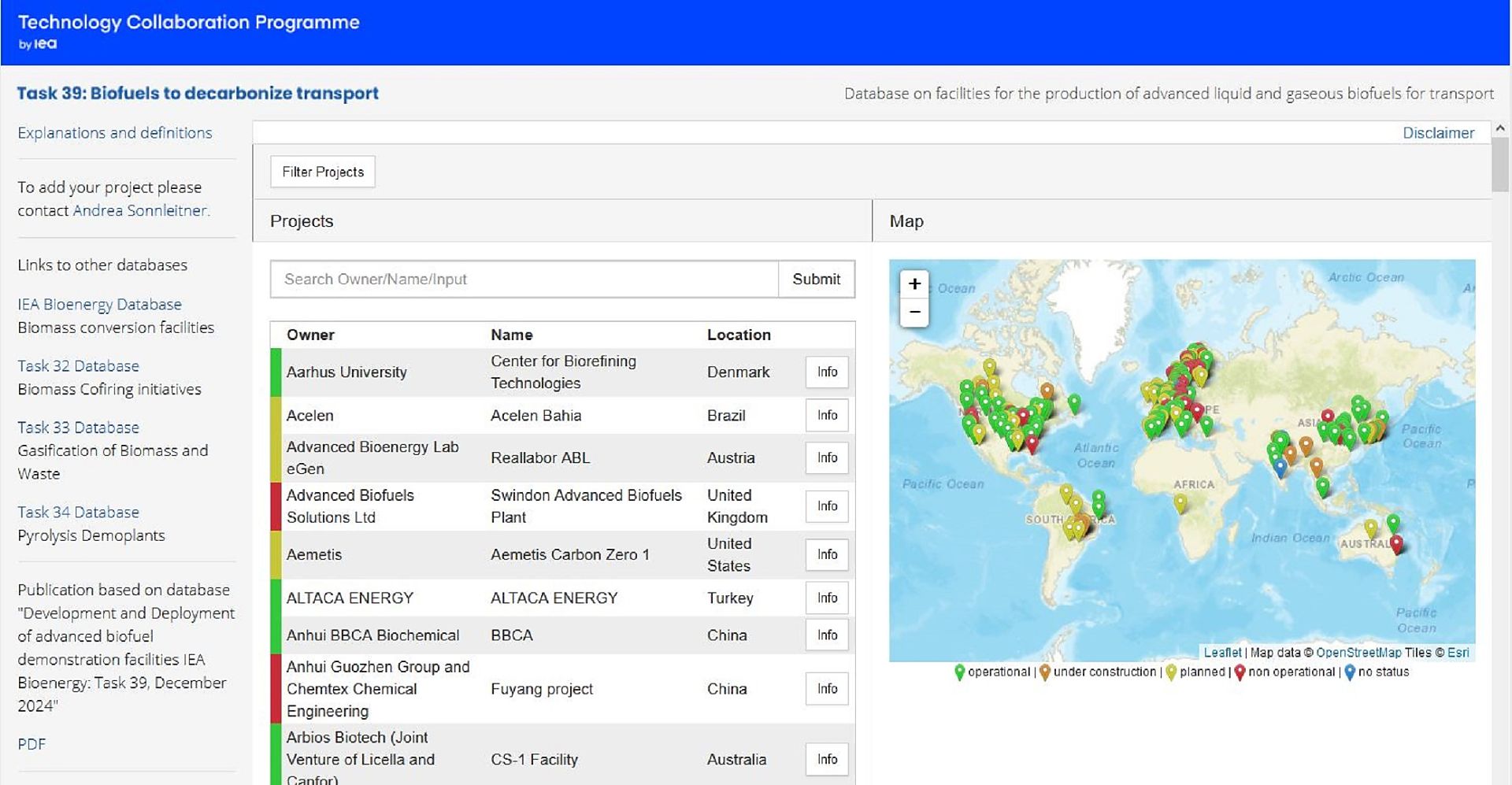
Demoplants Database
Database on facilities for the production of advanced liquid and gaseous biofuels for transport
Copyright: @IEA Bioenergy Task 39 @Open Street Map
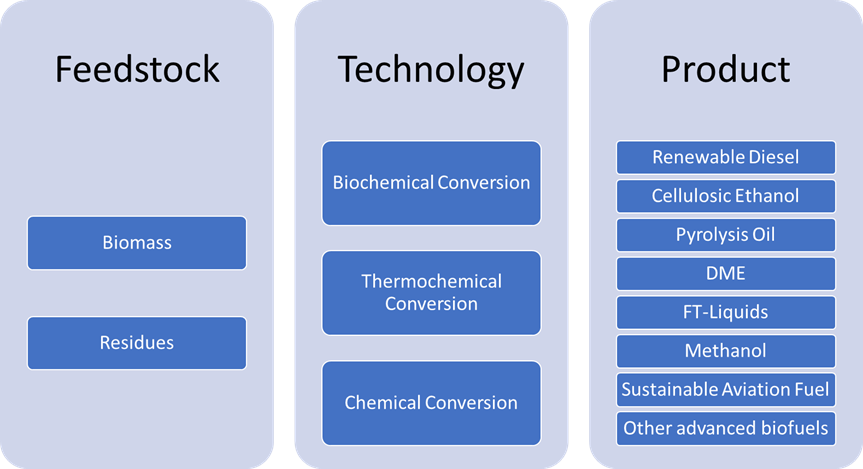
Advanced Biofuel Pathways
Principle pathways of advanced biofuels technologies
Copyright: @BEST
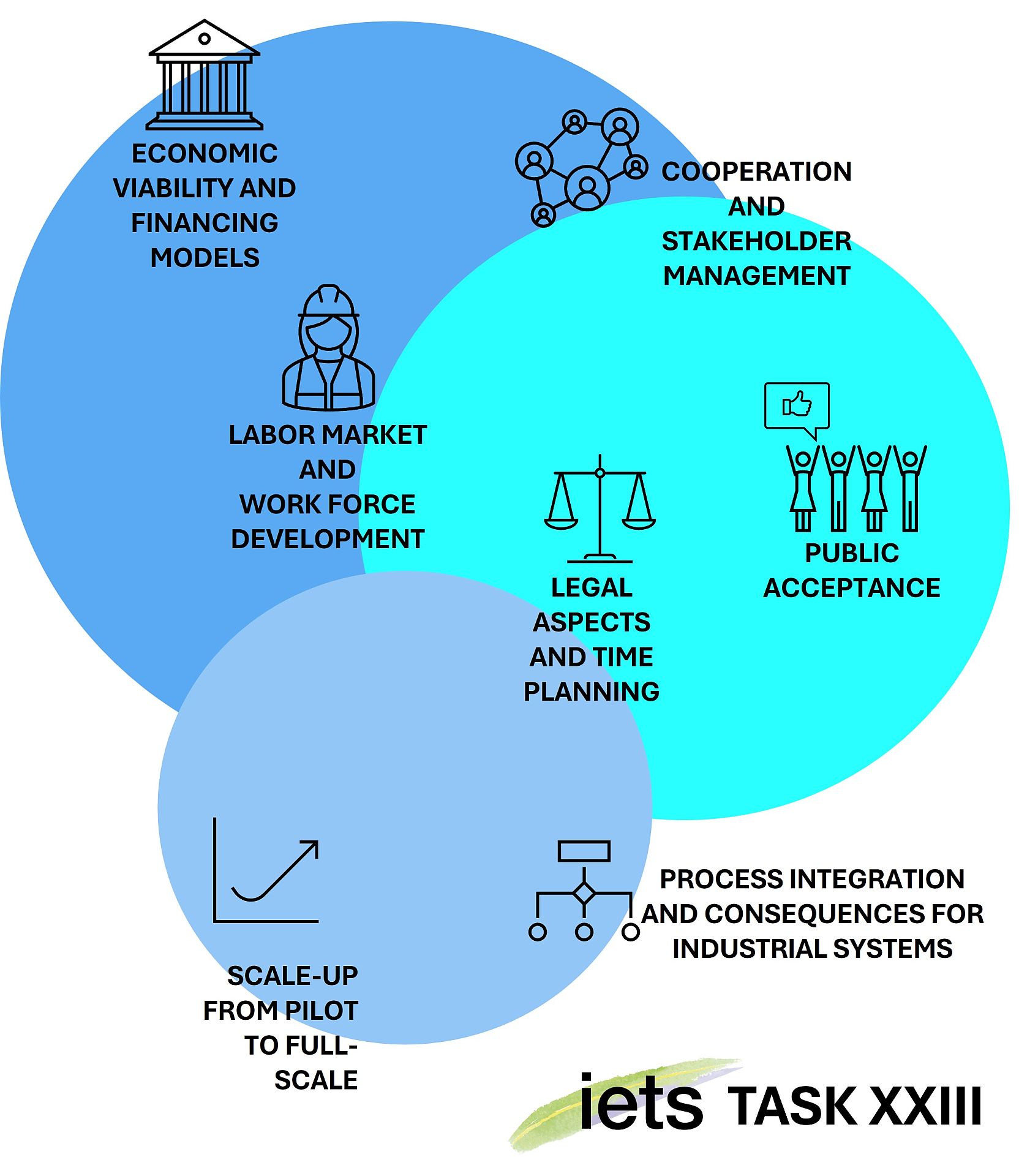
Fields of Action for non-technical drivers and barries in industrial transformation
The figure summarizes seven identified fields of action forming the core of the work in the IETS Task XXIII.
Copyright: AIT 2026
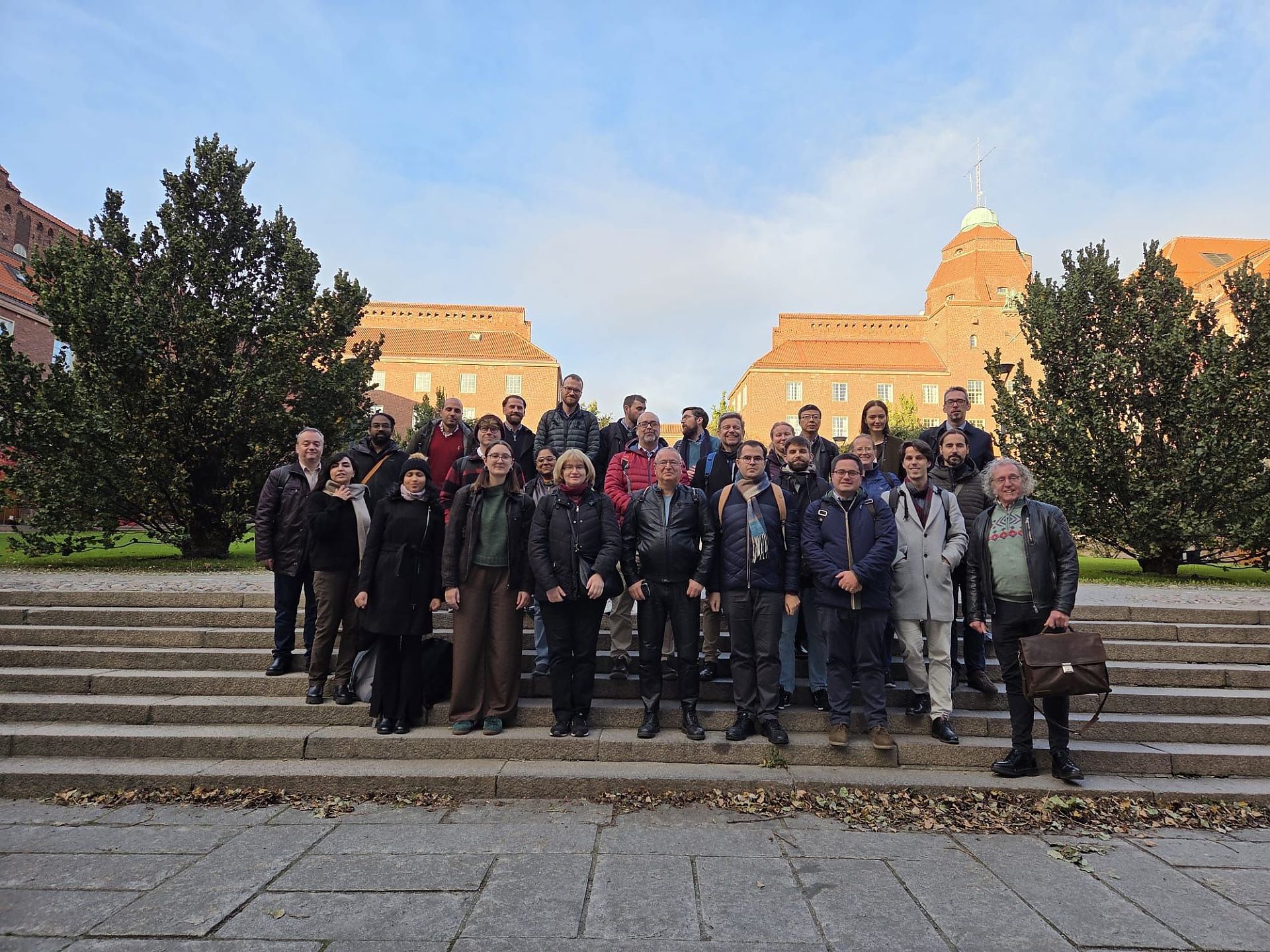
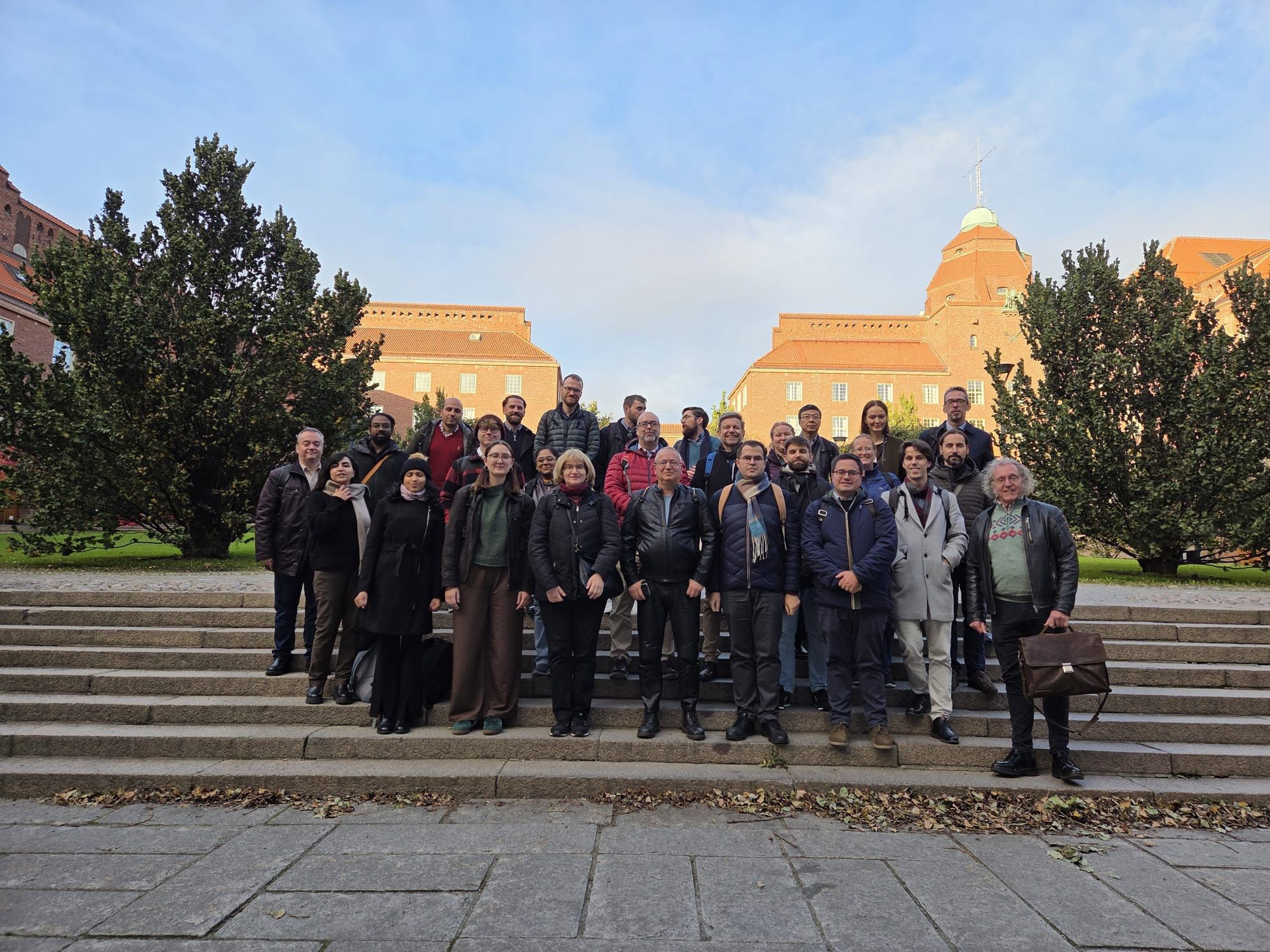
Kick Off Meeting des IEA ES Task 48 am KTH in Stockholm Oct. 13th 2025
We successfully kicked off Task 48 at KTH Royal Institute of Technology in Stockholm - together with our colleagues from Task 47: Components for Thermal Energy Storage. We are inspired by the energy and expertise everyone brought to the table. Our discussions set a strong foundation for collaboration on advancing thermal energy storage (TES) materials — including phase change materials (PCM), thermochemical materials (TCM), and high-temperature sensible storage. Over the coming months, we’ll work together to develop measurement guidelines for TES materials, compile an overview of innovative TES materials and build a shared, high-quality TES materials database. A big thank you to Saman Nimali Gunasekara and colleagues for hosting and to all participants for their inspiring contributions!
Copyright: Saman Nimali Gunasekara / KTH
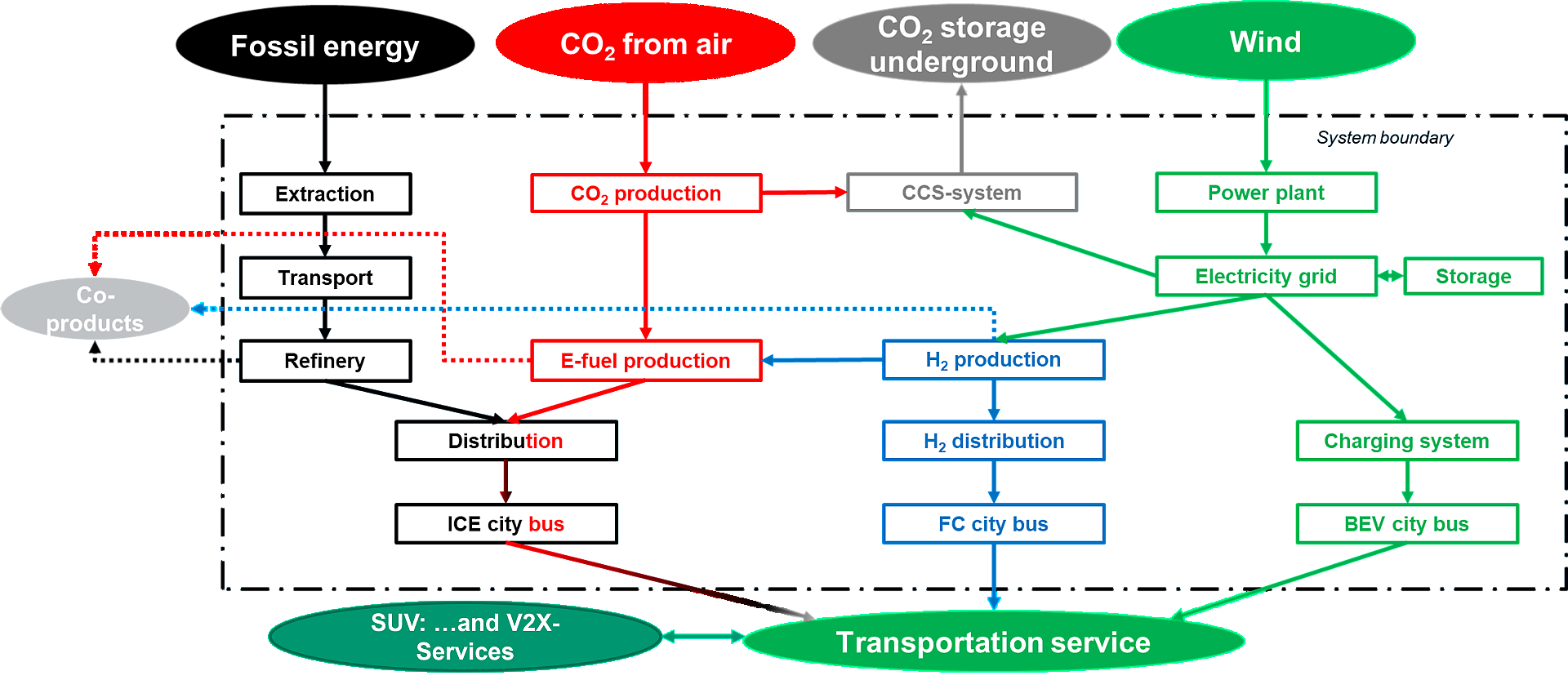
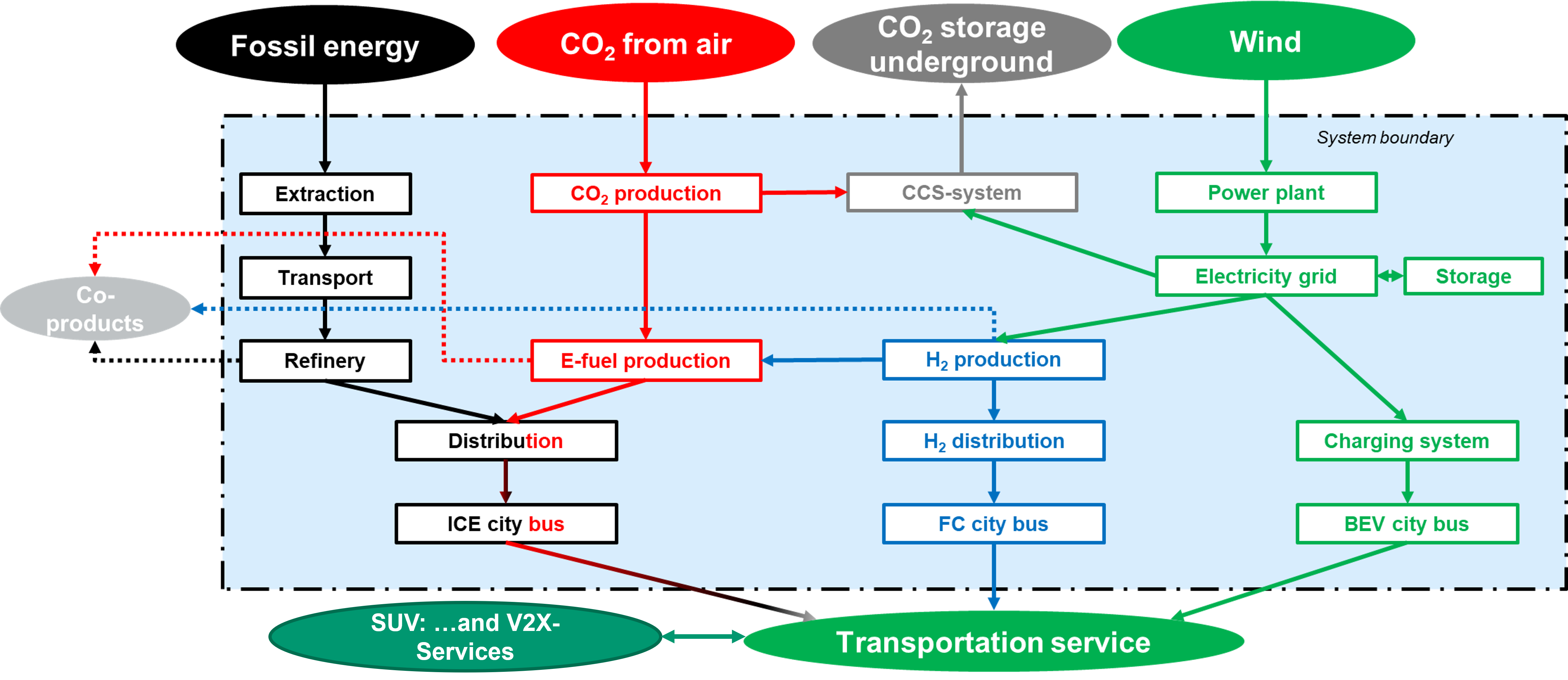
LCA comparison of renewable hydrogen, e-fuel systems and conventional fuels (Comment: distribution and ICE vehicle can be used for fossil fuel and e-fuel)
LCA comparison of renewable hydrogen, e-fuel systems and conventional fuels (Comment: distribution and ICE vehicle can be used for fossil fuel and e-fuel)
Copyright: JOANNEUM RESEARCH
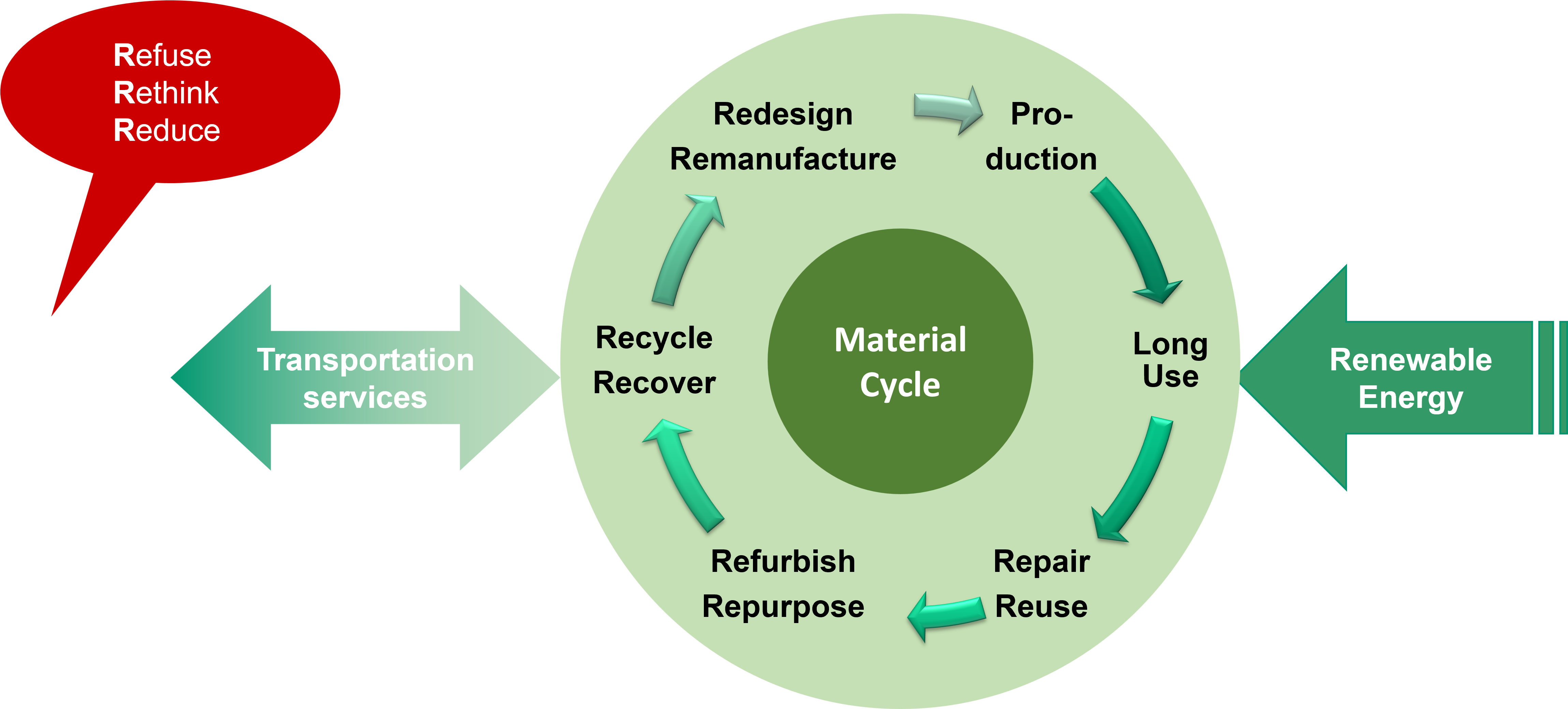
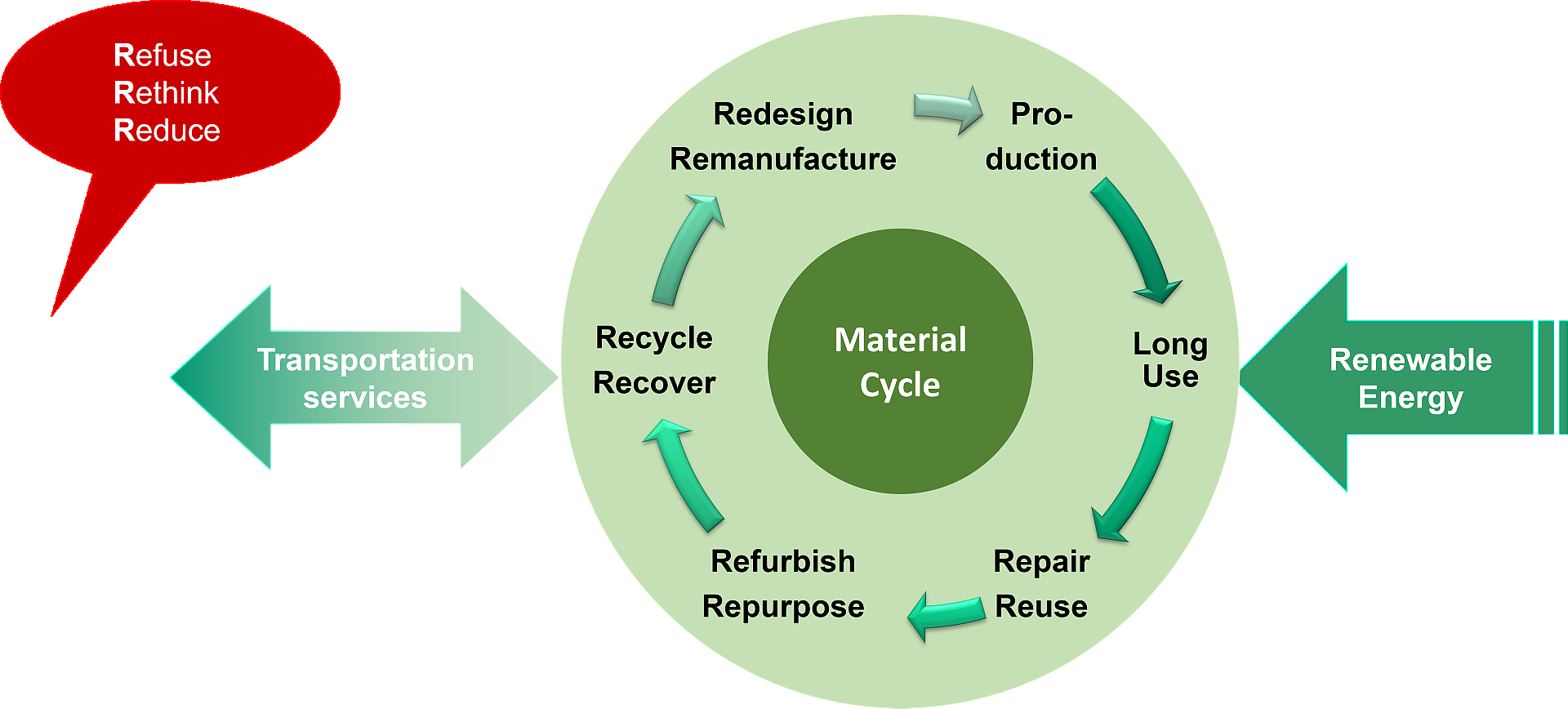
Circularity and Climate Neutrality for transportation services
A product or service is “climate neutral“ and “circular“, if its whole life cycle - production, operation and end-of-life - uses only • reused components (reuse index), • secondary/recycled material (recycled content), • renewable energy, and makes • zero waste and • zero GHG emissions. In Figure 2, this definition is shown for supplying a 100% circular transportation service with its closed material cycle, which is driven by renewable energy. A mobility demand is satisfied by transportation services that are provided by a closed material cycle using renewable energy.
Copyright: JOANNEUM RESEARCH
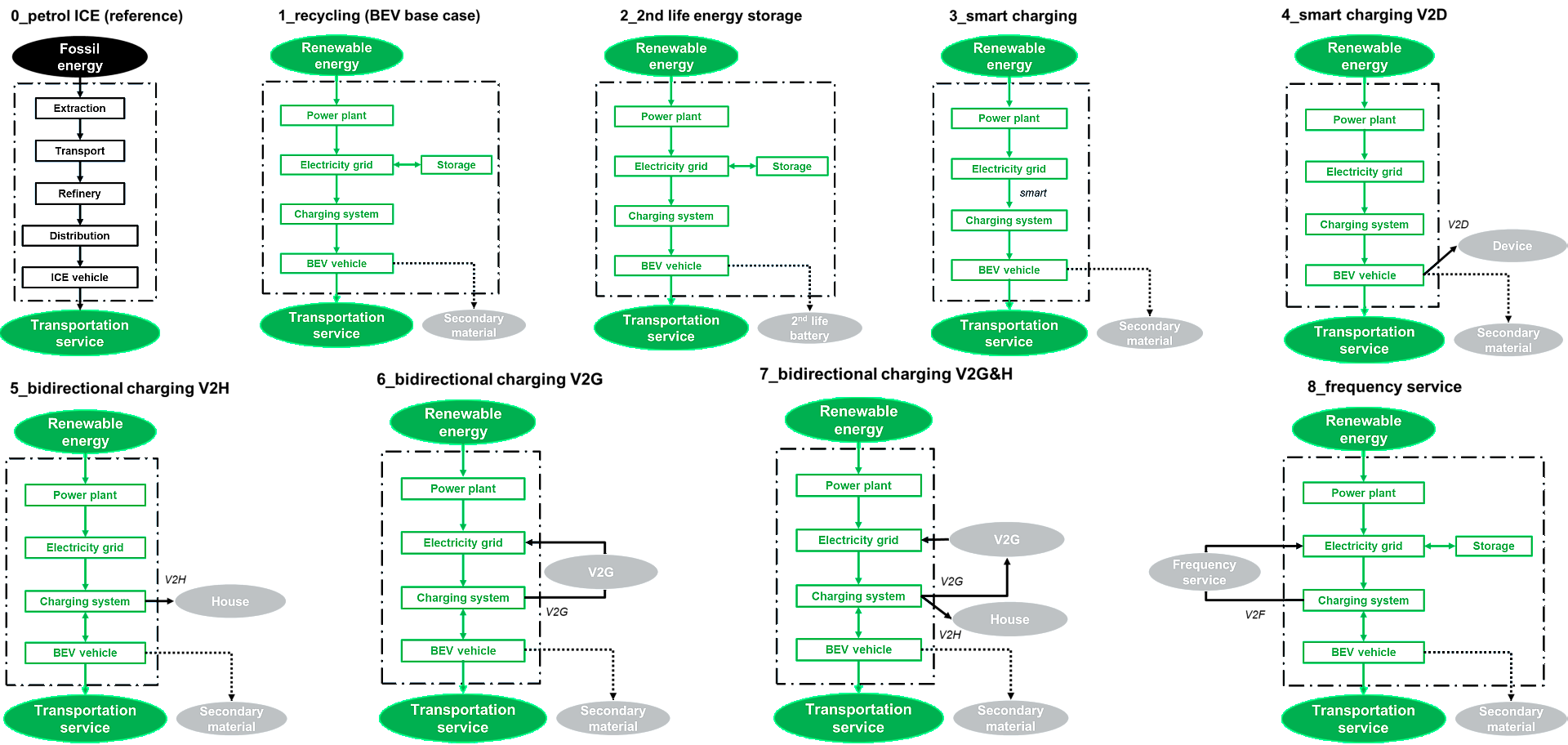
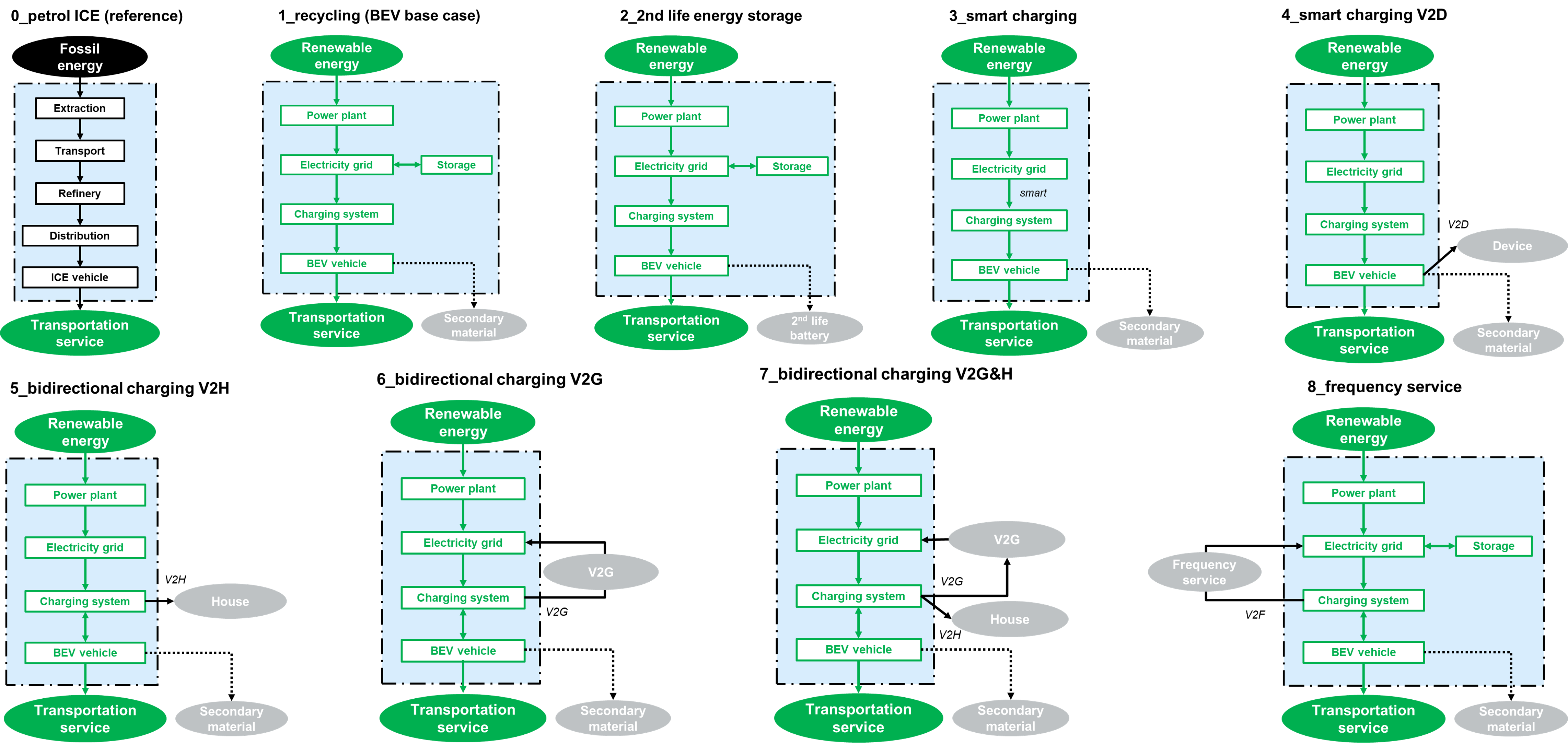
System boundaries for the eight analysed cases and the petrol ICE as reference
In Figure 3 the system boundaries for the V2X use cases are shown. For the cases without smart or bidirectional charging an additional electricity storage in the grid is considered.
Copyright: JOANNEUM RESEARCH
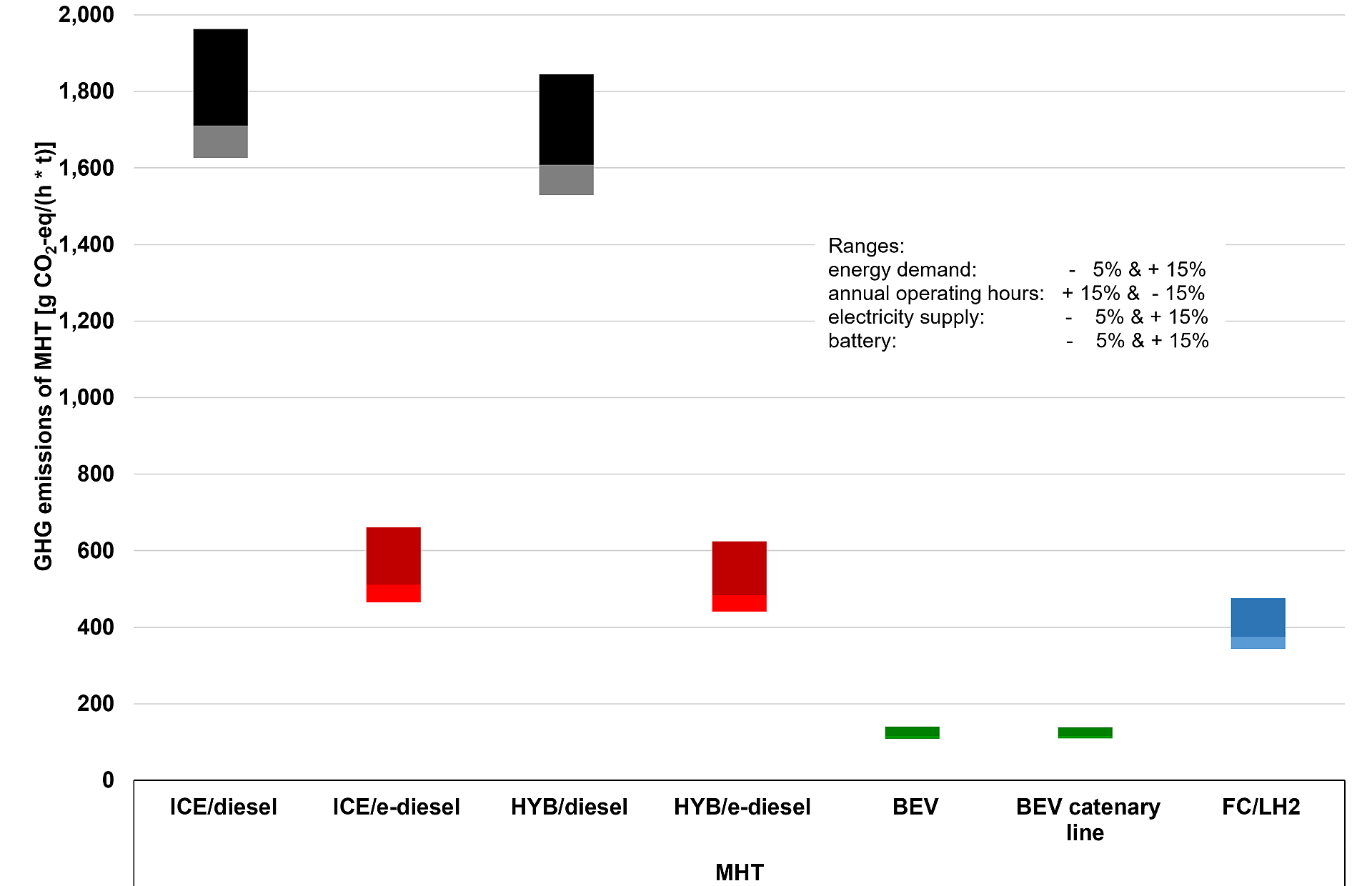
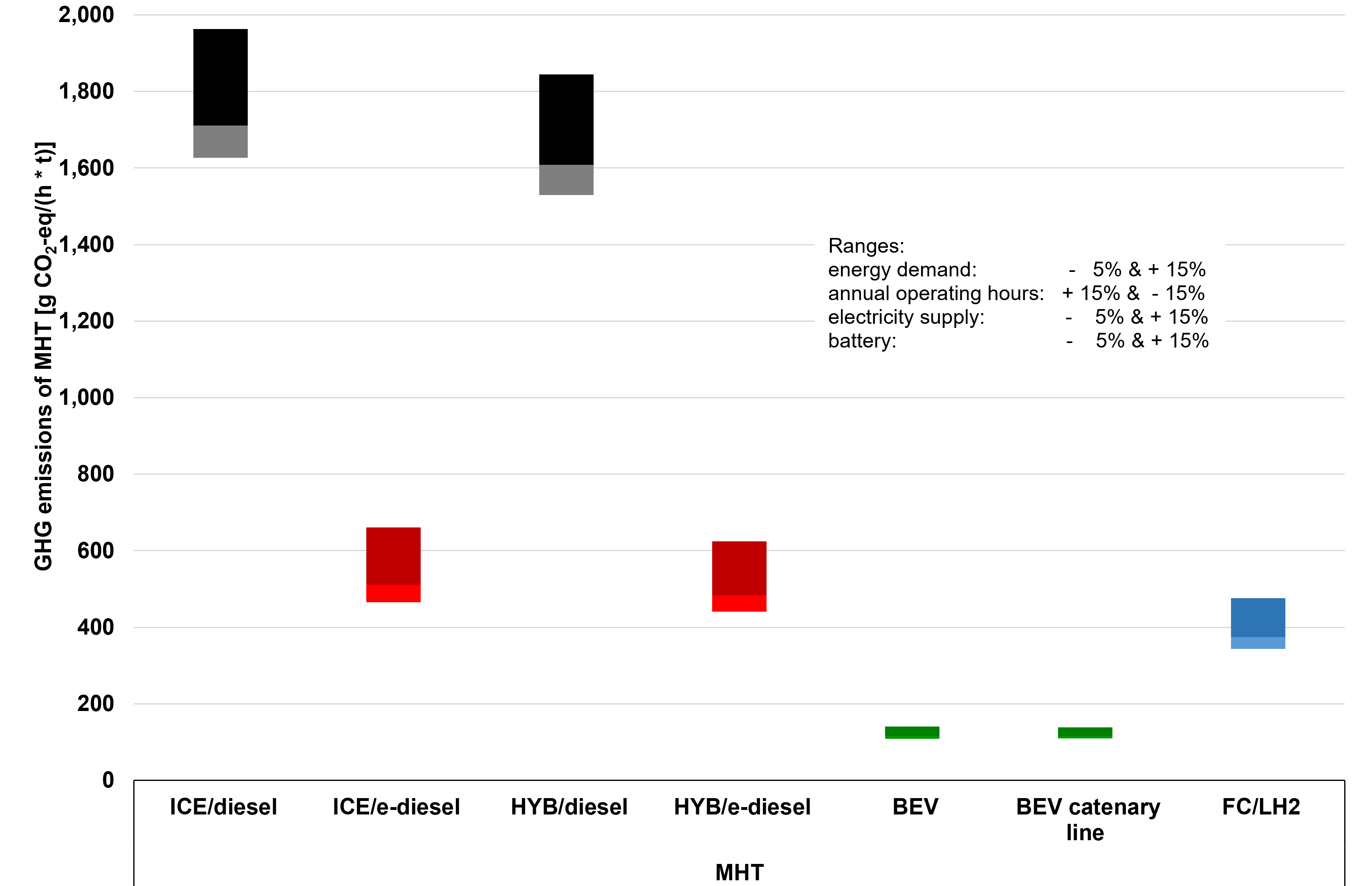
GHG emissions of MHT per hour of missions in total life cycle
ICE: Internal Combustion Engine, HYB: Hybrid Combustion Engine, MHT: Mining Haul Truck, BEV: Battery Electric Vehicle, FC: Fuel Cell, LH2: Liquid Hydrogen