Project Image Pool
There are 25 results.
Terms of use: The pictures on this site originate from the projects in the frame of the programmes City of Tomorrow, Building of Tomorrow and the IEA Research Cooperation. They may be used credited for non-commercial purposes under the Creative Commons License Attribution-NonCommercial (CC BY-NC).
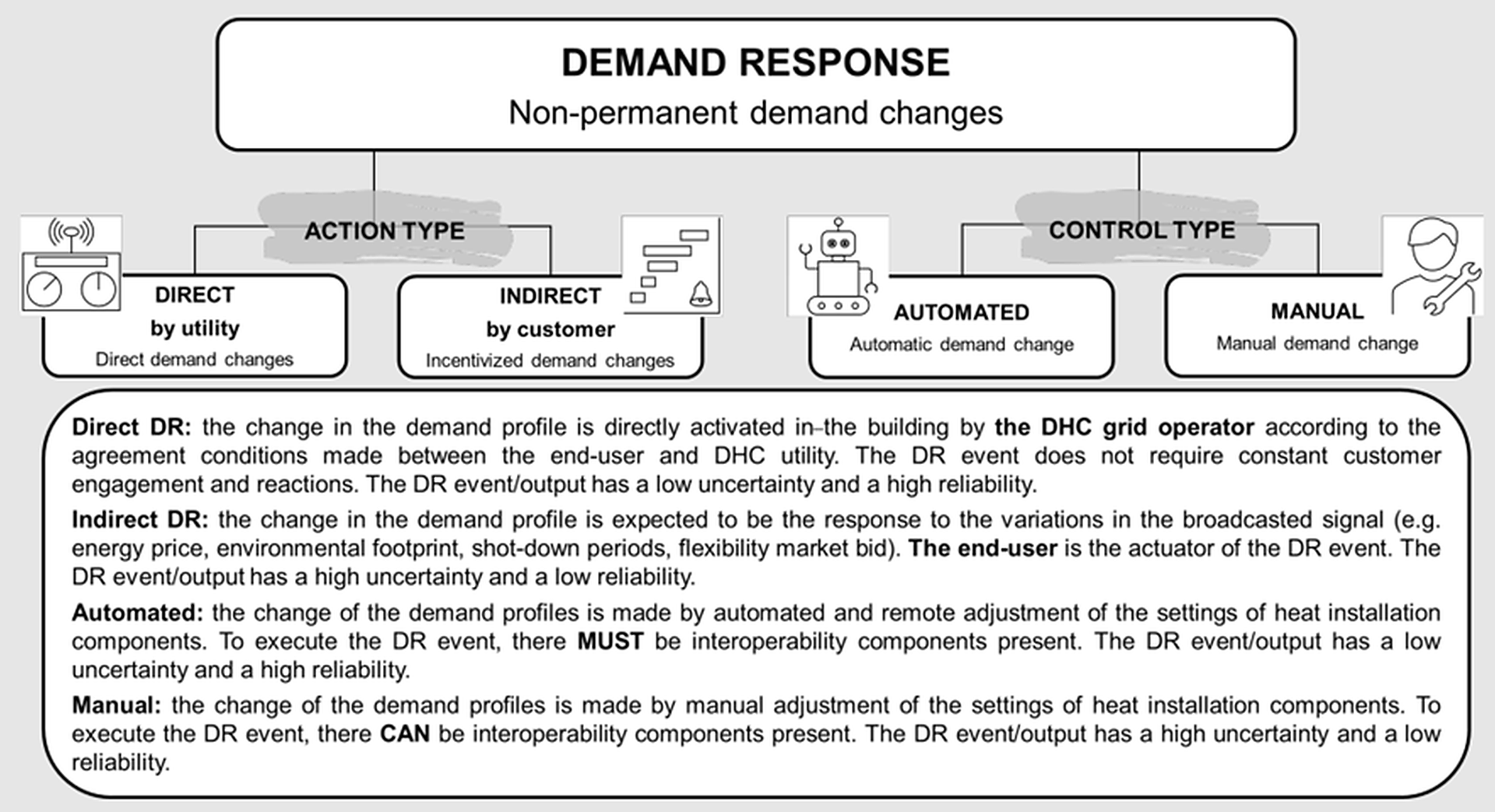
Terminology used for demand response within the framework of IEA EBC Annex 84
EBC Annex 84 distinguished between different "action types" and "control types".
Copyright: Authors of final report IEA EBC Annex 84
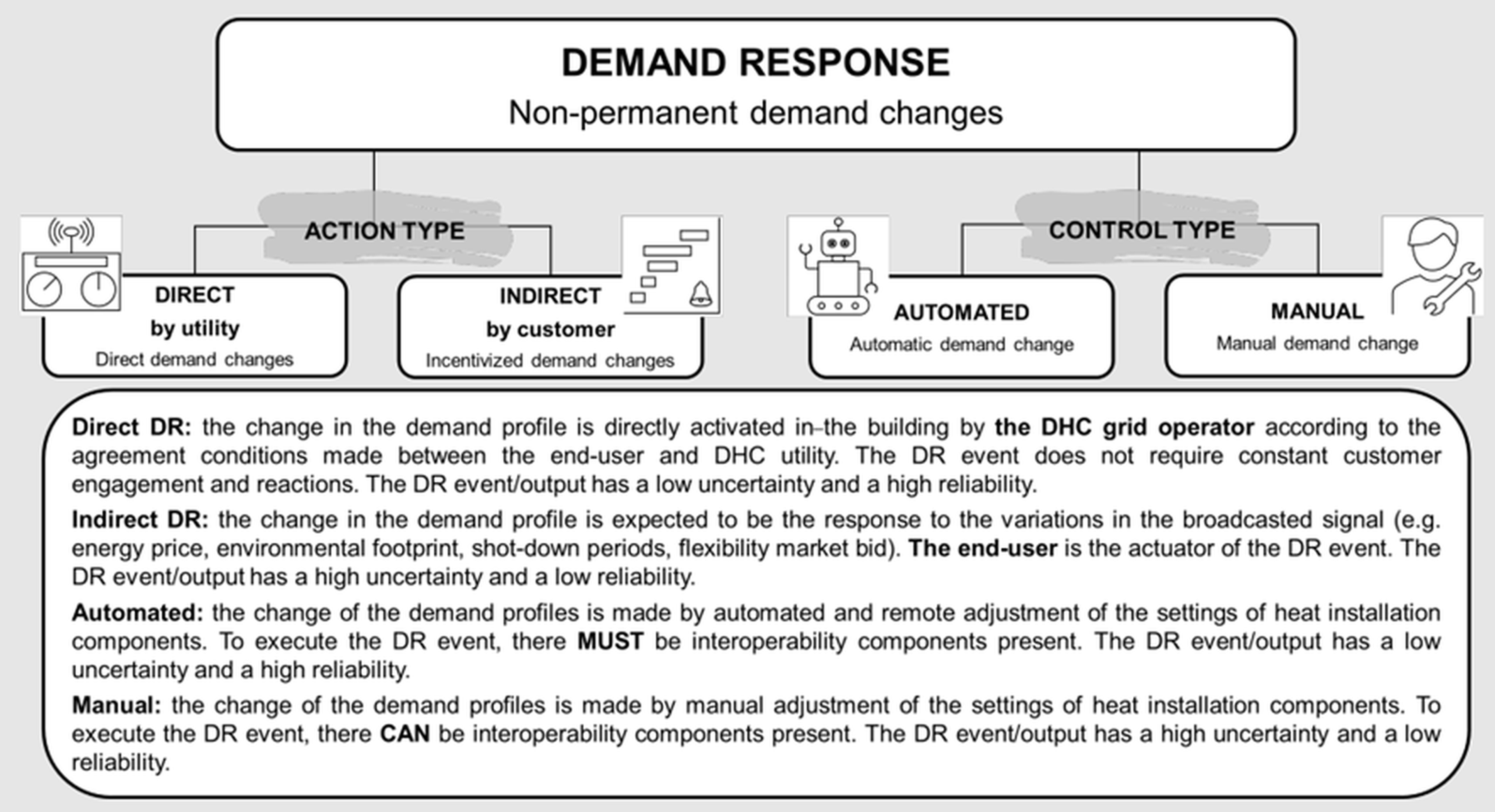

Overview demand response types
Combining the two action and control types there can be four different demand response types: 1) Direct Automated (e.g. action and control types are characterised by high reliability; 2) Indirect Automated (e.g. model predictive control in the building reacting to the DHC broadcasted signal), action and control types are characterised by low & high reliability, respectively; 3) Direct Manual (e.g. DHC operator vising the house or sitting in the control room and pressing the button), action and control types are characterised by high & low reliability, respectively; 4) Indirect Manual (e.g. end users changing the settings physically of via using the remote technology (walking in the house, sitting on the sofa and using app) as the reaction to the broadcasted signal), action and control types are characterised by low reliability.
Copyright: Authors of final report IEA EBC Annex 84

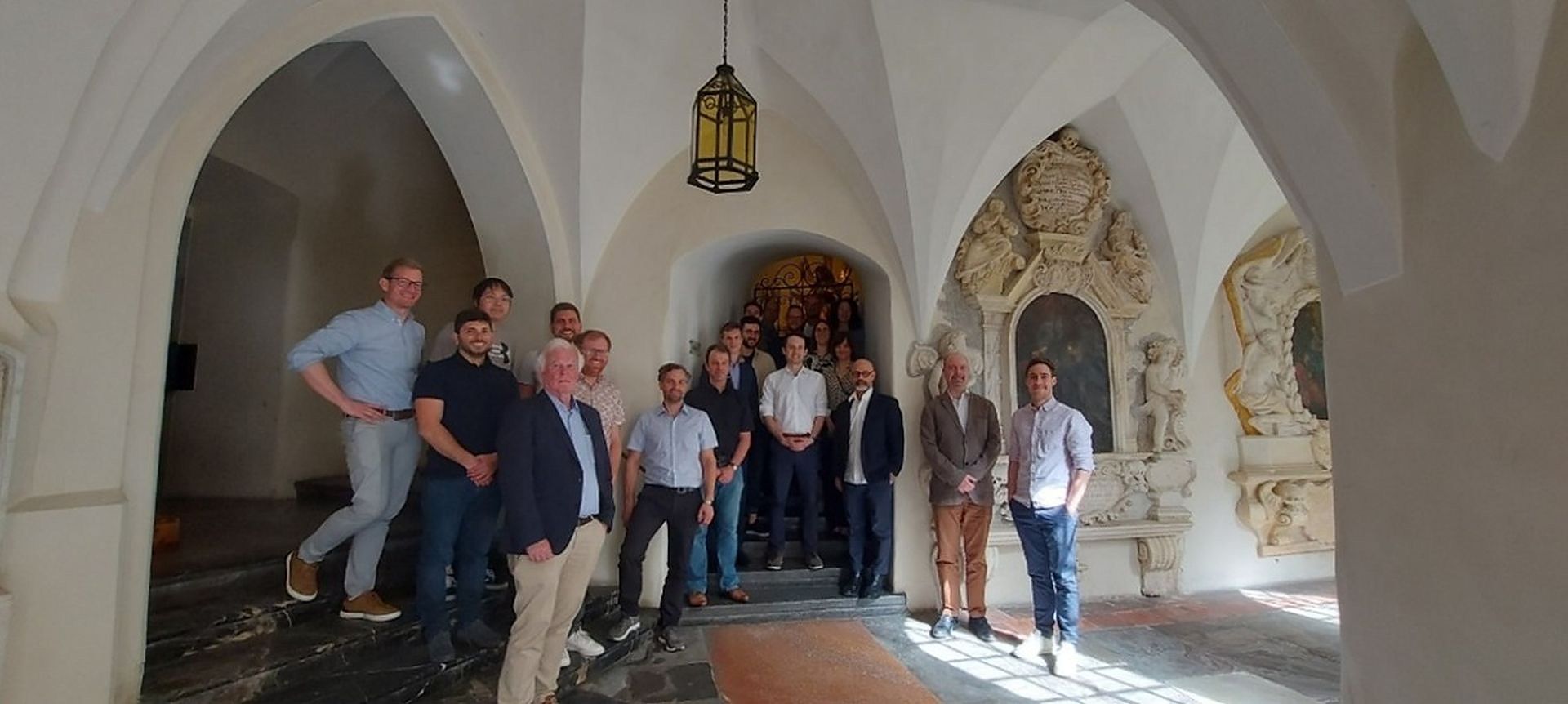
Joint workshop IEA EBC Annex 84 & IEA ES Task 43 („Standardized Use of Building Mass as Storage for Renewables and Grid Flexibility“)
Joint workshop IEA EBC Annex 84 & IEA ES Task 43 („Standardized Use of Building Mass as Storage for Renewables and Grid Flexibility“)
Copyright: Ingo Leusbrock
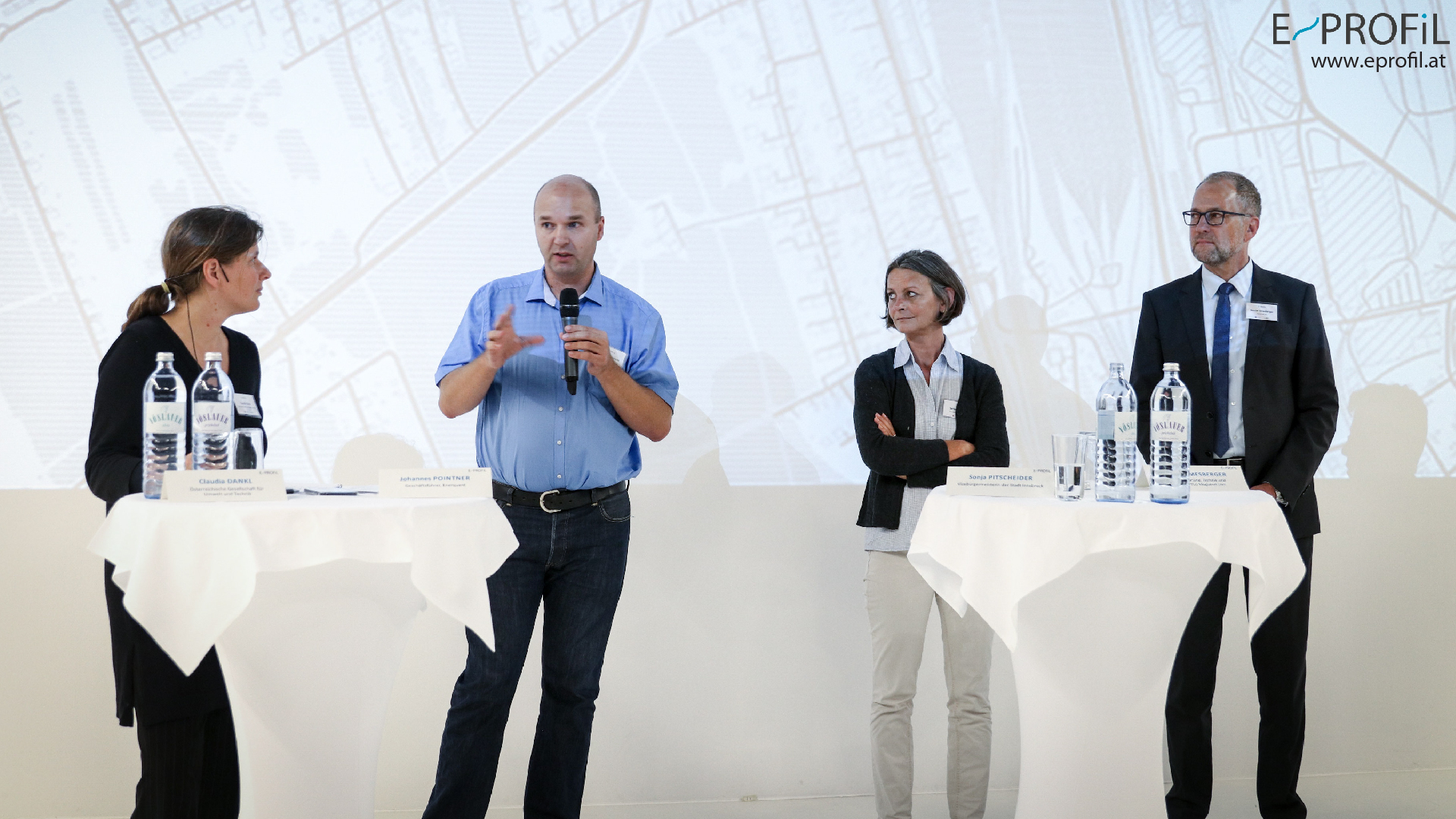
Panel discussion on "energetic transformations in urban quarters" - E_PROFIL
Within the final event of the project E_PROFIL at Ars Electronica Deep Space. Left to right: Claudia Dankl (ÖGUT. Moderation), Johannes Pointner (Enerquent), Sonja Pitscheider (City of Innsbruck), Gunter Amesberger (Planning Director, City of Linz).
Copyright: Ars Electronica Futurelab, 2017

Share of multi-flat buildings and multi-storey housing in buildings with flats - Linz central region
Own illustration by SRF/TU Wien, 2017, based on Statistics Austria's "Gebäude- und Wohnungszählung" 2011.
Copyright: Robert Kalasek, TU Wien, 2017
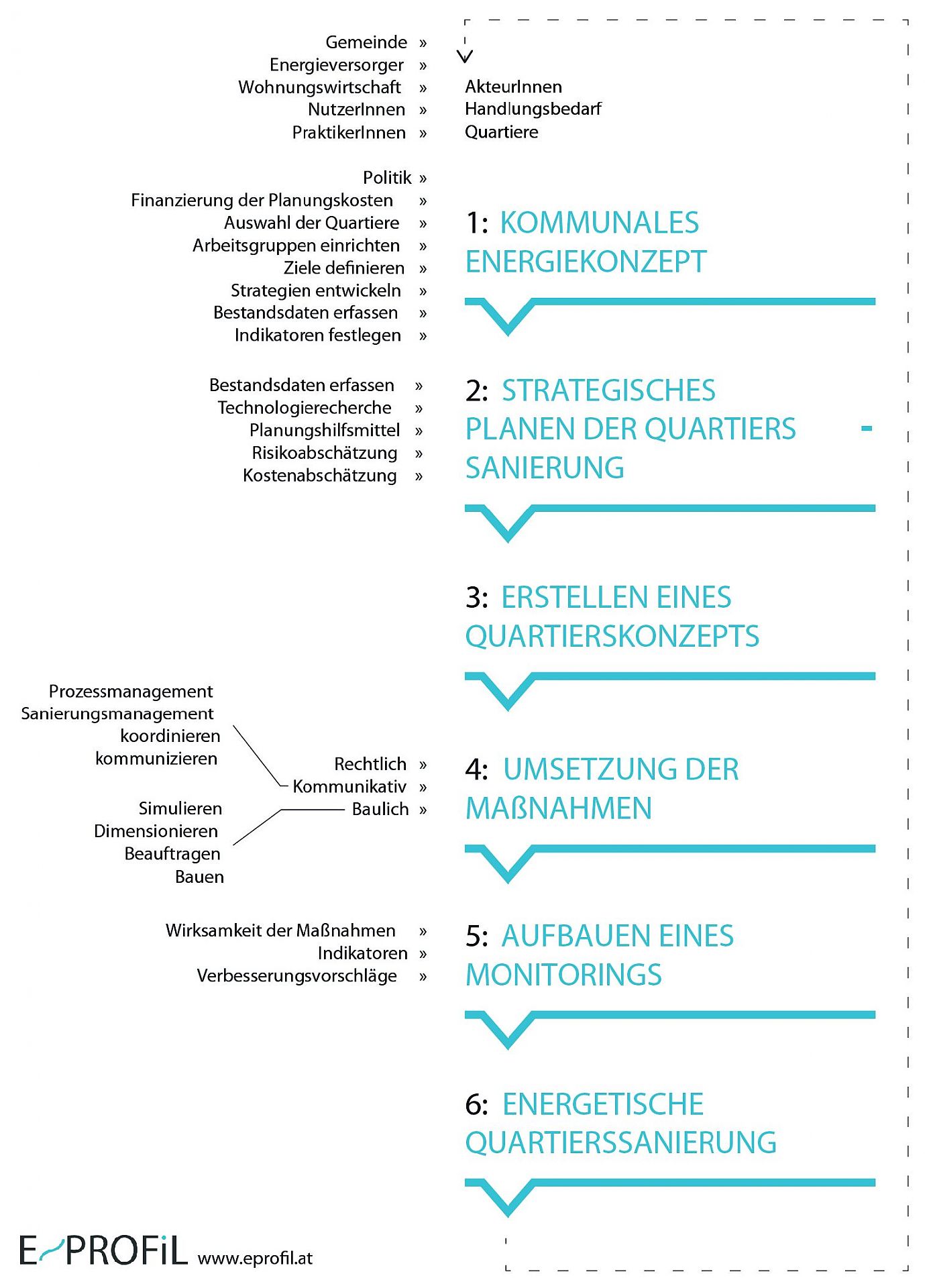
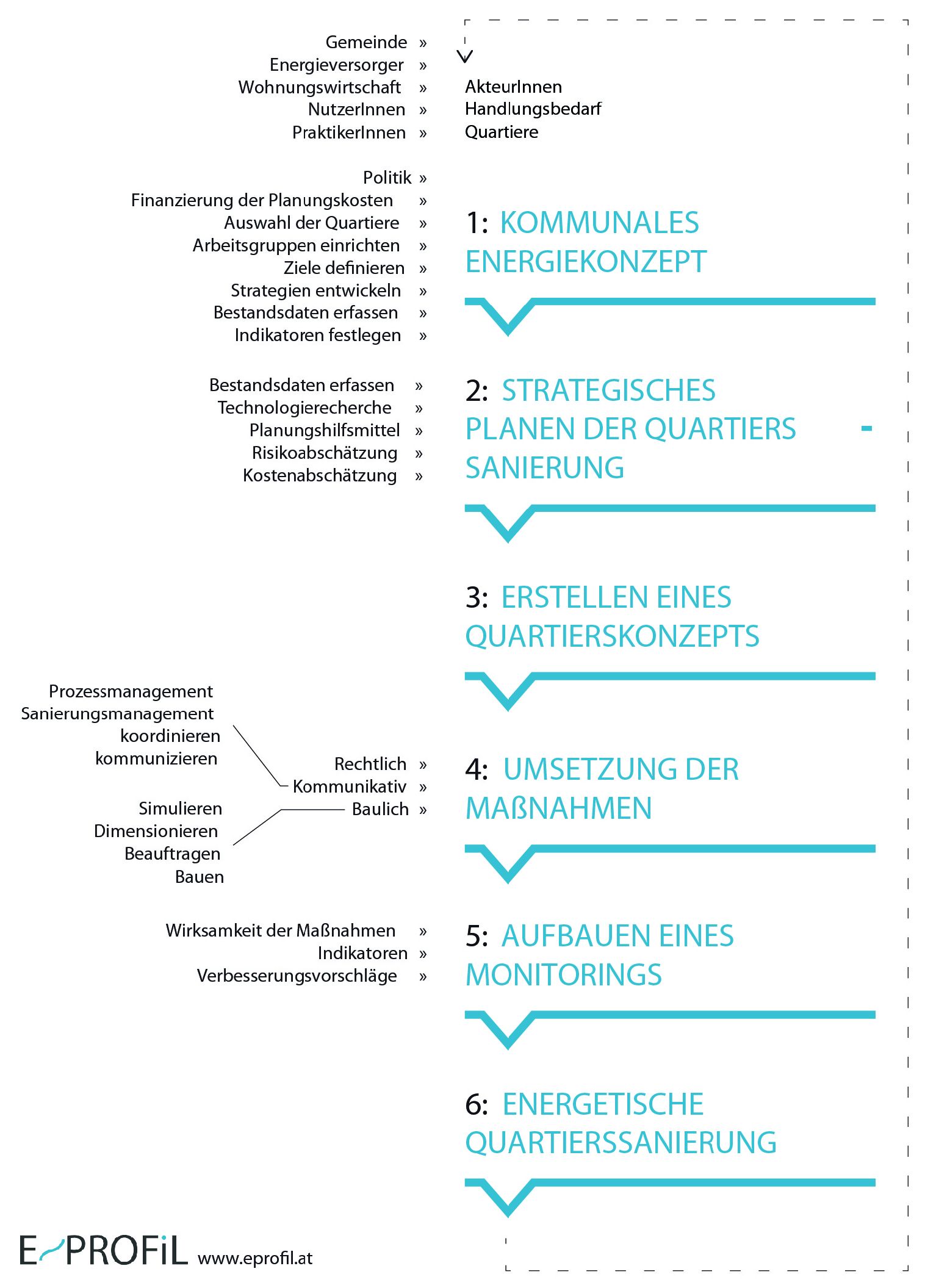
Energetic management of urban quarters - ideal-typical process
more here: http://www.eprofil.at/res/booklet.pdf
Copyright: Ars Electronica Futurelab, 2017
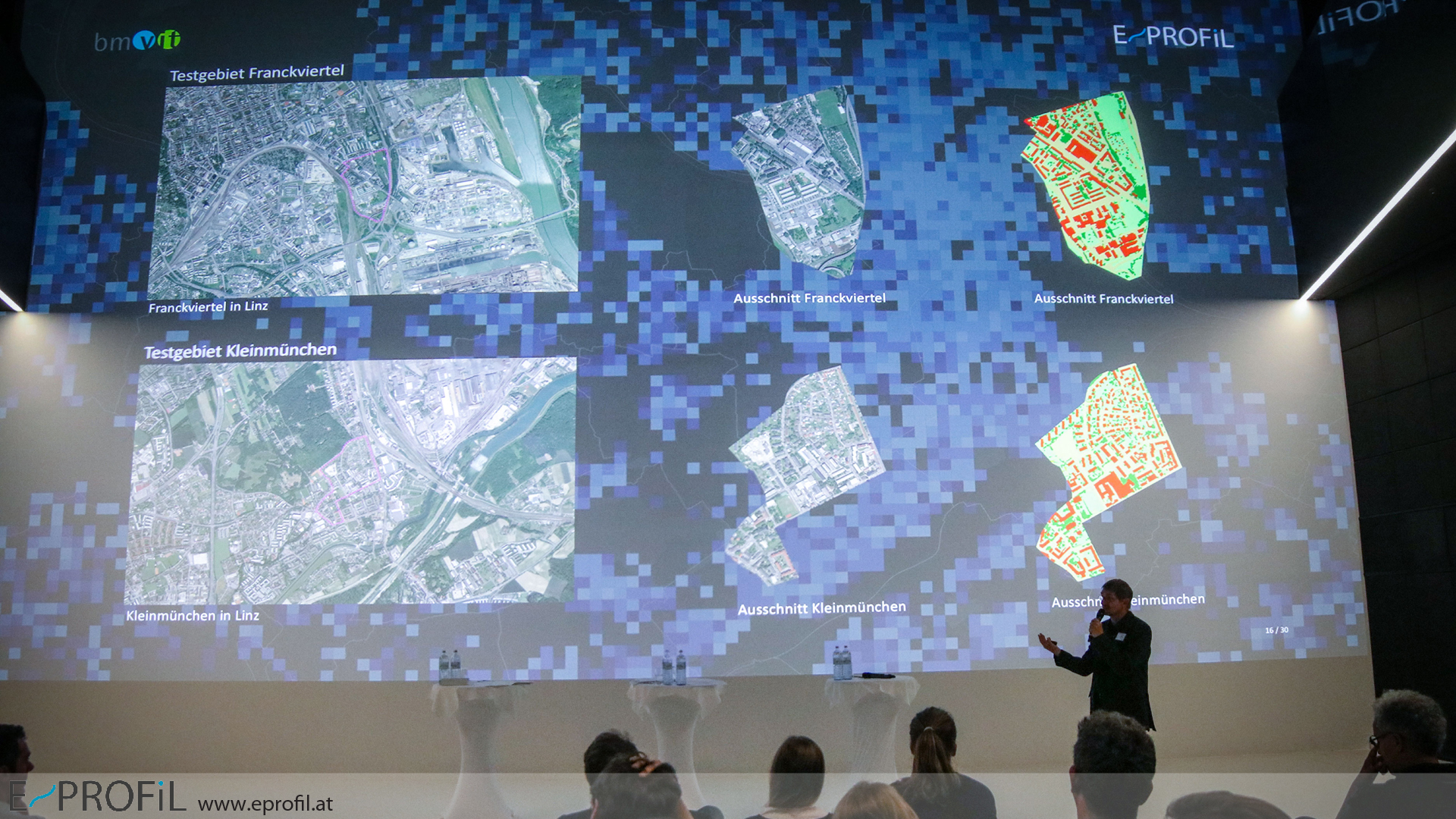
Final event of the project E_PROFIL at Ars Electronica Center
Presentation of the urban quarters Kleinmünchen and Bergern in Linz.
Copyright: Ars Electronica Futurelab, 2017
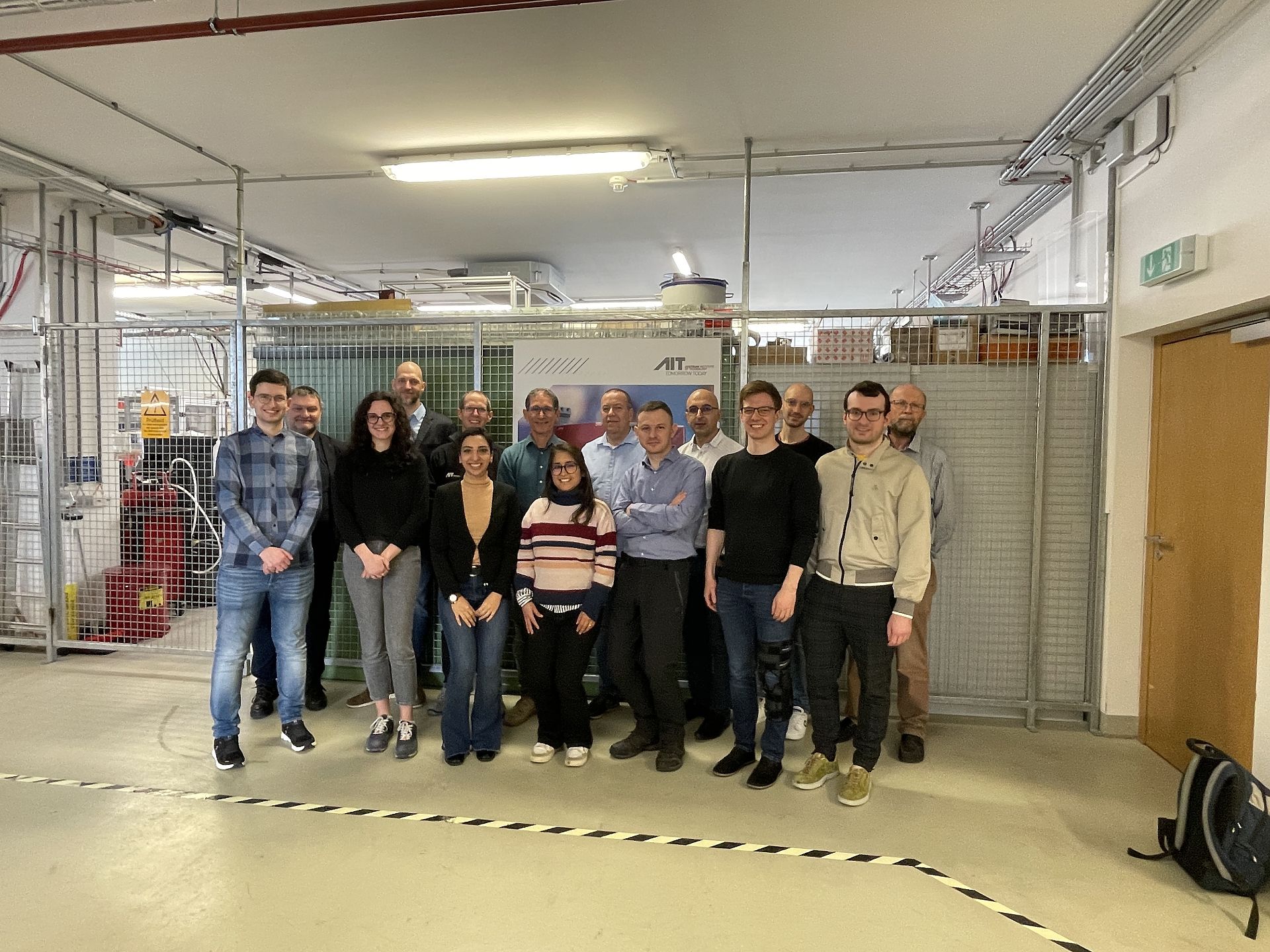
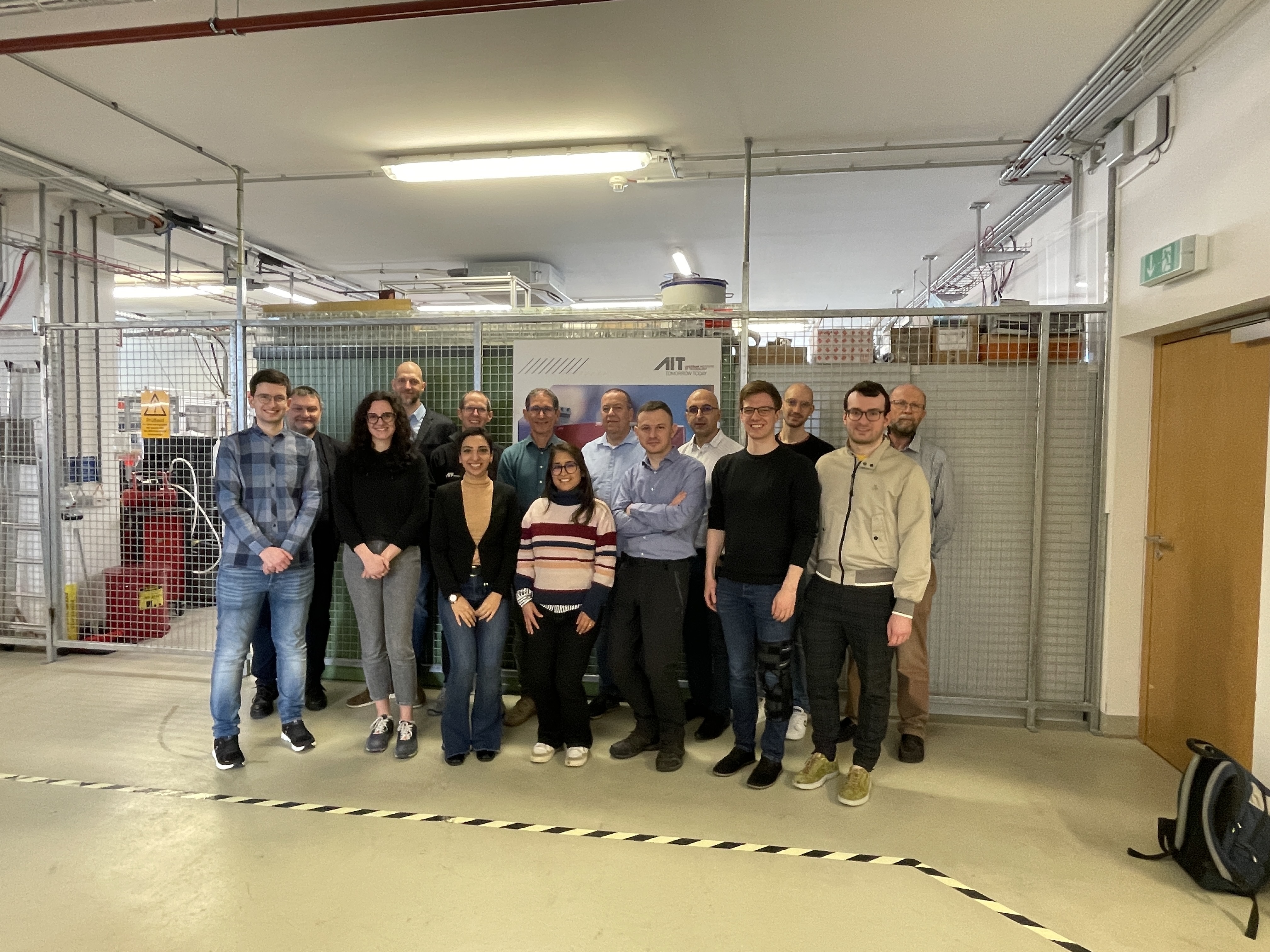
SIRFN-AIT Workshops "Grid-forming converters - testing and validation challenges" - March 2024
International SIRFN experts and participants of the SIRFN-AIT Workshops "Grid-forming converters - testing and validation challenges" visiting the laboratory showcase at the AIT MicroGrid Labor in March 2024.
Copyright: AIT Austrian Institute of Technology
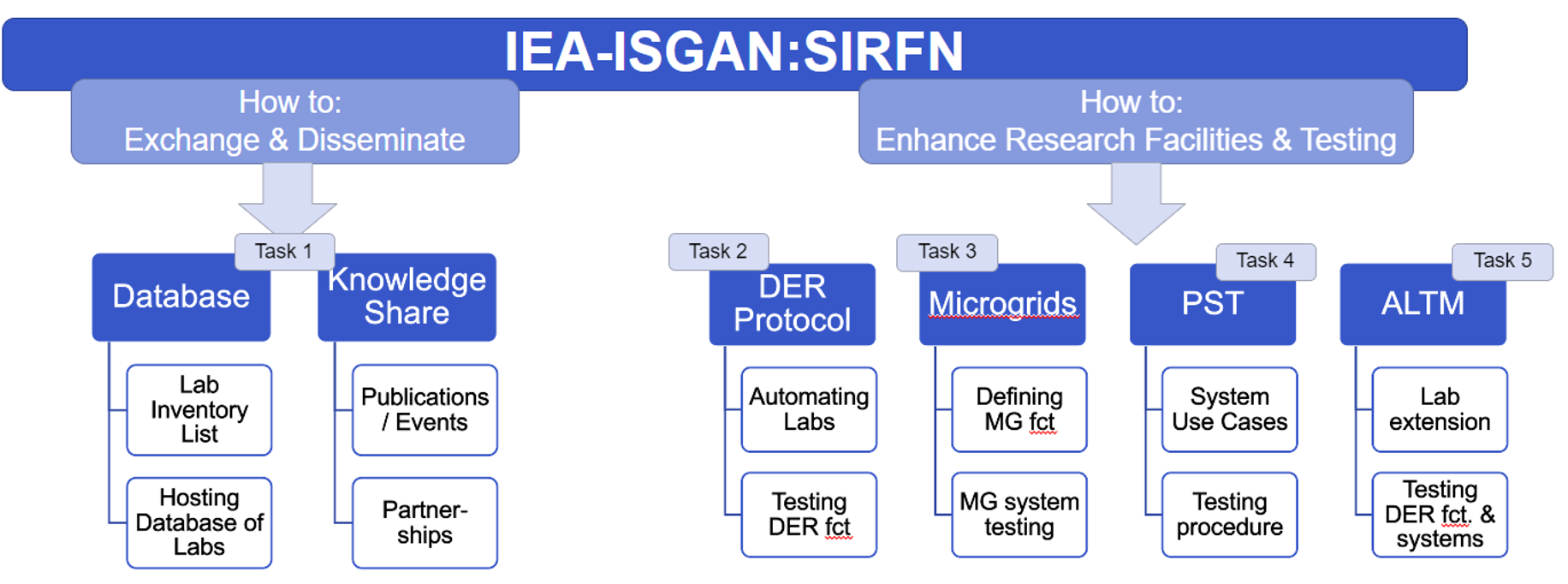
Organisation of the SIRFN network and technical topics in the project period 2021-2023
Overview of the organisation of the SIRFN network: The work programme for Annex 5 approved by the ISGAN Executive Committee (ExCo), the decision-making body within ISGAN, is divided into two sections, one dealing with the dissemination and exchange of knowledge and the other with the implementation of concrete projects for the further development of the research infrastructure.
Copyright: ISGAN-SIRFN
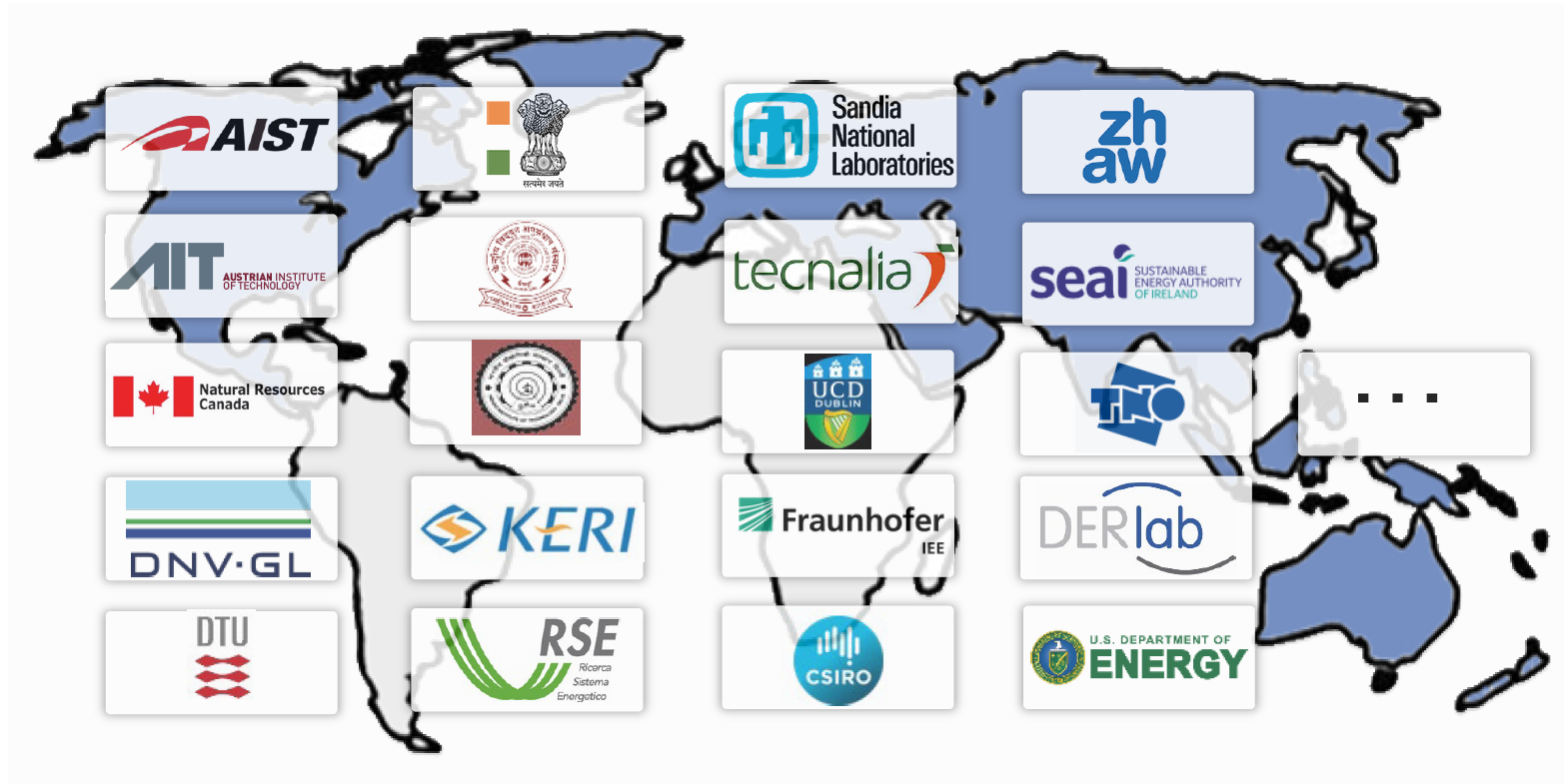
SIRFN member institutions 2024
Overview of the countries and research institutions participating in SIRFN 2024. SIRFN brings together leading research laboratories, academic institutions, industry partners and government organisations from around the world with the aim of promoting collaboration, knowledge exchange and the implementation of joint research projects.
Copyright: ISGAN-SIRFN
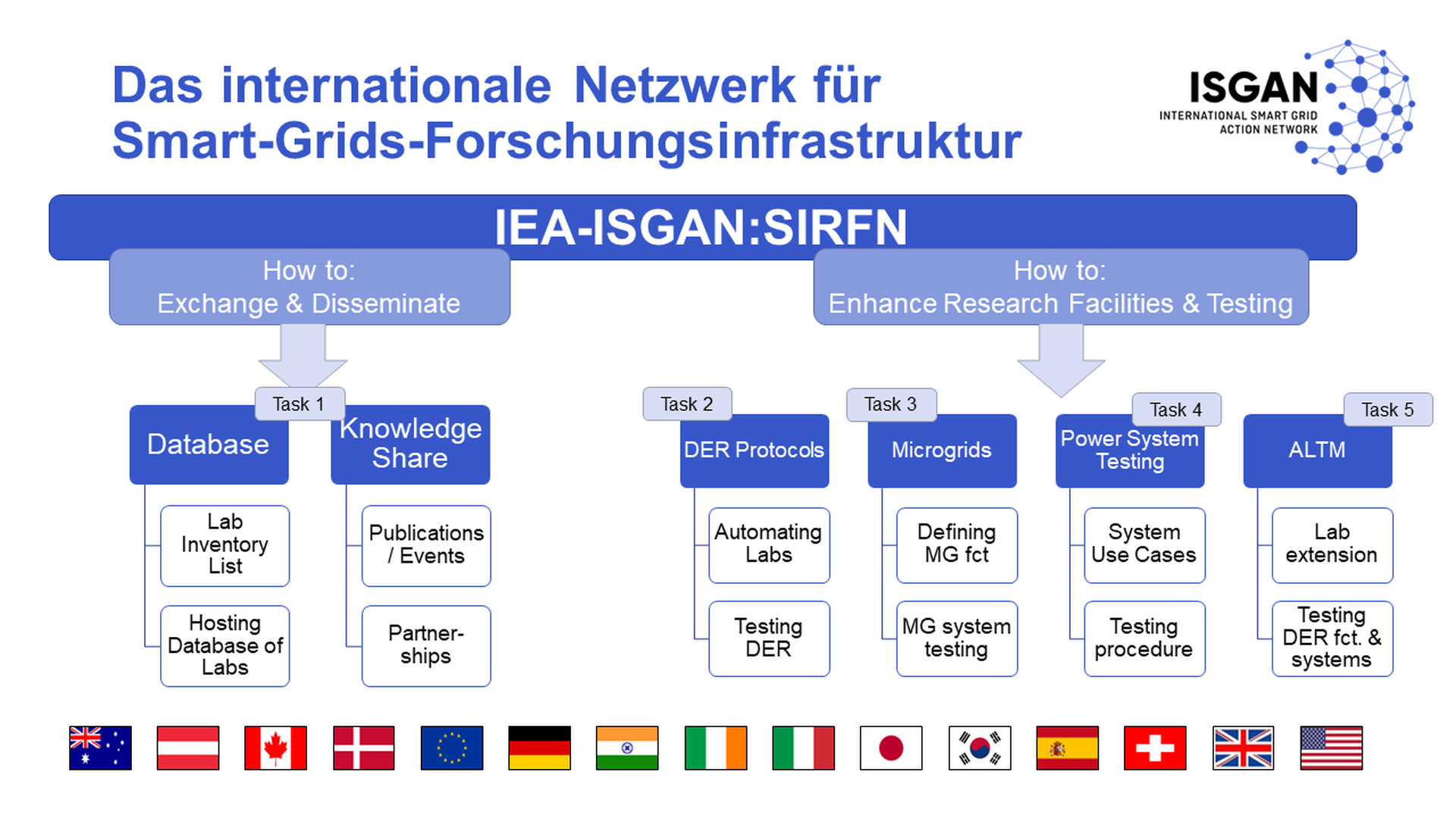
Organisation of the Smart Grids International Research Facility Network (SIRFN)
ISGAN Annex 5 is divided into two sub-areas dealing with the dissemination and exchange of knowledge on the one hand and the implementation of concrete projects for the further development of the research infrastructure on the other. The work is organised in the following main focus areas : - DER test protocols - Microgrids - Power System Testing - Advanced laboratory testing methods
Copyright: ISGAN Annex 5 SIRFN
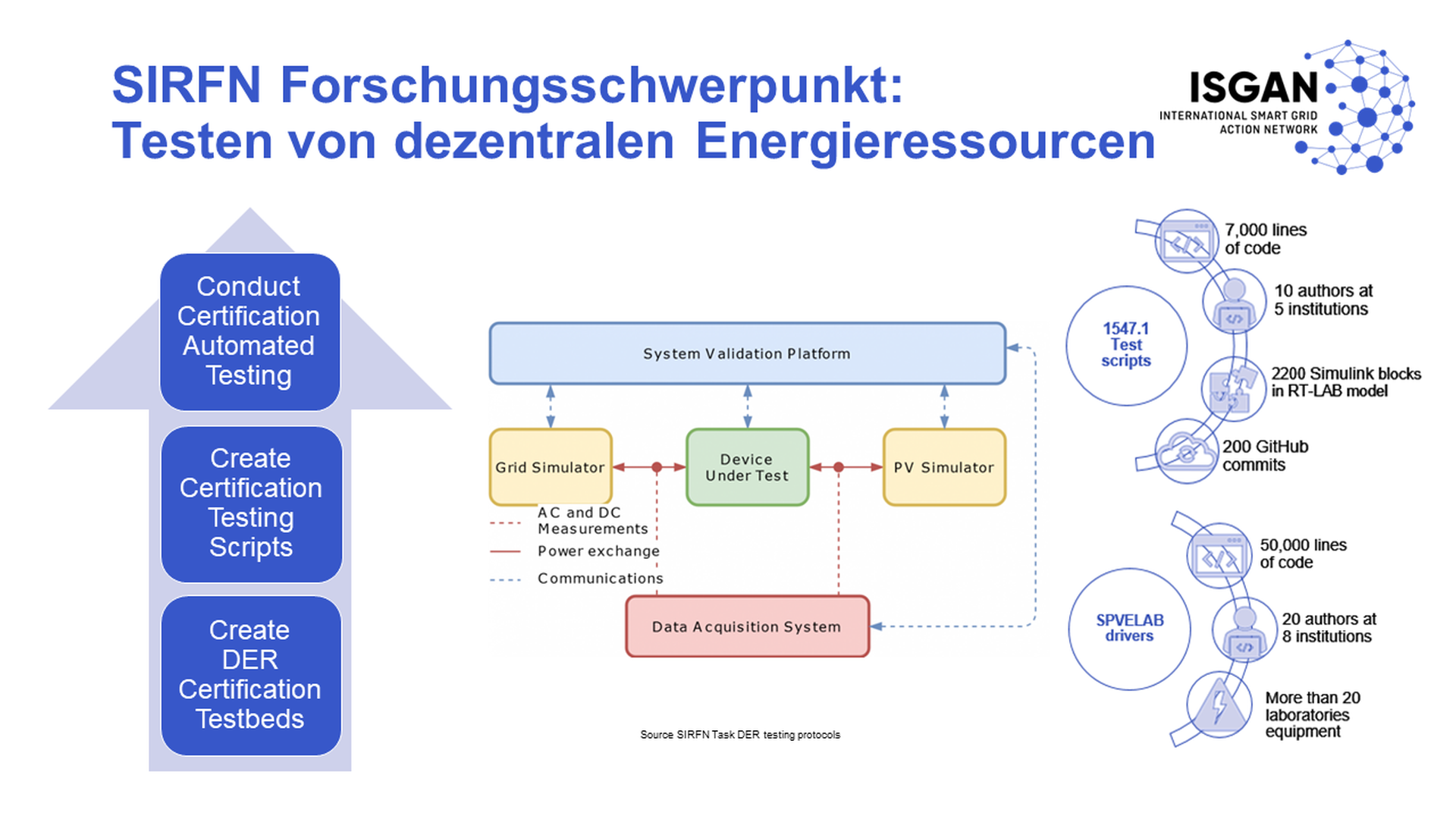
SIRFN Focus Area: DER testing protocols
As part of the SIRFN focus are, SIRFN laboratories are developing test protocols for validating the interoperability of distributed energy resources, which can be used in an integrated test platform (System Validation Platform), for implementing a harmonised, international certification standard for all distributed energy resources in the power grids.
Copyright: ISGAN Annex 5 SIRFN

SIRFN Focus Area Power System Testing
Within the framework of the SIRFN focus area "Power System Testing", leading international laboratories are pooling their activities with the aim of developing strategies for testing system aspects of digitalised, renewable energy-based, cyber-physical power systems.
Copyright: ISGAN Annex 5 SIRFN
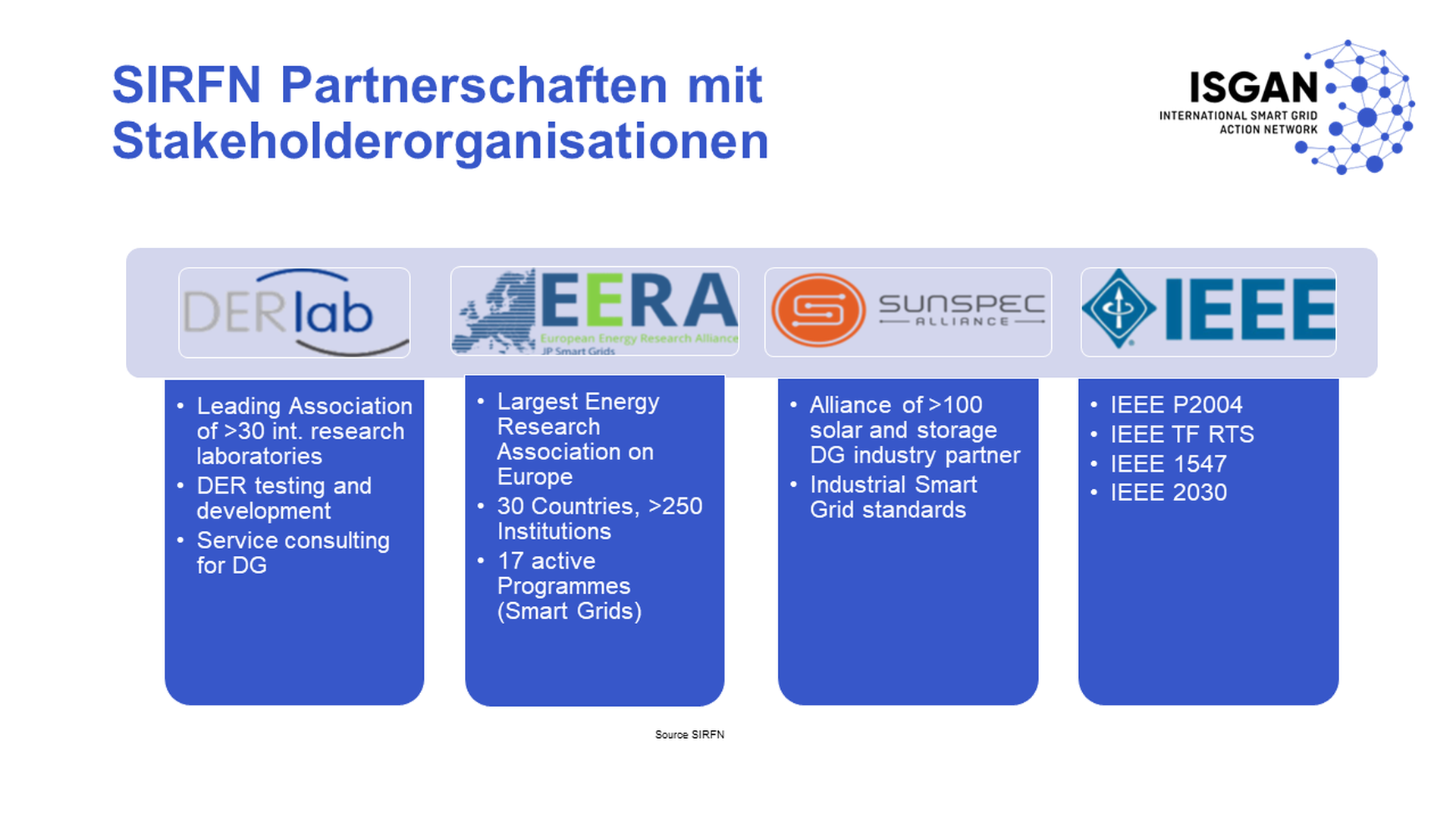
SIRFN Partnerships and Stakeholders
As a global network, SIRFN also works intensively with partners from other relevant networks. These networks include research and development, industry and, in particular, the field of standardisation.
Copyright: ISGAN Annex 5 SIRFN
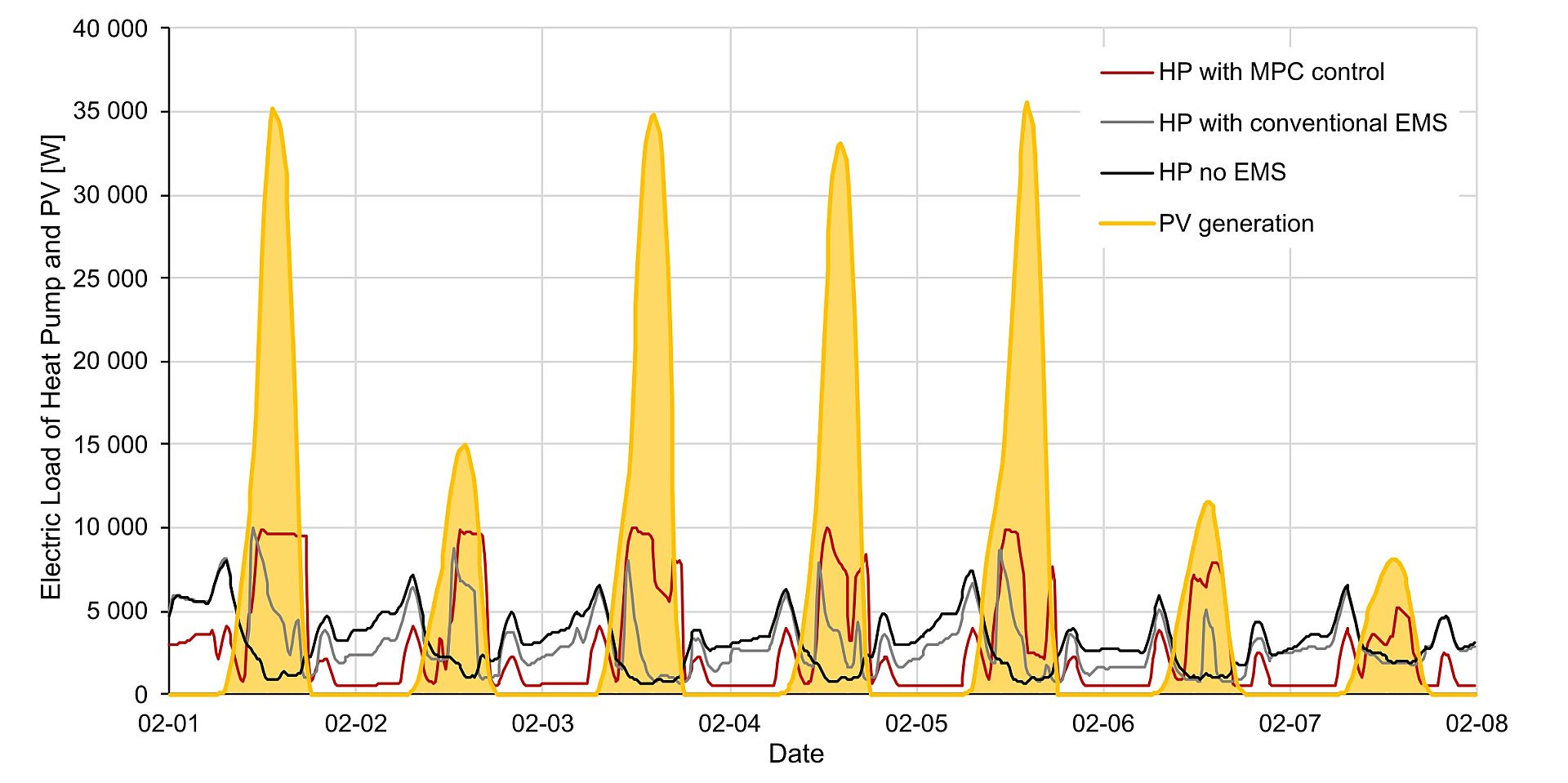
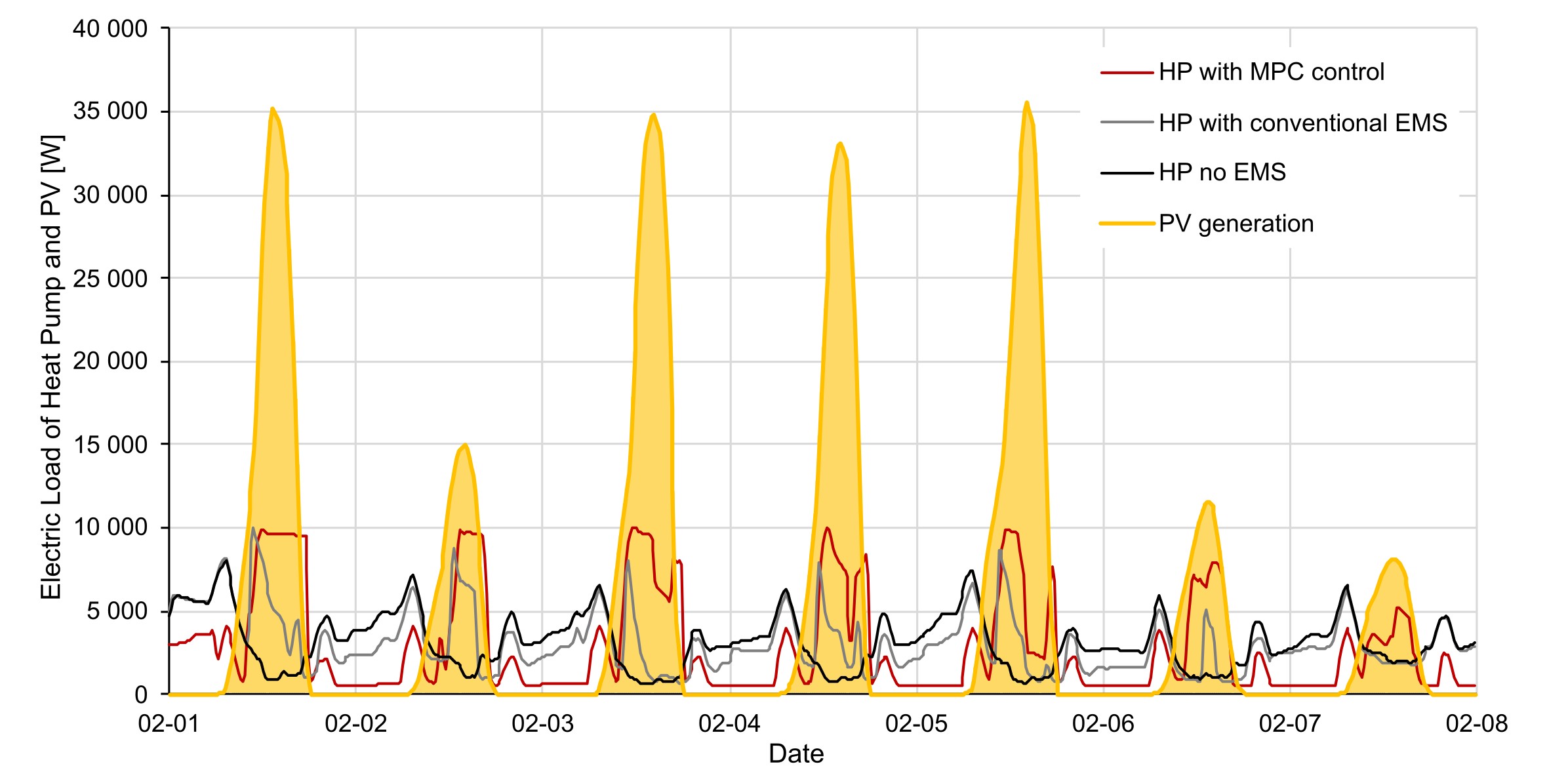
Simultaneity of PV electricity generation and heat pump electricity demand for different control strategies in the PEB use case EXCESS
Comparison of the electricity demand of heat pumps under different control strategies, simulated for the Austrian EXCESS demonstration building, in relation to the available PV generation on the façade for an average winter week in February. The building under investigation represents a use case in the IEA EBC Annex 83 project.
Copyright: AEE INTEC
Innsbruck Campagne
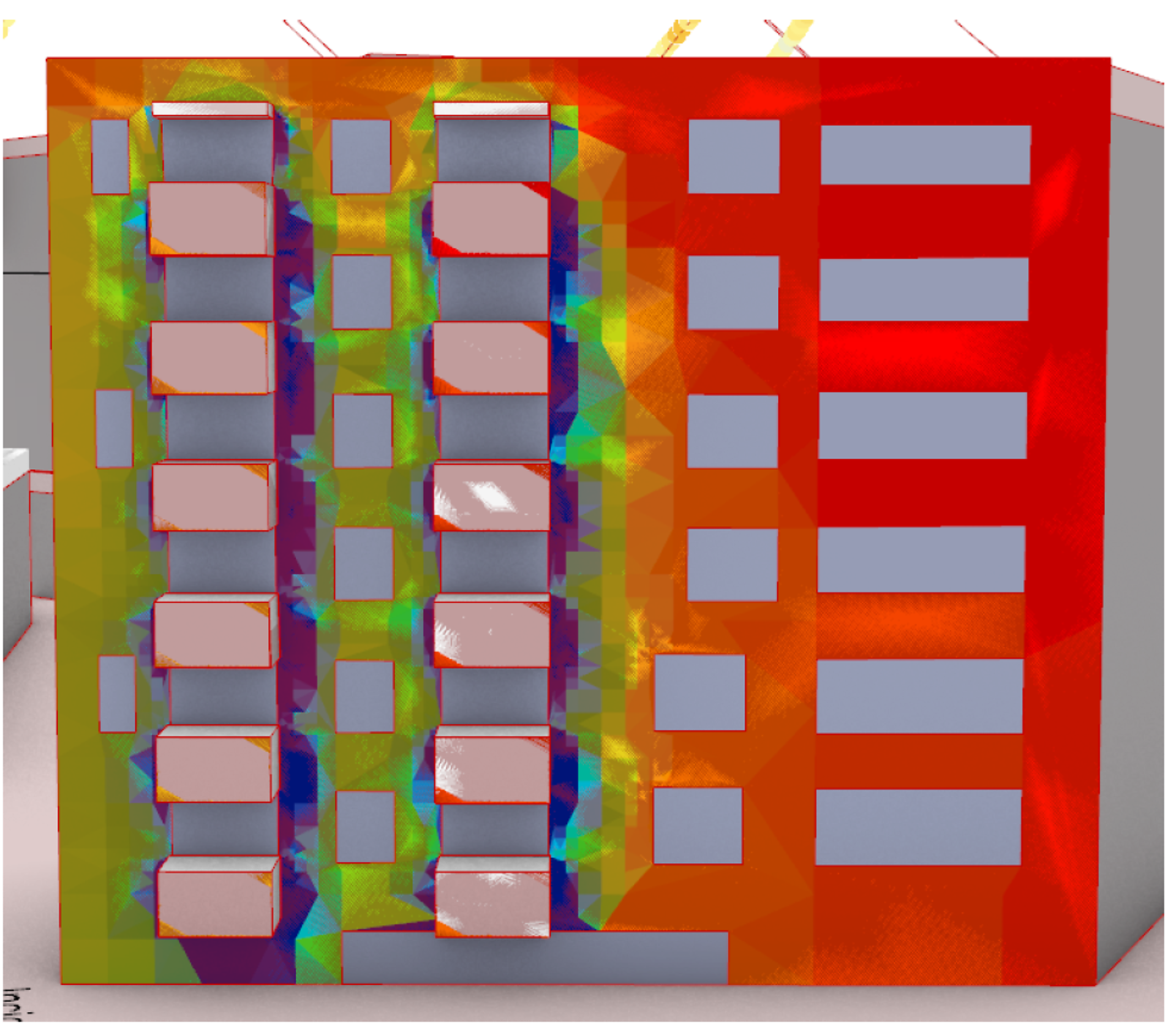
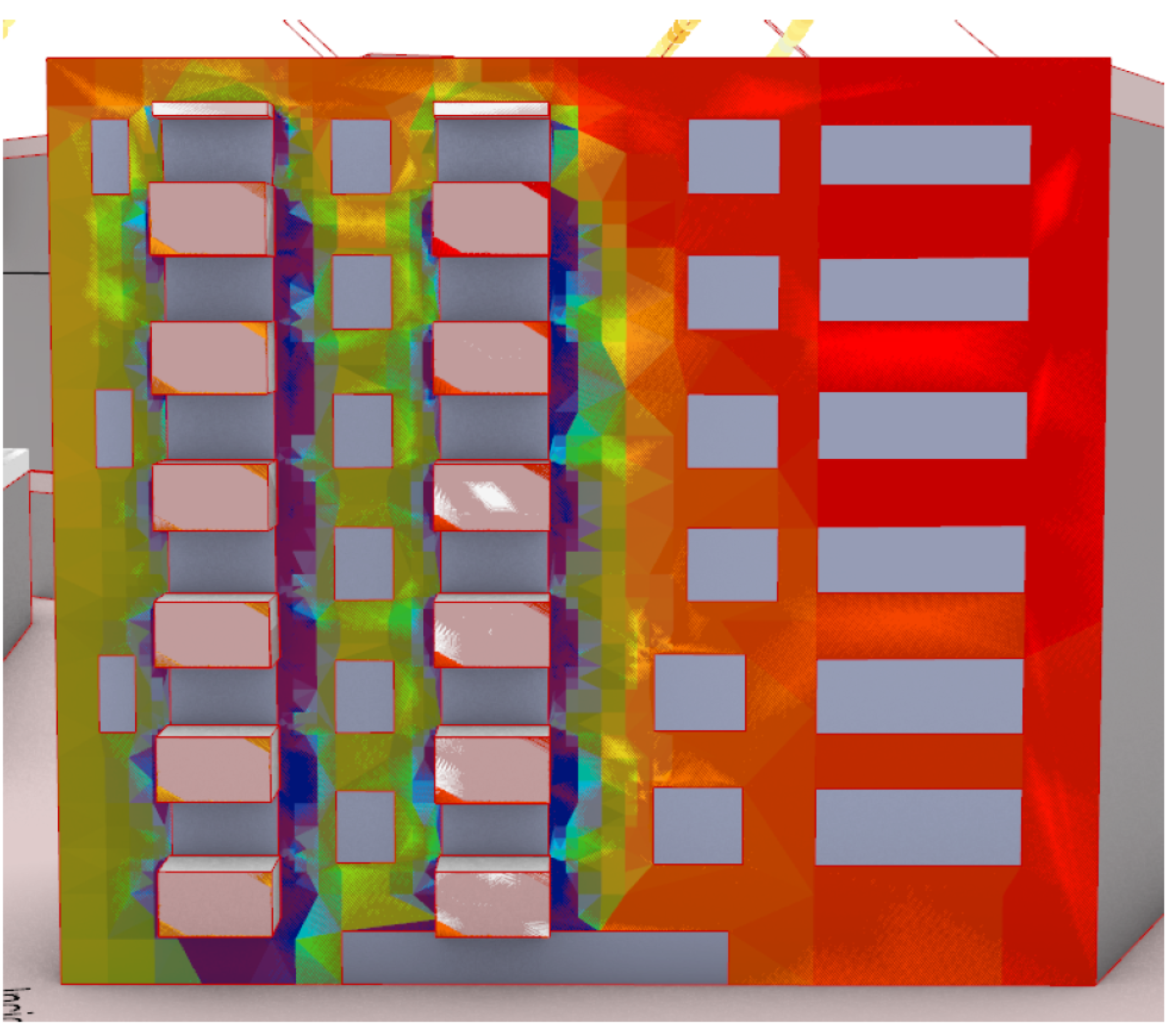
PV Potential of the Facade - Project Innsbruck Campagne
Copyright: UIBK Heiß/Ochs
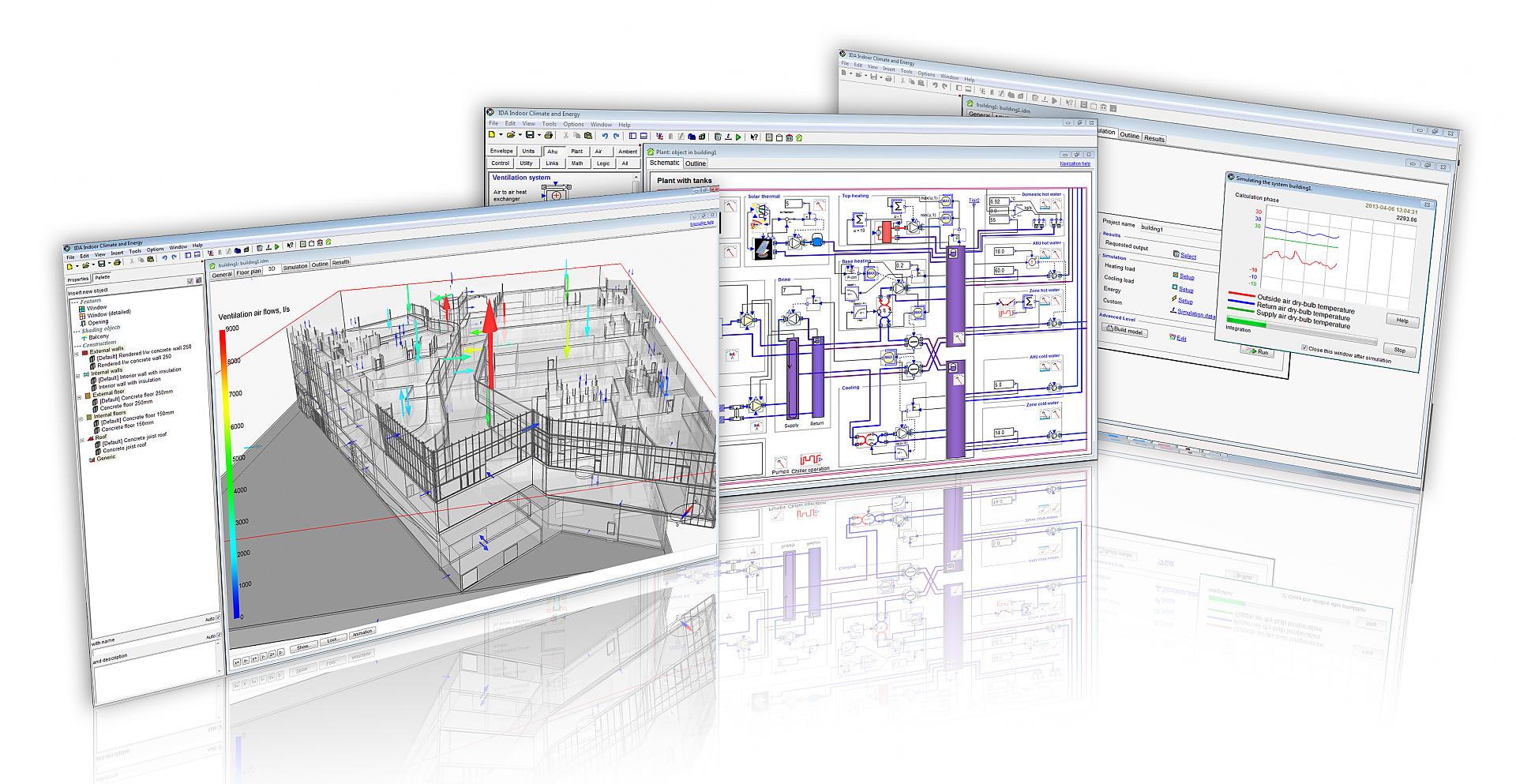
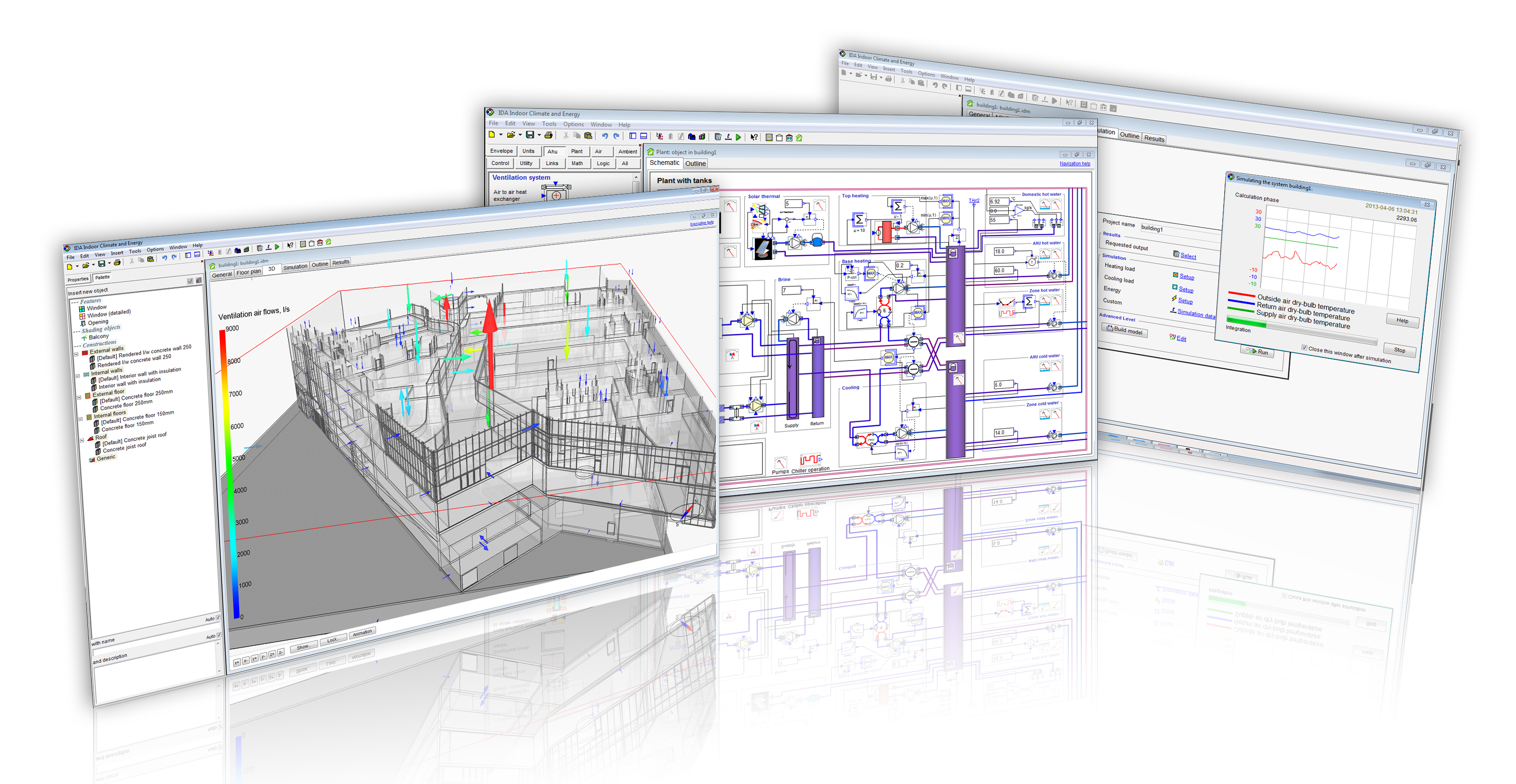
Combined building and plant simulation in real time
In a dynamic building simulation, the zones (rooms) are in contact with their surroundings and with the adjacent building components, the people, equipment and objects located in them. In the combined building and plant simulation, the dynamic interaction between building, plant and control is also taken into account. A building and plant simulation, adapted in real time to the actual weather conditions and current measurement data from the building, can help to optimize the control of the building services and thus reduce energy costs and increase user comfort.
Copyright: EQUA
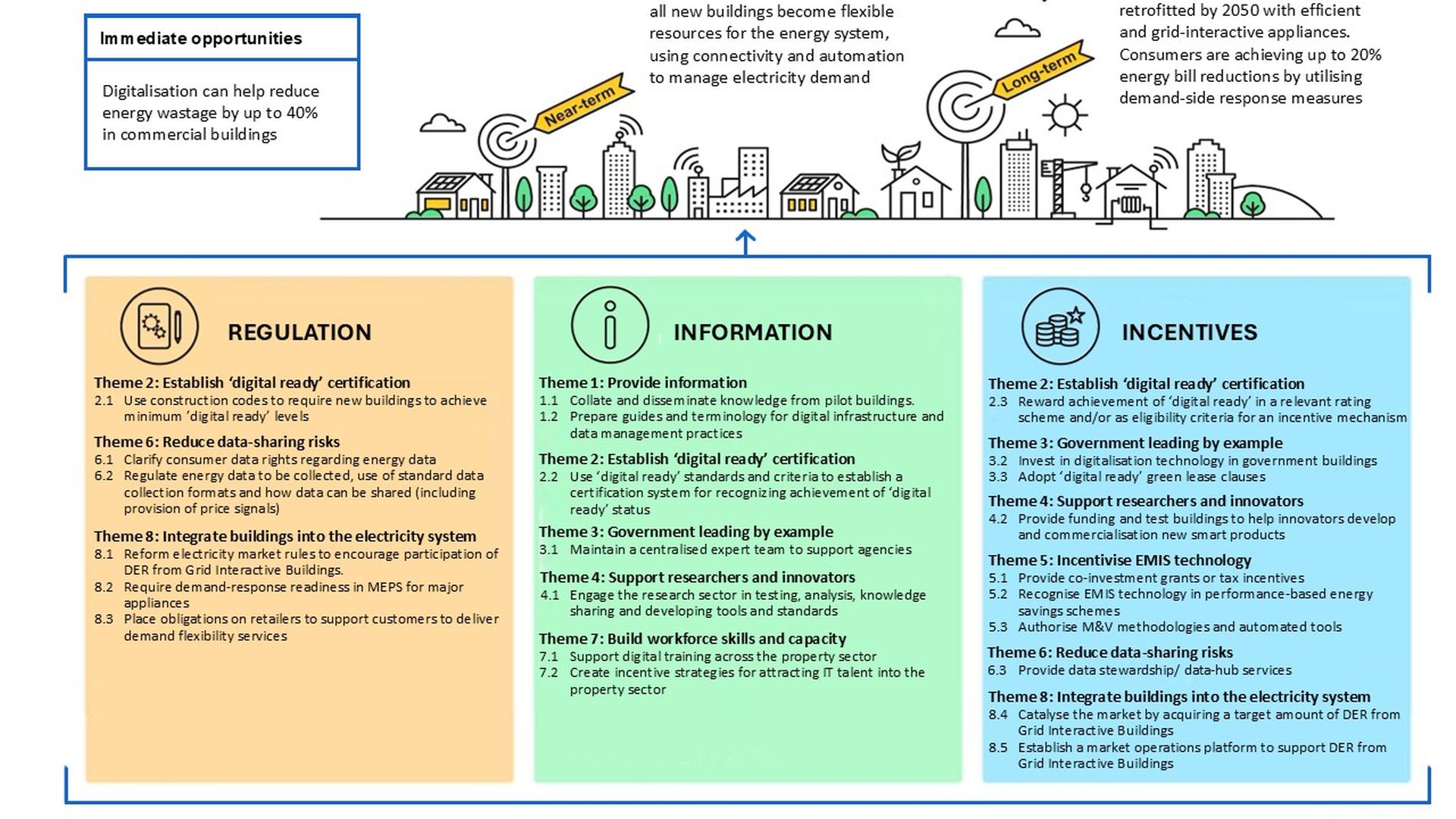
Annex 81 Policy Package
Graphic representation of the policy package of measures developed in Annex 81 to promote Data-Driven Smart Buildings.
Copyright: Stephen White - format adopted from from IEA, 2023 “Energy Efficiency Policy Toolkit 2023”,
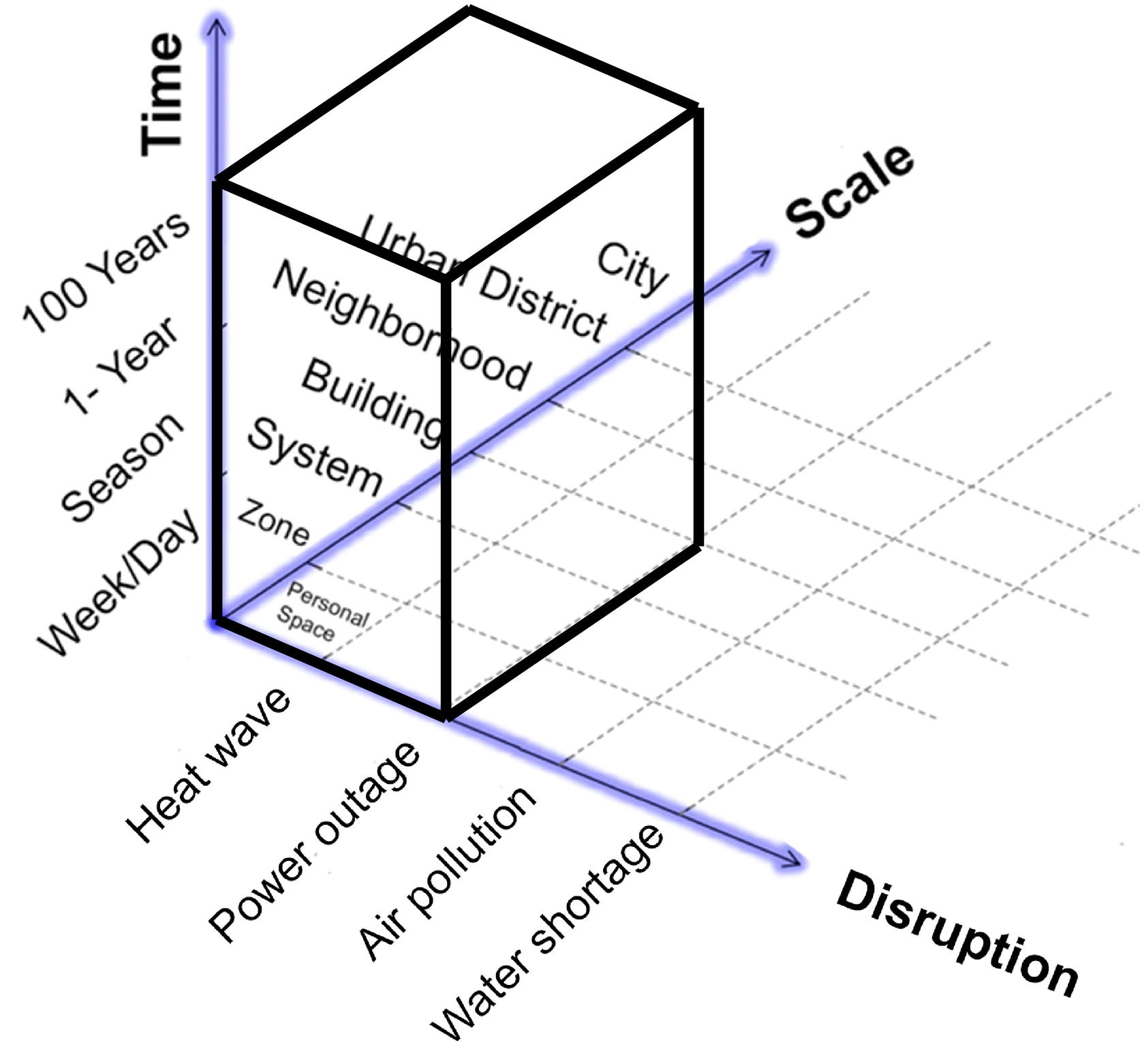
Scope of Resilience Definition
This figure illustrates the chosen framework for assessing the resilience of buildings. The definition focuses on building scale, with consideration of heat waves and power outages for a period of the next 100 years.
Copyright: Shady Attia, Ronnen Levinson, Eileen Ndongo, Peter Holzer, Ongun Berk Kazanci, Shabnam Homaei, Chen Zhang, Bjarne W. Olesen, Dahai Qi, Mohamed Hamdy, Per Heiselberg; Resilient cooling of buildings to protect against heat waves and power outages: Key concepts and definition; Energy and Buildings, Volume 239; 2021; 110869, ISSN 0378-7788, https://doi.org/10.1016/j.enbuild.2021.110869.
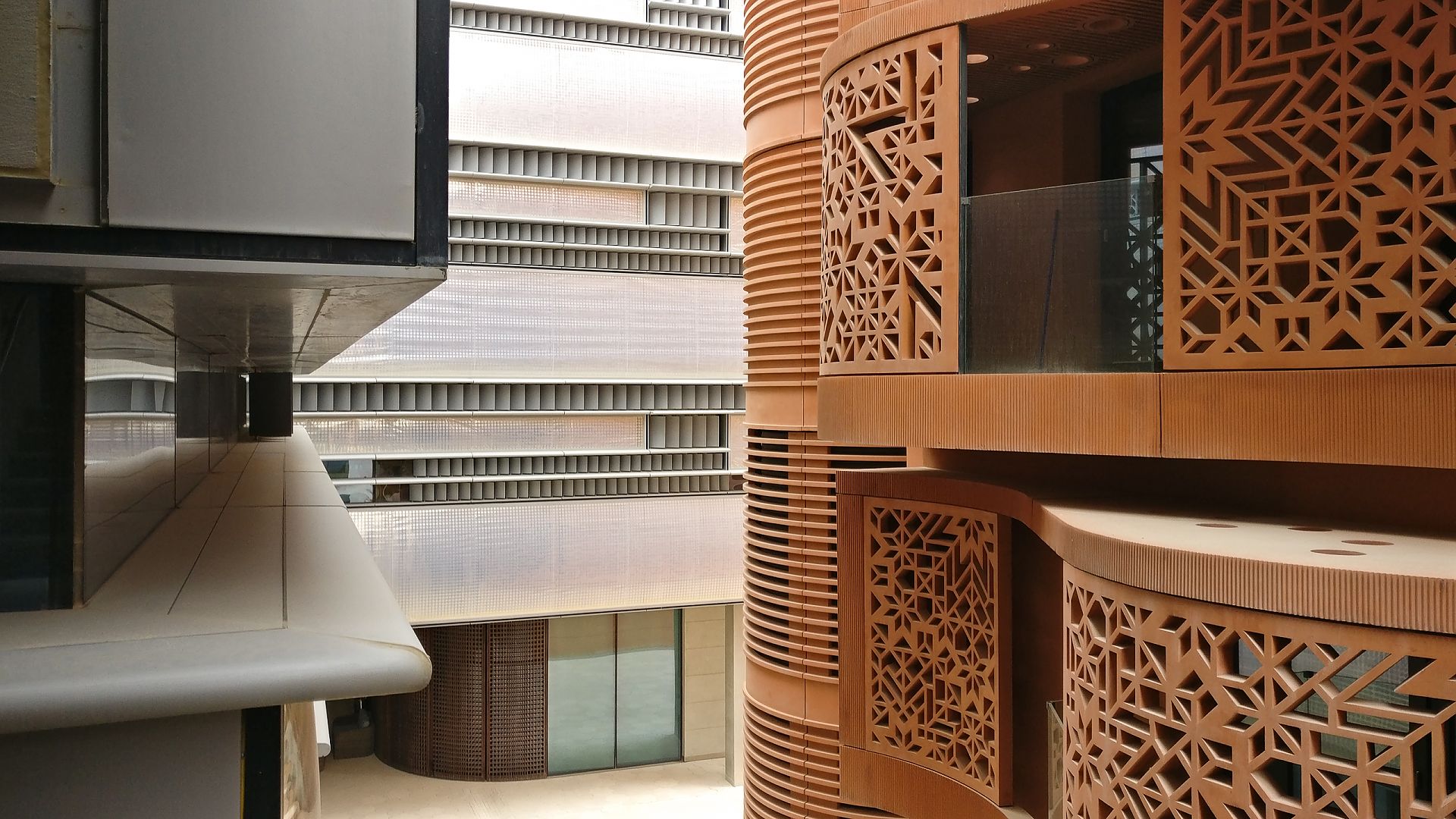
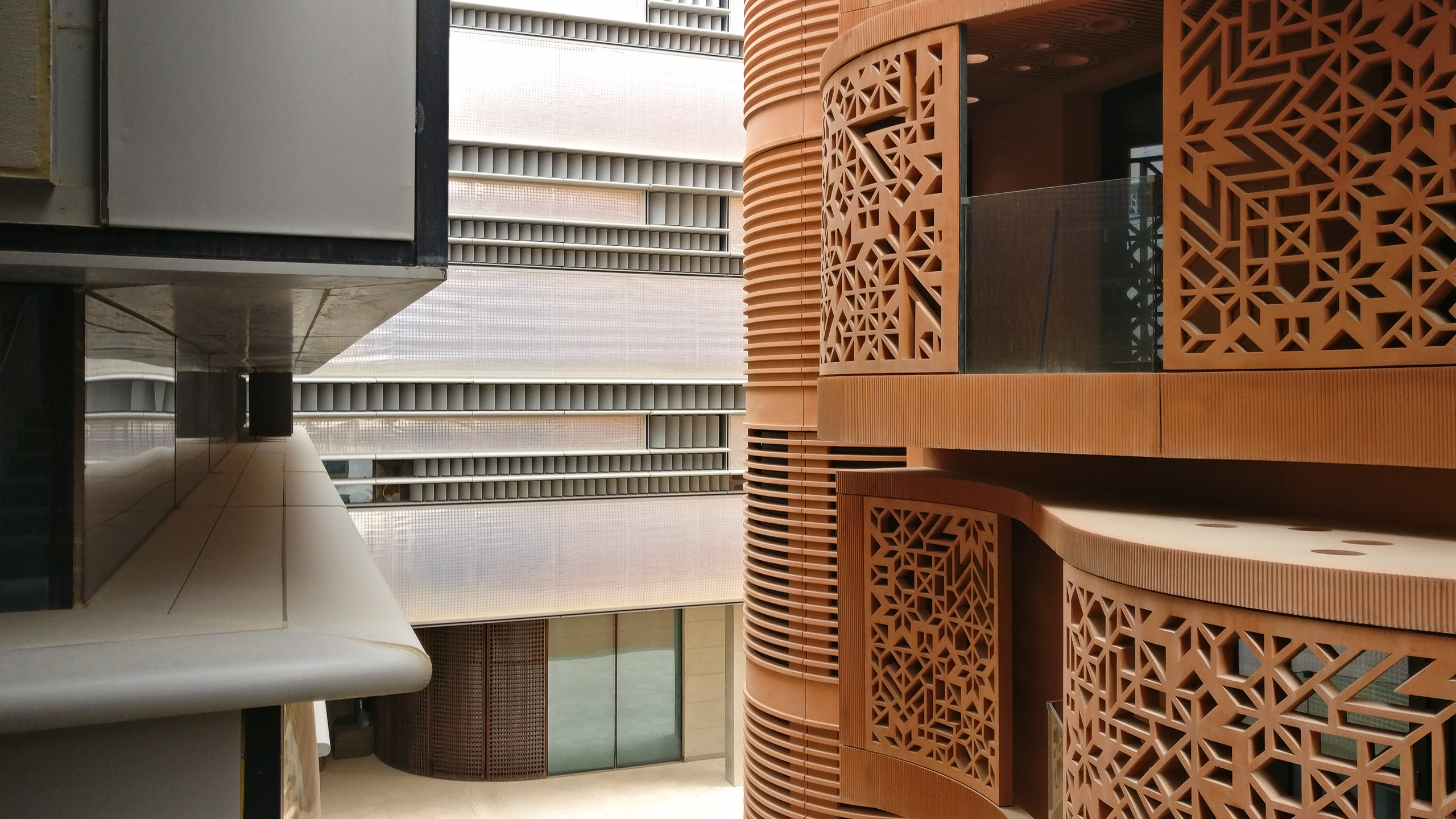
Example of Façade-integrated Shading - Masdar City, United Arab Emirates
This illustration shows solar shading. The image was taken in the experimental " ecological city" of Masdar City, United Arab Emirates.