Project Image Pool
There are 35 results.
Terms of use: The pictures on this site originate from the projects in the frame of the programmes City of Tomorrow, Building of Tomorrow and the IEA Research Cooperation. They may be used credited for non-commercial purposes under the Creative Commons License Attribution-NonCommercial (CC BY-NC).
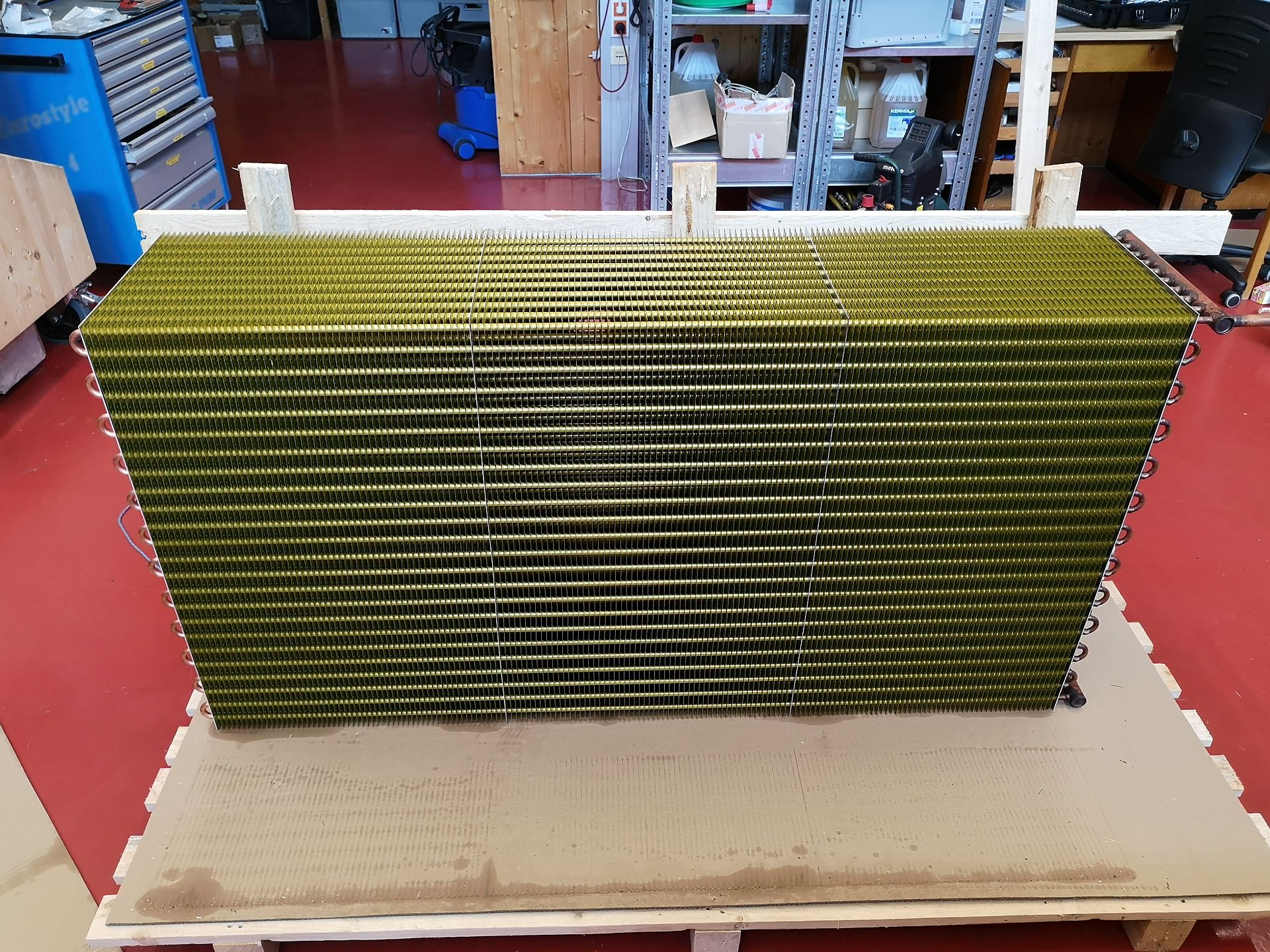
Heat exchanger for sorption thermal storage
The heat exchanger is built into a containment and the sorption material, small grains of zeolite, is filled between the heat exchanger plates. The total volume of material is about 400 liter. Heat is stored through the adsorption and desorption of water vapour in the zeolite. The water vapour is transported between the plates and collected in a header on top of the containment.
Copyright: AEE INTEC
The large-scale thermal solar plant of Silkeborg, Dk
Overview over the large-scale solar thermal plant in Silkeborg, Denmark (left) and schematic showing the different sections and piping of the installation (right)
Copyright: © Silkeborg Forsyning AB
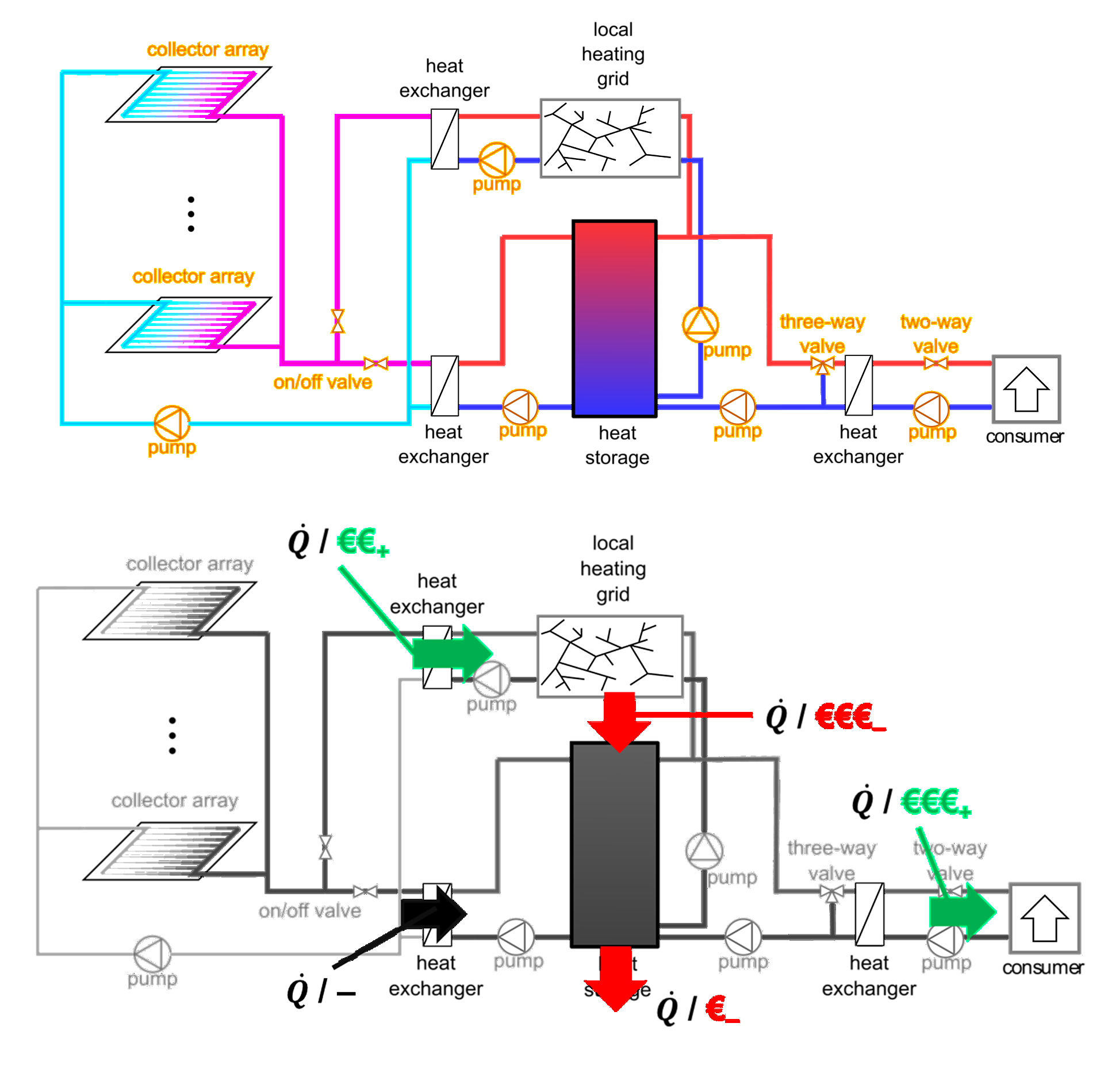
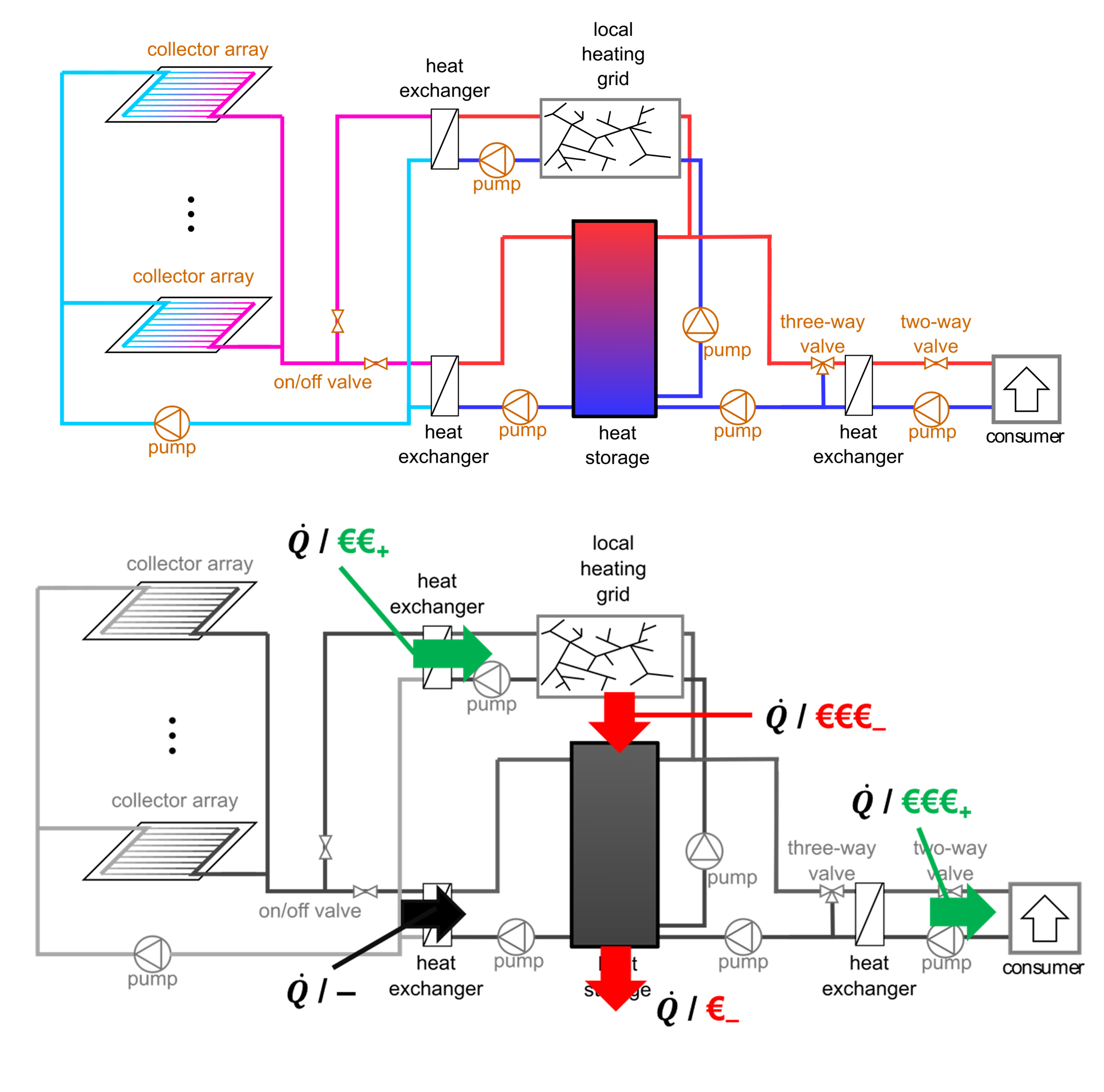
Solare District Heating: Structure, Heat and Revenue Streams
General structure of solar district heating (top) as well as important heat and revenue streams (bottom): The figure shows solar collectors, heat exchangers, a buffer storage, pumps, valves, the grid and consumers.
Copyright: © Dr. Viktor Unterberger / BEST GmbH
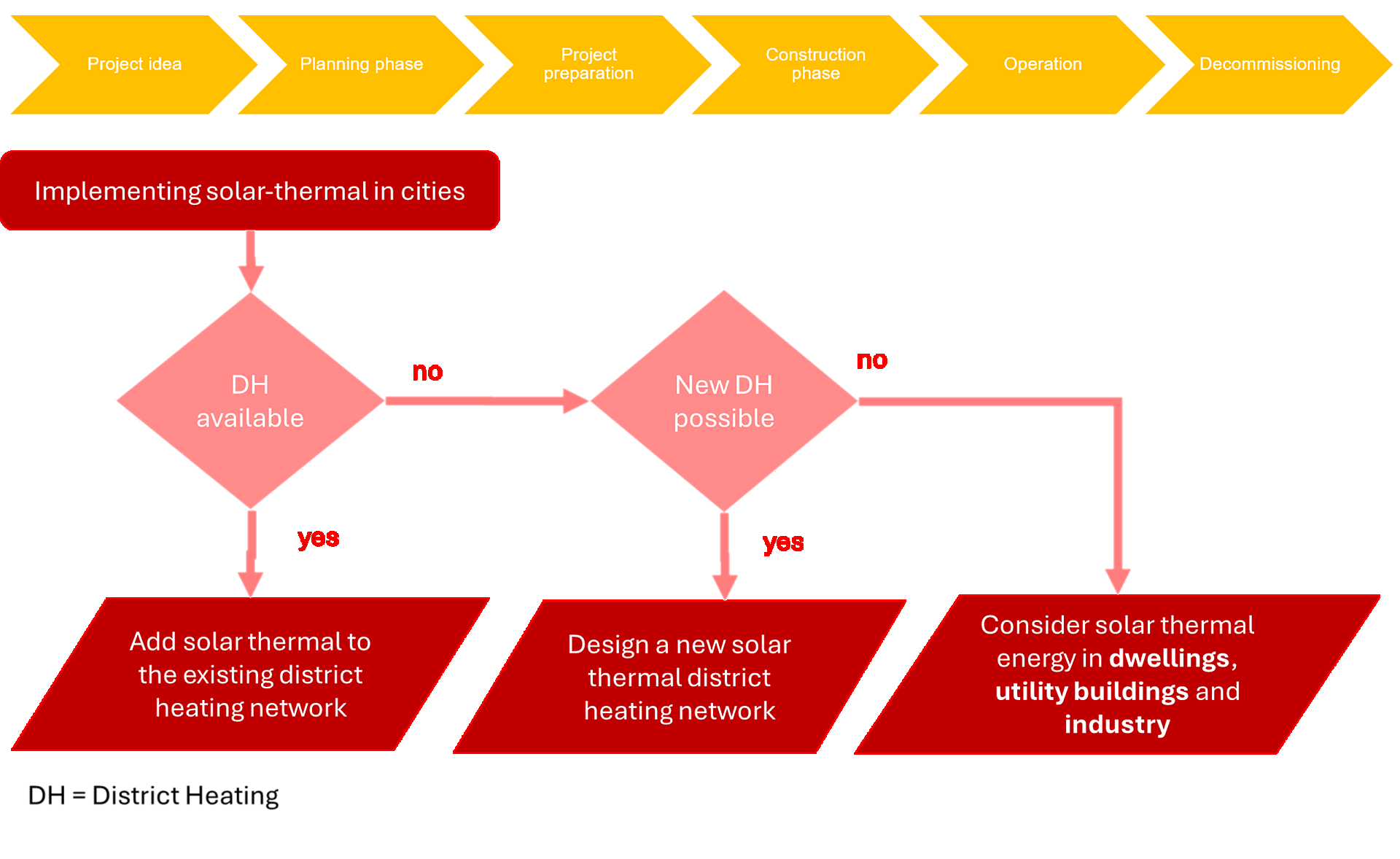
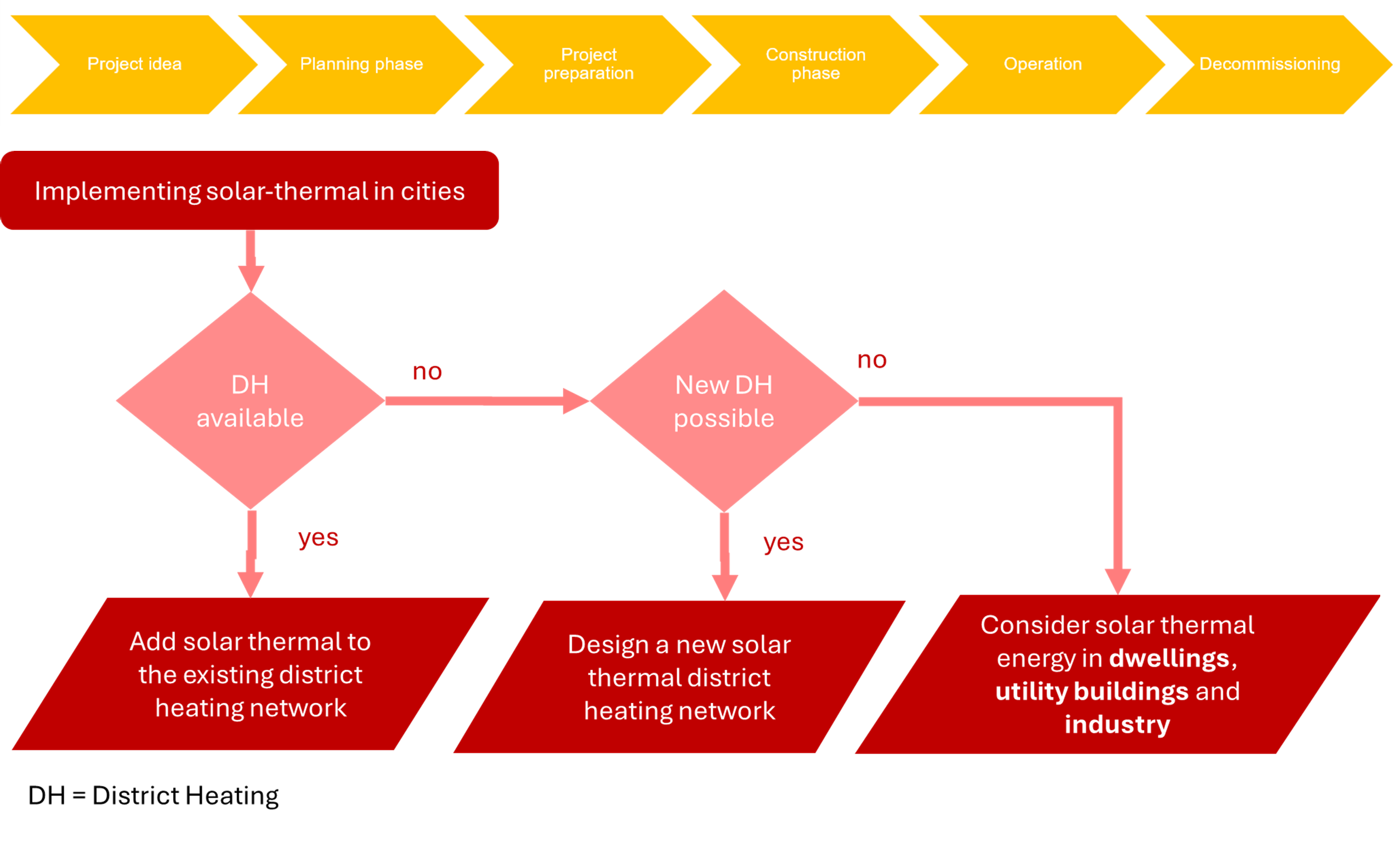
Thermal Solar Plants: Life Cycle and Planning
Stages in the solar thermal plant life cycle (top), flow chart for the decision about implementation of solar district heating (bottom)
Copyright: © IEA SHC Task 68 – Subtask C
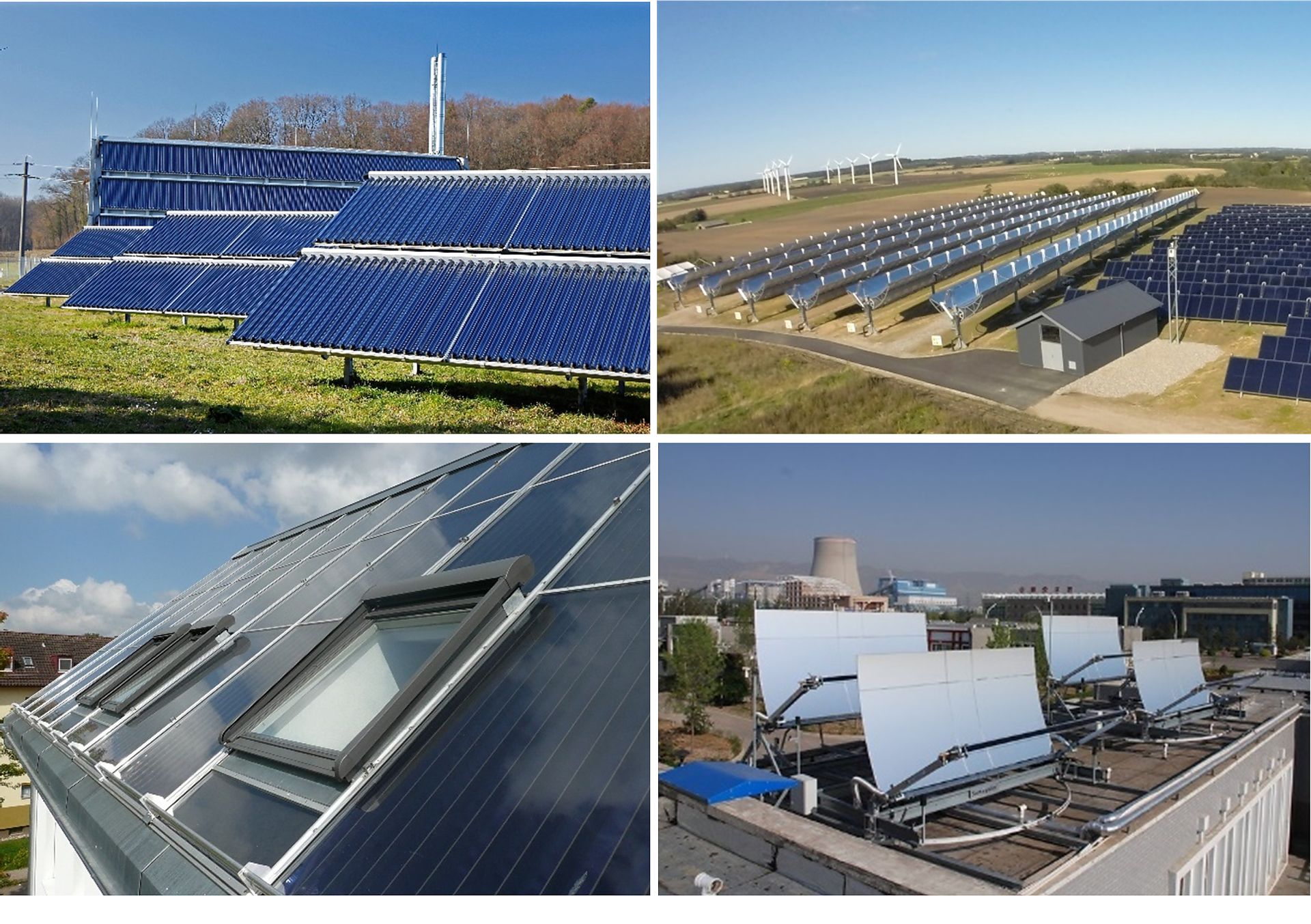
Examples for modern solar thermal collectors
Ground mounted evacuated tube collectors in Büsingen, Germany; combination of flat plate collectors and parabolic trough collectors in Taars, Denmark; roof integrated solar thermal collectors on “solar@home” building in Crailsheim, Germany; demo system of Sun Oyster on a flat roof in Zhangjiakou, China
Copyright: © Solites, Aalborg CSP und sunoyster.com
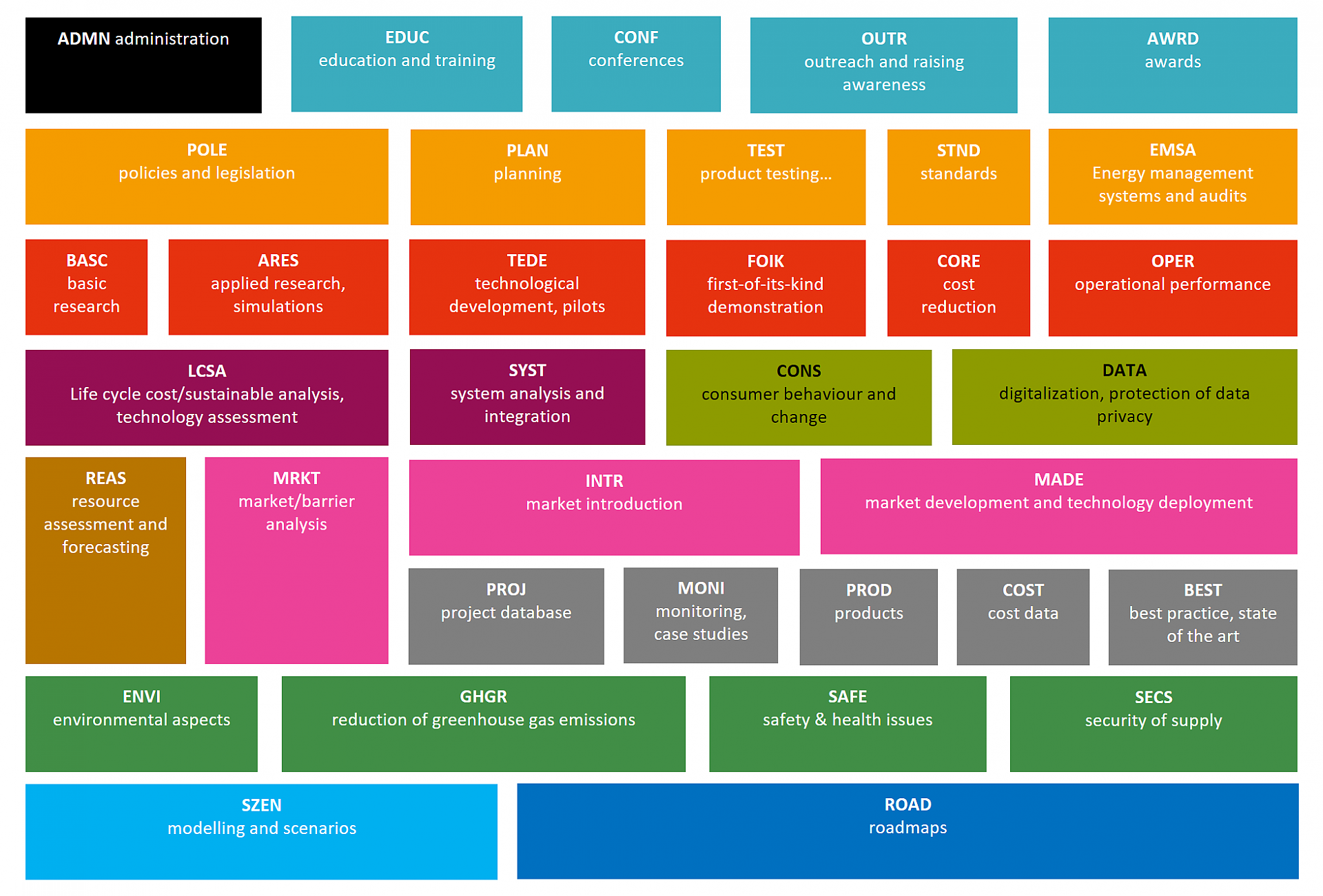
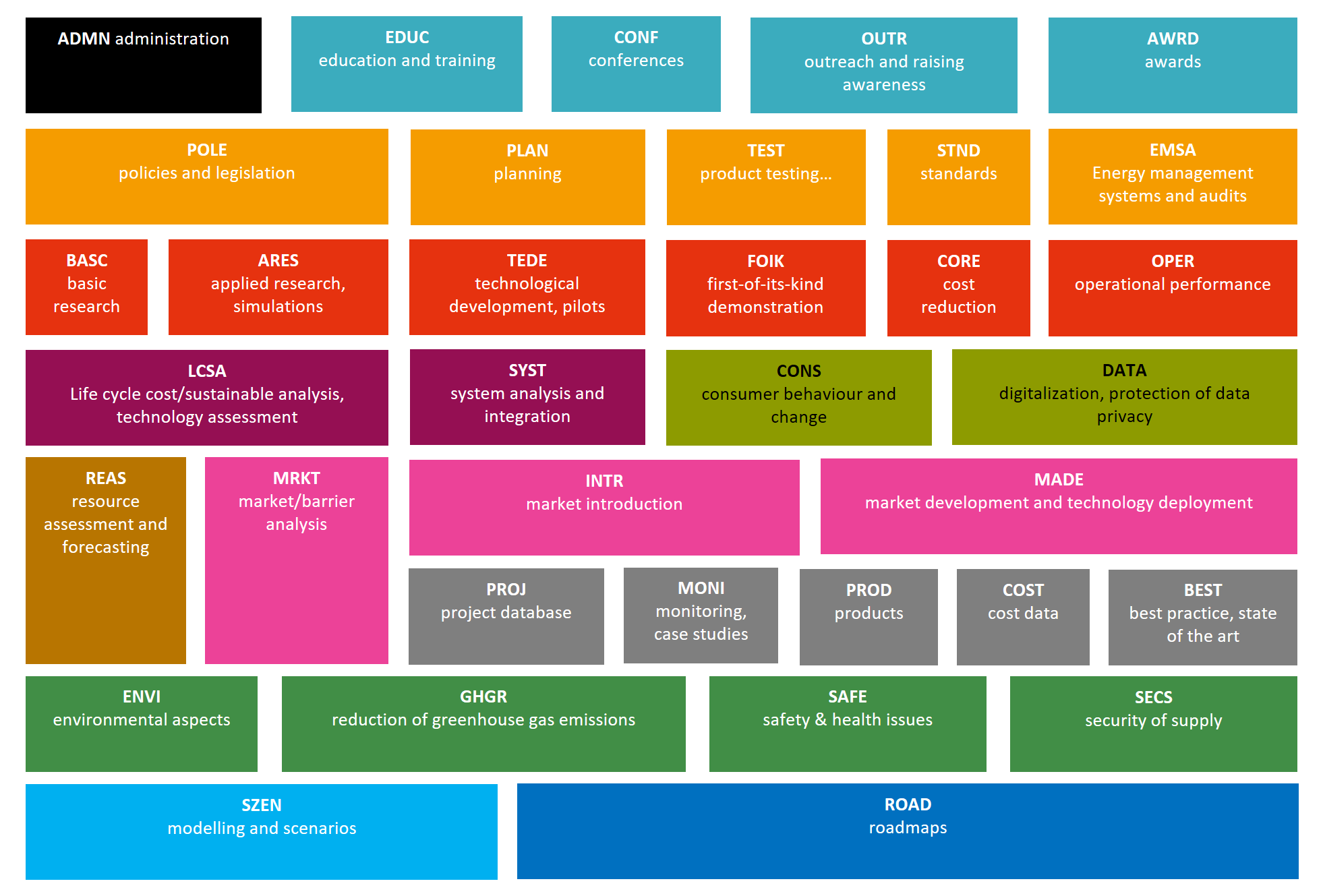
Methods
Set of methods to classify the type of activity of TCP Tasks and Annexes.
Copyright: Austrian Energy Agency
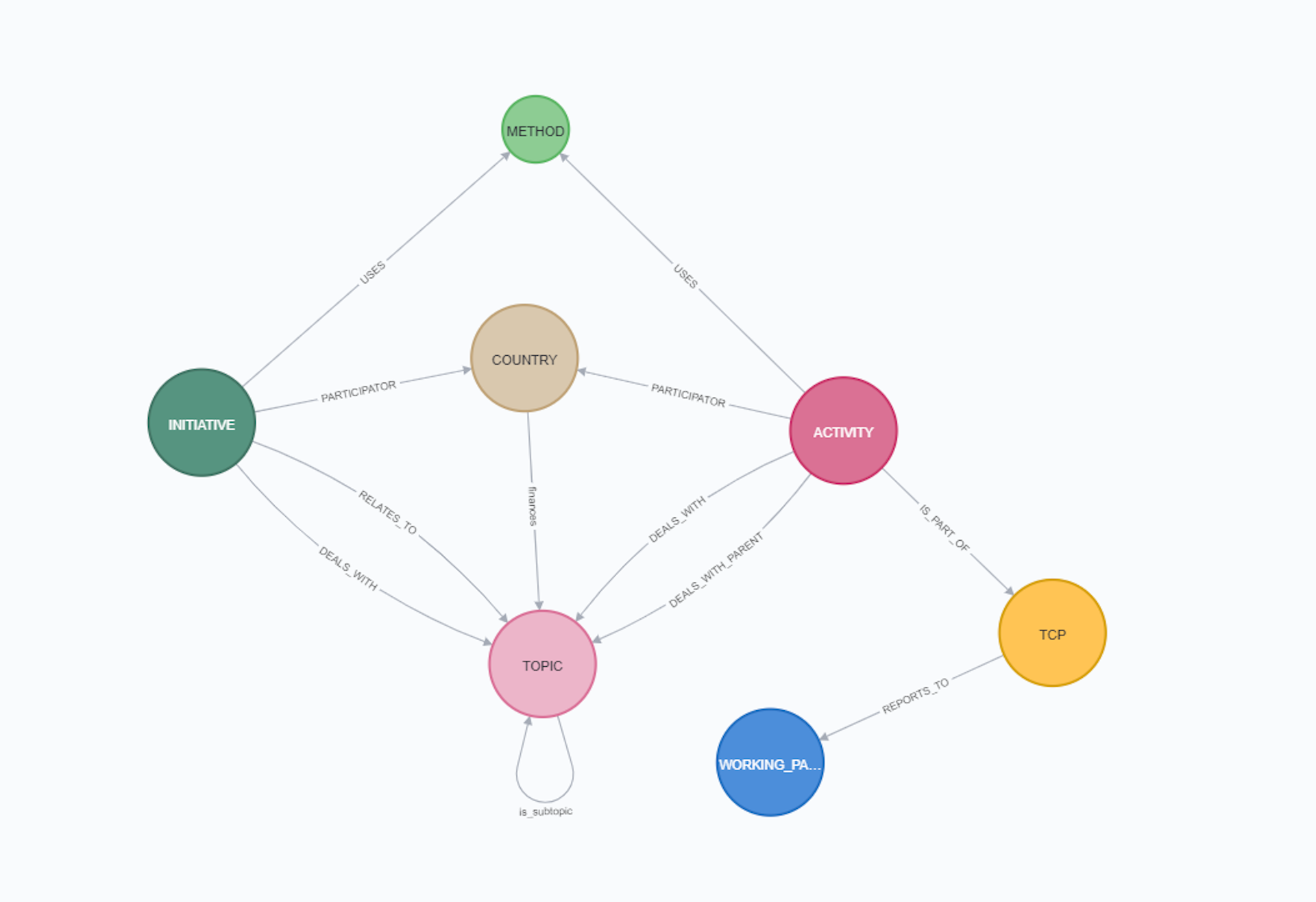
Graph Datastructure
Graphbased datastructure of the open access IEA-TCP dataset.
Copyright: Austrian Energy Agency
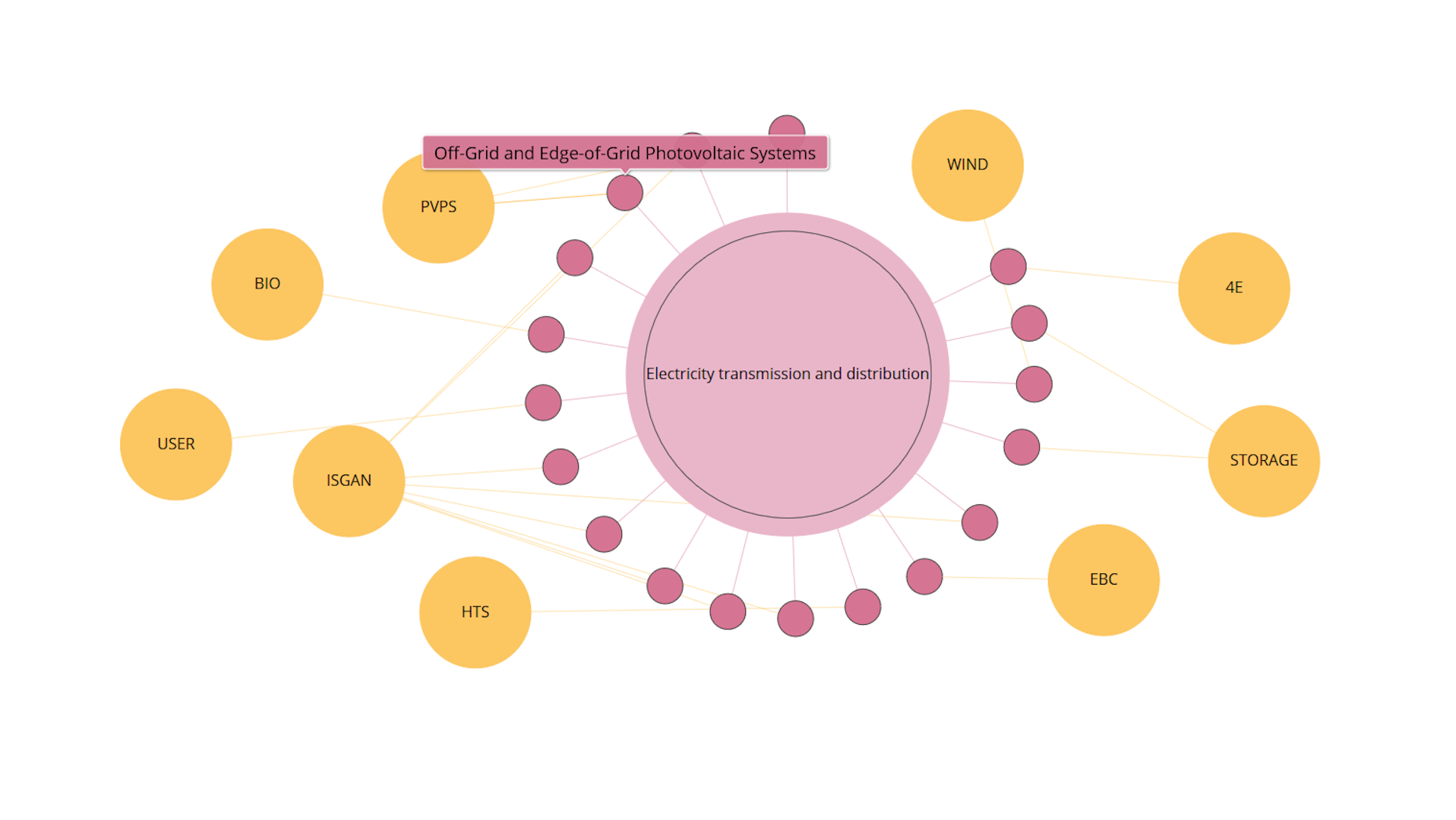
Visualisation of TCPs
After selecting a topic (in this example "Electricity transmission and distribution" was selected), this graph shows all tasks (activities) focussing on the selected topic. The topics are structured according to the IEA energy RD&D budget/expenditure statistics. Additionally, you can see the related Technology Collaboration Programmes (TCPs). Activities which had been ongoing in Summer 2020 from all IEA-TCPs are covered in this analysis. You can re-arrange the different bubbles to better meet the needs of your analysis. If a TCP consists of more than one task (activity), it also contains one entry in the database labelled “ExCo-Activities”. Available at https://nachhaltigwirtschaften.at/en/iea/visualisations/tcps-focussing-on-a-topic.php
Copyright: Austrian Energy Agency
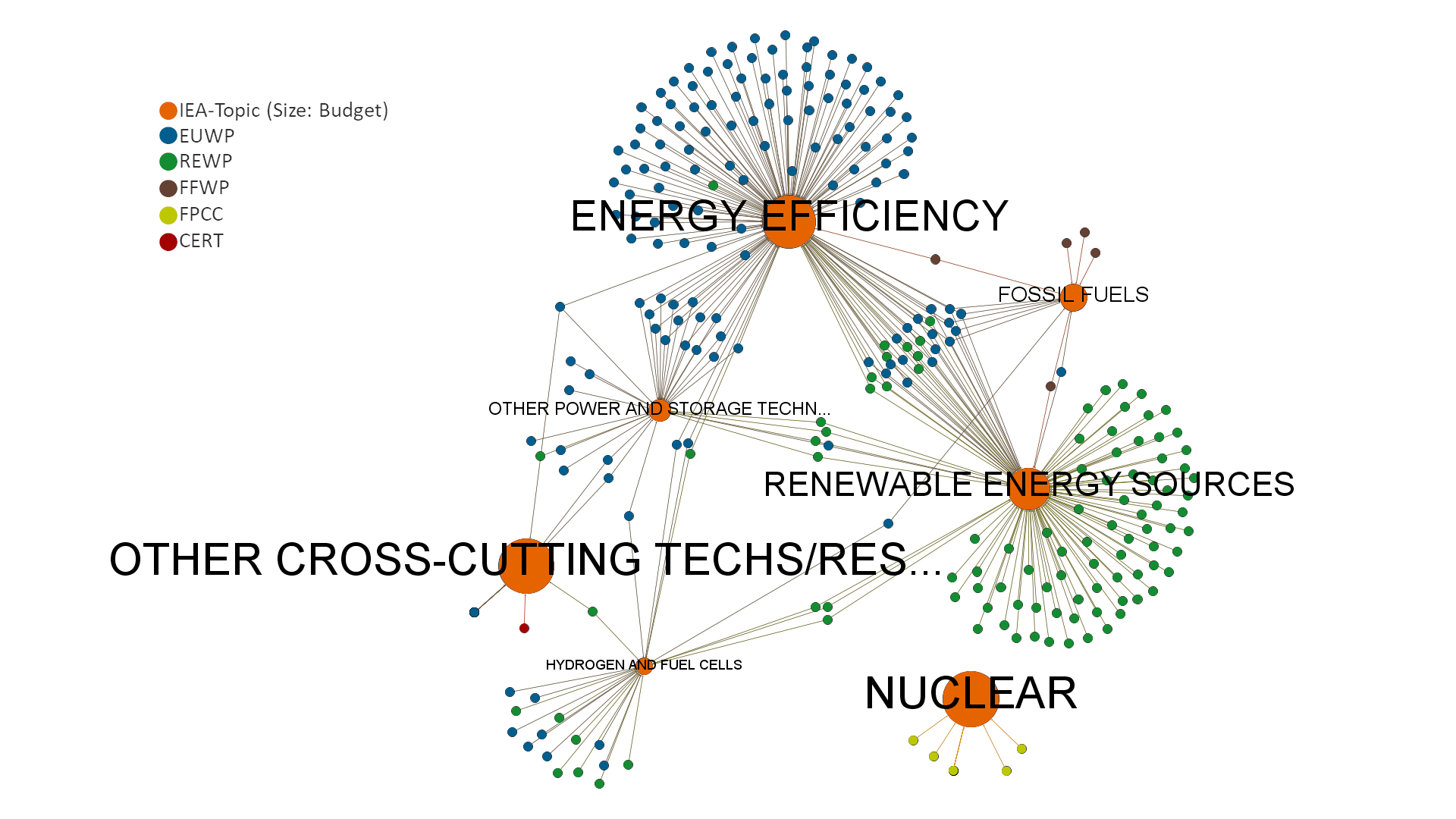
R&D Map
Visualisation of all ongoing Tasks and Annexes ("Activities") and their respective research topics.
Copyright: Austrian Energy Agency
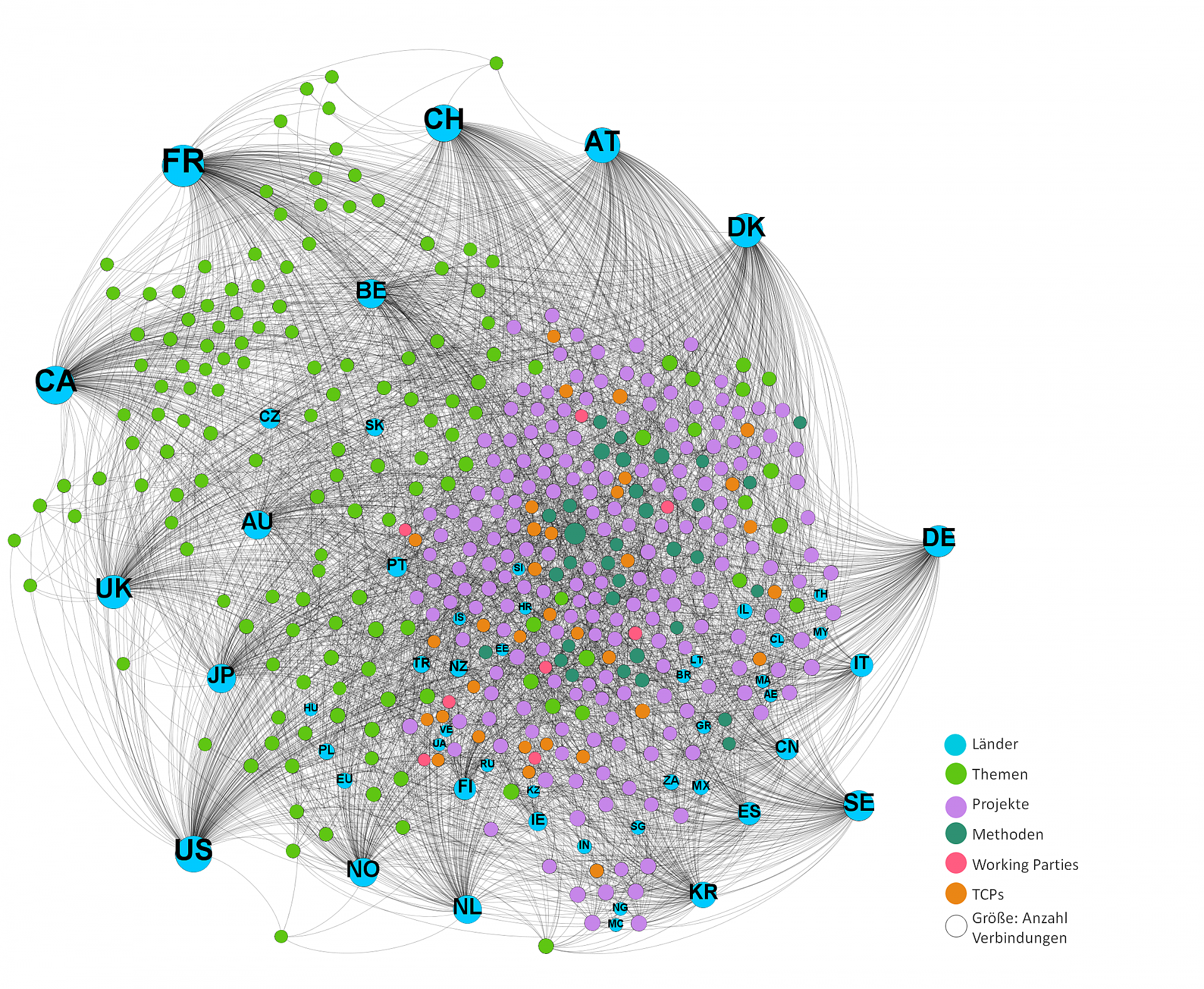
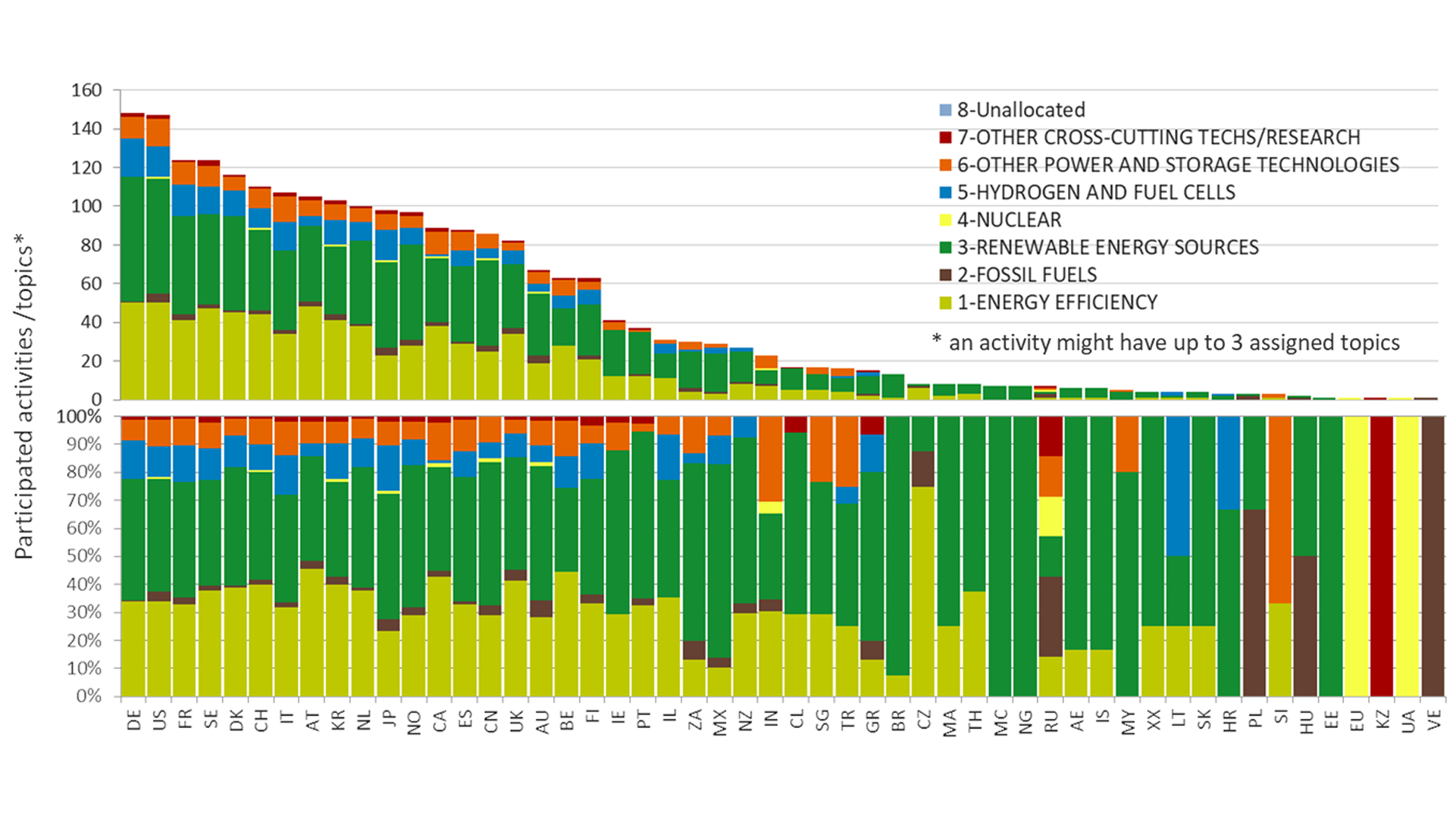
IEA-TCP Graph: Visualization of all nodes and edges in the IEA-TCP data model
Size of the nodes corresponds to the number of connections, color to the type of node (see legend).
Copyright: Österreichische Energieagentur 2018
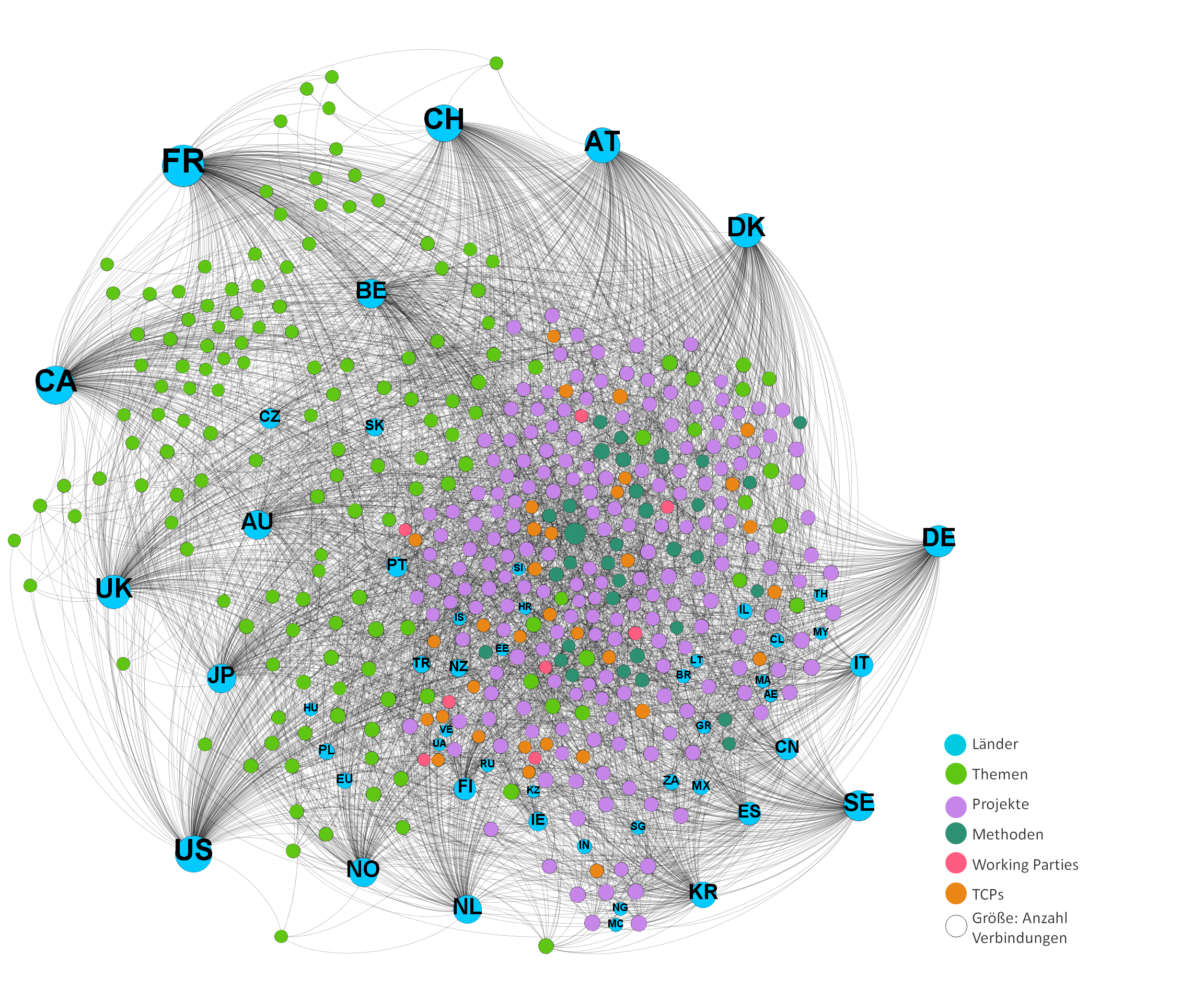
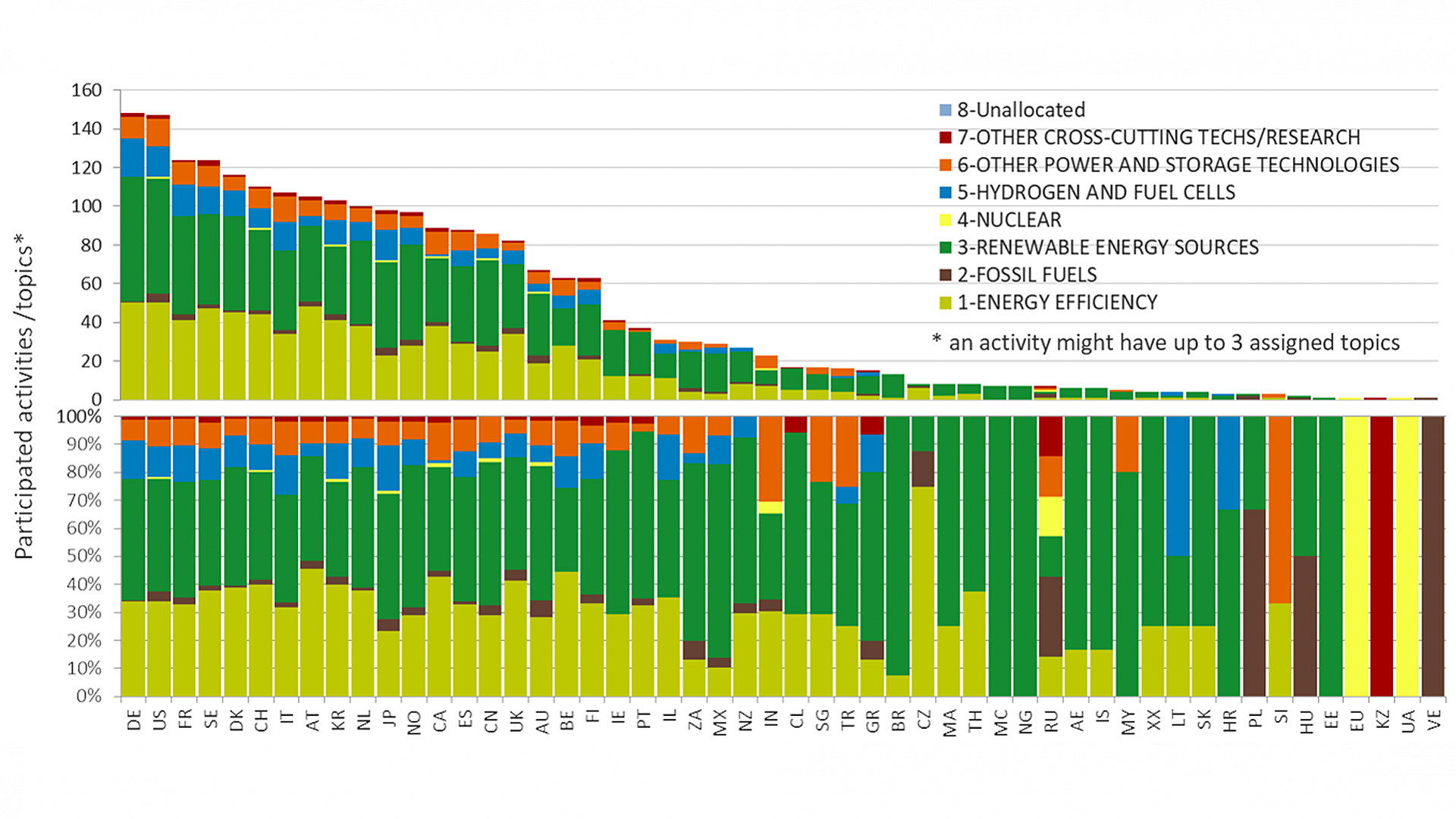
Participation of countries in IEA Technology Collaboration Programmes and Related Research Topics
Absolute (upper chart) and relative (lower chart) number of TCP-activities that countries are participating in. The color code shows how the assigned activities are related to the IEA-Topics and how the countries set their priorities with regard to the research topics (based on the IEA RD&D taxonomy).
Copyright: Österreichische Energieagentur, 2018
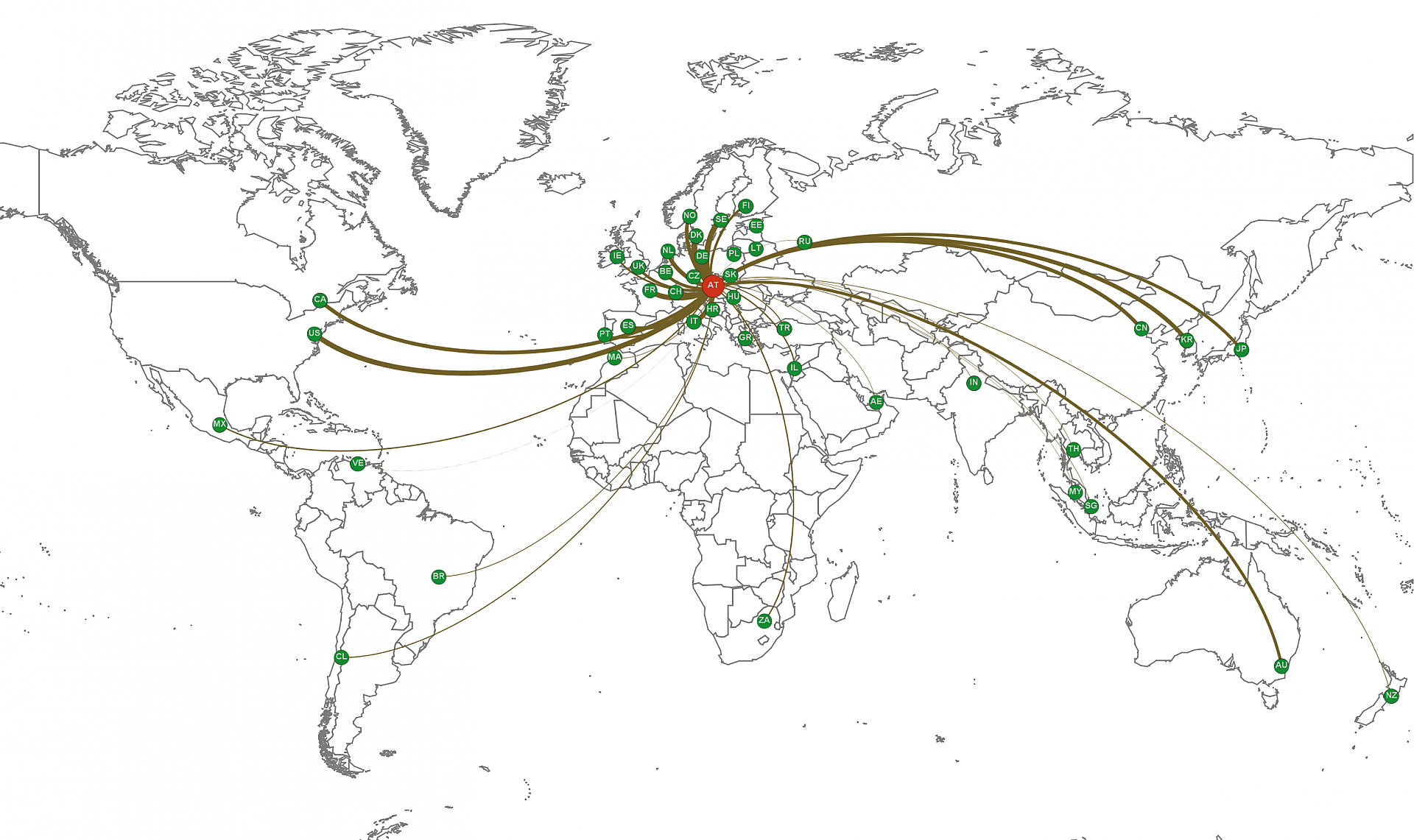
International cooperations of Austria in context of TCP activities.
Worldmap of Austrias cooperations with other countries in context of the IEA Technology Collaboration Program reasearch activities. Line thickness indicates the number of cooperations.
Copyright: Österreichische Energieagentur 2018

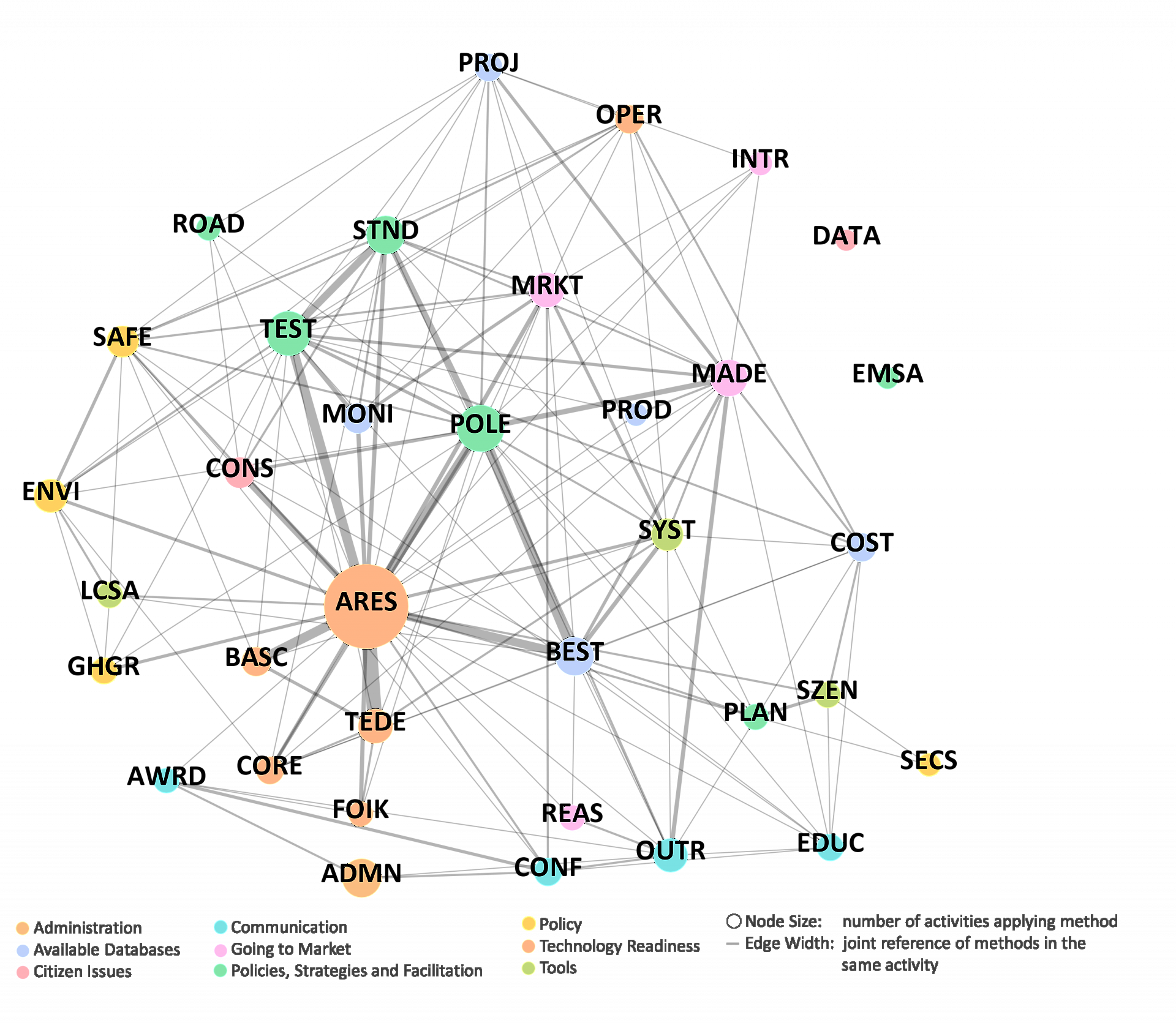
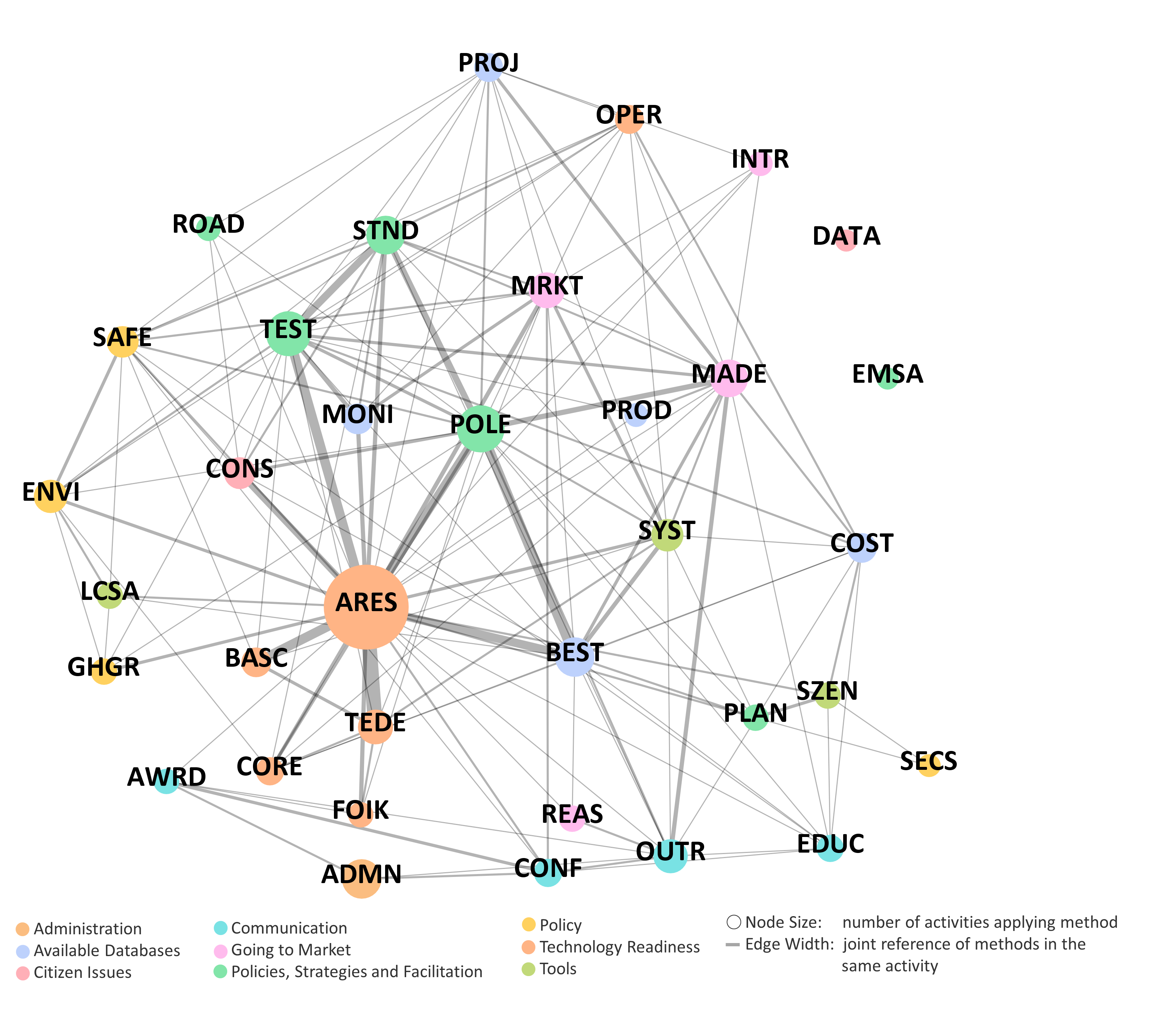
Combination of Methods used by TCP-Activities
A set of methods was developed to categorize the kind of project work that is done in the activities. The figure shows which methods are applied how often in total (node size), and which methods were frequently applied together (edge width) by activities. The color corresponds to the different method cate-gories described in chapter.
Copyright: Österreichische Energieagentur, 2018
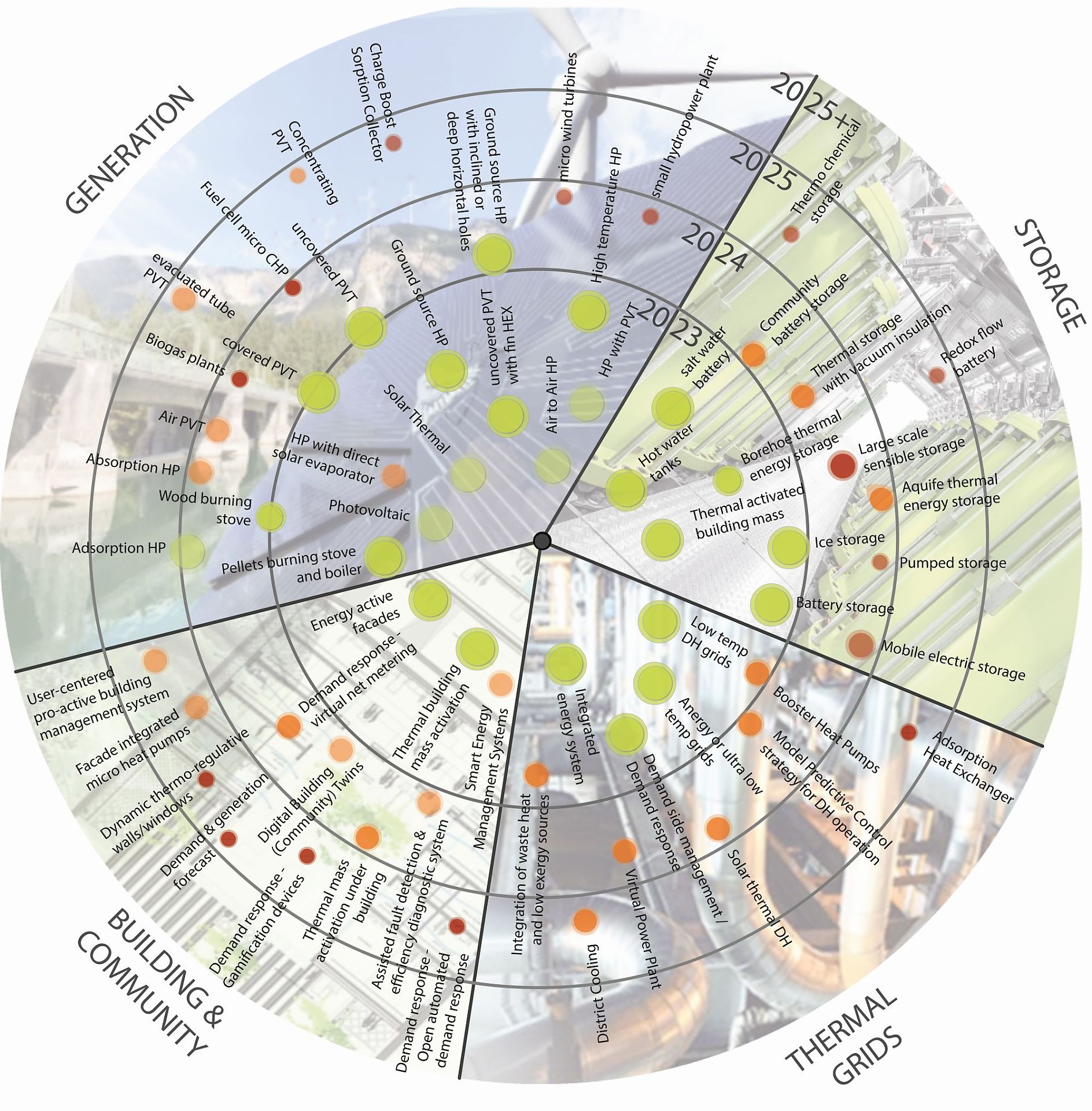
Technology Radar for Solar Energy Buildings
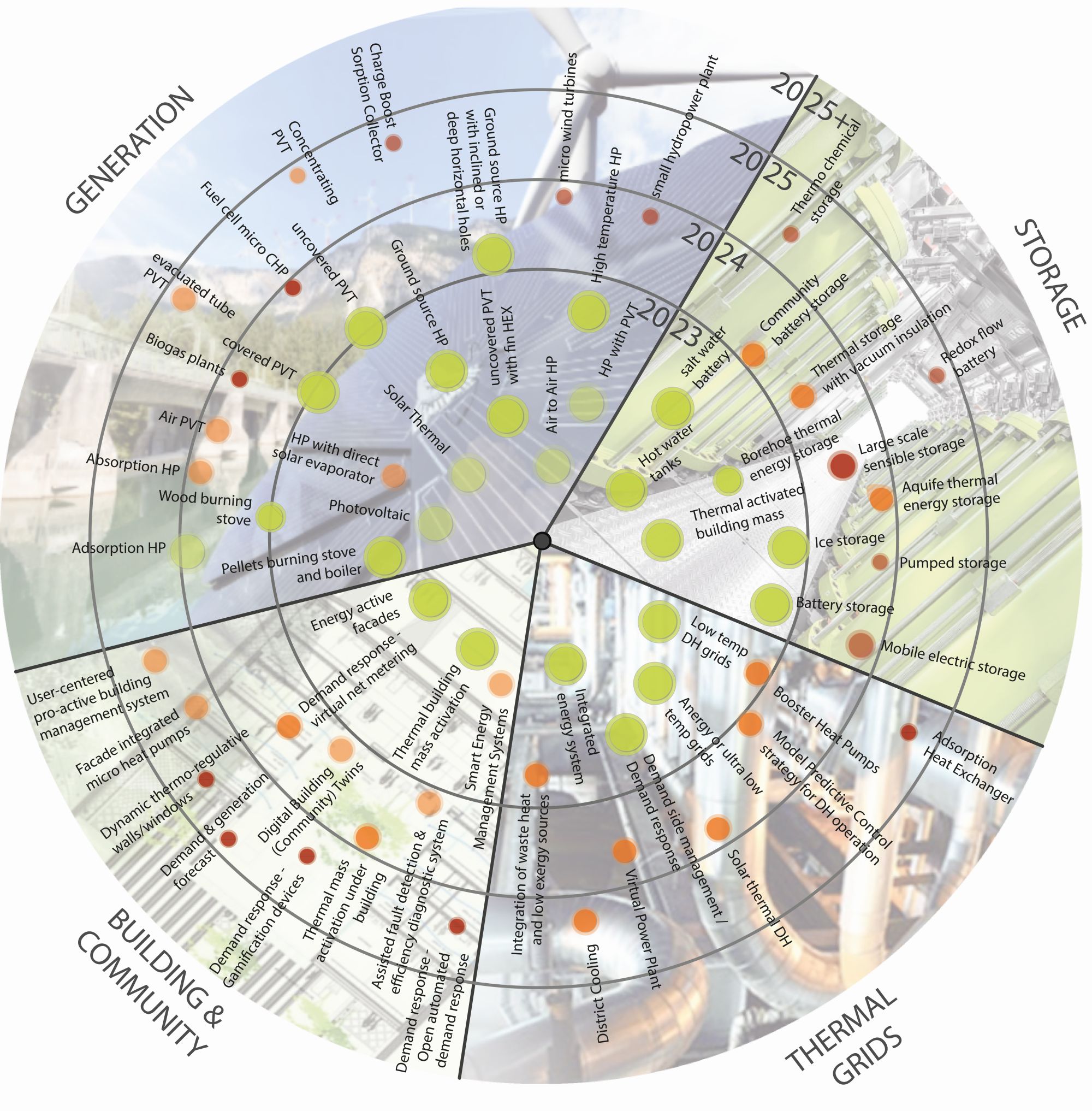
The Technology Radar for Solar Energy Buildings, developed by the IEA SHC Task 66 Subtask D team under the lead of AEE INTEC, provides a comprehensive evaluation of over 50 technologies and solutions contributing to solar energy buildings. It categorizes measures into four key areas: generation, storage, thermal grids, and building & community, and assesses their readiness, market competitiveness, and potential for adoption. Among these, 24 technologies, such as PV, solar thermal, biomass boilers, PVT collectors, and low-temperature district heating grids, were highlighted as having high market relevance. The analysis considers factors like barriers to market entry, regulatory impact, and the overall value and growth potential of each solution. To support stakeholders like architects and engineers, the team is compiling detailed factsheets and will publish the findings in the 2025 report New Technologies and Components for Solar Energy Buildings.
Copyright: AEE INTEC
IEA SHC Task 66: Solar Energy Buildings – Presentation of final results
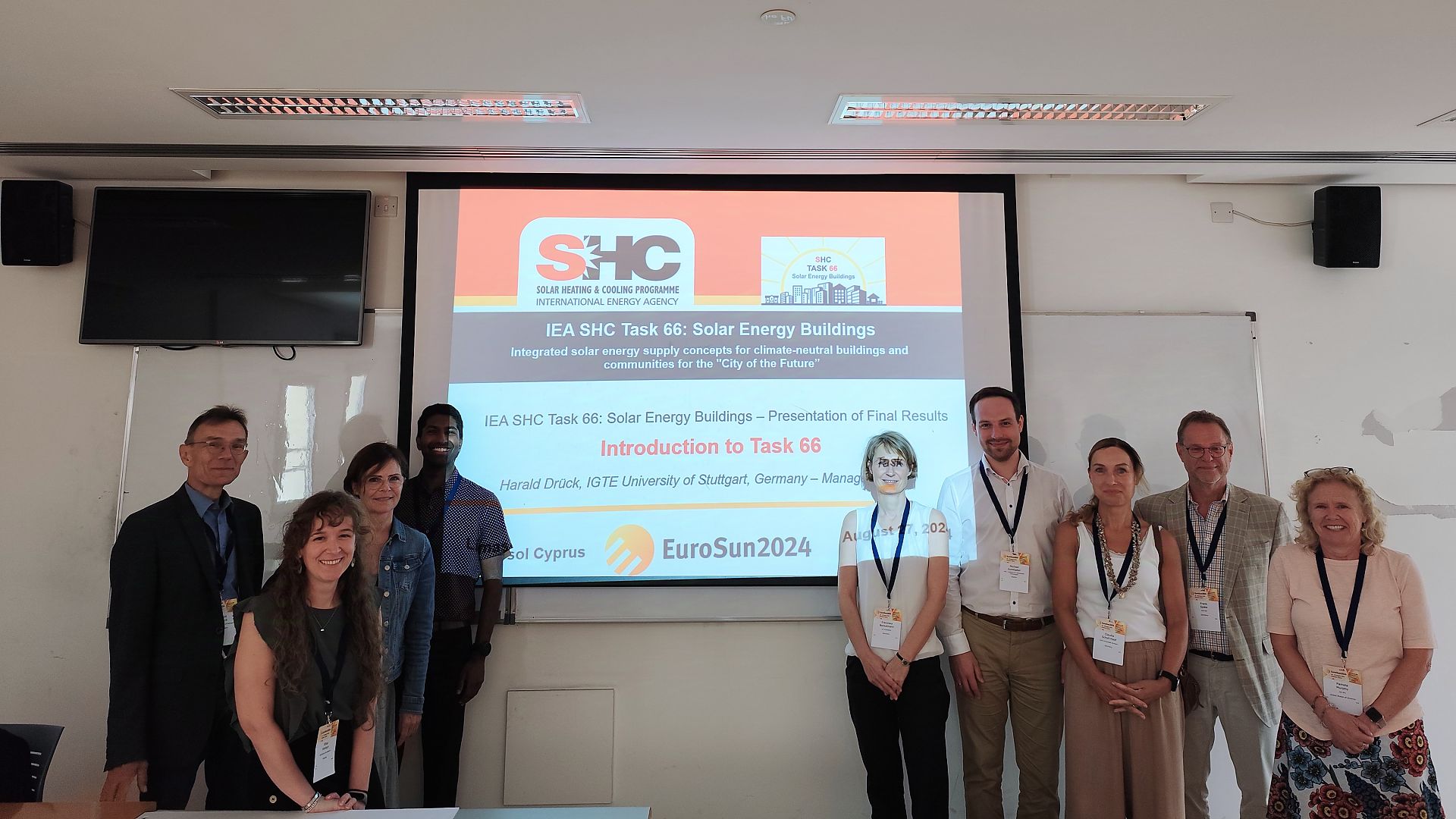
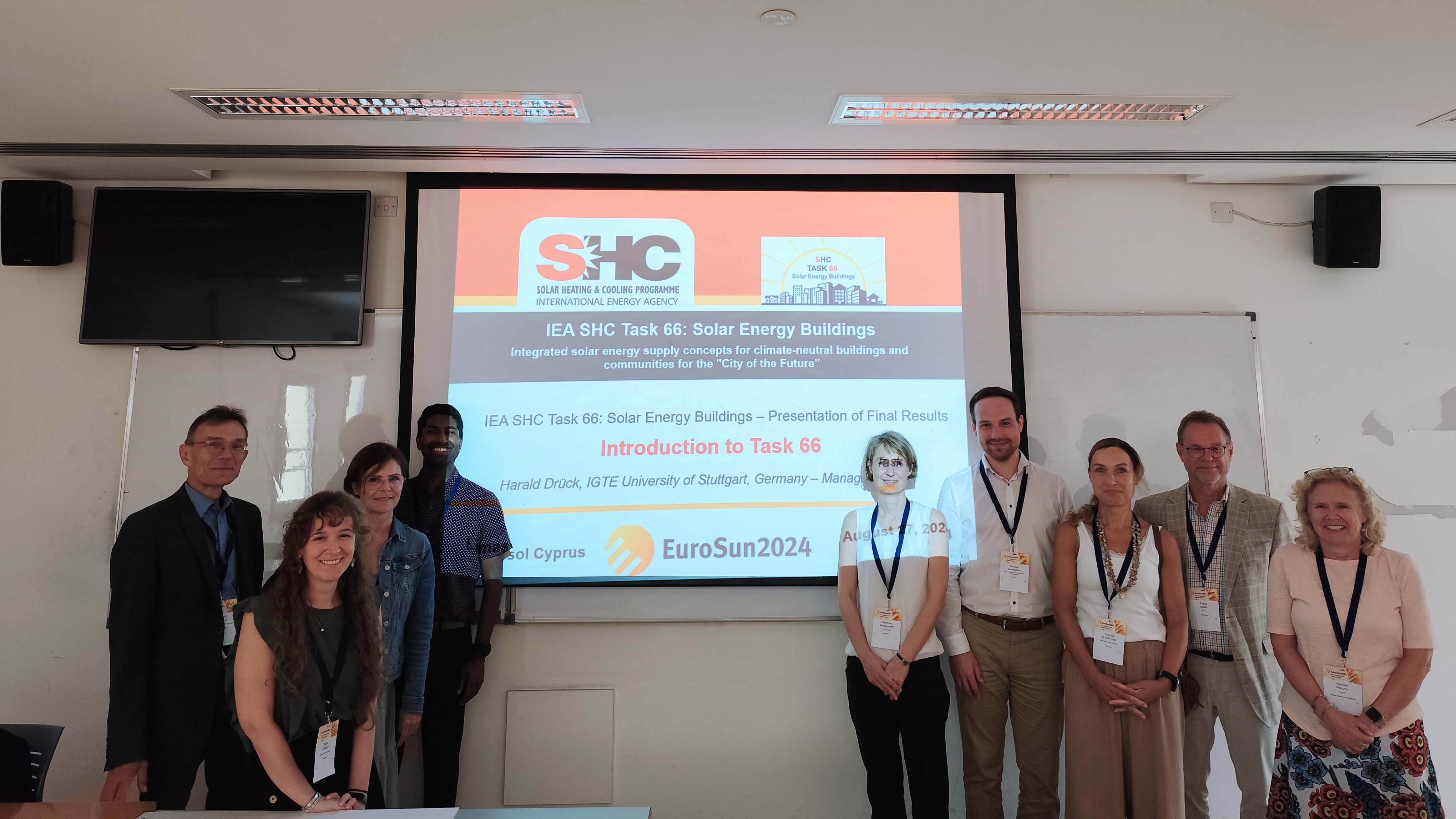
IEA SHC Task 66 “Solar Energy Buildings” presented the final results of their activities at the EuroSun Conference 2024 in Limassol, Cyprus, on Tuesday, 27 August, from 11:00 to 12:30 EEST. Over three years, an international team of scientists and industry representatives collaborated on the topic “Solar Energy Buildings.” The event featured presentations by the task manager, subtask leaders, and an industry representative. Dr. Harald Drück, Manager of Task 66 from the University of Stuttgart’s IGTE, provided an overview of the project and highlighted key achievements. Subtask leaders shared summaries of their findings: Prof. Frank Späte (OTH-AW, Germany) discussed key performance indicators for assessing solar energy buildings, while Elsabet Nielsen (Technical University of Denmark) showcased demonstration projects of completed solar energy buildings. Michael Gumhalter (AEE INTEC, Austria) explored current and future technologies in the field. Additionally, Zanil Narsing from Naked Energy Ltd. (UK) presented on "Solar Energy Buildings with Advanced Solar Thermal and Photovoltaic-Thermal (PVT) Collectors." More details on Task 66 are available on their website: https://task66.iea-shc.org/.
Copyright: AEE INTEC
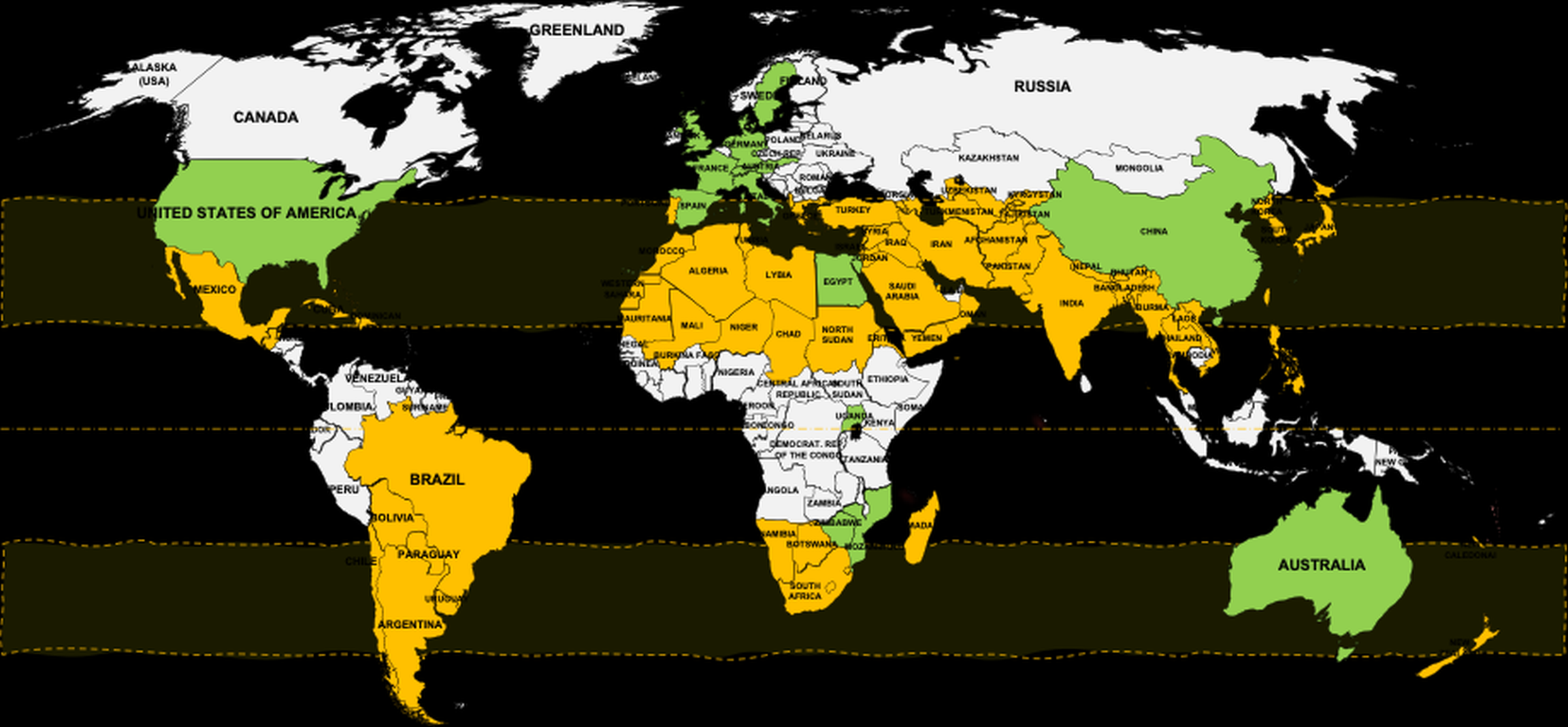
Sunbelt regions
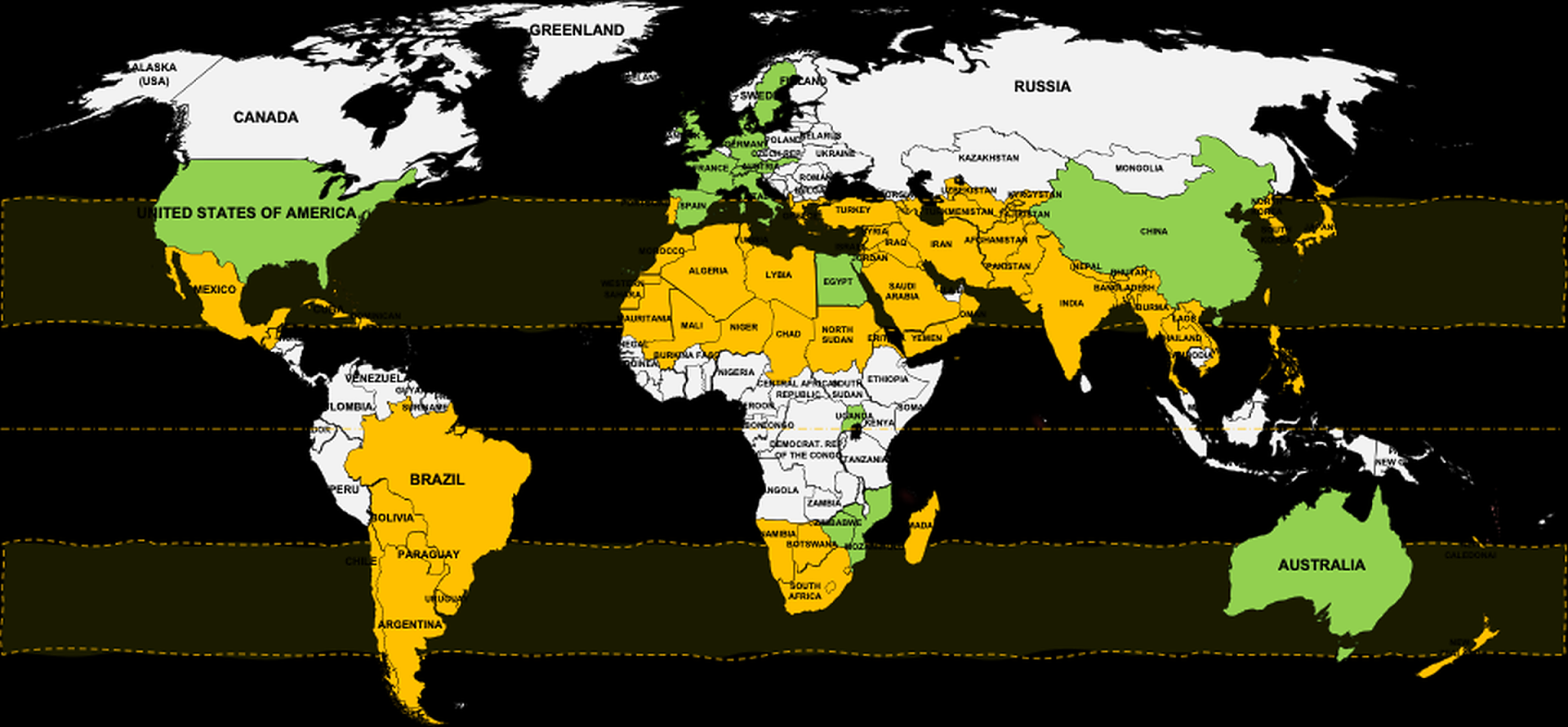
Sunbelt countries (orange) and IEA SHC Task 65 participants (green)
Copyright: Neyer Brainworks GmbH / Dr Jakob Energyresearch GmbH
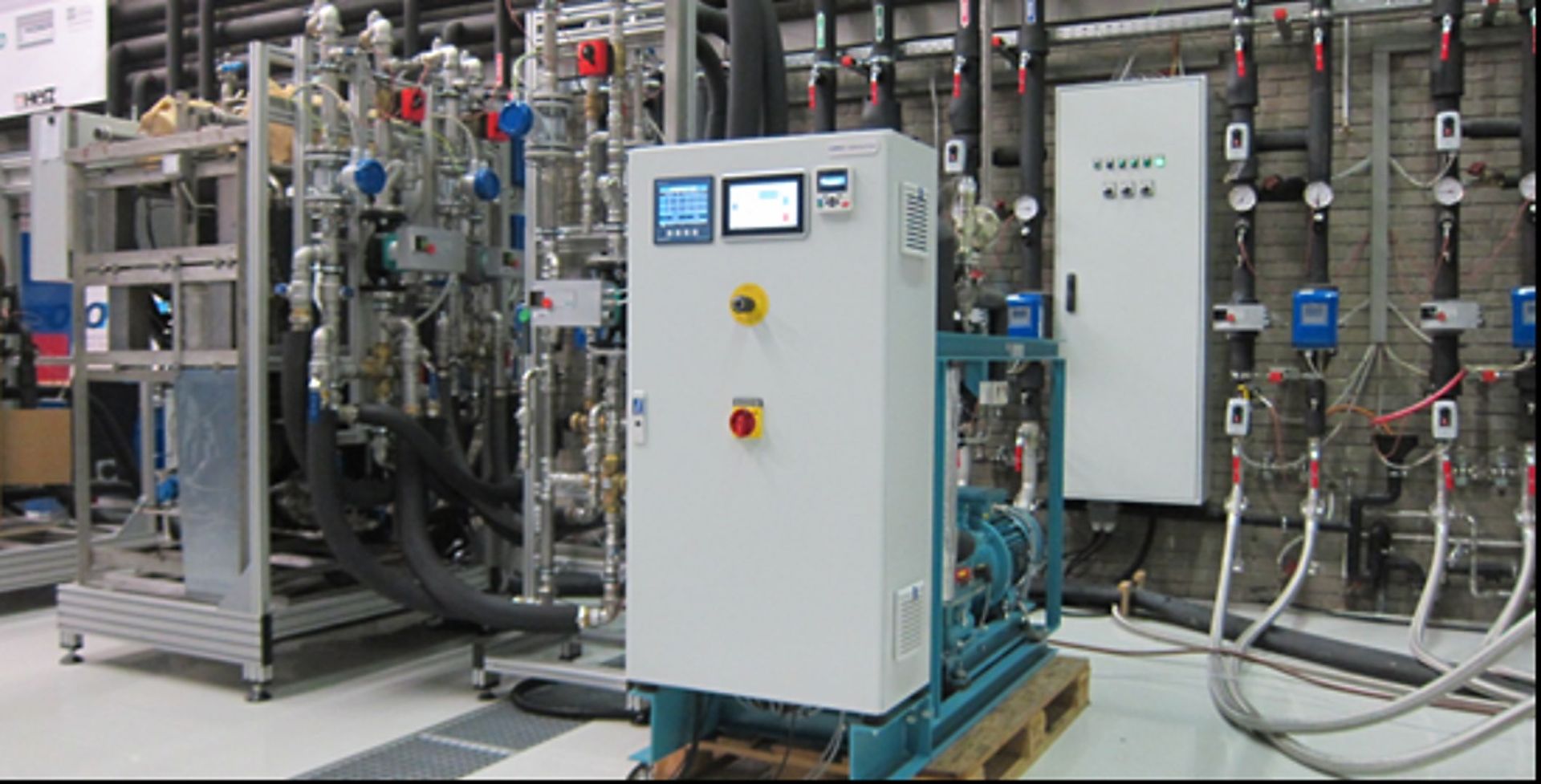
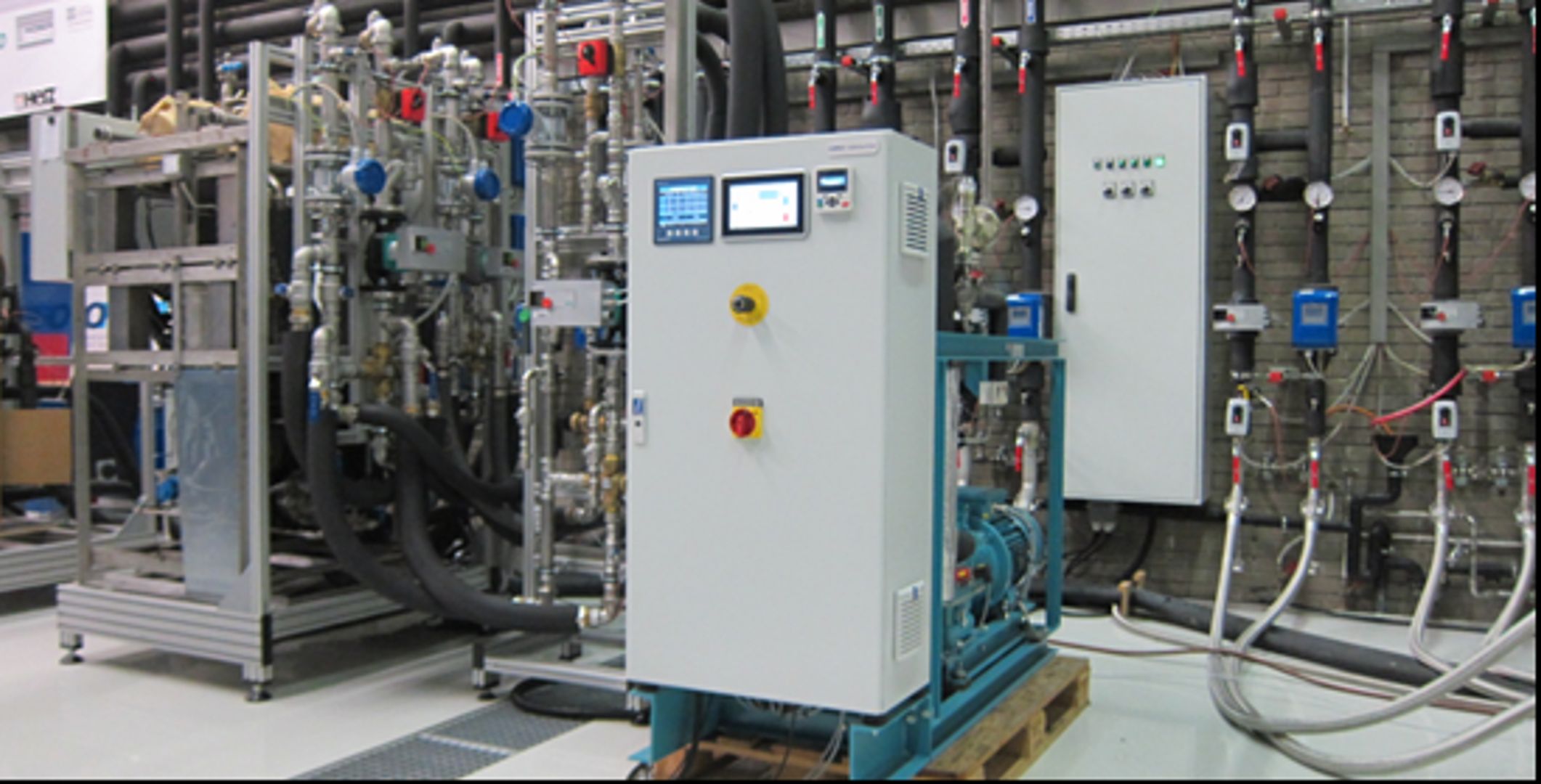
Hybrid Solar Cooling Concept
As part of the SolarHybrid project, functional models for an ammonia/water (NH3/H2O) single-/half-effect (SE/HE) absorption chiller were adapted based on the previous DAKtris project and a new NH3 compression chiller was built.
Copyright: UIBK
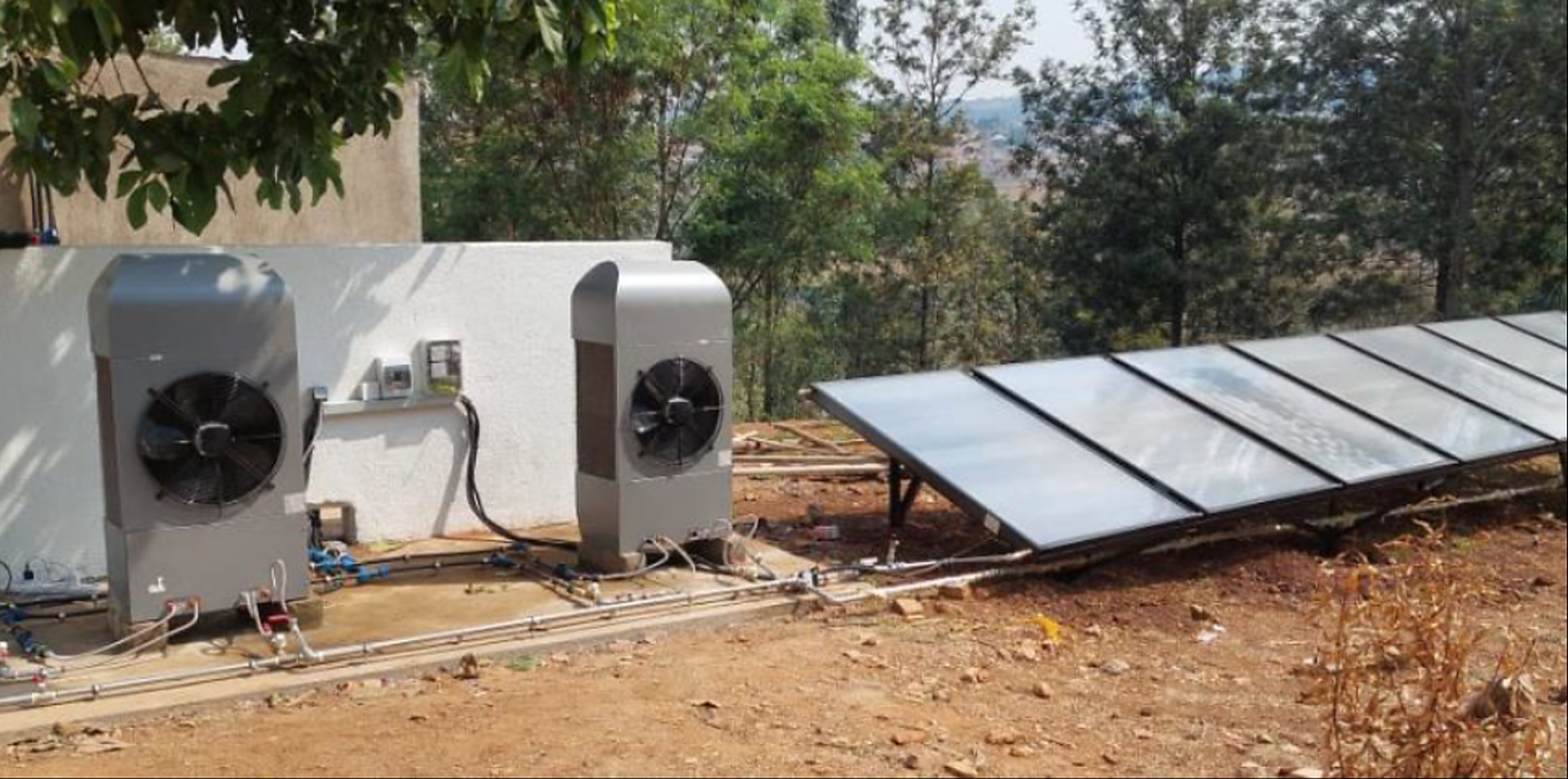
PURIX Solar Cooling System
PURIX provides sustainable cooling technologies, leveraging R718 (water), a natural, non-flammable refrigerant, to develop environmentally friendly air conditioning and cooling systems.
Copyright: PURIX
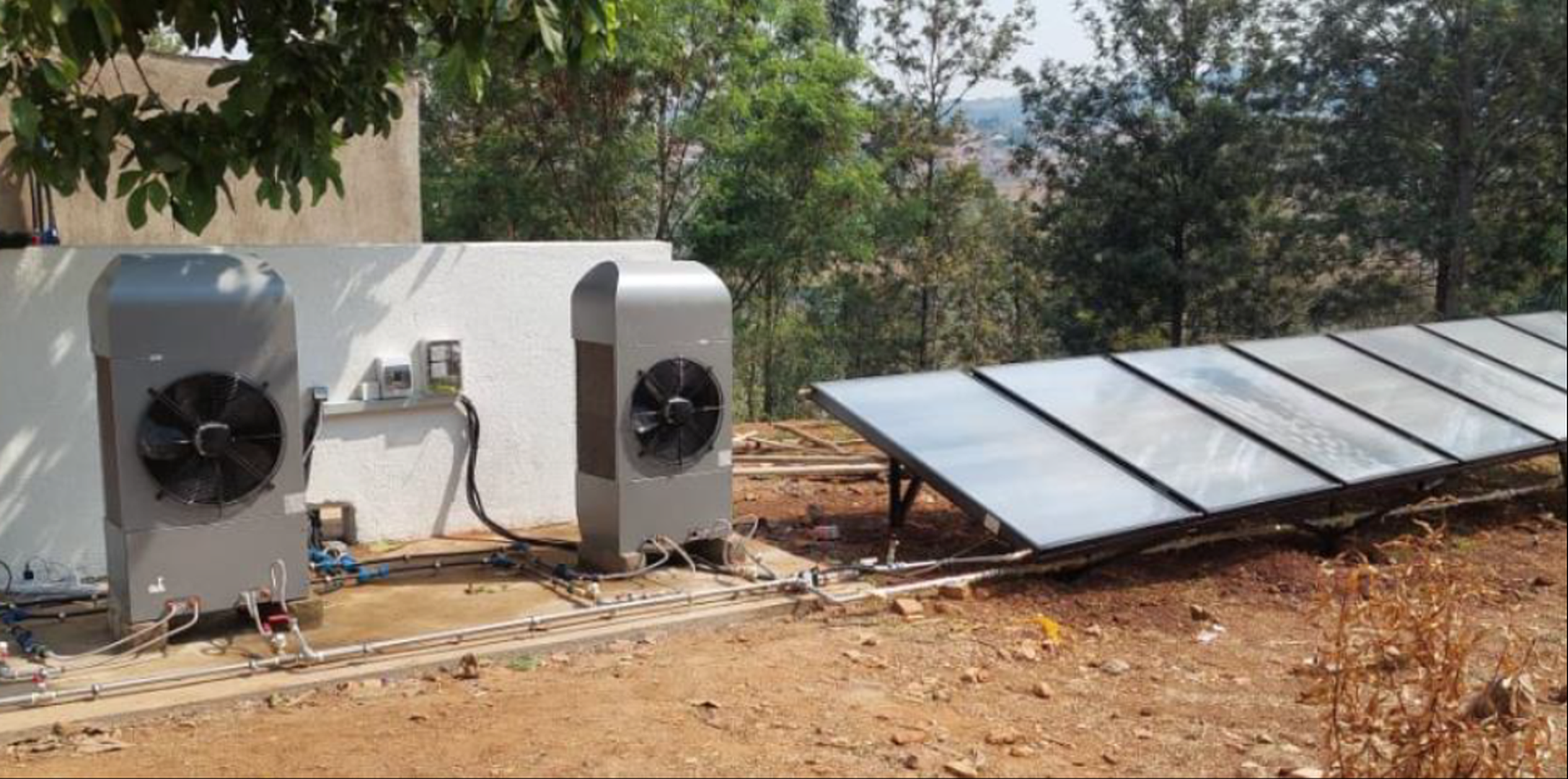
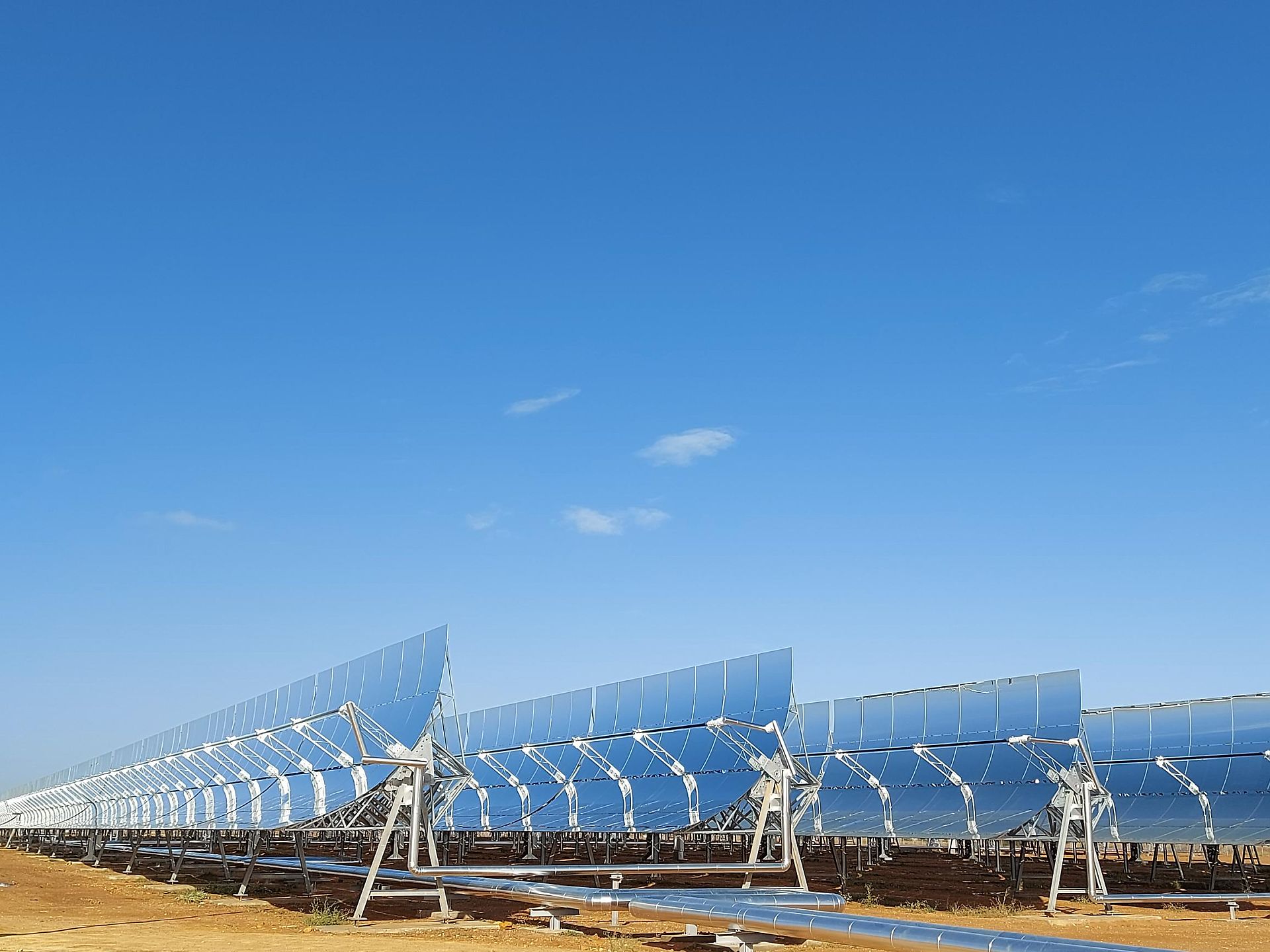
Solar process heat system for Seville brewery
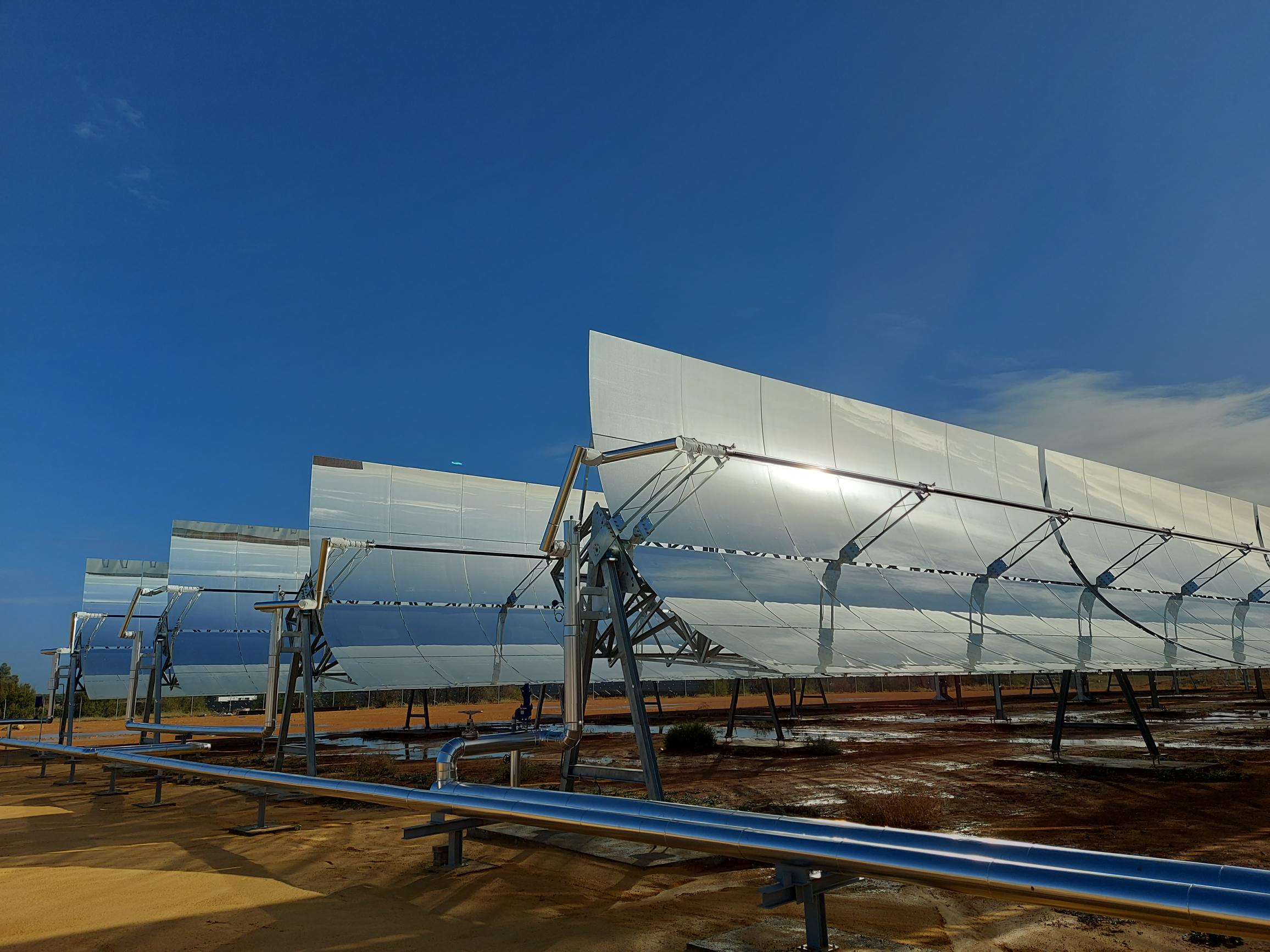
The solar process heating plant was built in 2023 by Azteq/Solarlite, is operated by ENGIE Spain and supplies heat to the Heineken Sevilla brewery. In addition to the parabolic trough solar area of 43,000 m² (30 MW thermal output), high-temperature storage tanks (8 x 200 m³) ensure a high solar share of 60-70%.
Copyright: Wolfgang Gruber-Glatzl, AEE INTEC
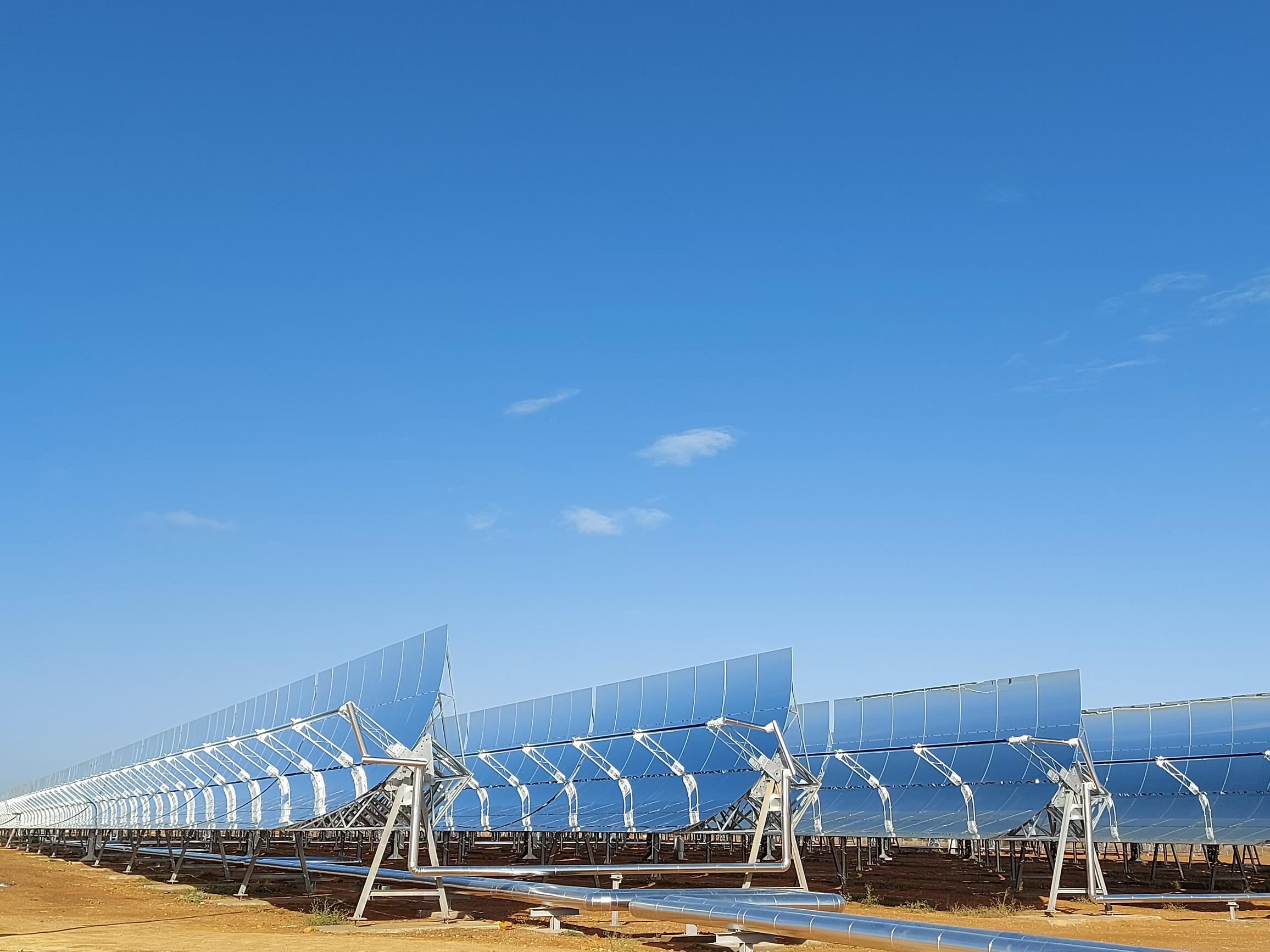
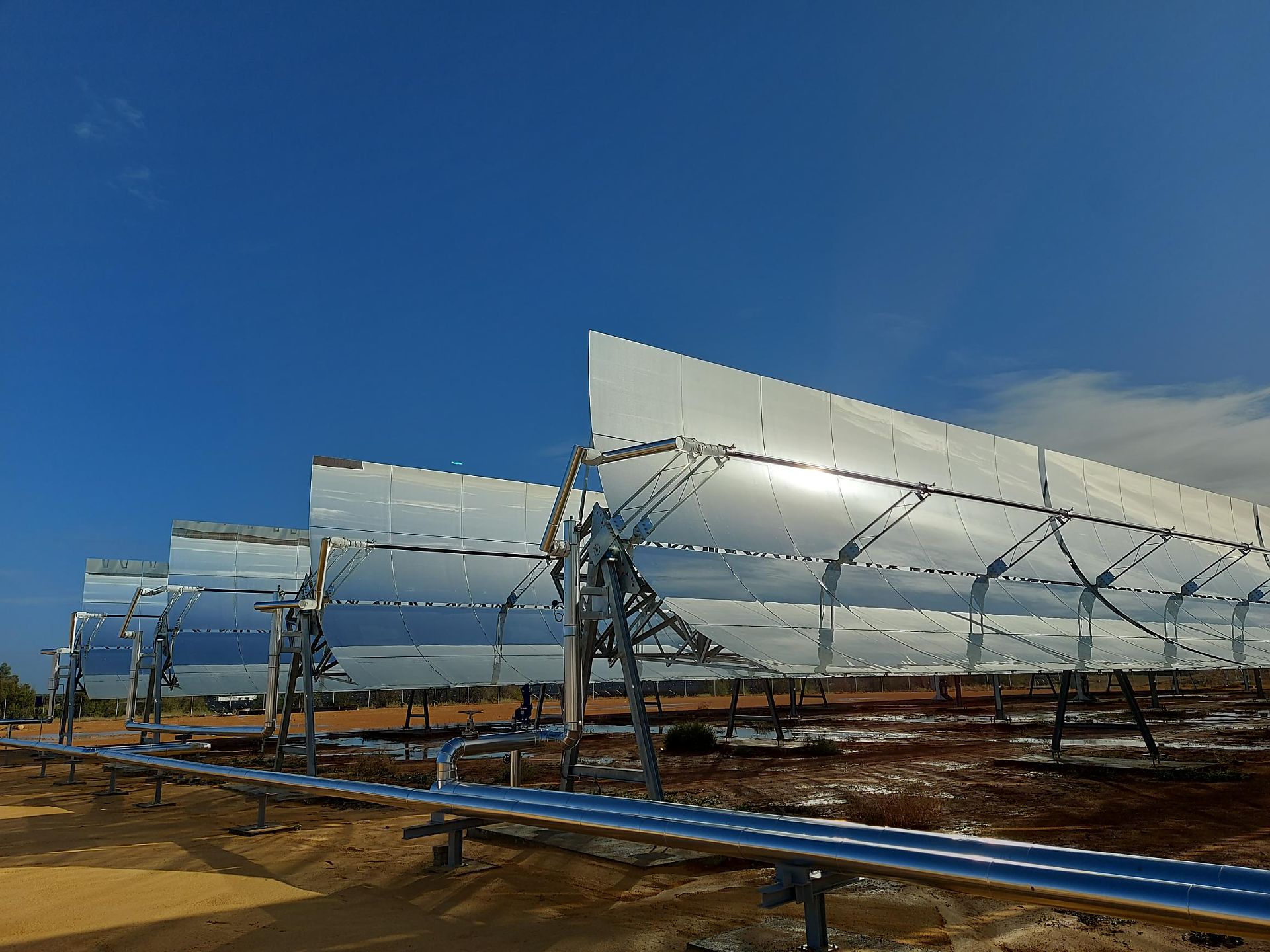
Solar process heat system for Seville brewery
The solar process heating plant was built in 2023 by Azteq/Solarlite, is operated by ENGIE Spain and supplies heat to the Heineken Sevilla brewery. In addition to the parabolic trough solar area of 43,000 m² (30 MW thermal output), high-temperature storage tanks (8 x 200 m³) ensure a high solar share of 60-70%.