
Search Results
IEA ES Annex 49: Low Exergy Systems for High-Performance Buildings and Communities
The objective of Annex 49 is the development of approaches for reducing the exergy demand of buildings, so as to reduce the CO2 emissions of the building stock and support structures for sustainable and reliable energy systems in the building sector. To achieve the objectives of Annex 49, the following activities have been carried out:Application of exergy analysis and providing tools, guidelines, best-practice examples and background information for planners and decision makers in the fields of construction, energy and politics Support of cost-efficient low-energy/exergy measures for renovation and new building taking into account both the residential and the service sector Promotion of exergy-related performance analysis of buildings, particularly from the perspectives of communities / regions
IEA ES Task 41: Economics of Energy Storage
What is the value of energy storage and how can it be quantified? How can the benefits and value of energy storage be translated into promising business models? The Task will conduct a coordinated methodological assessment of the economic viability of energy storage (electrical, thermal, and chemical) in applications relevant to the energy system. This will be used to derive preferred conditions for energy storage configurations.
IEA ES Task 36: Carnot Batteries
Carnot Batteries are an emerging technology for the inexpensive and site-independent storage of electric energy at medium to large scale (> 1.000 MWh). The technology transforms electricity into thermal energy, stores it in inexpensive media such as water or molten salt and transforms the thermal energy back to electricity as required. Carnot Batteries have the potential to solve the global storage problem of renewable electricity in a more economic and ecologic way than conventional batteries.
IEA Demand Side Management Energy Efficiency (DSM TCP)
Demand Side Management (DSM) refers to the implementation of energy efficiency improvements and service management measures on the side of end users for optimising energy systems overall. This IEA-research programme pushes development of suitable technologies, applications and methods for end users and thus facilitates their preferential adoption in all political decisions on energy policy.
IEA District Heating and Cooling (DHC TCP)
The TCP on District Heating and Cooling (DHC) was founded in 1983. It deals with the design, performance and operation of DHC and Combined Heat and Power systems as powerful tools for energy conservation and the reduction of environmental impacts of supplying heat.
IEA DSM Task 25 – Business Models for a more effective market uptake of DSM energy services
This task aims at the identification and development of effective business models for energy services, which lead to a sustainable growth of energy efficiency services. Therefore the various national framework conditions and contexts have been analysed, that are necessary for a successful development of such business models. Examples for start-ups and entrepreneurs have been discussed, their challenges and deficits as well as success factors in terms of capabilities/skills identified and out of these findings a web based analysis tool been developed.
EBC Annex 66 Text: Definition and Simulation of Occupant Behavior in Buildings

Hintergrund, Ziele und Methoden des EBC Annex 66. (November 2014)
D. Yan, T. Hong
Publisher: IEA EBC Annex 66
English, 14 pages
Publication Downloads
Comprehensive Refurbishment of Buildings through Energy Performance Contracting (2008)
Comprehensive Refurbishment of Buildings through Energy Performance Contracting - A Guide for Building Owners and ESCos
English
Fuel cells: Why is Austria not taking off?
10. October 2016
Kommunalkredit Austria AG, Türkenstraße 9, 1090 Vienna, AT
Fuel cells – international innovations and successful markets
IEA AFC Annex 35: Fuel cells for portable applications (Working period 2020 - 2023)
The aim of Annex 35 is the information exchange on the status and new developments of portable fuel cell systems and comprises the development and manufacture of membrane electrode assemblies (MEAs) all the way through to system components such as electronic converters or gas supply units. In addition, the setup and configuration of hybridized systems and the key topics of secure operation, codes and standards are of interest.
Energy storage systems
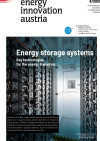
Key technologies for the energy transition
energy innovation austria
5/2021
Publisher: BMK in cooperation with the Climate and Energy Fund
English, 16 pages
Publication Downloads
IEA ISGAN Working Group 7: Smart grids transitions of the institutional change (Working period 2023-2026)
The aim of ISGAN Working Group 7 is to bundle international experiences and interdisciplinary research activities on smart grids, process them and make them usable for policy makers and regulators. These include social, economic and humanities research on the institutional framework conditions of the transition, in particular on governance issues, as well as the development of processes for the broad participation of relevant social groups in smart grid transition processes.
IEA 4E EDNA: Efficient Demand-flexible Networks and Appliances Platform (Working period 2024 - 2027)
The IEA 4E EDNA Platform aims to recommend measures to promote the energy efficiency of network connected devices, and to make them available to key stakeholders such as policy makers and product developers in the form of reports, policy briefs and tools. In various tasks the opportunities and the barriers for the promotion of energy efficiency measures are researched and analyzed. On this basis ENDA recommendations should support the design of regulations for energy efficient network connected devices.
IEA HEV Task 46: LCA of Electric Trucks, Buses, Two-Wheelers and other Vehicles (Working period 2022 - 2025)
The objective of this R&D service is the participation in Task 46 of the IEA Hybrid and Electric Vehicle (HEV) TCP with the work on the internationally agreed topics and the managing of the task as Operating Agent. Beside the Life Cycle Assessment (LCA) studies of typical examples also methods for the assessment of climate neutrality and circularity are developed. This is done in dedicated expert workshops.
IEA AFC Annex 34: Fuel Cells for Transportation (Working period 2022 - 2025)
The vision of the Technology Collaboration Programme on Advanced Fuel Cells (AFC TCP) is to make a significant contribution to addressing the opportunities and barriers to the commercialisation of fuel cells by promoting the development of fuel cell technologies and their applications at the international level. In detail, Annex 34 deals with the advantages and disadvantages of fuel cells, the further development of storage media, the recording of cost reduction potentials and the results analysis of pilot projects for mobile applications.
IEA HEV Task 45: Electrified roads (E-roads)
Electric vehicles can be charged stationary as well as dynamically while driving on so-called "e-roads". From a systemic point of view, this technology can be an addition to stationary charging and is not competing. Internationally, the academic and political discussion in this field is progressing rapidly. Task 45 aims for a mutual knowledge exchange, a joint understanding of next steps and a contribution of the Austrian position into the international debate.
IEA TCP AFC Annex 33: Fuel Cells for Stationary Applications (Working period 2022 - 2024)
The development of the energy system is characterized in particular by increasing decentralized power generation from renewable energy sources. Hydrogen is a key energy source for the decarbonization of buildings, mobility and industry. In 2022, Austria took on a sub-task in the IEA AFC TCP, which is investigating the use of stationary fuel cells in climate-neutral neighbourhoods. The project analyses its success factors and limitations and tests modelling tools.
IEA HPT Annex 56: Digitalization and Internet of Things for Heat Pumps
As digitalization progresses, heat pumps are becoming part of the Internet of Things (IoT). In this project, the opportunities and challenges of IoT-capable heat pumps for the use in households, commercial enterprises and industrial applications will be investigated. The aim of the project is to provide a structured overview of IoT-enabled heat pumps.
IEA AFC Annex 33: Stationary Applications (Working period 2019 - 2022)
The future energy system will be strongly characterized by decentralized and renewable power generation. The use of fuel cells (FCs) can contribute to energy and environmental policy objectives. This project investigated whether a market transition from successful international demonstration plants to commercial plants is possible. The potential applications of fuel cells in the building sector and across energy communities and climate-neutral neighbourhoods were investigated.
IEA 4E EDNA: Electronic Devices and Networks Annex (Working period 2019 - 2021)
By 2030, the number of network-connected electronic devices worldwide is expected to exceed 100 billion, resulting in significant consequences for global energy consumption. The IEA 4E Electronic Devices and Networks Annex - EDNA therefore aims to develop policy recommendations to promote the energy efficiency of network-connected devices, and make those project results available to key stakeholders such as policy makers and product developers in the form of reports, policy briefs and tools.