Project Image Pool
There are 106 results.
Terms of use: The pictures on this site originate from the projects in the frame of the programmes City of Tomorrow, Building of Tomorrow and the IEA Research Cooperation. They may be used credited for non-commercial purposes under the Creative Commons License Attribution-NonCommercial (CC BY-NC).
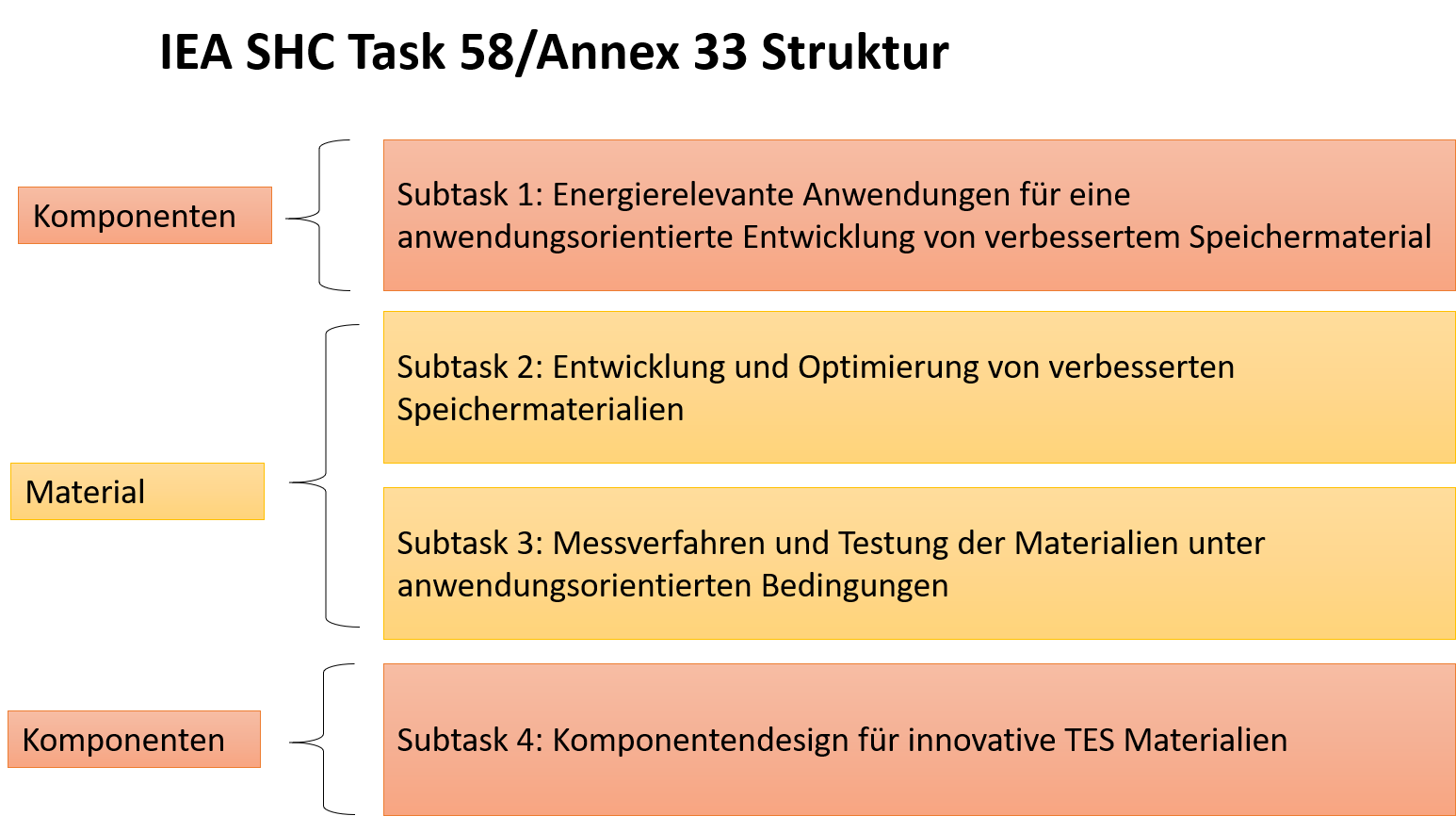
Overview Task 58 for Material and Component Development for Compact Thermal Storage Systems
The figur shows the overview and contents of the IEA SHC Task 58 for material and component development for compact heat storage. The task is divided into 4 subtasks dealing with the definition of boundary conditions, development of TCM and PCM materials, test methods and component design of compact heat storage systems.
Copyright: AEE INTEC

Passys Test Cell
Measurement of the luminance of a solar facade in the Passys test cell of the UIBK
Copyright: Bartenbach GmbH
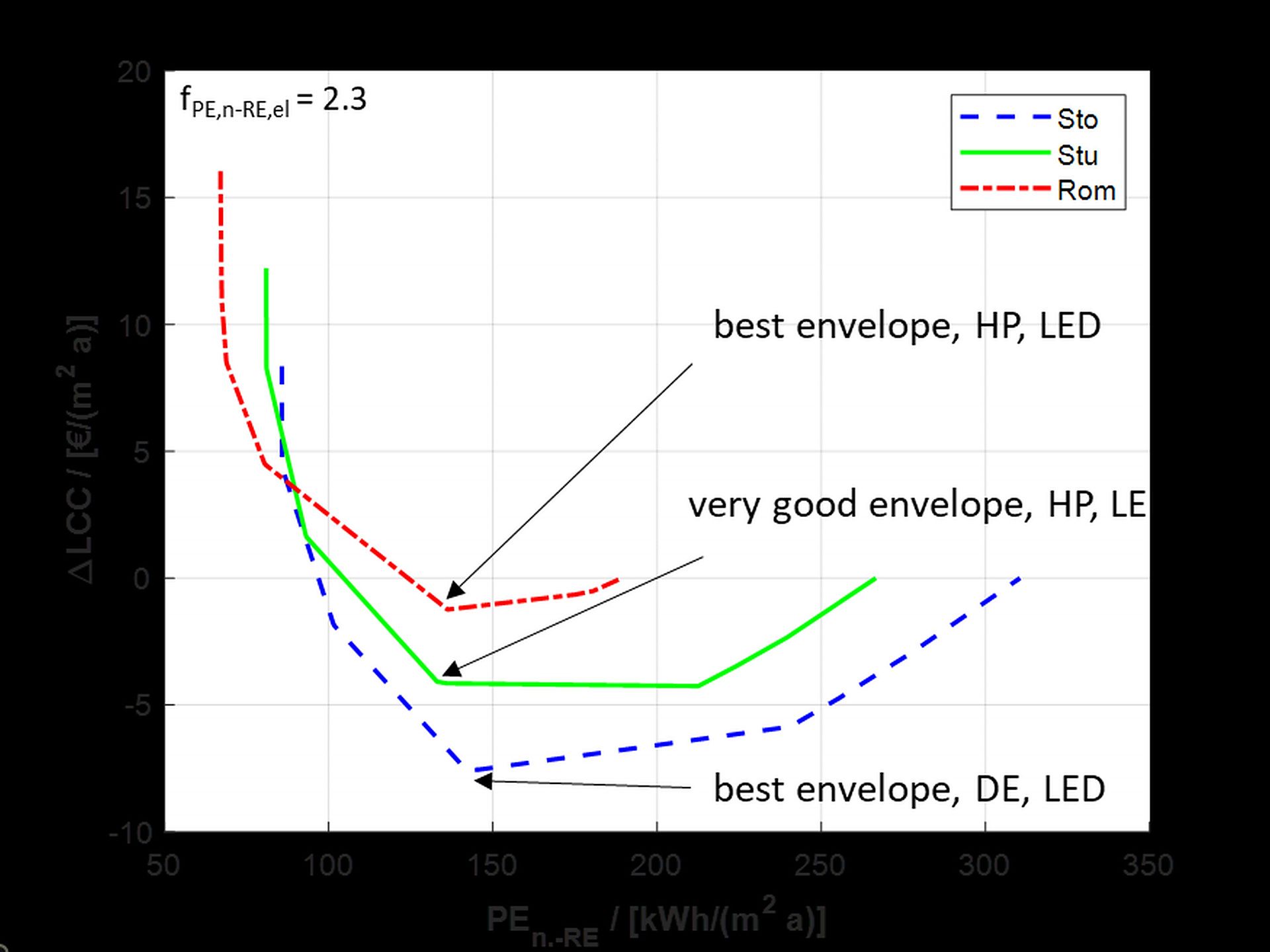
life cycle cost
Lines showing the smallest difference in life-cycle costs per non-renewable primary energy unit and HVAC configuration at office buildings in Stockholm (Sto), Stuttgart (Stu) and Rome. LCC includes investment, maintenance and operation over a 20-year period. HP stands for heat pump and DE for direct electric.
Copyright: Universität Innsbruck

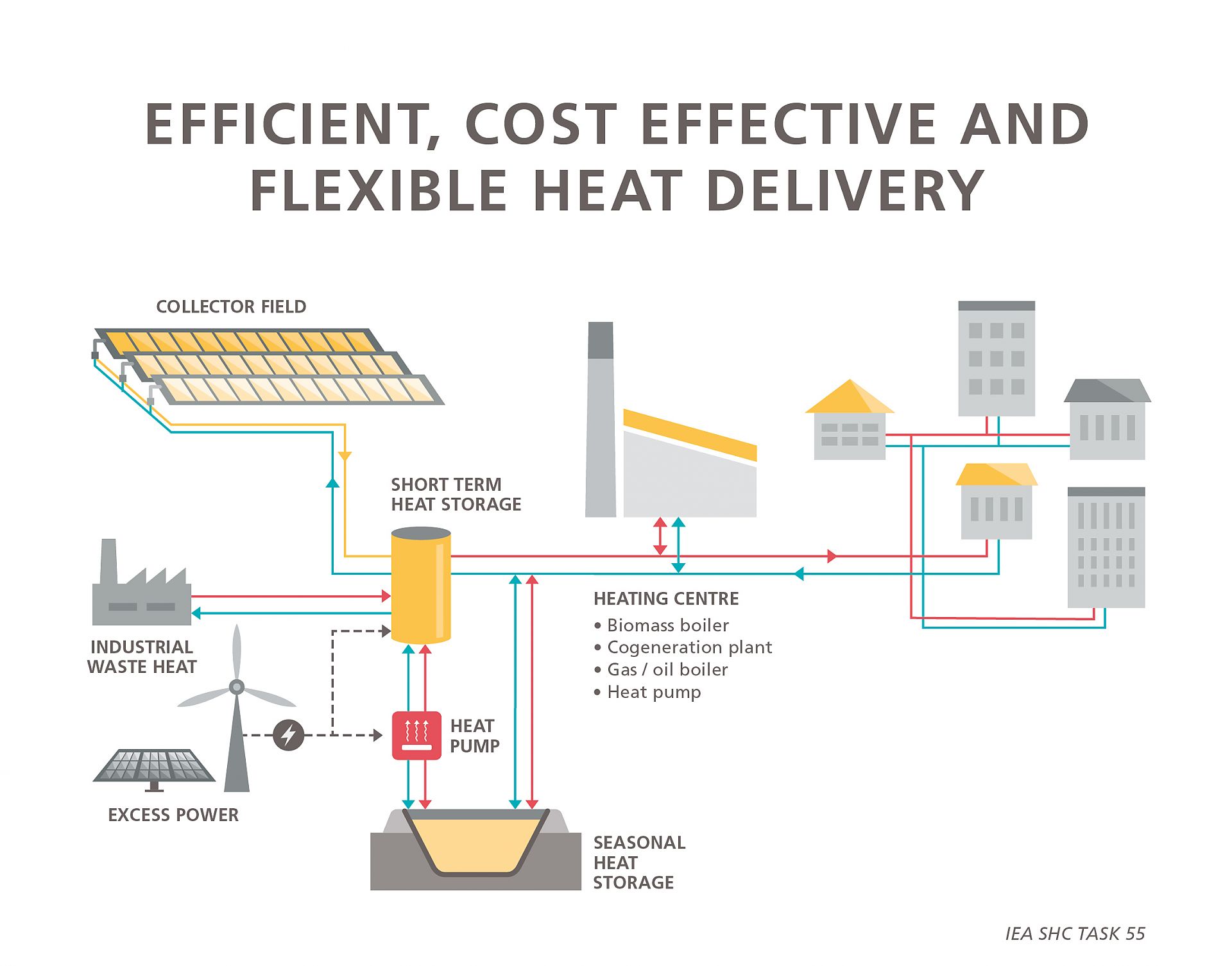
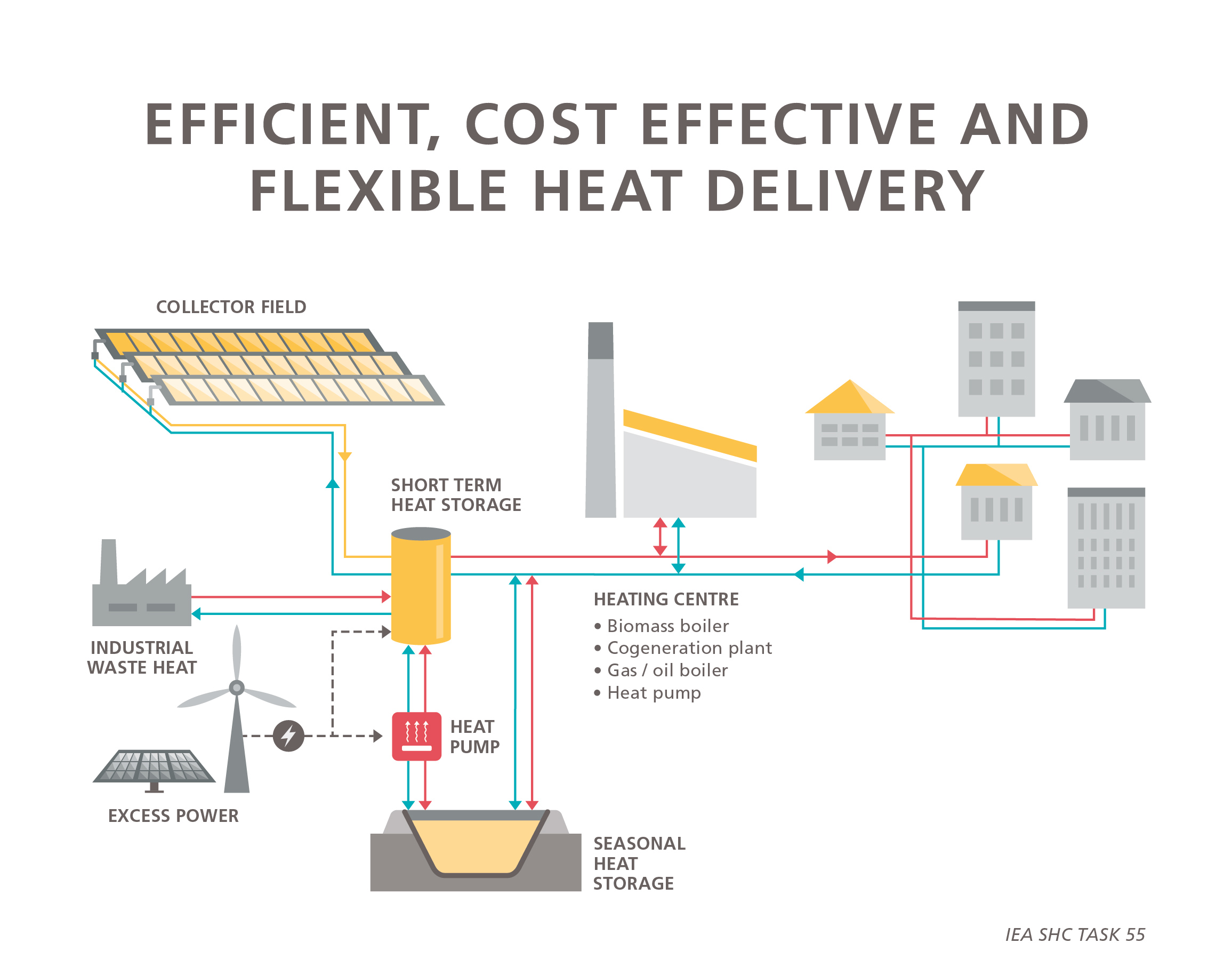
Solar district heating system with power-to-heat
District heating system with heat supply from central solar collectors, industrial waste heat, heating centre, heat pump, and with short-term and seasonal thermal storage. Source of the heat pump is the saisonal storage. Excess power from PV and wind turbines is used to operate the heat pump.
Copyright: IEA SHC Task 55 und European Copper Institute

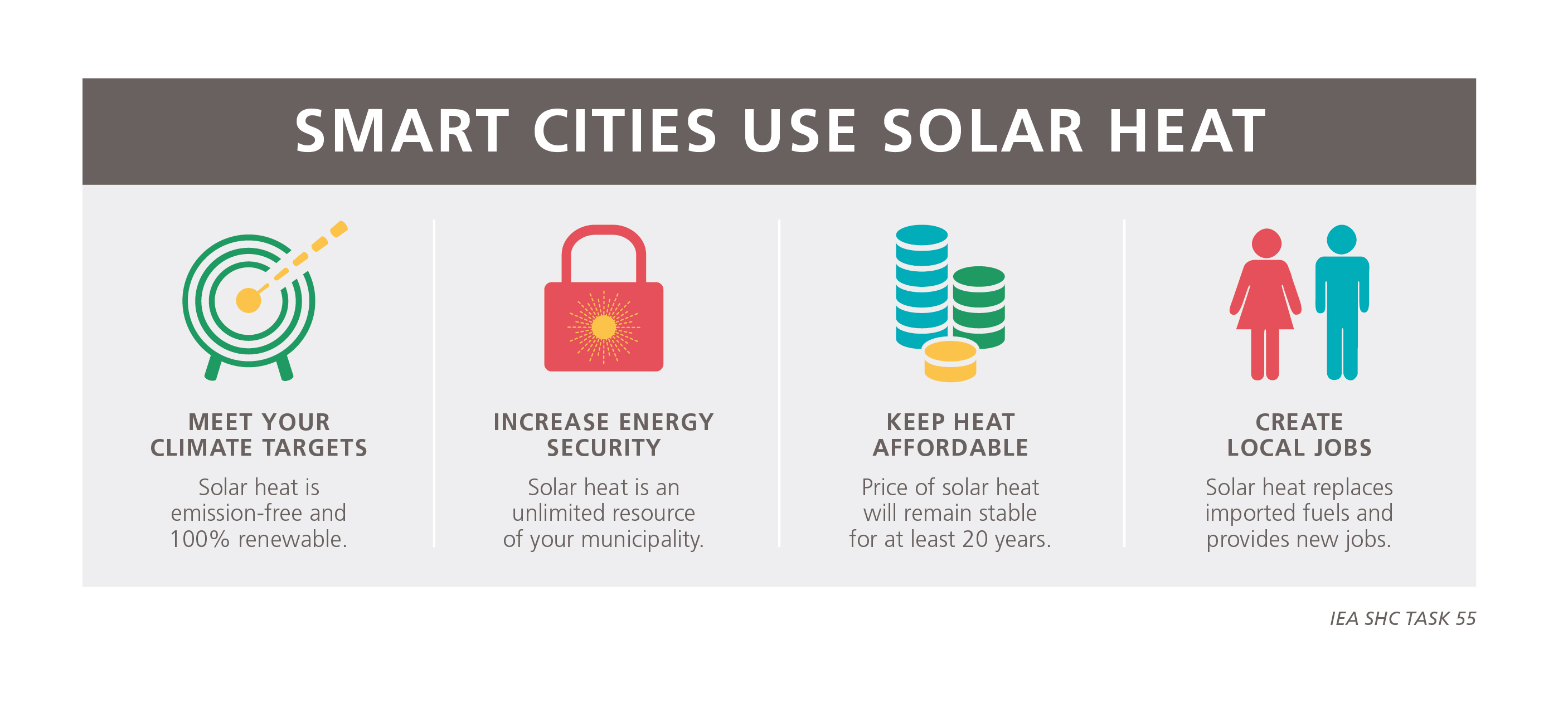
Solar heat in smart cities
List of the main advantages of solar heat: it is emission-free and 100% renewable, it increases the energy security, the price is affordable and remains stable for at least 20 years, it replaces imported fueld and provide new jobs.
Copyright: IEA SHC Task 55 und European Copper Institute
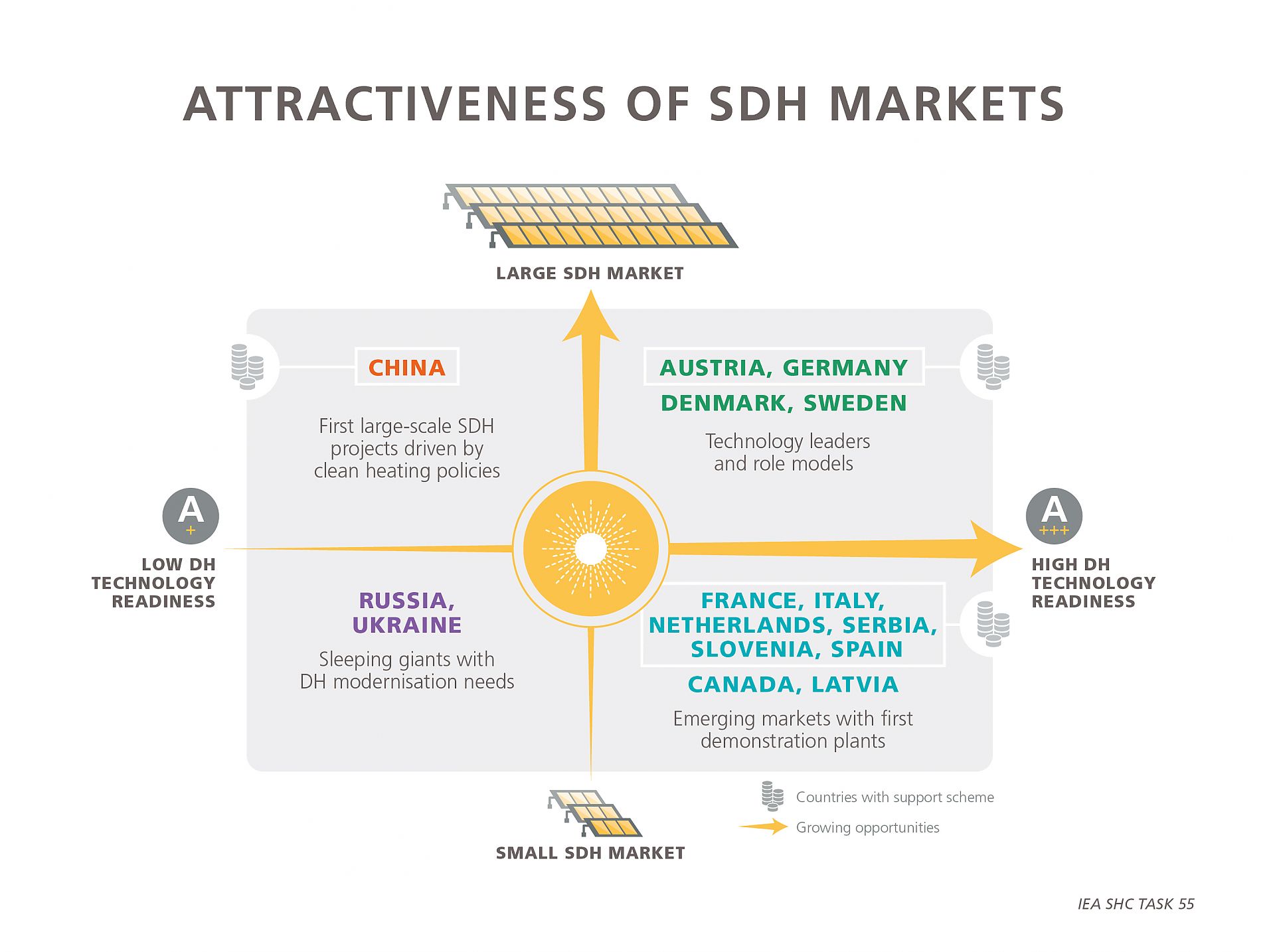
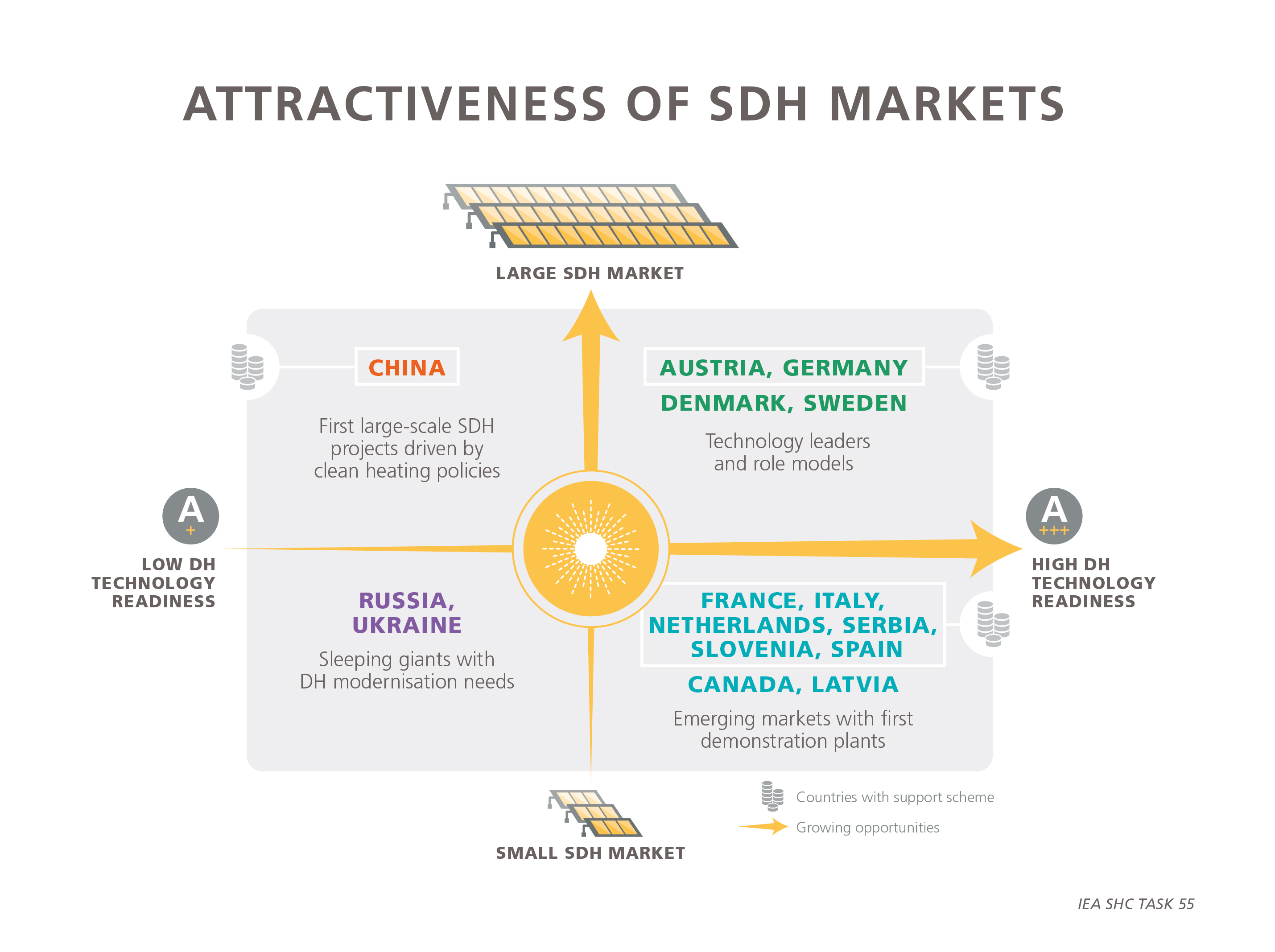
Attractiveness of SDH markets
Diagram with 4 areas according to DH technology readiness (low/high) and SDH market (small/large). Low readiness and small market is the case of Russia and Ukraine; low readiness and large market is the case of China; high readiness and small market is the case of France, Italy, Netherlands, Serbia, Slovenia, Spain, Canada, Latvia; high readiness and high market is the case of Germany, Austria, Denmark, Sweden, which are technology leaders and role models.