
Innovative heat pump solutions: Research for efficient and sustainable heating and cooling
The heating sector currently accounts for around half of Austria's energy consumption. However, the majority of this energy still comes from fossil fuels such as heating oil and natural gas. This means that heat generation and the building sector contribute significantly to greenhouse gas emissions. In order to reduce these emissions and achieve the climate targets that have been set, the supply of heat and air conditioning in buildings must become more sustainable and efficient. The so-called "heat transition" is therefore crucial to the success of the energy transition as a whole.
In this context, heat pumps are becoming increasingly important. A heat pump works in a similar way to a refrigerator in reverse: it extracts heat energy from its surroundings and makes it usable for heating. Air or geothermal probes (groundwater) as well as waste heat sources, such as from industrial processes, can be used as heat sources. Electrical energy is required to power the heat pump. If this electricity comes from renewable sources, then the heat generation is sustainable overall.
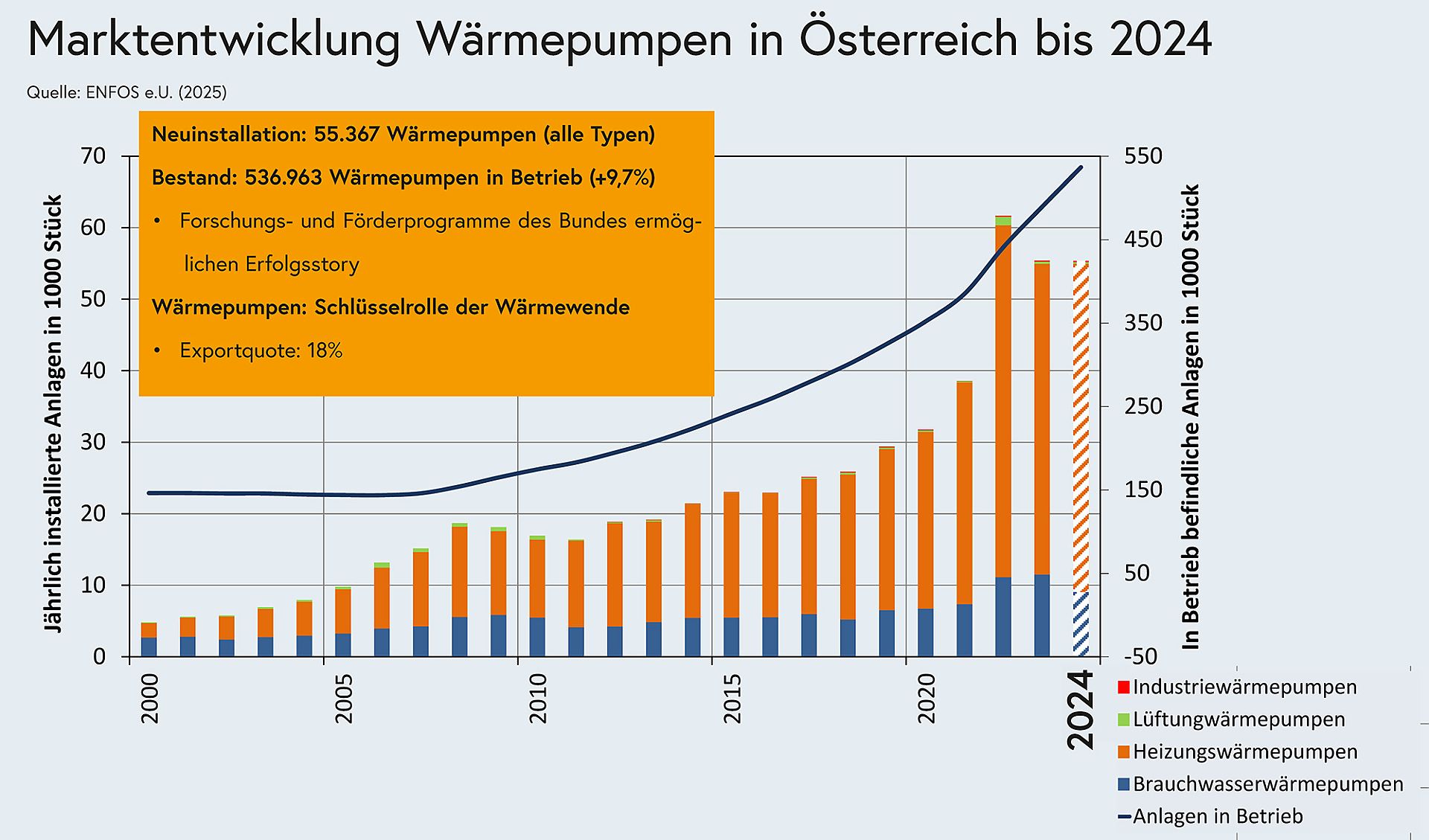
Around 537,000 heat pump systems are in use across Austria, saving 1.26 million tonnes of CO₂ (net). In 2024, the heat pump sector generated a total added value of around €1.7 billion in Austria and employed 2,944 people (full-time equivalent). The export market accounted for 18 percent of total sales of all heat pumps in terms of unit numbers.
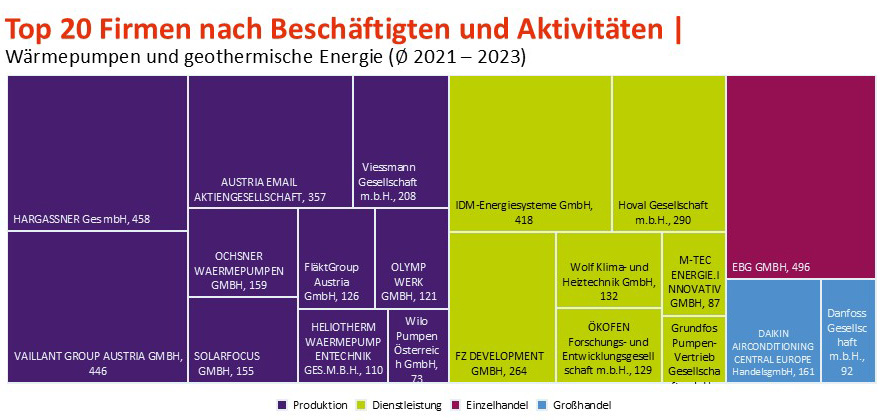
A look at the leading Austrian companies in the field of heat pumps and geothermal energy shows that the majority of employees work in production and the service sector, while retail and wholesale account for only a small proportion. Among the companies are OCHSNER Wärmepumpen GmbH and iDM Energiesysteme GmbH, which are also actively involved in research and development projects.
In order to further advance the energy transition and achieve climate targets, the development of innovative heat pump applications is being promoted by the Federal Ministry for Innovation, Mobility and Infrastructure. For this purpose, Austria is working closely with international partners in the International Energy Agency's (IEA) "Heat Pumping Technologies" programme.
The IEA Heat Pump Technologies programme (HPT) promotes international cooperation in the research, development and dissemination of heat pump, refrigeration and air conditioning technologies. This enables the energy and environmental potential of these technologies to be better exploited. The programme's activities include research projects, workshops, conferences and an information service provided by the IEA Heat Pump Centre.
For current developments and innovative applications in the field of heat pump technologies, the 15th IEA Heat Pump Conference 2026 in Vienna offers exciting insights and opportunities for exchange.

High-temperature heat pumps for industrial processes
High-temperature heat pumps (HTHPs) play an important role in decarbonising industry and reducing CO₂ emissions. Compared to conventional heat pumps, they can generate significantly higher temperatures. The "High Temperature Heat Pump for Industry" project is developing innovative high-temperature heat pumps based on reciprocating compressors. The components of these new HTHPs are being optimised to achieve outputs of up to 8 megawatts and reliably deliver heat up to 150°C. In the long term, the plan is for them to reach temperatures of up to 200°C.
The heat pumps will be installed and tested by INNIO Jenbacher on test benches in Jenbach, Tyrol. Subsequently, a heat pump will be integrated into the energy system at the company headquarters as a demonstration plant. It will supply the site with heat, while also feeding waste heat into the local district heating network. The project also involves the development of digital solutions such as innovative control systems and a digital twin. These are intended to further optimise the operation of the systems and their integration. The "High Temperature Heat Pump for Industry" project is being carried out by INNIO Jenbacher in cooperation with the Austrian Institute of Technology (AIT) and is funded as part of the FTI Initiative for the Transformation of Industry (2024).
However, research into high-temperature heat pumps in industry is not only being conducted at national level; international teams are also working on this technology. Austria is cooperating with Denmark, for example, as part of the "IEA HPT Annex 68" project to promote the use and dissemination of industrial high-temperature heat pumps. To achieve this, information on manufacturers, products and projects (from research to demonstration) is systematically collected and trends are analysed. This information is then entered into an existing, international and freely accessible online database. In addition, recommendations for sector-specific solutions are formulated. The project aims to help close existing knowledge gaps and increase market acceptance of this technology.
Sustainable industry through steam-generating heat pumps
In the production of pharmaceuticals, energy is used to cool raw materials, intermediate products and medicines. Heat and steam are also needed to initiate chemical and biological processes or to create sterile conditions in production. In pharmaceutical manufacturing, most of this process heat demand is primarily met by natural gas.
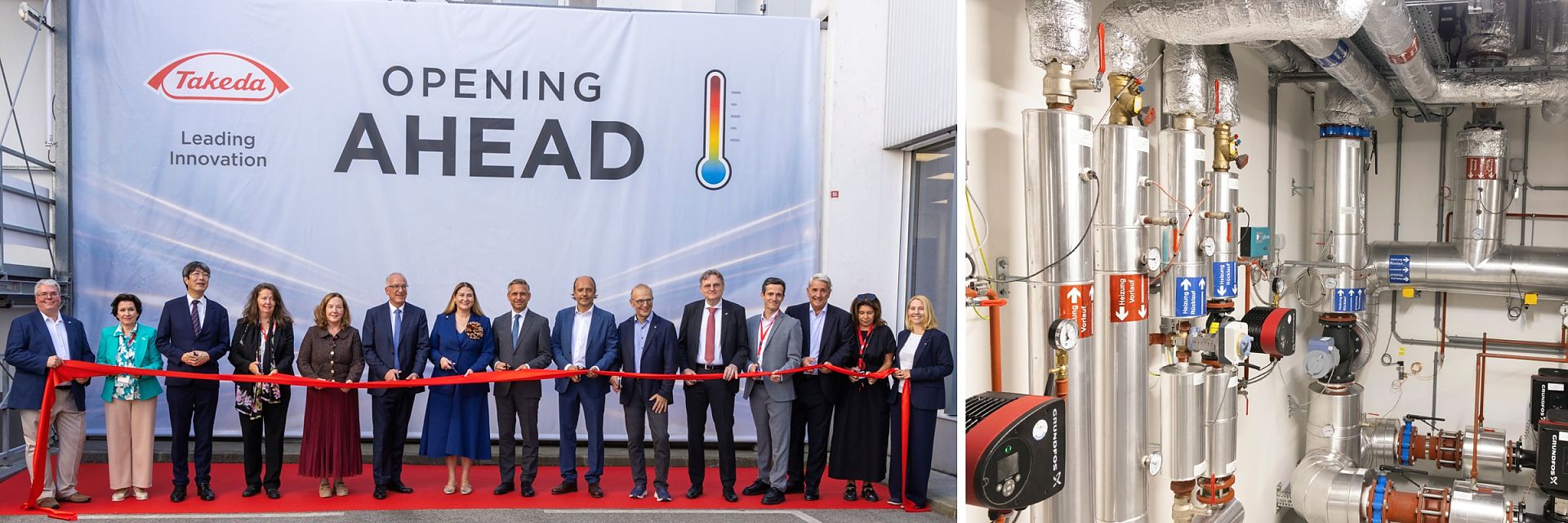
As part of the "AHEAD" project, a steam-generating heat pump is being integrated into industrial processes for the first time at the site of the biopharmaceutical company Takeda in Vienna. The use of natural gas-free steam generation is expected to reduce CO₂ emissions in the production process by up to 90 percent. This corresponds to a reduction of approximately 1,900 tonnes of CO₂ per year at the site.
The steam-generating heat pump is operated exclusively with natural refrigerants such as ammonia, butane and water. In combination with steam compressors, it can achieve higher process temperatures than previously possible. To do this, the heating water is first heated from 65°C to approximately 130°C so that it evaporates. The steam is then compressed to 11 bar, heating it to over 184°C. The AHEAD system can also be expanded for temperatures from 200°C to 260°C. Centralising cooling at Takeda's site also allows the waste heat from the refrigeration system to be recovered. It is heated by a heat pump to 65 to 70°C and used for the heating water.
As part of the research project, the potential of the solution is also being investigated in other energy-intensive sectors, such as the paper, chemical and food industries. "AHEAD" was funded by the Climate and Energy Fund and carried out as part of the "NEFI – New Energy for Industry" research initiative, which is part of the "Flagship Region Energy (Vorzeigeregion Energie)" innovation offensive.
Further applications in industry
Industry often generates waste heat that cannot be used for processes due to its low temperature. Although heat exchangers are being used more and more frequently, they can only transfer heat and not heat it up. Since the waste heat cannot be used, it is released into the environment, usually into water bodies. This not only consumes a lot of energy, but also has a significant impact on the environment. High-temperature heat pumps have therefore been developed for industrial use. However, due to a lack of knowledge about process integration, they are rarely used.
The "Process Heat Pumps" project used case studies in Austrian industrial companies to demonstrate how heat pumps can be used in the process industry. These heat pumps can nowadays provide thermal energy at temperatures of up to 160°C. The project began by analysing industrial companies to identify the most promising processes for the use of high-temperature heat pumps. These processes were then analysed and evaluated in more detail to determine the system design and the economic and ecological impacts. Existing obstacles and opportunities were also identified and recommendations for action were developed. The project was carried out by the Austrian Energy Agency in cooperation with Ochsner Process Energy Systems GmbH and steamtec gesmbh and was funded as part of the Energy Research Programme 2022.
Heat pumps can also be used in drying processes for industry, commerce and households. However, these processes are associated with high energy consumption. The international project "IEA HPT Annex 59" with Germany and China is investigating how much energy can be saved in drying processes in these areas through the use of heat pumps. The aim is to pass on the knowledge gained to manufacturers, planners and operators, to promote the use of heat pumps in the mentioned areas and to remove existing barriers.
Waste heat utilisation using a large heat pump in Vienna Spittelau
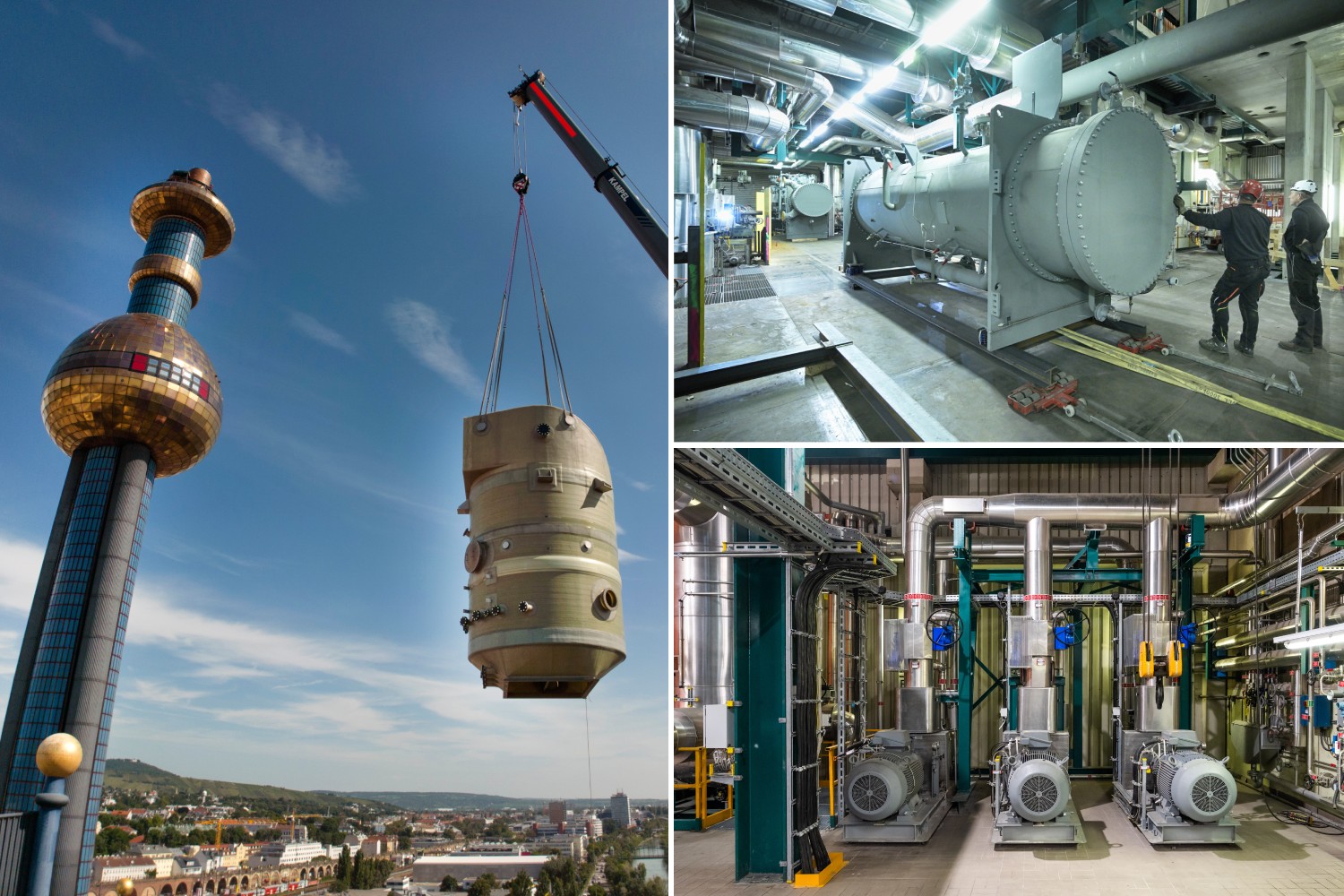
Wien Energie recently commissioned Vienna's third large-scale heat pump with an output of 16 megawatts at the Spittelau waste incineration plant. The plant supplies an additional 16,000 households with climate-friendly district heating, saving around 22,000 tonnes of CO₂ annually.
The waste incineration plant in Vienna Spittelau has already generated electricity for 30,000 households and heat for 60,000 households. The incineration of waste produces flue gases, which are filtered and purified in a multi-stage process. The water used for this purpose is also purified, cooled and returned to the Danube Canal. The waste heat generated was previously released into the air and thus lost. Now, with the help of the new high-temperature large-scale heat pump, it can be used to generate district heating. In addition, the cooled water is treated and returned to the plant. This means that up to 125,000 cubic metres less water from the Danube Canal is required annually for waste incineration.
The large-scale heat pump in Vienna Spittelau is a demonstrator for the large-scale research project ThermaFLEX from the Green Energy Lab portfolio. This project, funded by the Climate and Energy Fund, developed strategies for making heating networks more flexible.
Energy transition at the district level
Heat pumps can be used not only in industry and for district heating, but also in neighbourhoods, where they contribute locally to the decarbonisation of residential buildings. This is also the case in the "CarbonZero4IMS" project, which aims to achieve a sustainable energy supply in the Inge Morath Estate in Graz.
The neighbourhood comprises 108 residential units and 51 individual buildings, which were constructed in the early 2000s. In the residential units, heat is currently provided centrally via gas heating systems and hot water is provided locally via electricity. This means that it is distributed via a low-temperature network. In the individual buildings, individual gas boilers provide heat and hot water.
The current gas supply is to be converted to a renewable, CO₂-free heat supply during the project. Heat pumps are suitable for this district because the heat is already distributed at low temperatures. To transport the heat and cold to the heat pumps, a combined photovoltaic solar thermal system and geothermal probe fields are to be installed and connected via an anergy network. The anergy network can also be used to supply energy to individual heat pumps in the individual buildings.
The "CarbonZero4IMS" project is funded as part of the "Flagship Projects of the Heat Transition 2024 (Leuchttürme der Wärmewende 2024)" programme. The project consortium includes AEE INTEC, StadtLABOR Innovationen für urbane Lebensqualität GmbH, GREENoneTEC Solarindustrie GmbH, evon GmbH and Energie Steiermark AG.
While "CarbonZero4IMS" focuses on a specific neighbourhood, the "UrbanHP" project is looking at how heat pumps can be integrated into and operated in existing urban neighbourhoods in general. A lot of energy can be saved in buildings through networked heating and cooling systems. However, the use of heat pumps also brings with it various challenges, such as limited space and noise. At the same time, increasing electricity consumption from e-mobility is putting a strain on the grids, and PV and wind power are causing fluctuations. Heat pumps in combination with heat storage systems can shift loads flexibly, thus helping to better integrate renewable energies. The "UrbanHP" project is conducting a structured analysis based, among other things, on a partially digital implementation in a real-world case study. UrbanHP is funded as part of the Energy Research Programme 2023. The project consortium is led by Graz University of Technology and includes six other partners.
In addition to the national level, there are also international projects on the topic of heat pumps in districts. As part of the "IEA HPT Annex 61" project, the use of heat pumps in Positive Energy Districts is being investigated in collaboration with Germany, Switzerland, Japan and the USA. The aim is to determine how efficiently heat pumps use electrical and thermal energy and how they can contribute to a positive energy balance. To achieve this, heat pump concepts for individual buildings and neighbourhoods are being developed and evaluated.
In addition to the use of heat pumps at district level, the optimisation of individual buildings also plays an important role. Technical solutions for the renovation of multi-storey residential buildings (e.g. window replacement and insulation) and for boiler replacement have been available in Austria for many years. Nevertheless, the renovation rate is stagnating at well below 1%. Switching from oil or gas-based heating systems to heat pumps is usually only feasible and advisable in conjunction with thermal renovation. In order to increase the renovation rate, new minimally invasive and scalable renovation methods are needed. These should combine innovative systems for the building envelope and renewable heat supply.
The "PhaseOut" project involved designing, optimising, demonstrating and evaluating innovative, minimally invasive renovation solutions using heat pumps and photovoltaics in multi-storey residential buildings. A focus was on serial and industrialised approaches. To do so, various technical renovation options (from centralised to partially centralised to decentralised heat pump systems) were compared and evaluated based on seven buildings. In addition to heat pump technology, modular, prefabricated façade elements with integrated technology were also used. The project was coordinated by the University of Innsbruck and implemented with nine other project partners as part of the "City of Tomorrow" programme (8th call for proposals).
Together with Italy and the United Kingdom, the "IEA HPT Annex 60" project aims to remove barriers to the use of heat pumps in the renovation of large non-residential buildings. These buildings include hospitals, shopping centres, industrial buildings, educational institutions and museums. The project collects data from real buildings and then makes recommendations for better planning of heat pumps in non-residential buildings.
In addition to individual buildings and entire neighbourhoods, heat pumps also play an important role for district heating networks as a whole. However, the planned expansion of networks and the growth of cities mean that grids often reach their limits in terms of heat availability and capacity. In this context, heat pumps prove useful because they can use the return flow from the heating network as a heat source. They lower the temperature of the return flow, which means that the network can supply more heat without having to increase the size of the pipes. This enables them to assist in network expansion. In addition, waste heat from room cooling can be used as a heat source for heating networks.
The "DistrictHeatCoolPump" project systematically analyses the success factors as well as the limitations of heat pumps in heating networks. It also takes a closer look at how waste heat from room cooling can be integrated into heating networks. For this purpose, six network types are defined and examined in terms of the challenges they face. The aim is to expand heating networks, make them more environmentally friendly and reduce losses in the grids. "DistrictHeatCoolPump" is being carried out by the Austrian Energy Agency in cooperation with Armacell Austria GmbH and Ochsner Process Energy Systems GmbH and is funded as part of the Energy Research Programme 2023.
Intelligent control relieves the strain on the power grid
Control systems are necessary to use the flexibility of buildings, heat pumps and heat storage systems. This is because they can manage loads in advance and initiate measures proactively. Artificial intelligence (AI) and Internet of Things (IoT) open up many new possibilities for control algorithms. With the help of intelligent algorithms, it is possible to control and shift the load of individual consumers. This can relieve the strain on the electricity grid and increase the share of renewable energies in the grid.
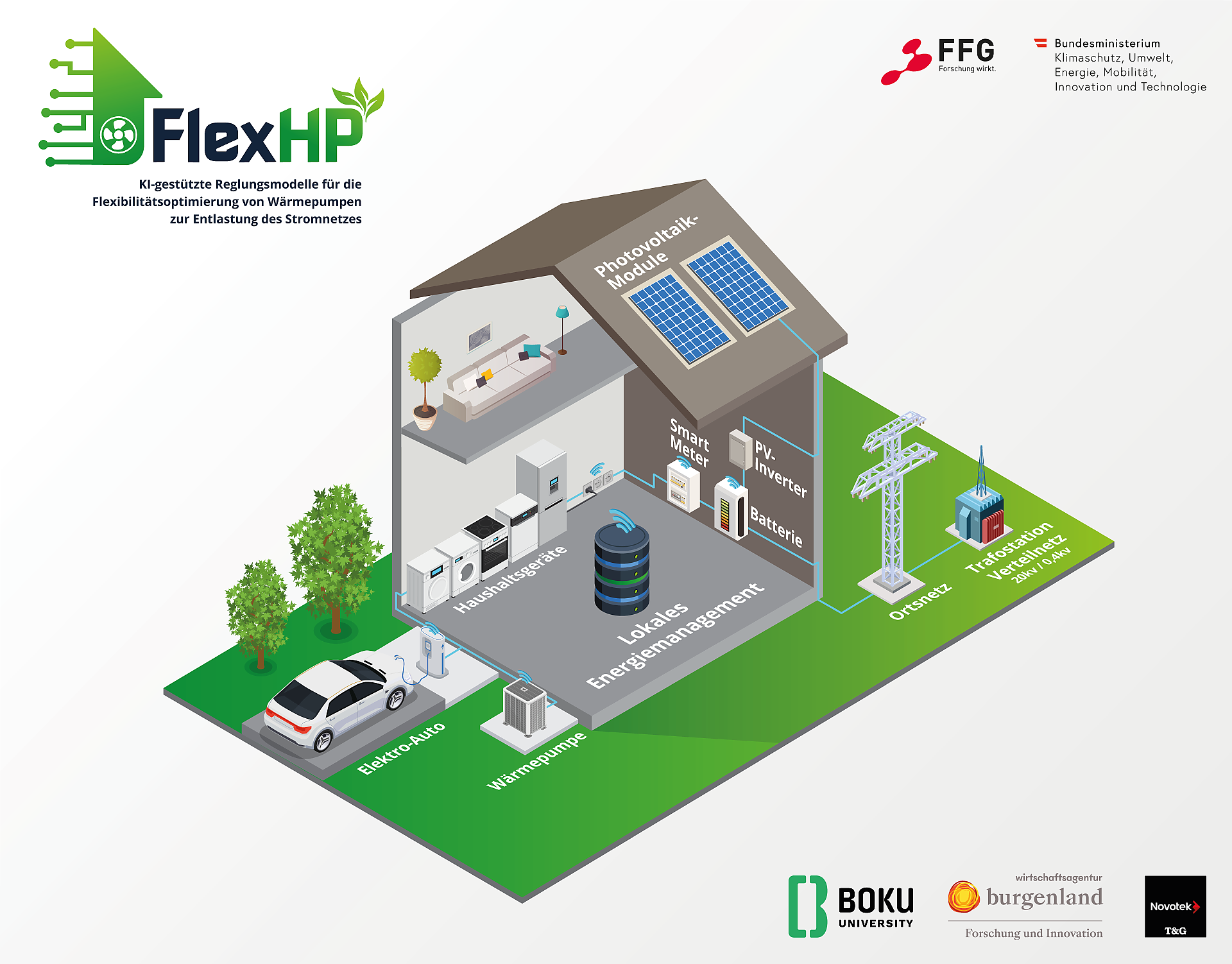
The project "FlexHP" is developing a new energy management system that allows heat pumps to be operated dynamically and flexibly in a decentralised energy system. All actors in the energy system are first mapped in a model. The focus is on developing a reliable heat pump model that can be used to predict the power consumption and thermal behaviour of the building. An AI-supported algorithm regulates power consumption in such a way that the grid is relieved. Finally, the models and the algorithm are tested in a living lab with real components. "FlexHP" is being carried out by the "Universität für Bodenkultur Wien" (University of Natural Resources and Life Sciences) in collaboration with Forschung Burgenland GmbH, Novotek Austria GmbH and Wirtschaftsagentur Burgenland Forschungs- und Innovations GmbH. The project is funded as part of the Technologies and Innovations for the Climate-Neutral City (TIKS) 2024 programme.
In addition to the use of AI to optimise the flexibility of heat pumps, other digital services such as advanced modelling, big data methods and augmented reality are also being researched in connection with heat pumps. This is because such digital solutions are not yet widely used in the heat pump industry. In the international IEA HPT Annex 67 project, Austria is working with Belgium and Sweden to investigate how these services can be used throughout the entire life cycle of a heat pump, particularly in the areas of product design, product testing, integration, operation and maintenance. For this purpose, data from research and practical experience is compiled in an international database.
Noise emissions and safety
Heat pumps offer many advantages, but as with any technology, certain factors must be considered when using them. These include noise emissions, as the noise generated by heat pumps can affect the quality of life and the acceptance of the systems. Noise emissions can therefore limit the widespread use of this technology, especially in urban areas.
An example of noise emission research can be found in the "AIrFoil" project, which is dedicated to increasing the efficiency and reducing the noise of air source heat pumps. To achieve this, a method for designing air source heat pumps is being developed that has seen limited use so far. In contrast to the conventional design, in which air is sucked through the heat exchanger by a fan, the air direction is now reversed. This means that the fan pushes the air through a duct to the heat exchanger. Although this method generates less noise, it results in lower performance without further measures. The project aims to compensate for these losses with a fixed rectifier. This optimises the air flow and ensures efficient heat transfer. The "AIrFoil" project is funded as part of the Energy Research Programme 2023 and is being carried out by a consortium led by Software Competence Center Hagenberg GmbH and five other partners.
At the international level, Austria is collaborating with Germany on the IEA HPT Annex 63 project, which deals with the effects of heat pump placement on noise emissions. For this purpose, noise emissions in buildings and neighbourhoods are first analysed and evaluated. In addition, research is being conducted into how people perceive the noise made by heat pumps. Finally, existing tools that support the optimal placement of heat pumps are being further developed. The project aims to help break down market barriers caused by noise emissions.
In connection with heat pump technologies, various safety aspects must also be considered, such as the use of flammable refrigerants. This can potentially lead to leaks, through which flammable refrigerant can escape from the refrigeration circuit. The "WISE" project is expanding safety concepts for heat pumps with flammable refrigerants for gas boiler replacement. The aim of these concepts is to increase safety in the installation of heat pumps in residential areas beyond the current safety standards. Simulations are used to improve methods for detecting leaks and testing. The project is being carried out by OCHSNER Wärmepumpen GmbH in cooperation with AIT - Austrian Institute of Technology GmbH and is funded as part of the "Technologies and Innovations for the Climate-Neutral City" programme.
The results of the national project will be incorporated into the international IEA HPT Annex 64 project, which also deals with safety measures for flammable refrigerants. The aim is to develop new knowledge about the safe use of flammable refrigerants in heat pumps and refrigeration systems up to 50 kW. The knowledge gained should highlight both the risks and the technical solutions for the safe use of heat pumps. In addition to Austria, Germany, Sweden and South Korea are also participating in this cooperation.
Heat pump laboratory as a link between research and practice
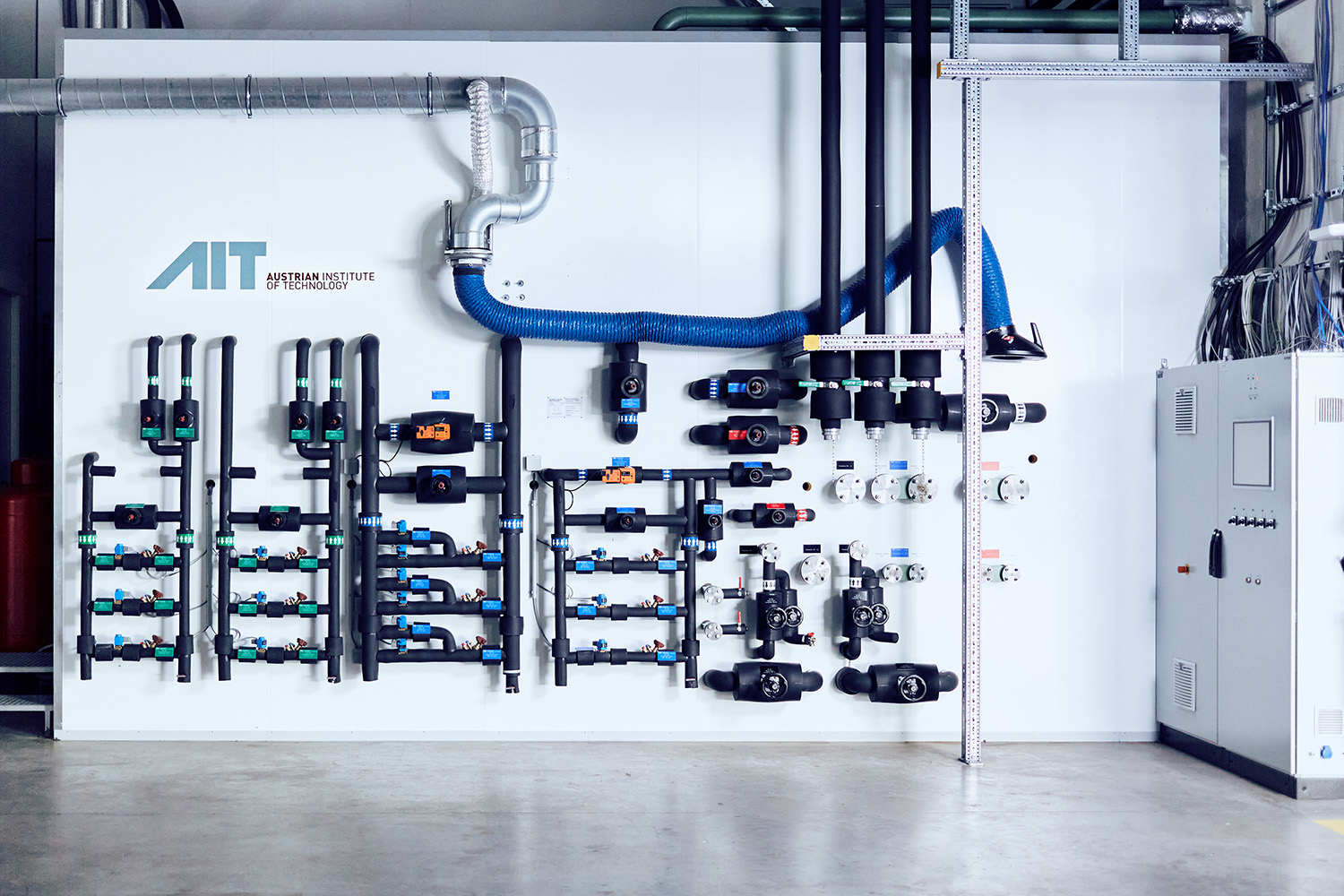
In order to combine research into heat pump technologies with practical application, the Austrian Institute of Technology (AIT) opened a state-of-the-art heat pump laboratory in October 2025. Heat pump systems with a heating capacity of up to 100 kW can be tested there on test benches. This means that not only typical residential buildings, but also large commercial buildings can be simulated.
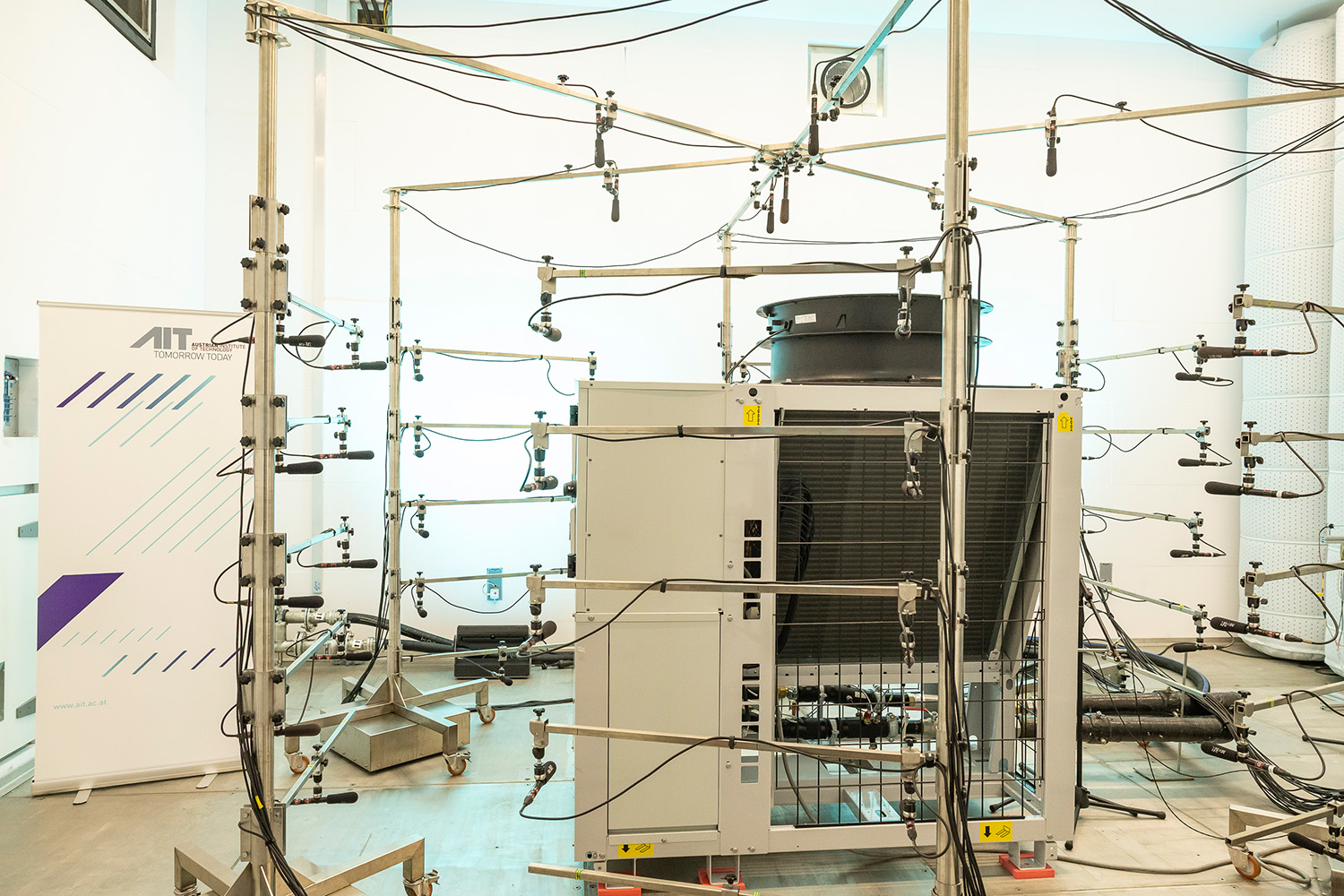
The laboratory offers realistic conditions for developing and optimising the systems. This is made possible by, among other things, dynamic operation and links to simulation models. The focus is on testing air source heat pumps that run on all relevant refrigerants. There are also test facilities for optimising the noise levels of heat pumps.
Further links
- IEA Heat Pump Technologies programme (HPT)
- IEA HPT Annex 68: Industrial High-Temperature Heat Pumps
- Prozess-WP: Hocheffiziente Wärmepumpenkonzepte zur Abwärmenutzung in der Prozessindustrie
- IEA HPT Annex 59: Heat Pumps for Drying Processes
- Large High Temperature Heat Pump Vienna, Wien Spittelau
- CarbonZero4IMS: Energiewende im Quartier – CO2-freie Versorgung durch NutzerInnen-Integration und sektorenübergreifende Optimierung
- UrbanHP: Wärmepumpensysteme in urbane Bestandsquartiere integrieren und systemdienlich betreiben
- IEA HPT Annex 61: Heat Pumps in Positive Energy Districts
- PhaseOut – Heat pump technologies in the renovation of existing buildingg
- IEA HPT Annex 60: Retrofitting Heat Pump Systems in Large Non-domestic Buildings
- DistrictHeatCoolPump: Wärme und Kälte aus und für Fernwärmenetze mittels Wärmepumpen
- FlexHP - AI-supported control models for optimising the flexibility of heat pumps to reduce the load on the electricity grid
- IEA HPT Annex 67: Digital Services for Heat Pumps
- AIrFoil: Effizienzsteigerung und Lärmminderung von Luftwärmepumpen
- IEA HPT Annex 63: Impact of heat pump placement on noise emissions
- WISE - Extension of the safety concept for heat pumps with flammable refrigerants for gas boiler replacement
- IEA HPT Annex 64: Safety measures for flammable refrigerants
Authors
Anna-Lena Oberhofer and Ludwig Fliesser, Green Energy Lab (on behalf of BMIMI)