Project Image Pool
There are 29 results.
Terms of use: The pictures on this site originate from the projects in the frame of the programmes City of Tomorrow, Building of Tomorrow and the IEA Research Cooperation. They may be used credited for non-commercial purposes under the Creative Commons License Attribution-NonCommercial (CC BY-NC).
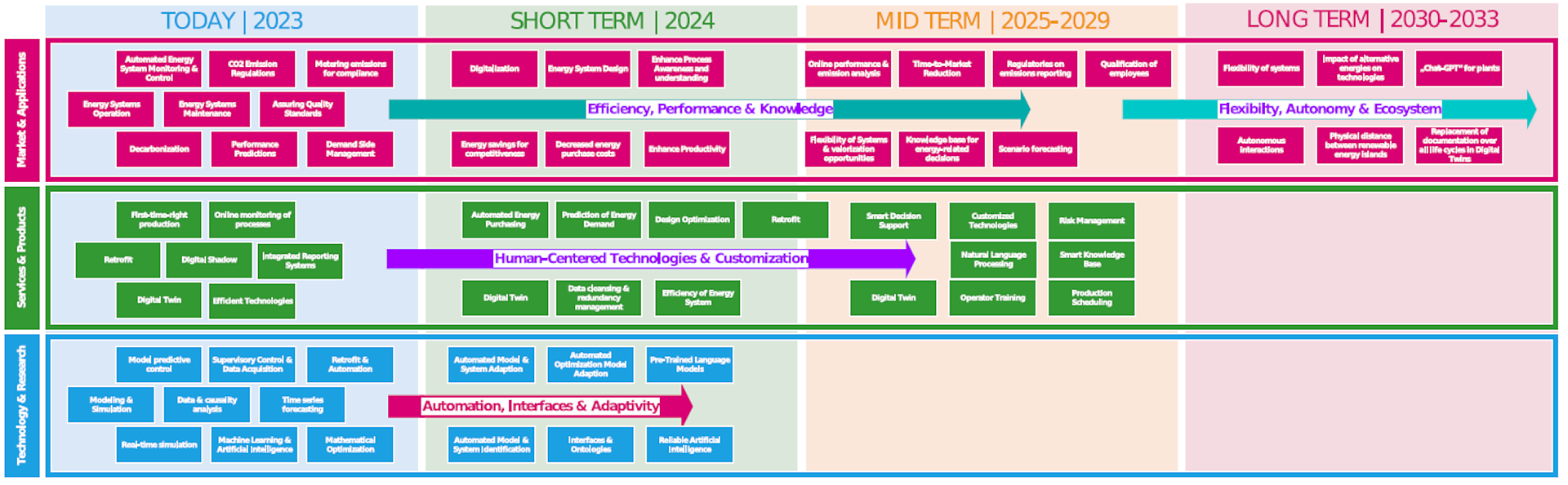
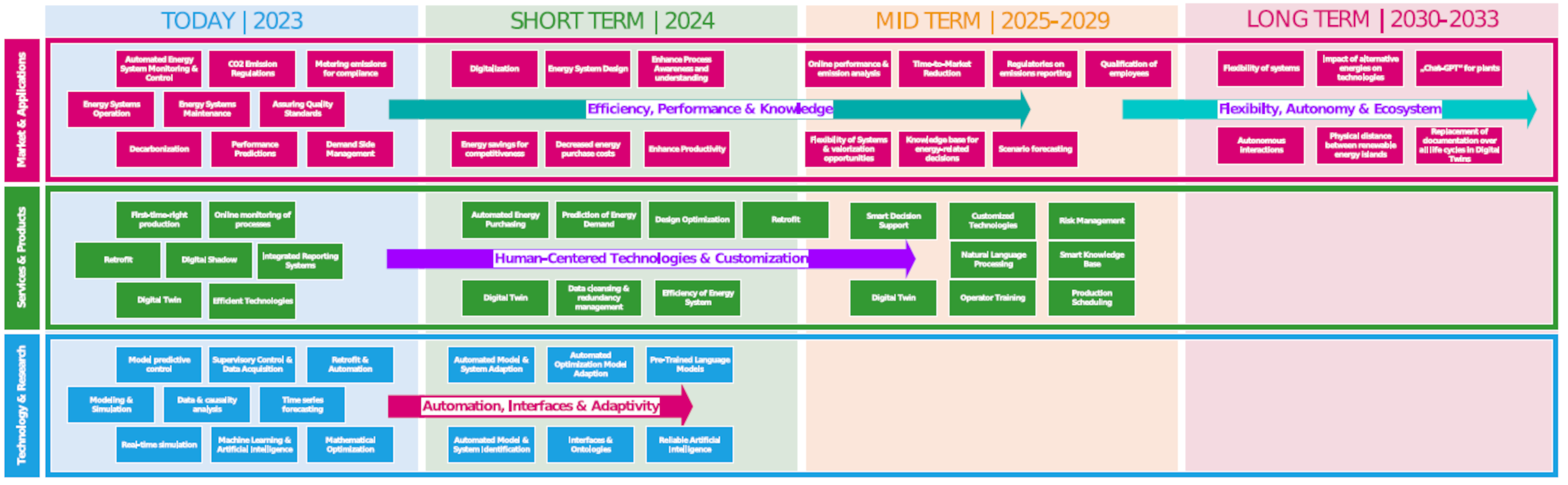
Illustration of the "Roadmap on Digitalization" that was developed in the Annex.
The roadmap shows the keywords with regard to future application areas of digital twins, which were identified during workshops in the Annex.
Copyright: TU Wien
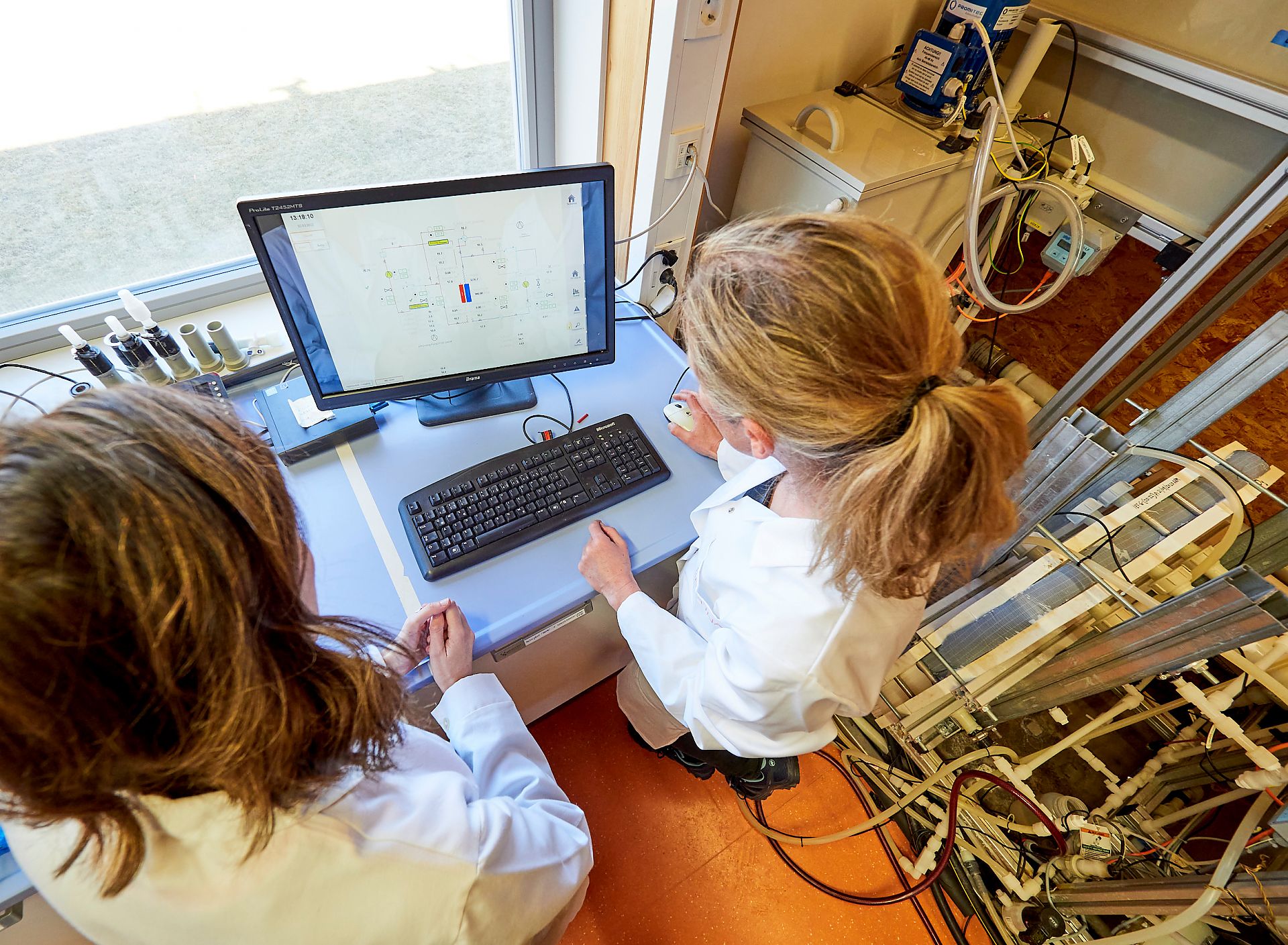
Membrane distillation plant @ AEE INTEC
The membrane distillation plant in the laboratory of AEE INTEC in Gleisdorf offers the possibility to test different types and sizes of membrane modules under varying conditions.
Copyright: ACR/schewig-fotodesign
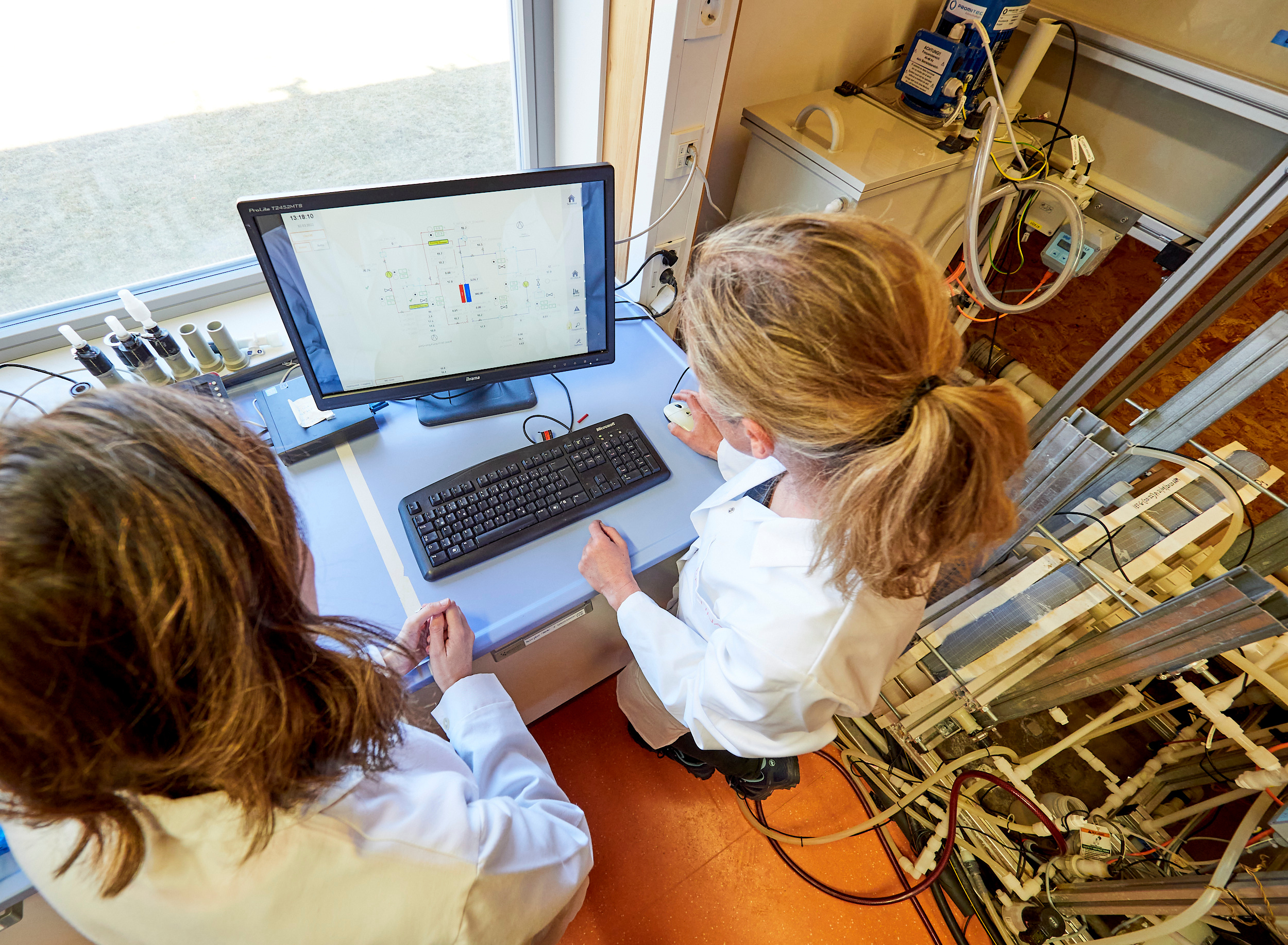
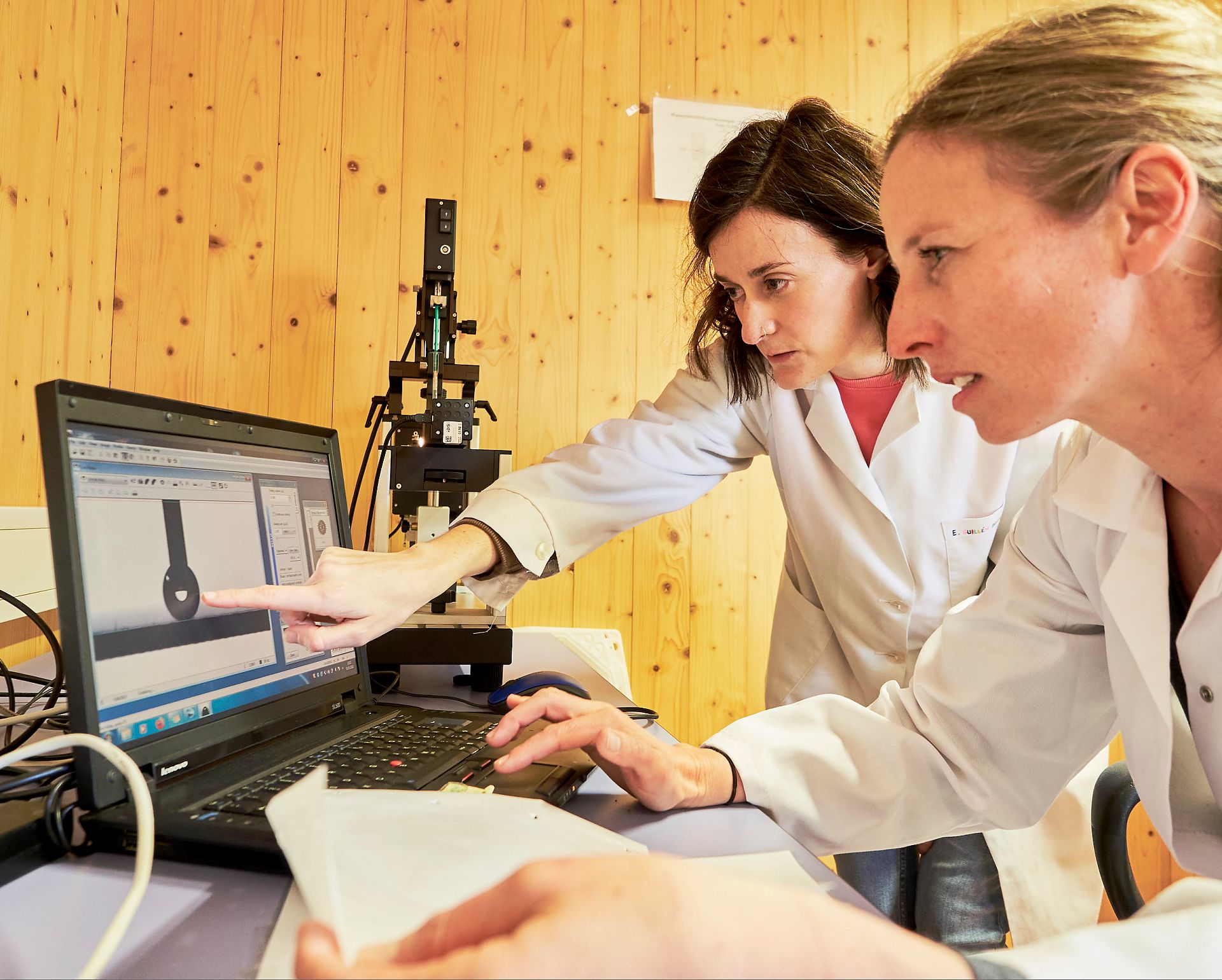
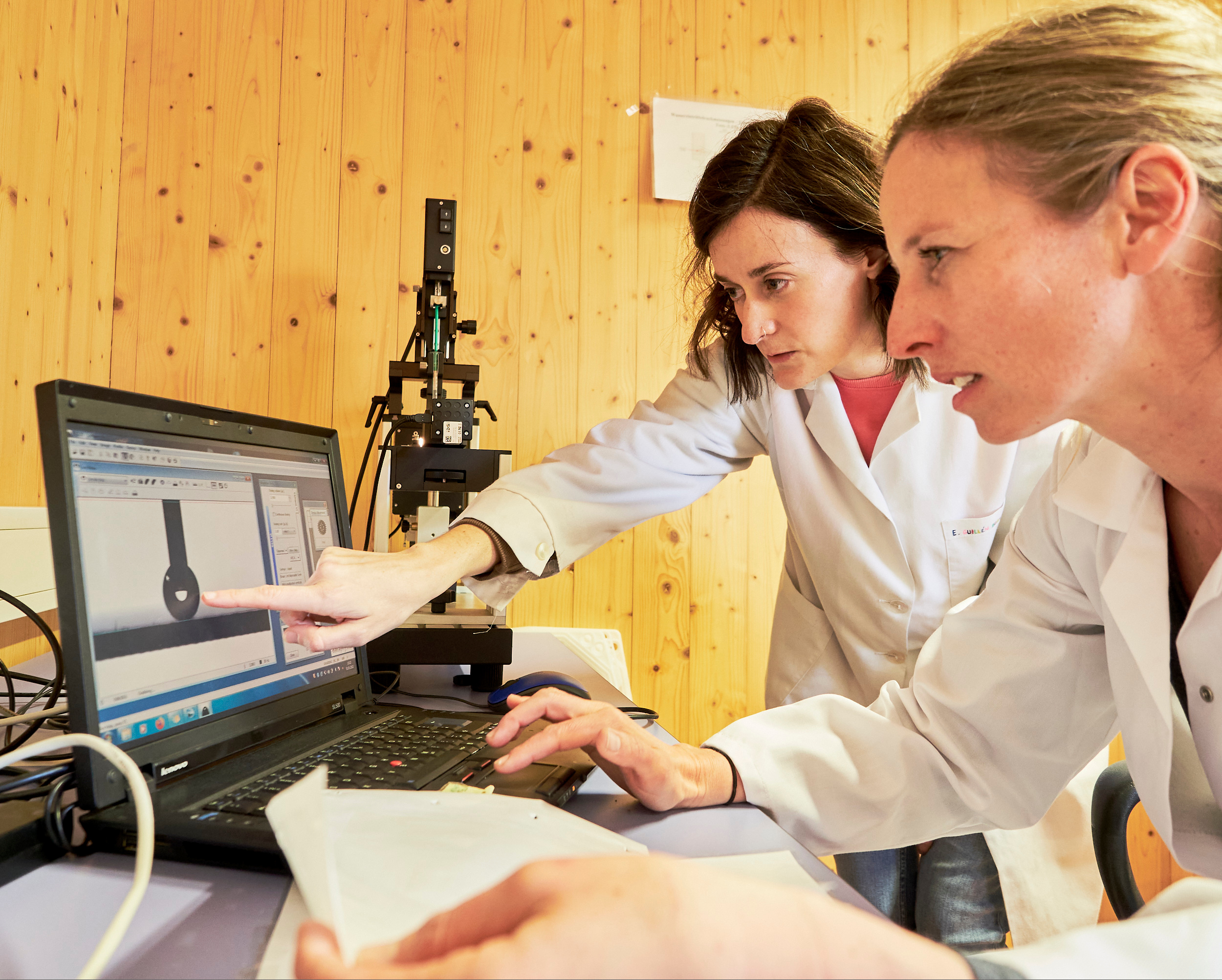
Membrane tests for the analysis of surface properties
By means of contact angle measurements, the membrane can be analyzed before and after its application and conclusions can be drawn about its functionality and usability.
Copyright: ACR/schewig-fotodesign
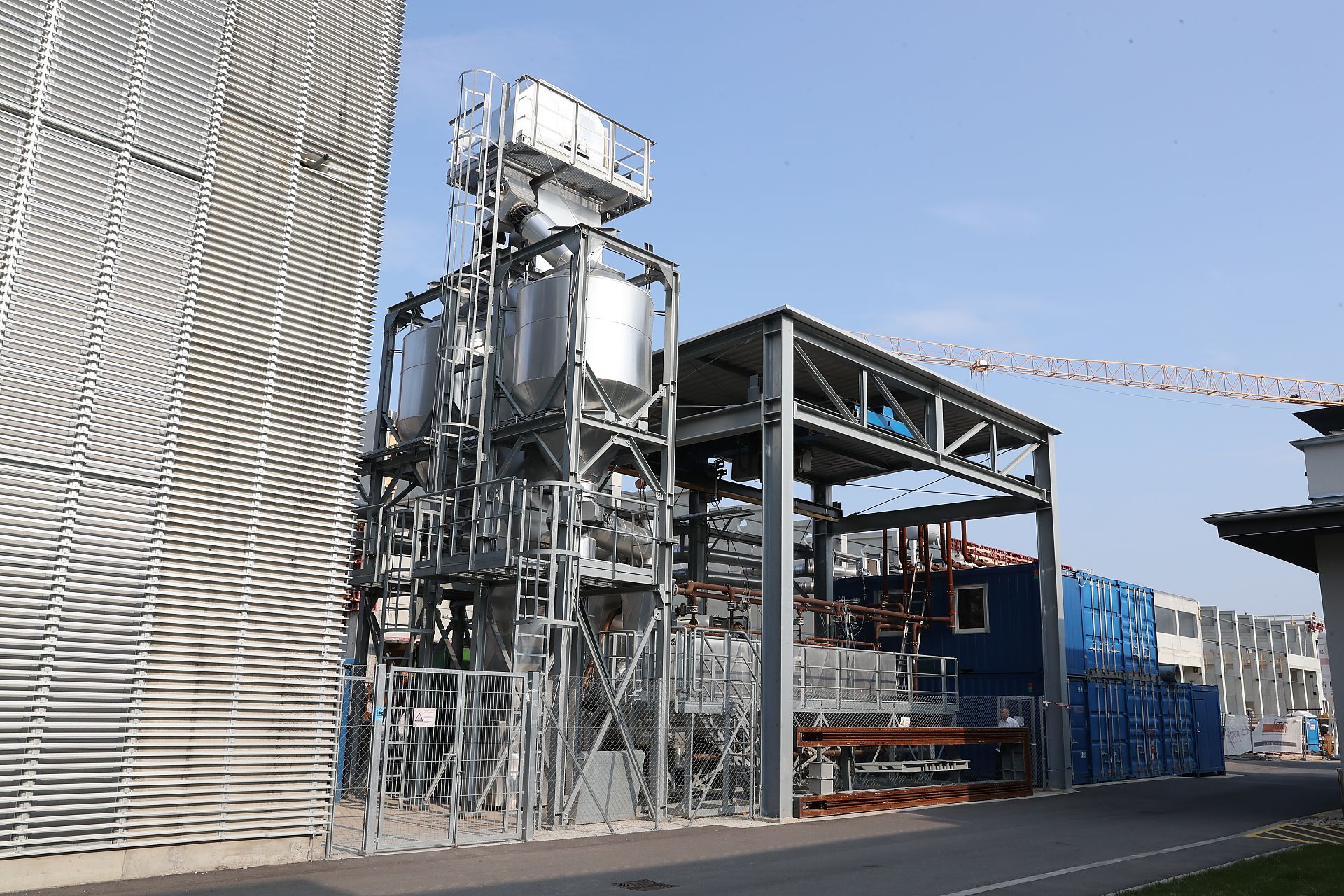
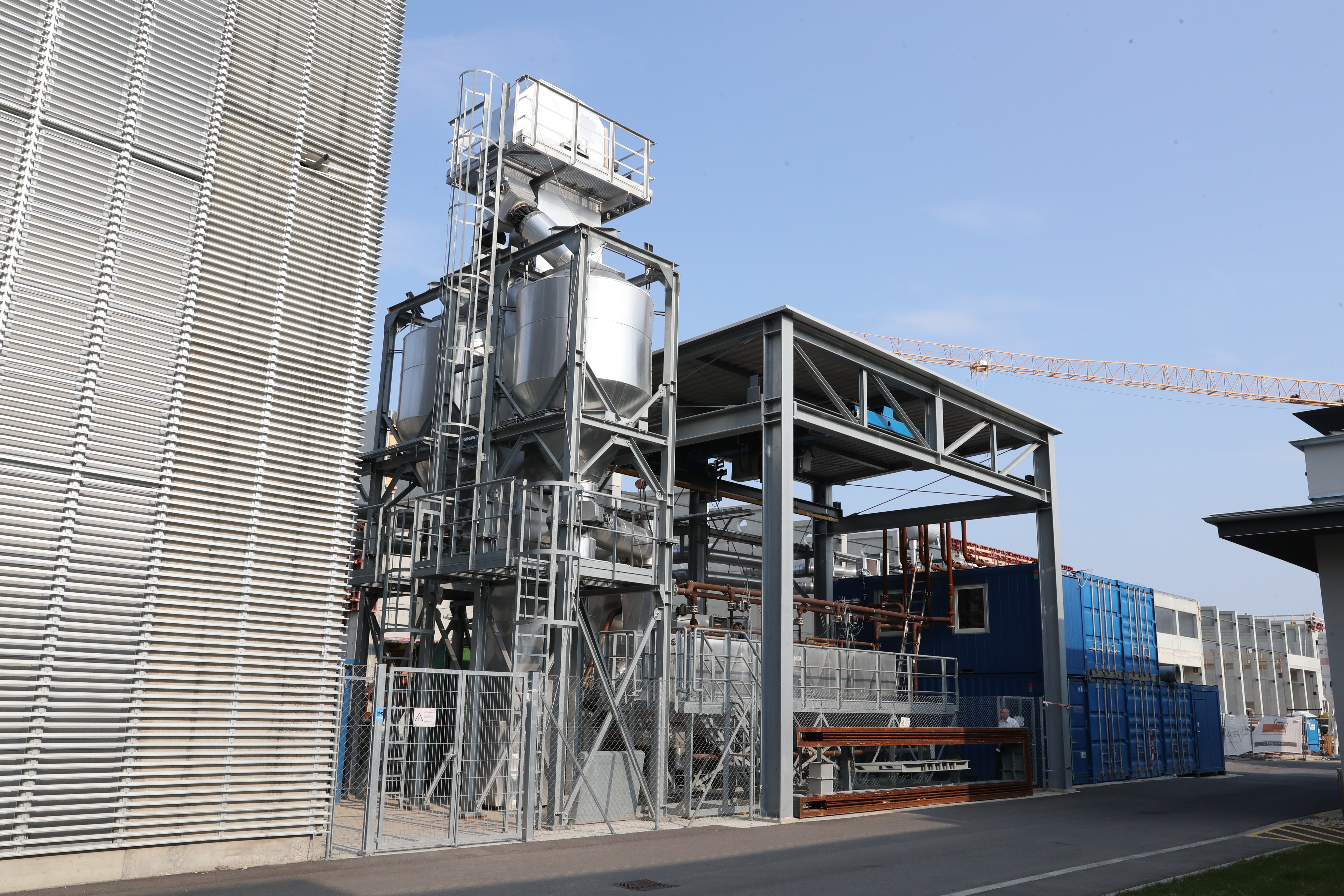
sandTES
active fluidized bed storage "sandTES" of the Institute for Energy Systems and Thermodynamics (TU Wien)
Copyright: Institut für Thermodynamik und Energietechnik, TU Wien
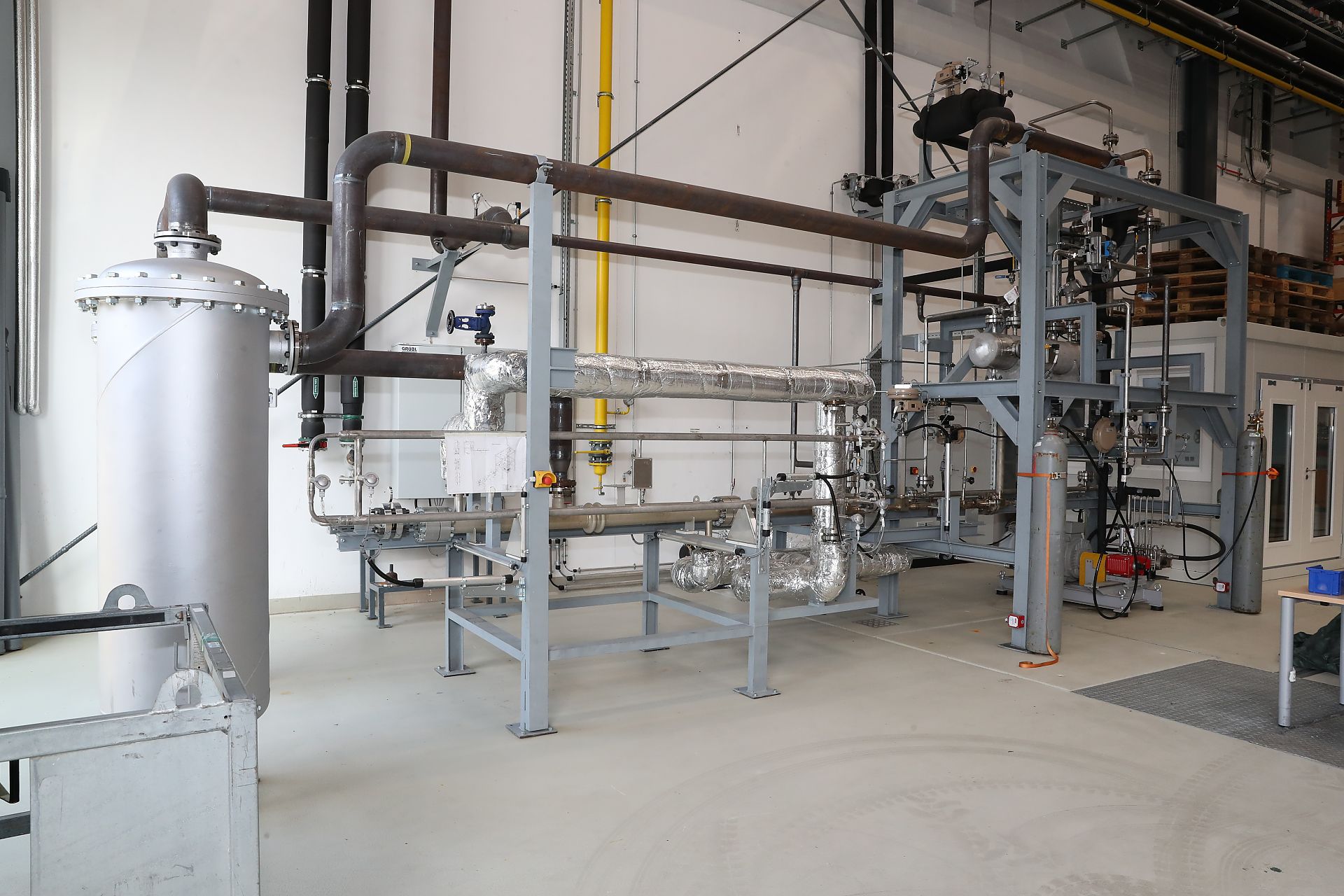
supercritical CO2 cycle
supercritical CO2 cycle for electrification of waste heat at the Institute for Energy Systems and Thermodynamics (TU Wien)
Copyright: Institut für Thermodynamik und Energietechnik, TU Wien

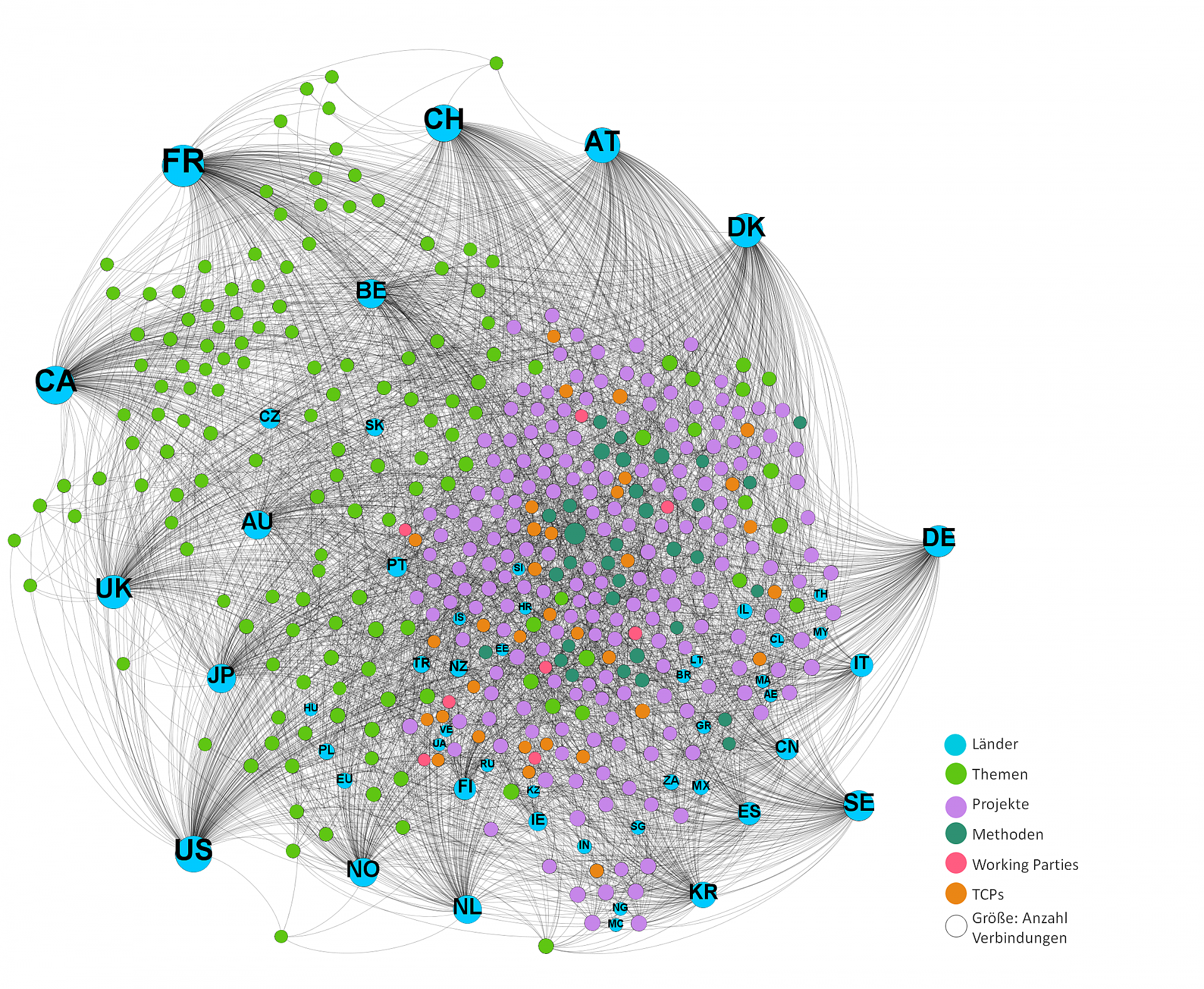
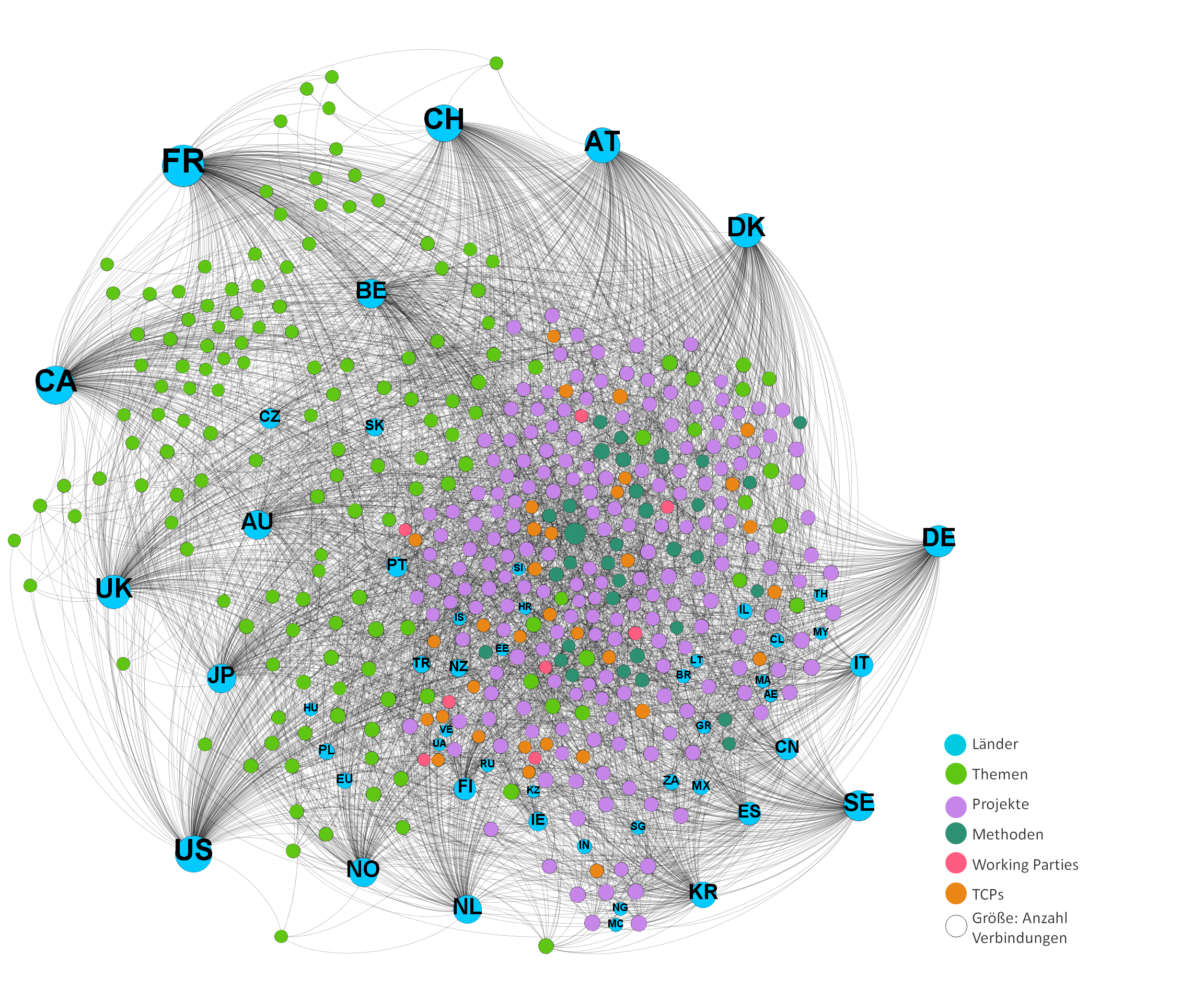
IEA-TCP Graph: Visualization of all nodes and edges in the IEA-TCP data model
Size of the nodes corresponds to the number of connections, color to the type of node (see legend).
Copyright: Österreichische Energieagentur 2018
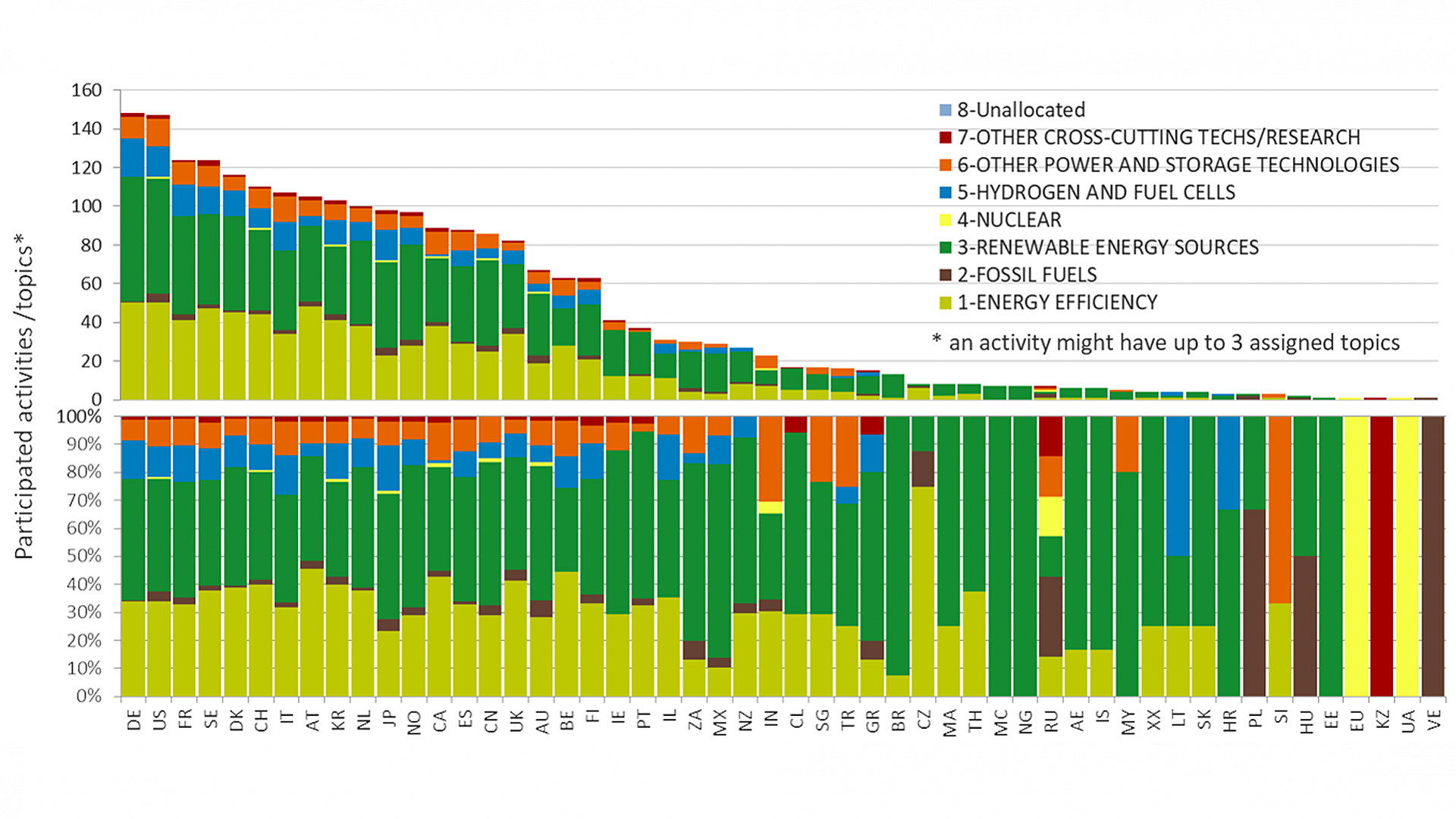
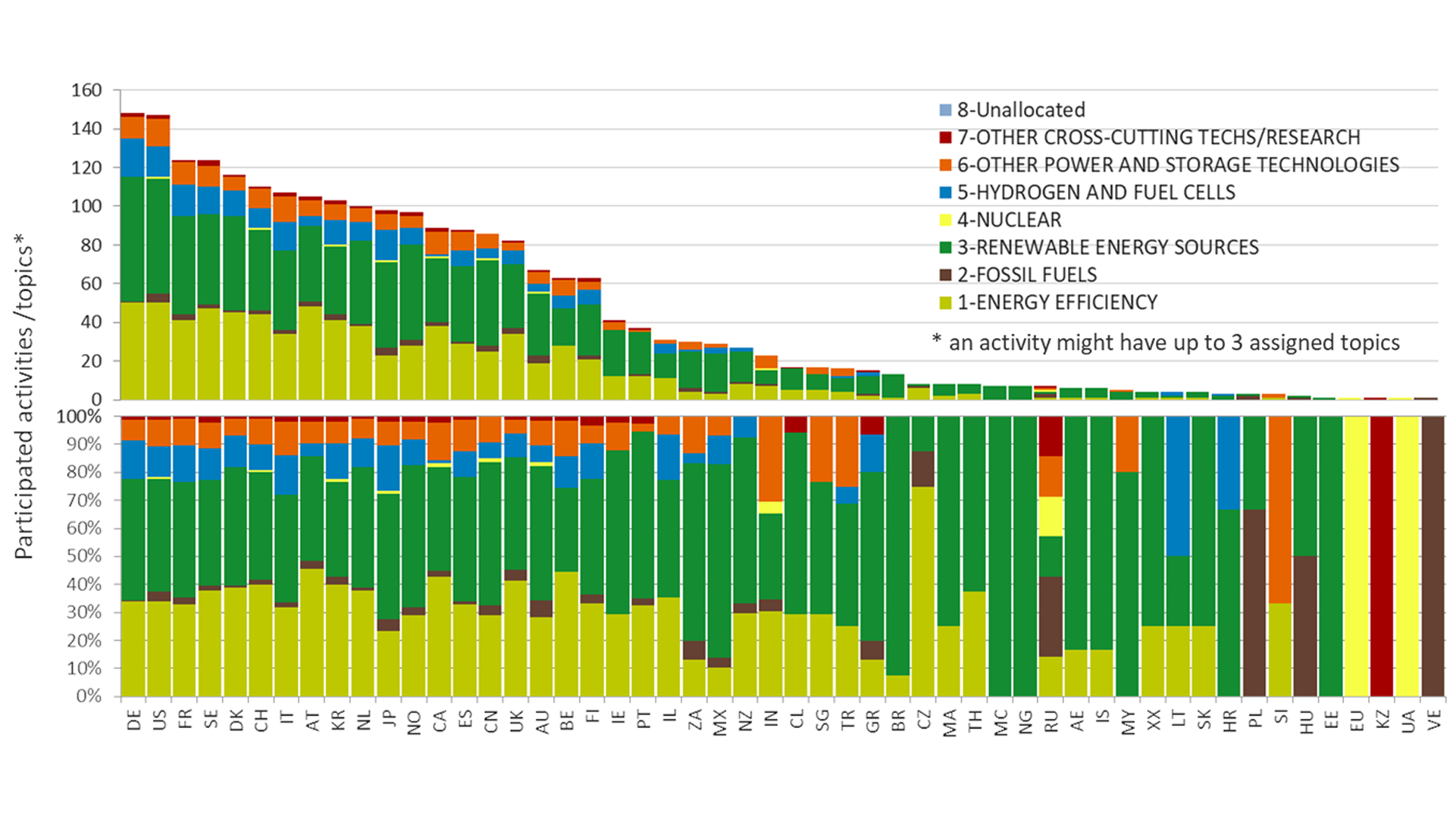
Participation of countries in IEA Technology Collaboration Programmes and Related Research Topics
Absolute (upper chart) and relative (lower chart) number of TCP-activities that countries are participating in. The color code shows how the assigned activities are related to the IEA-Topics and how the countries set their priorities with regard to the research topics (based on the IEA RD&D taxonomy).
Copyright: Österreichische Energieagentur, 2018
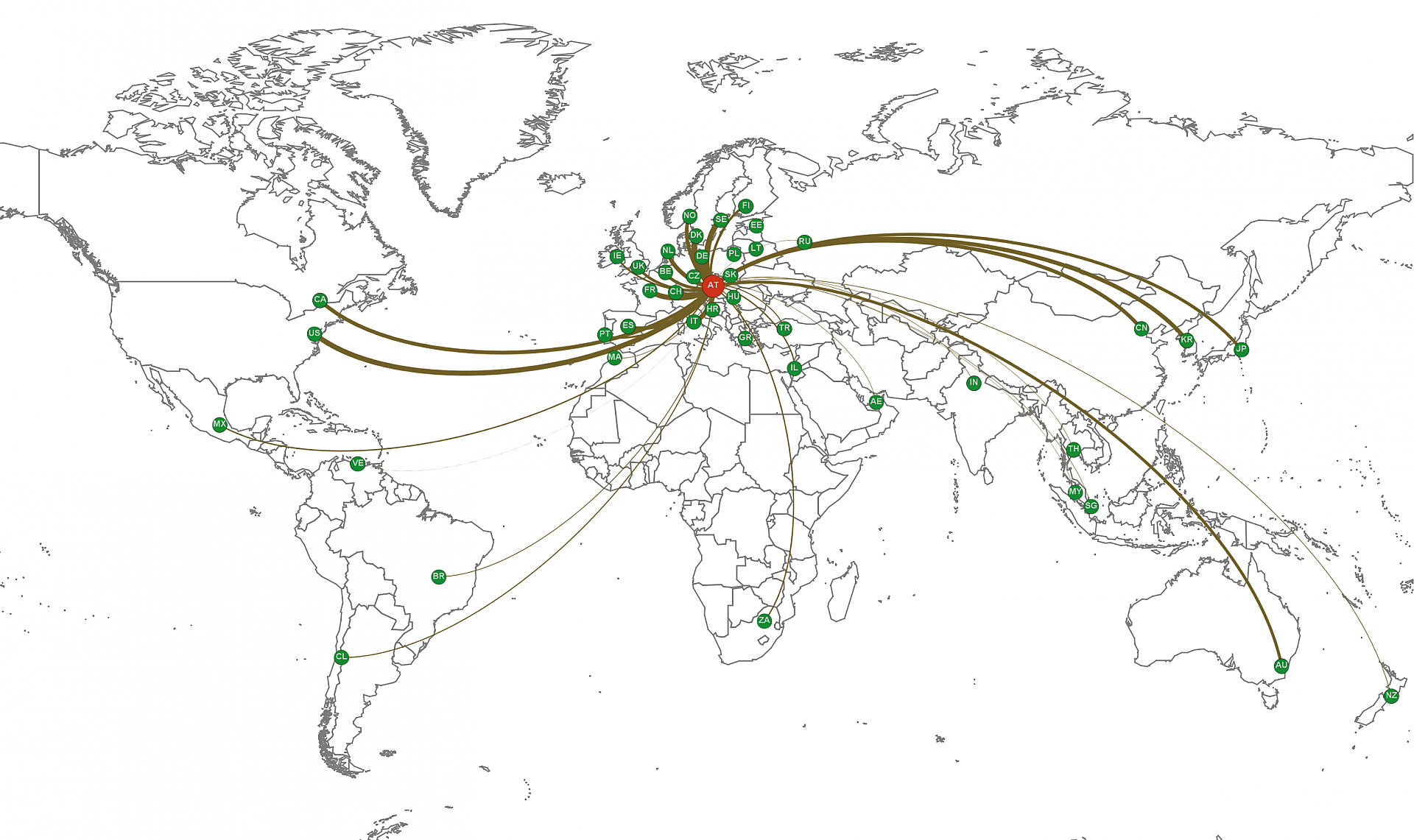
International cooperations of Austria in context of TCP activities.
Worldmap of Austrias cooperations with other countries in context of the IEA Technology Collaboration Program reasearch activities. Line thickness indicates the number of cooperations.
Copyright: Österreichische Energieagentur 2018

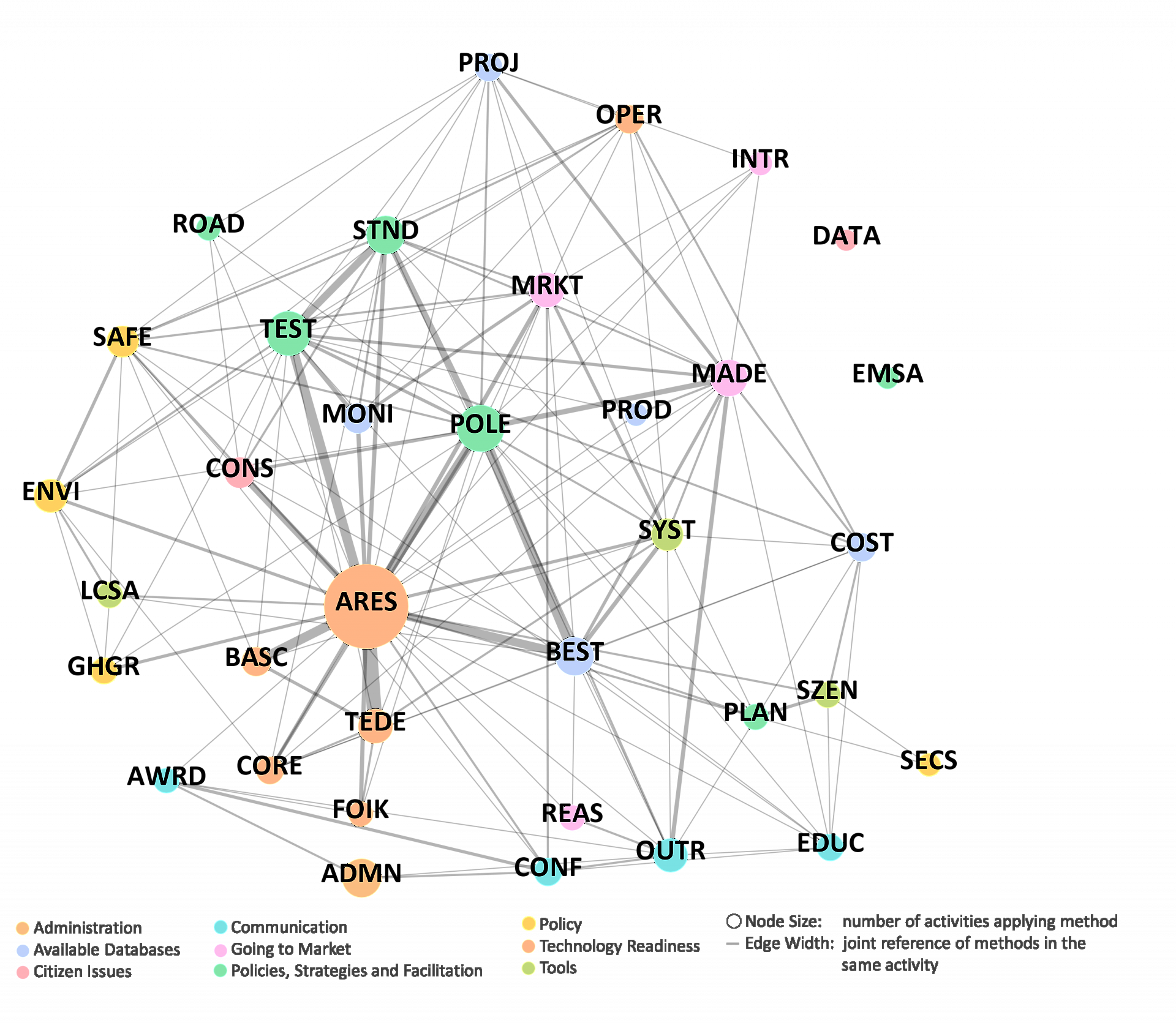
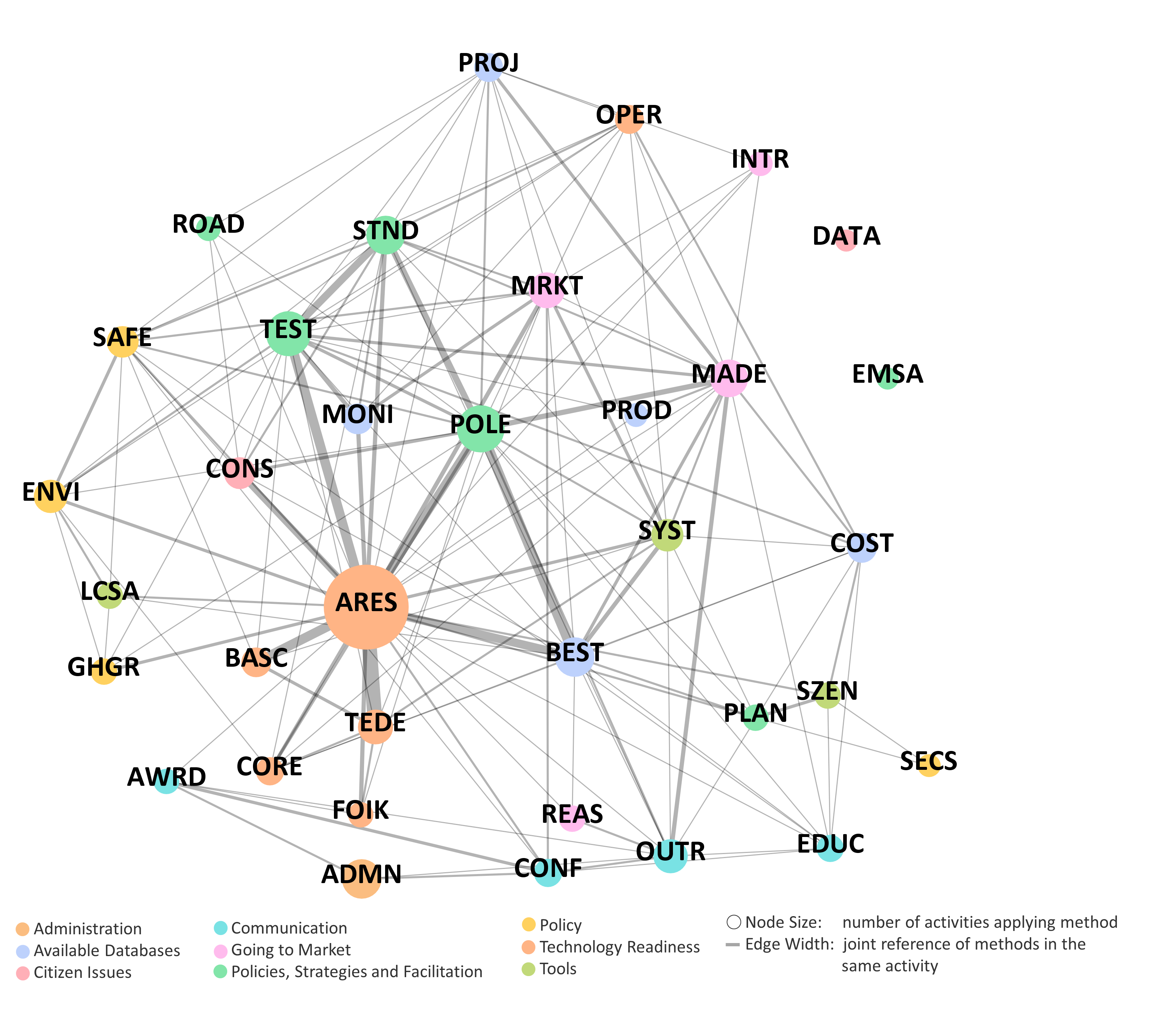
Combination of Methods used by TCP-Activities
A set of methods was developed to categorize the kind of project work that is done in the activities. The figure shows which methods are applied how often in total (node size), and which methods were frequently applied together (edge width) by activities. The color corresponds to the different method cate-gories described in chapter.