
IEA SHC Task 74: Components for Thermal Energy Storage
Short Description
Task 74 aims to bridge the gap between research on storage materials and practical implementation, with the focus on three key pillars: application-oriented case studies, component design and integration, and determination of the state-of-charge.
The work is divided in three subtasks.
- Subtask A: Applications and Case Studies
Here, we want to demonstrate the practical value of thermal energy storage through real-world applications and case studies, bridging the gap between research, system integration, and market needs. This is done by identifying and classifying relevant TES applications across sectors and temperature ranges and provide the application boundary conditions to the other Subtasks, by collecting, analysing, and sharing high-impact case studies on TES integration; and by evaluating techno-economic and environmental performance to support decision-making and adoption. - Subtask B: Design
The work here is to investigate design approaches and determine design metrics and rules, like testing and validation, to improve and accelerate the design process and design quality for the main components of thermal energy storages.
The main activities are: making an inventory of TES component design approaches, defining a limited number of application scenarios, making an inventory of design tools, determining appropriate design metrics that could govern most of the design process, and collecting feedback on the approaches from practice, possibly through a round-robin approach. - Subtask C: State of Charge
With this subtask, we want to bring the application of State of Charge (SoC) determination technologies one step further to practice.
We start with expanding the inventory of SoC measurement techniques and proof of concepts to include sensible TES technologies and address gaps in knowledge for TCM TES inhibiting the advance of fundamental measurement techniques to the proof-of-concept and applications levels. For PCM technologies, the focus will be on validating proof-of-concepts of remaining materials measurement techniques identified in T67/T40 Subtask C that are promising and have not yet been explored at the component level, and cataloguing application case studies. Next, we will determine the system requirements from the application scenarios, perform SoC measurement and calculation and write a catalogue of developed solutions for SoC determination, each for TCM, PCM, and sensible TES.
The expected results are a number of deliverables: a set of TES application data sheets, a white paper with industry, industry webinars or workshops, a review paper on design approaches and design tools, a journal paper on the round-robin approach, a journal paper on the state-of-the-art of design metrics and design rules, a report on the impact of design and applications, an updated inventory on thermal energy storage State-of-Charge determination solutions, a catalogue of developed SoC solutions and a position paper on gaps in knowledge and on best practices.
Project Images
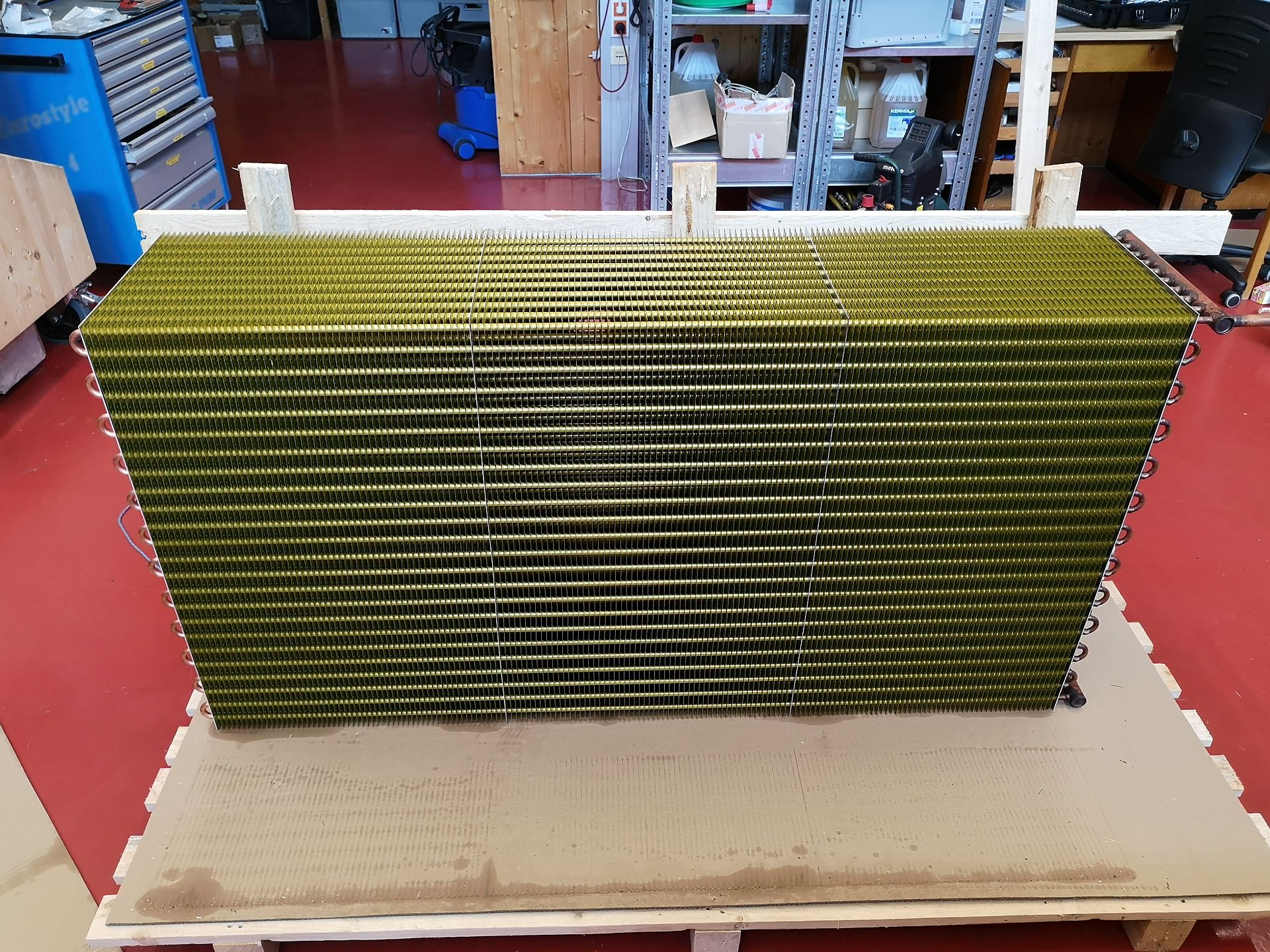
Terms of use: The pictures listed underneath the header “Project Pictures” originate from the projects in the frame of the programmes City of Tomorrow, Building of Tomorrow and the IEA Research Cooperation. They may be used credited for non-commercial purposes under the Creative Commons License Attribution-NonCommercial (CC BY-NC).
Project Partners
Project leader
Wim van Helden
AEE INTEC
Feldgasse 19, 8200 Gleisdorf
E-Mail: w.vanhelden@aee.at
Project partners
Bernhard Zettl
FHOÖ
Rosseggerstrasse 15, 4600 Wels
E-Mail: bernhard.zettl@fh-wels.at
Peter Weinberger
TU Wien
Karlsplatz 13, 1040 Wien
E-Mail: peter.e163.weinberger@tuwien.ac.at
Participants
Austria (Task Manager), Canada, Denmark, France, Germany, Netherlands, Norway, Spain, Sweden, Switzerland, United Kingdom