
IEA ES Task 48: Thermal Energy Storage Materials
Short Description
Objectives
The IEA Energy Storage Task 48 supports R&D on innovative thermal energy storage (TES) materials to enhance efficiency and decarbonisation across sectors. The focus lies on phase-change (PCM), thermochemical (TCM), and sensible high-temperature materials. Austria contributes significantly through subtask leadership in the advanced material testing, and data provision. The goal is to establish harmonised measurement guidelines, validate novel materials, and expand the international TES material database.
Content / Subtask Activities
- Subtask A – Lessons Learnt: Compilation of prior research outcomes and identification of best-practice methods for PCM/TCM characterisation; preparation of guideline papers and review articles.
- Subtask B – Material Characterisation (Lead: AIT, Austria): Development and validation of measurement protocols via international round-robins (e.g., thermal conductivity, heat capacity, density) aiming at standardisation of thermophysical testing.
- Subtask C – Material Development and Production: Focus on new and improved TES materials. TU Wien advances the Tutton-salt family for wider temperature ranges; FH Upper Austria develops "Salt-in-Matrix" composites using regional zeolites for sustainable, scalable production.
- Subtask D – TES Materials Database: Relaunch of the existing database and integration of Austrian datasets (HyStore, StoRIES, RISEnergy). The database and TES Wiki will facilitate global data access and knowledge exchange.
Expected Results
- Standardised measurement guidelines for key thermophysical properties.
- Validated interlaboratory comparisons and benchmark datasets for PCM and TCM.
- Expanded international TES database with ≥ 100 entries from ≥ 14 institutions.
- Next-generation storage materials with higher energy density and improved stability.
- Strengthened Austrian leadership in material characterisation (ST B lead) and active roles in ST C and D.
- Broad dissemination and capacity-building through publications, conferences, teaching, and national stakeholder networks.
Austria thus plays a key role in shaping global standards for thermal storage materials and advancing the transition to a low-carbon energy system.
Project Images
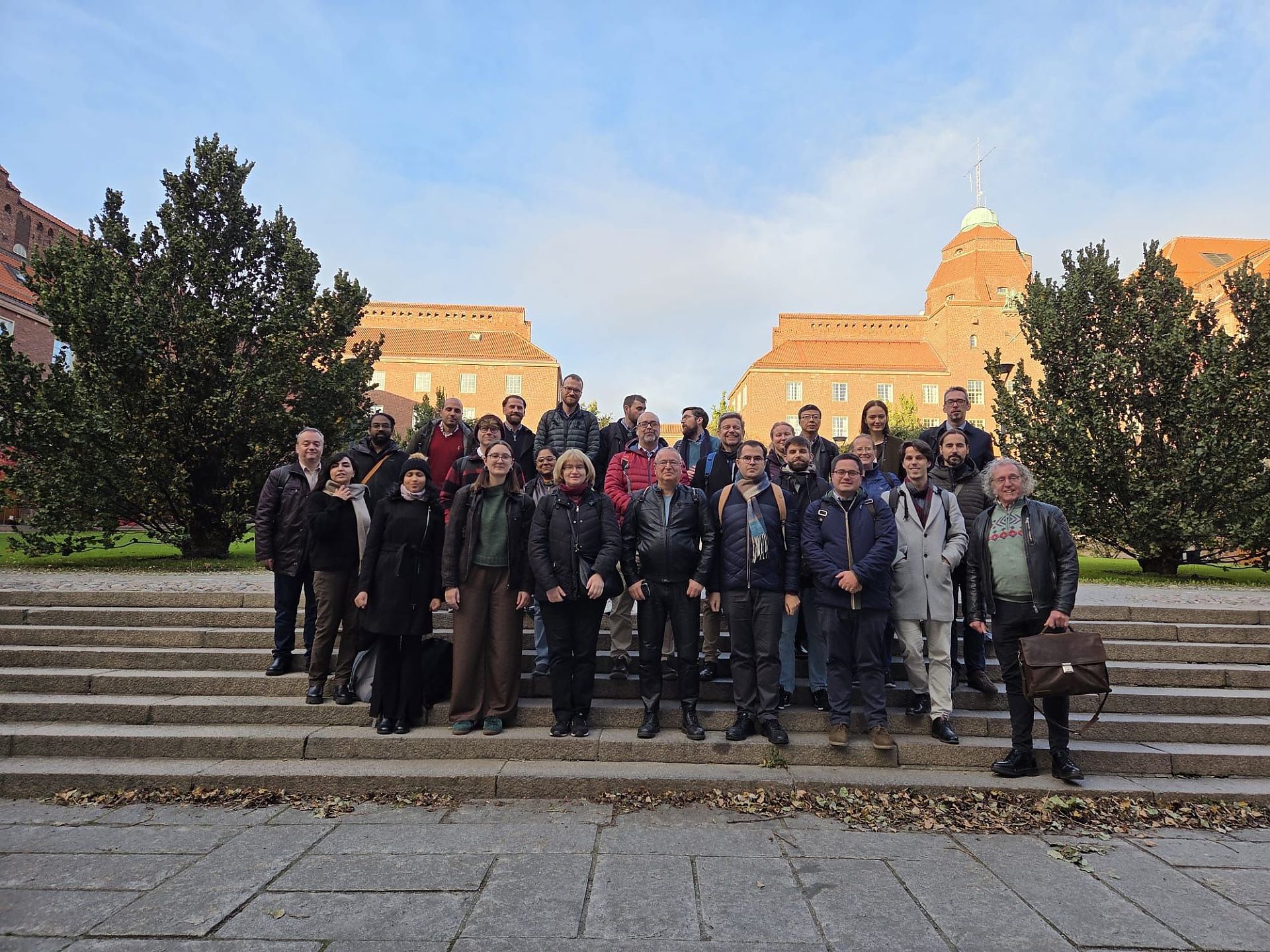
Terms of use: The pictures listed underneath the header “Project Pictures” originate from the projects in the frame of the programmes City of Tomorrow, Building of Tomorrow and the IEA Research Cooperation. They may be used credited for non-commercial purposes under the Creative Commons License Attribution-NonCommercial (CC BY-NC).
Participants
Austria, Belgium, Canada, China, Colombia, Denmark, Finland, France, Germany (Operating Agent), Greece, India, Israel, Italy, Netherlands, Norway, Poland, Portugal, Slovenia, Spain, Sweden, Switzerland, Turkey, UK and United States
Contact Address
Project leader
Dr. Daniel Lager, MSc
AIT Austrian Institute of Technology GmbH
Giefinggasse 2, A-1210 Wien
E-Mail: daniel.lager@ait.ac.at
Web: ait.ac.at/labs/thermophysik
Project partners
Ass. Prof. Dipl.-Ing. Dr.techn. Peter Weinberger
TU Wien
Getreidemarkt 9/163-01-3, A-1060 Wien
E-Mail: peter.e163.weinberger@tuwien.ac.at
Web: ias.tuwien.ac.at/pw
DI Gayaneh Issayan, BSc
FH Oberösterreich
Stelzhamerstraße 23, A-4600 Wels
E-Mail: gayaneh.issayan@fh-wels.at
Web: fh-ooe.at/forschung/research-center-wels